Lead-Top continues to offer both paths because there is method to the madness. Thermal is not "the old way". It’s an entirely different reliability philosophy, and in some projects it is the better choice. This comparison between the LT111 photocell switch and the LT124 light sensor aims to assist your choice of path, rather than just presenting specifications.
- There are three differences.
- The first difference relates to the switching device itself:
- A bimetallic strip in the LT111
- A relay in the LT124
- The second difference is that of inherent delay performance:
- Inherently delayed in the thermal type
- Specified as quick in the electronic type
- The third difference is what you get when using it at the tender stage.
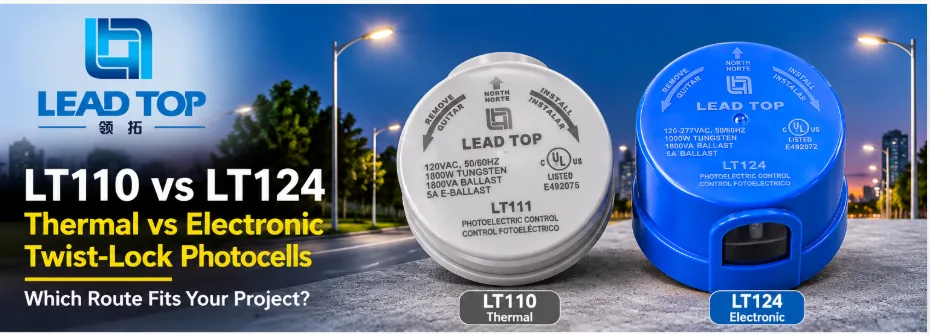
What "Thermal" and "Electronic" Actually Mean Inside the Photocell Lighting Sensor Unit?
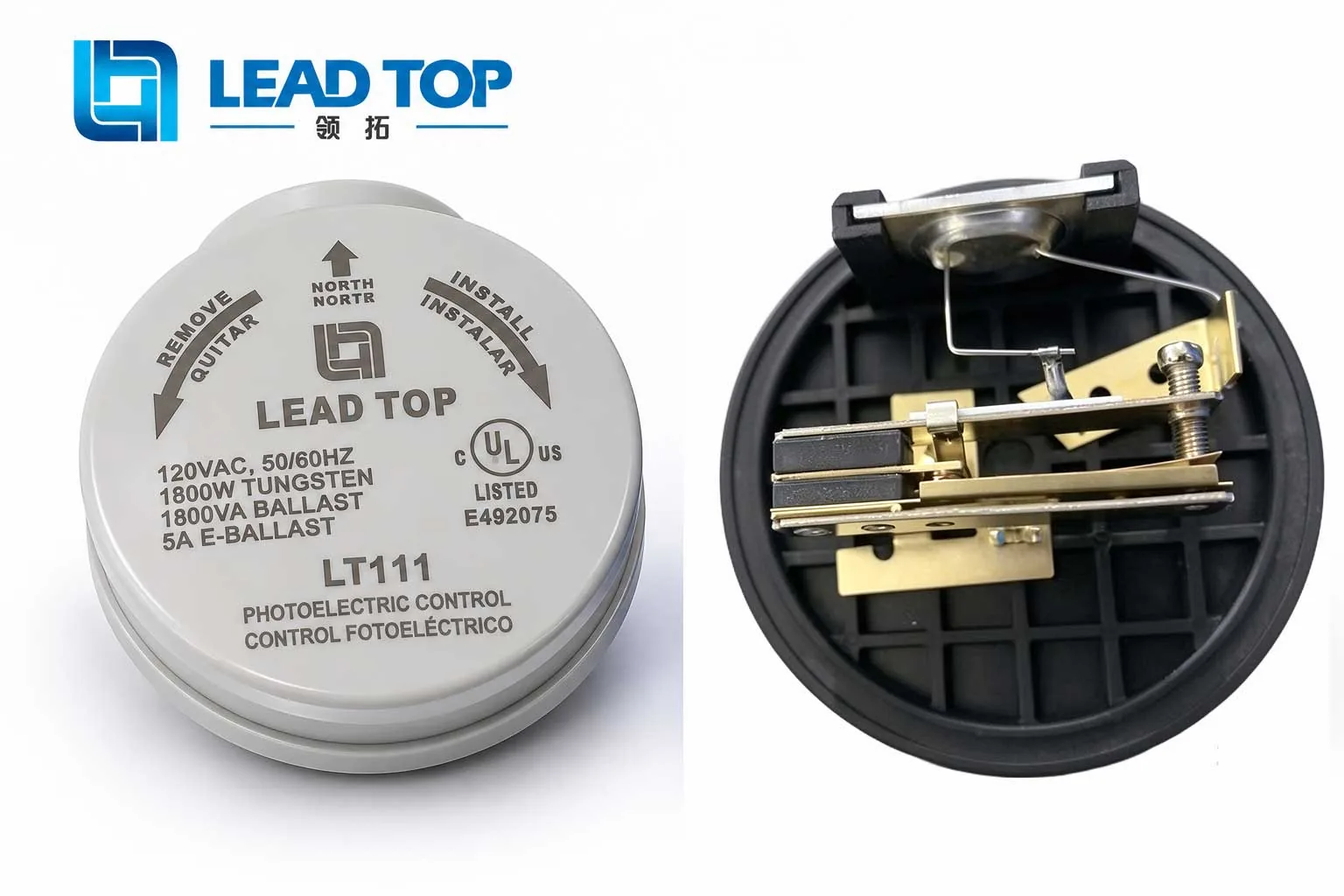
Thermal (LT111 Light Sensor Switch)
In the LT111 unit, there is a CDS sensor that makes the bimetallic strip hot. As the strip gets hot, it bends and makes the contacts open or close. The delay is determined by the physical characteristics of the strip; it cannot be set. There is neither a relay nor an electronic circuit in the unit.
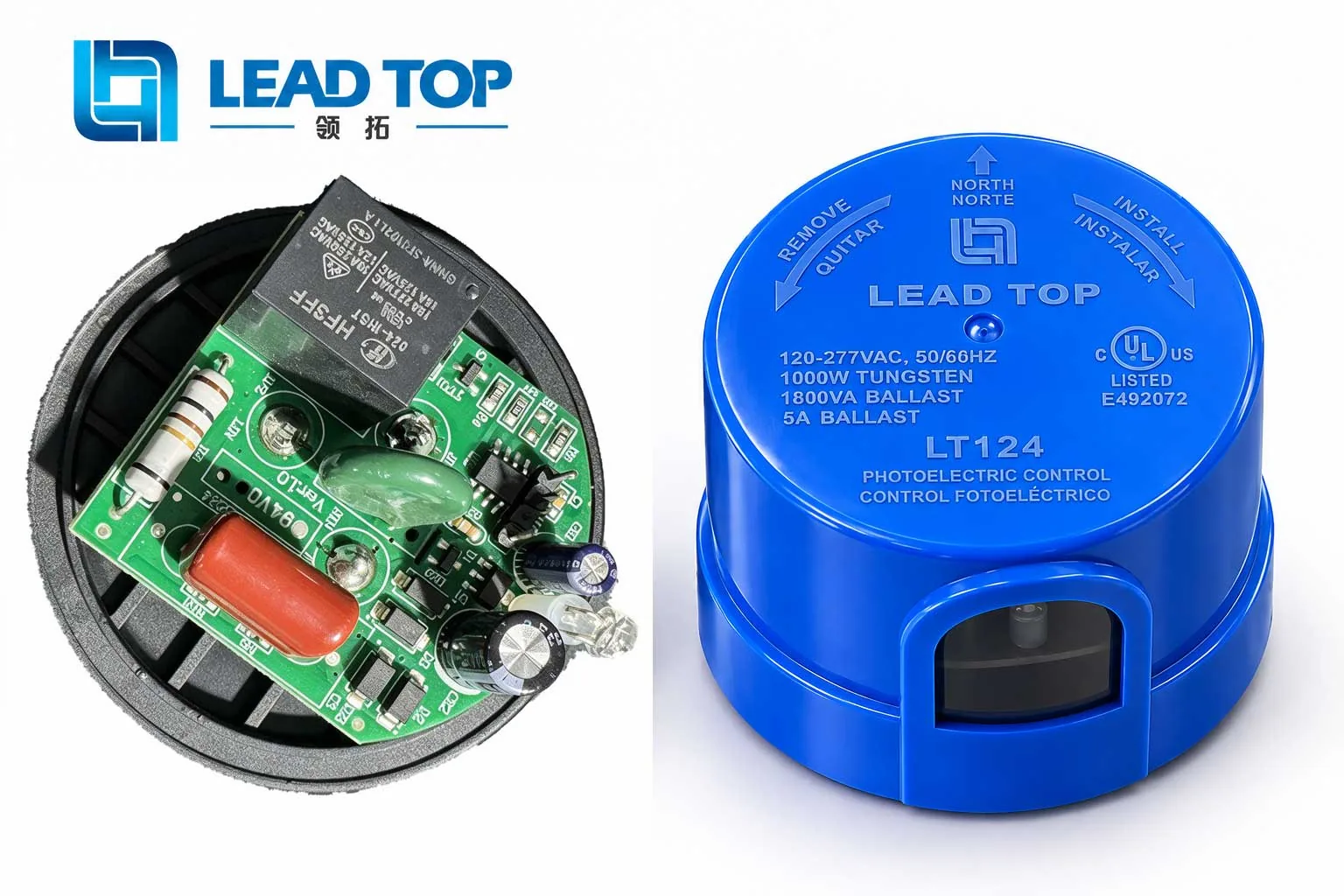
Electronic (LT124 Photoelectric Sensor)
In the LT124 unit, there is an IR phototransistor providing a signal to the electronic circuit, which activates the relay. The ゼロクロッシング switching activates contacts at the right moment of the AC voltage cycle, while the 動画 protects the circuit from overvoltages. Every stage is monitored, and every stage is known.
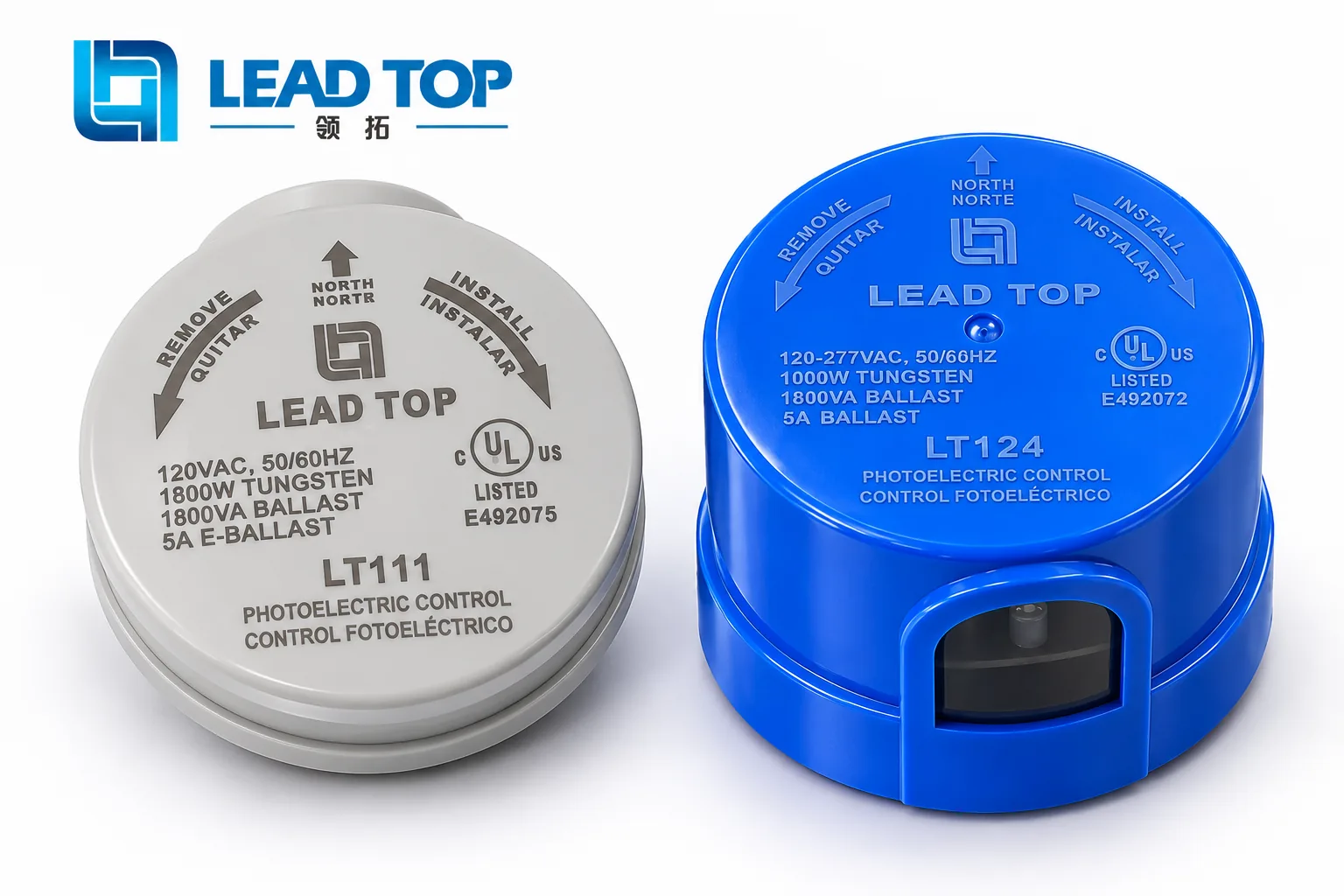
What Differences Decide the Route?
| Spec | LT111 (thermal) | LT124 (electronic) | Verdict direction |
| センサー | CDS photocell | IR phototransistor | Sensor decision, see the sensor deep-dive |
| 切り替え | Bi-metal strip, no relay | Relay + zero-cross | Fewer parts vs controlled inrush |
| Turn-on/turn-off | 10–16 lux / <65 ルクス | 10–16 lux band | Same band, different stability story |
| 時間遅延 | 30–180 s | 3–6 s (specified) | Slow = natural transient rejection; fast = specifiable |
| Voltage variants | 120 / 220 / 208–277 / 480V | Continuous, floor 80VAC | Variant choice vs one-SKU coverage |
| Surge (MOV) | – | 475J / 950J / 1425J | Joules decide lightning regions |
| Cycles/warranty | > 5000/3 years | >10,000 / 5 years | Warranty tier only on LT124 |
| フェイルモード | Fail ON | Fail ON or OFF | Safety-critical sites read this row first |
The route is chosen on delay behavior and component logic, not on the lux band both models share.
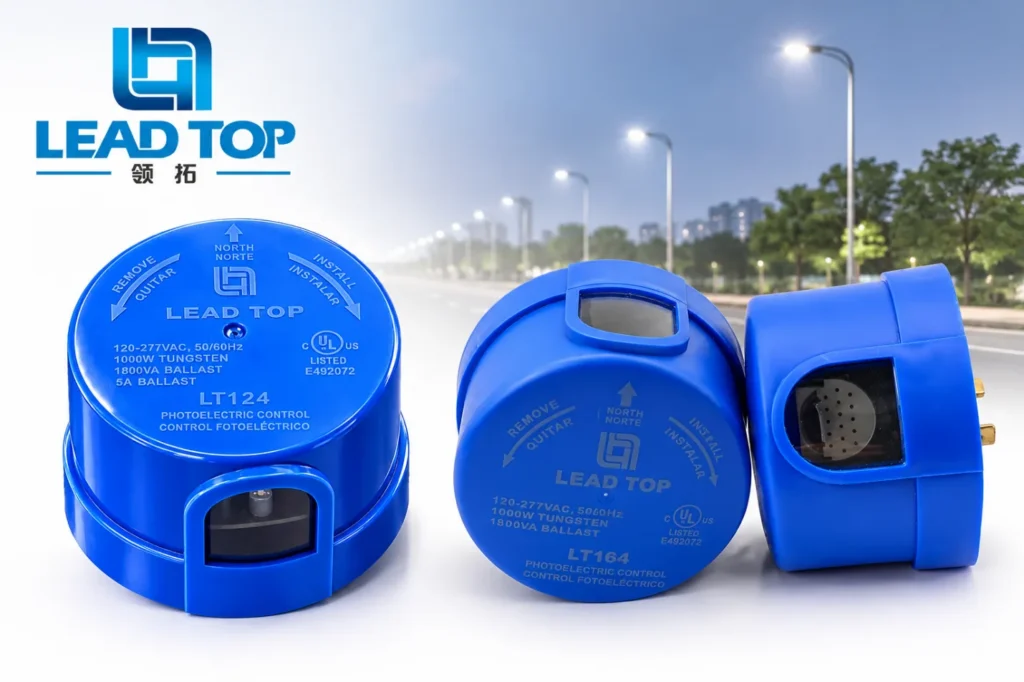
LT111 120V Thermal Approved Photocell Sensor: Where the Thermal Route Wins?
LT111 light photocell sensor is the better choice in three conditions.
- Programs driven by costs
Where the bid favors the lowest per-unit price and does not require any extras.
- Transitory roads
Its natural lag time is one of its strengths. Headlights and other transitory sources of light are captured through physical reality, not on paper.
- 480V systems
480V version gets into places the other twist-lock versions don’t.
Conditions Where Not to Consider LT111
Consider other options if your project includes:
- Tenders with LED-based lights demanding zero cross-switching and small delay bands
- Bidders wanting a warranty level
- Voltage sagging systems during winter
Tip: Check the LT111 minimum threshold on the datasheet first
LT124 光電式照明制御スイッチ: Where the Electronic Route Wins
LT124 photocontrol receptacle has its rightful place when documentation and LED compatibility are paramount:
- LED driver compatible
Zero-crossing and E-ballast make the issue of inrush current a non-issue.
- Winter Sag
Grids as low as 80VAC are no barrier to its switching ability.
- Documents
Procurement where the delay time is paramount comes with a documented solution.
Skip LT124 Where
You can avoid LT124 where:
- The procurement is too cost-conscious
- A delay of less than 180 seconds is insignificant
- Your buyers have zero tolerance for relays in the BOM
How to Choose a Photocell Model?
Answers in sequence, mostly second or third.
- Is there a delay band or zero crossing in your tender?
Yes, go for LT124; No, LT111 is always open.
- Do you have lightning at the site?
Yes, refer to the Joules row and favor the MOV of LT124.
- Are you having a sag in winter on the grid?
Yes, LT124 is a better option with 80VAC min.
- Do you have a warranty in your tender?
Yes, then you can only go for the LT124.
If all your answers are ‘No’, then it is better to stick to LT111.
製品のおすすめ
Pair the product with the program:
- Cost-driven programs, frequent transients, and 480V: LT111
- LED systems, wintertime grid sag, and tender that cares about warranty: LT124
To know about sensors, visit our in-depth sensor guide. To know about surge ratings, visit our guide on photocell surge protection.
よくある質問
Can the LT111 thermal photocell be used for LED street light systems?
Yes. This model can safely control the LED loads when the load is kept within its rating. But since this model doesn’t have zero-crossing control and a fast delay feature, the LT124 should be preferred if these features are necessary.
What causes the LT111 to switch at a slower rate than LT124?
The delay period of the LT111 varies between 30 and 180 seconds. The variations are due to its physical characteristics since its bimetallic strip needs time to warm up and cool down. This delay is not adjustable. It’s also an advantage since even the slightest lighting changes caused by lightning or headlights do not warm up this strip enough for switching to happen.
The LT124’s 3–6 second delay is an electronic design choice. That’s fast enough to feel responsive yet long enough to reject the same transients.
Can I replace LT111 with LT124 on the same receptacle?
Yes. These two models utilize the ANSI C136.10 twist lock interface, so there is no need to change the luminaire. Voltage compatibility should be considered before the replacement, however.
Which model should I choose for a region with winter voltage sag?
Choose the LT124. Its rated range operates down to 80VAC, which keeps the control switching reliably when long cable runs and heavy loads pull the line voltage down on cold nights.
Check the confirmed low-voltage floor of your LT111 variant against your measured winter minimum before staying with the thermal route. If the sag approaches that floor, dusk-to-dawn switching will become intermittent.
結びの言葉
Choose the LT111 for simplicity and cost savings, or the LT124 for faster switching and documented protection. The right choice depends on your grid, load, and tender requirements. リードトップ offers reliable photocontrollers for diverse outdoor lighting needs. Contact our team to find the right model for your next project.


 English
 Portuguese (Brazil)
 Spanish
 Russian
 Dutch
 Japanese
 Portuguese (Portugal)