Outdoor illumination installers and engineers often encounter flexible structures for the first time during product selection or commissioning. This Swivel Stem Control FAQ is designed to answer the most common adjustable photo control questions related to installation, durability, alignment, and long-lasted service behavior.
Instead of concentrating only on specifications, this guide addresses applied, field-based concerns—how adjustment works, whether it affects sealing, what maintenance is compulsory, and how products like the LT210CHシリーズ perform with the time.

Can the Sensor Direction Be Adjusted After Installation?
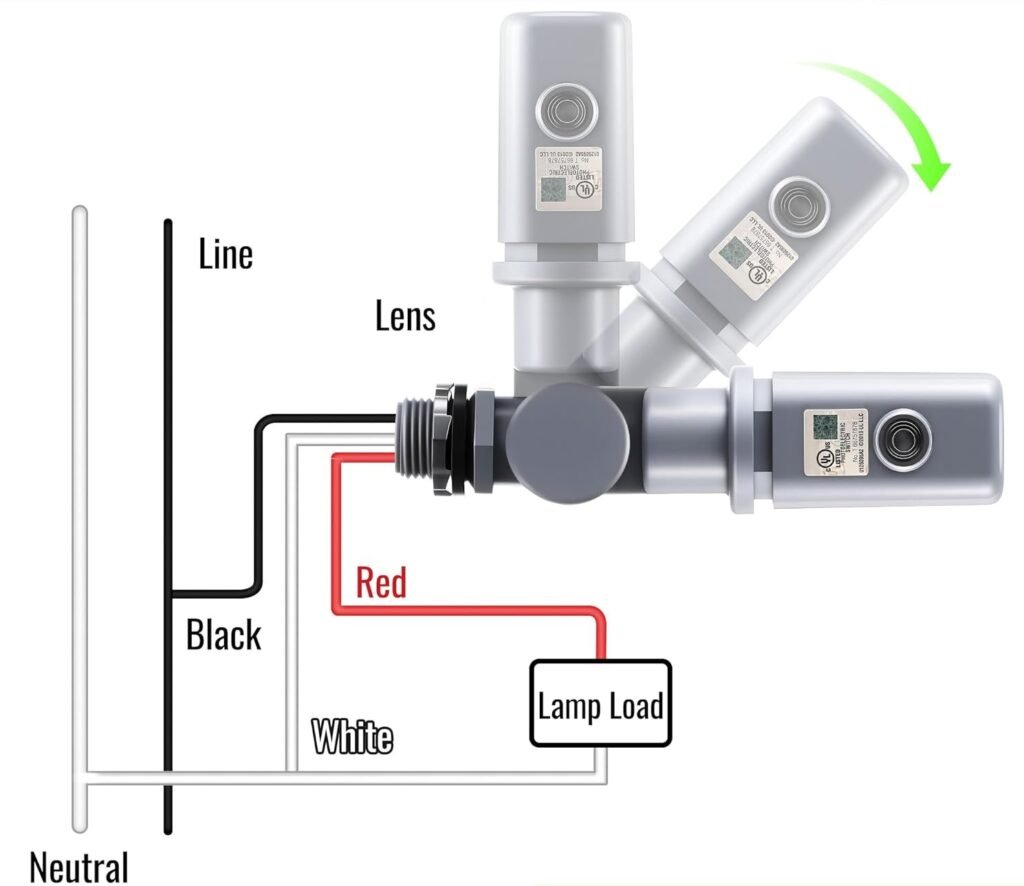
Yes—and this is the main purpose of Swivel Stem Control.
Not like fixed-direction 写真コントロール, Swivel Stem Control permits the sensor body to revolve after the device has been fully mounted and wired. This ability is fundamental to many adjustable photo control questions, particularly during commissioning.
In real terms, installers can:
- Complete mechanical installation first
- Finish wiring connections
- システムに活力を与える
- Observe switching behavior in actual circumstances
- Perform outdoor photo control adjustment devoid of disassembly
This parting between mounting and alignment considerably decreases installation risk. If the initial orientation creates early switching or late shutoff, rectification can occur instantly—without removing the unit or disturbing wiring.
This is one of the fundamental advantages highlighted throughout this Swivel Stem Control FAQ.
Does Post-Installation Adjustment Affect Sealing or Safety?

A common apprehension among engineers is whether movement compromises ecological protection.
When appropriately engineered, it does not.
Swivel Stem Control is designed with the aim of rotation occurs within a sealed structural interface. The adjustment mechanism is incorporated into the housing instead of demanding access to internal components.
Products like LT210CH series integrate this swivel mechanism directly into the enclosure architecture. The result is that outdoor photo control adjustment can be performed without:
- Opening the housing
- Exposing internal wiring
- Disturbing environmental gaskets
- Decreasing ingress defense
The design confirms that sealing and adjustability coexist instead of conflict.
This directly addresses one of the most recurrent adjustable photo control questions in field applications.
Is a Swivel Structure Suitable for Long-Term Outdoor Use?
One more main topic in this スイベルステムコントロール FAQ is permanency.
There is a common misunderstanding that any movable component is inherently weaker than a fixed one. On the other hand, resilience depends on how the adaptable mechanism is manufactured and planned to function.
Swivel Stem Control is made for:
- Organized setup adjustment
- Commissioning optimization
- Occasional readjustment if atmospheres change
It is not intended for continuous or dynamic movement during operation.
Once set, the structure remains mechanically steady under:
- Wind load
- Vibration
- Heat cycling
- Long-lasted outdoor exposure
Appropriately manufactured swivel mechanisms uphold steadiness after adjustment, meaning long-lasted dependability is preserved.
How Should Proper Outdoor Photo Control Adjustment Be Performed?
Right outdoor photo control adjustment is not about amending electrical sensitivity. It is about optimizing sensor exposure.
The sensor reacts to the light it receives. So, precise placement guarantees correct switching behavior.
General guidance contains:
- Avoid pointing the sensor directly toward the controlled luminaire
- Minimalize exposure to reflective walls, glass, or signage
- Favor open sky exposure when possible
- Observe switching behavior at actual sunset and dawning situations
Adjustments should be slow. After every change, switching performance should be observed before making further rectifications.
Numerous adjustable photo control questions arise because installers assume adjustment affects electronic thresholds. In reality, orientation determines exposure, which in turn determines switching accuracy.
Does Adjustment Require Special Tools or Calibration Equipment?
No.
Swivel Stem Control is made for manual adjustment as part of normal 試運転 procedures. No electronic calibration, programming interface, or specialized tools are required.
By eradicating the need for calibration devices, the design decreases:
- Training requirements
- On-site complication
- Commissioning time
- Potential configuration mistakes
This practical usability is a recurring theme throughout this Swivel Stem Control FAQ.
What Maintenance Is Required for Swivel Stem Sensor Maintenance?
Under normal working conditions, routine swivel stem sensor maintenance is not required.
Because the swivel mechanism is not planned for continuous movement, there are:
- No lubrication intervals
- No periodic tightening requirements
- No mechanical servicing schedules
Once orientation is set, the unit functions as a standard outdoor photo control device.
Maintenance considerations typically rise only if ecological conditions change considerably, such as:
- Installation of new adjacent lighting
- Construction of reflective structures
- Major landscaping changes
In such circumstances, performance can often be reinstated through simple repositioning instead of full replacement.
Are There Precautions to Follow During Adjustment?
Yes, even though they are straightforward.
To preserve long-lasted steadiness:
- Regulate orientation only after secure mounting
- Avoid applying force beyond the designed rotation range
- Make sure wiring is not under mechanical tension during adjustment
- Perform adjustments slowly
Following these guidelines helps uphold structural reliability and guarantees dependable performance throughout the product lifespan.
These practical instructions are frequently included in adjustable photo control questions, particularly during first-time installations.
How Does Swivel Stem Control Compare to Fixed Designs?
| 特徴 | 固定写真コントロール | スイベルステムコントロール |
| Post-Installation Adjustment | 不可能 | はい |
| Rewiring Required for Realignment | はい | いいえ |
| 柔軟なコミッショニング | 限定 | 高い |
| Sealing Integrity During Adjustment | Not applicable | Maintained |
| Adaptability to Environmental Change | 低い | 高い |
| Risk of Functional Obsolescence | より高い | より低い |
What Are the Key Installation and Maintenance Considerations?
| カテゴリ | Recommendation | Impact on Performance |
| Mounting | Secure base before adjustment | Ensures structural stability |
| オリエンテーション | Avoid luminaire glare | Improves switching accuracy |
| Reflective Surfaces | Minimize exposure | Reduces false triggering |
| Adjustment Force | Stay within rotation range | Preserves mechanical integrity |
| Long-Term Changes | Realign before replacing | Extends functional lifetime |
| Routine Maintenance | Not required under normal use | Reduces lifecycle cost |
These summarized practices support effective swivel stem sensor maintenance while upholding working dependability.
Why Does the LT210CH Series Integrate Swivel Stem Control?
The LT210CH series integrates Swivel Stem Control directly into the housing architecture instead of treating it as an add-on feature.
This incorporation guarantees:
- Structural constancy after adjustment
- Ecological sealing defense
- Simplified commissioning procedures
- Abridged field troubleshooting
By entrenching adjustability into the enclosure design, the LT210CH series exhibits how organized flexibility can co-occur with resilience.
What Is the Lead-Top Perspective on Adjustment, Durability, and Maintenance?
At Lead-Top, Swivel Stem Control is made to simplify actual installation while maintaining structural vigor.
Through designs for example the LT210CH series, the company incorporates controlled adjustability into the product architecture devoid of compromising sealing or mechanical constancy.
This Swivel Stem Control FAQ imitates a practical philosophy:
- Installation should be flexible
- Adjustment should be simple
- Permanency should remain uncompromised
- Maintenance should be negligible
By addressing common adjustable photo control questions and clarifying proper outdoor photo control adjustment procedures, Swivel Stem Control supports systems that function dependably—not only at installation, but throughout their working lifecycle.
In contemporary outdoor infrastructure, adaptability is not an added convenience.
It is a requirement for long-lasted success.
参考文献:
- https://leaditop.com/product-category/product/wire-in-controllers/swivel-stem-control/
- https://leaditop.com/product/adjustment-dusk-to-dawn-stem-photocell-sensor/
- https://leaditop.com/?s=swivel+stem+control&_gl
- https://en.wikipedia.org/wiki/Commissioning
- https://www.sciencedirect.com/topics/engineering/photocell




 Japanese
  English
  Portuguese (Brazil)
  Spanish
  Russian
  Dutch
Dutch  Portuguese (Portugal)