Почему модернизация системы «умного» освещения в Генуе важна для будущего европейских городов?
В Генуе близится к завершению один из самых значительных проектов модернизации освещения в Европе — обновление уличного освещения с использованием светодиодов стоимостью 34 миллиона евро, охватывающее более 55 000 точек освещения. Ожидается, что эта инициатива позволит сэкономить более 701 тонны энергии, значительно сократит расходы на техническое обслуживание и повысит удовлетворенность населения ночным освещением.
Однако истинное значение генуэзского проекта выходит далеко за рамки снижения счетов за электроэнергию.
Это отражает масштабные преобразования, происходящие по всей Европе: системы наружного освещения превращаются из простых осветительных сетей в интеллектуальную цифровую инфраструктуру. Современные уличные фонари — это уже не отдельные светильники, а взаимосвязанные элементы в рамках интеллектуальных городских систем освещения.
В центре этого развития находится современный интеллектуальный фотоэлемент.
Обычно используемый только в качестве датчика освещенности, современные датчики... фотоэлементы В настоящее время фотоэлементы преобразуются в интеллектуальные узлы управления, обладающие навыками связи, регулировки яркости, мониторинга и интеграции с городскими платформами Интернета вещей. Следовательно, фотоэлементы становятся основополагающими компонентами в развитии инфраструктуры интеллектуальных столбов, адаптивных систем управления дорожным движением, сетей экологического мониторинга и подключенных платформ общественной безопасности.

Как генуэзский проект демонстрирует сдвиг, выходящий за рамки базовой экономии энергии?
Инвестиции города свидетельствуют о стратегическом сдвиге в сторону создания долгосрочной цифровой городской инфраструктуры.
Ключевые результаты проекта включают в себя:
- Более 55 000 современных светодиодных светильников
- Снижение потребления электроэнергии более чем на 70%
- Меньшие затраты на техническое обслуживание и замену.
- Повышение удовлетворенности общественности и повышение узнаваемости.
- Стремление к будущей интеграции в концепцию «умного города»
Это показывает, что муниципалитеты не слишком довольны простой установкой. ВЕЛ светильники. Вместо них они создают системы освещения, способные поддерживать:
- Экологические датчики
- Камеры видеонаблюдения
- системы управления дорожным движением
- Общедоступный Wi-Fi
- Устройства экстренной связи
В таких условиях компоненты управления светодиодными уличными фонарями должны эволюционировать от пассивных переключателей к интеллектуальным устройствам, готовым к работе в сети.
Почему фотоэлементы необходимы в современных интеллектуальных системах освещения?
Фотоэлементы остаются одним из наиболее важных компонентов в системах автоматизации наружного освещения, поскольку они контролируют включение и выключение систем освещения в зависимости от окружающей освещенности.
К основным функциям современных фотоэлементов относятся:
- Программируемое переключение с наступления сумерек на рассвет
- Прекращение дневных потерь энергии
- Более высокая стабильность в больших сетях освещения
- Сокращенное трудоемкое вмешательство
- Повышение общественной безопасности за счет надежной работы.
Современные интеллектуальные фотоэлементные системы теперь могут предложить:
- Возможность удаленного мониторинга
- Отчеты о данных об энергопотреблении
- Диагностика неисправностей
- Встроенная функция адаптивного затемнения
- Взаимодействие с облачными платформами управления
Это превращает фотоэлемент из простого выключателя в центральный узел архитектуры управления освещением в рамках Интернета вещей.
Каким новым требованиям должны соответствовать фотоэлементы для «умных городов»?
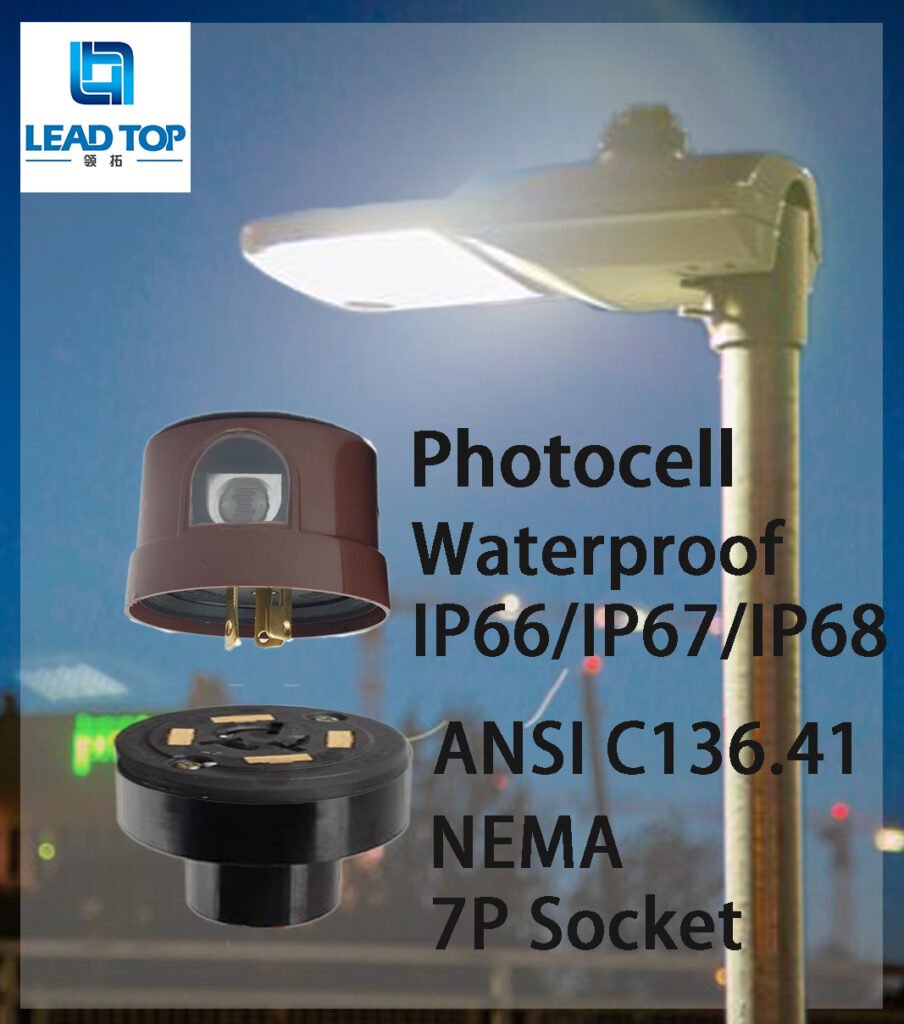
По мере того, как города внедряют все более совершенную систему освещения, старые фотоэлементы становятся все менее актуальными.
Основные технические требования включают:
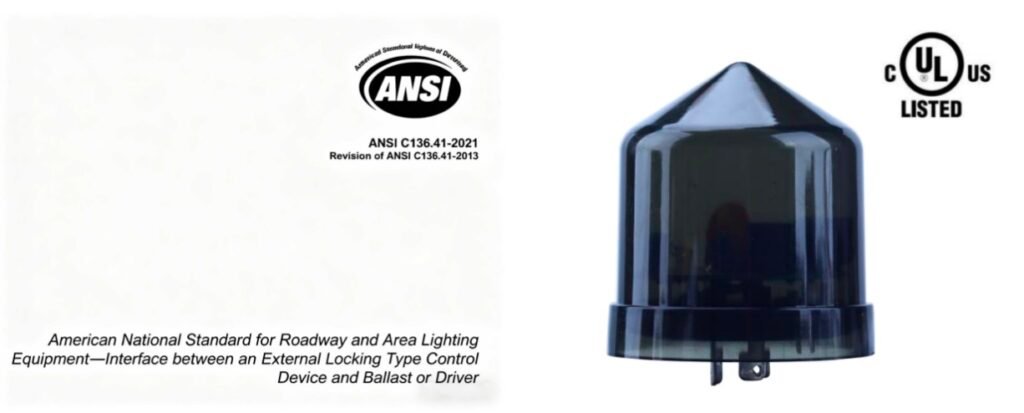
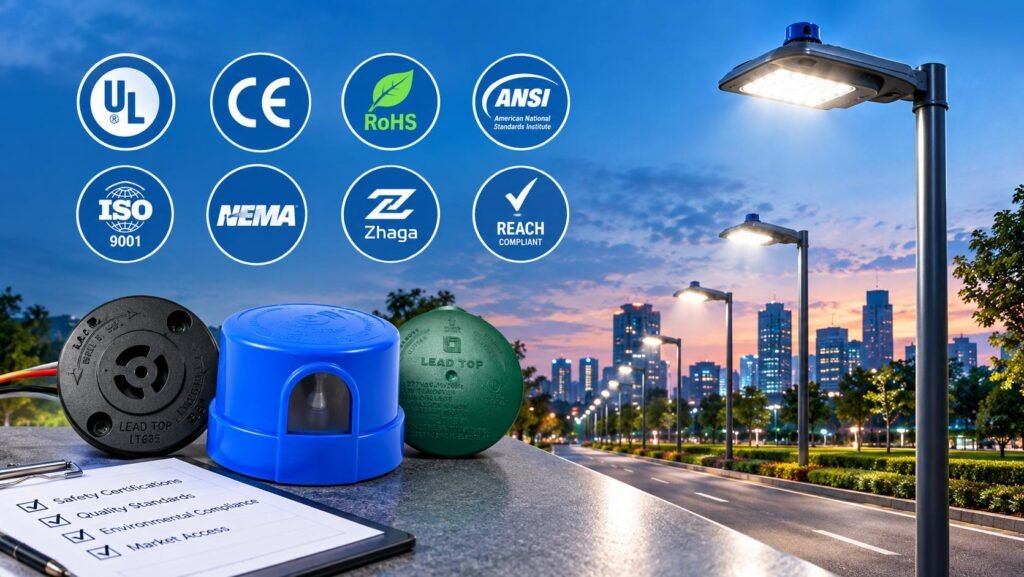
НЕМА Совместимость с (ANSI C136.41)
Стандарт NEMA для фотоэлементов широко распространен в ряде систем интеллектуального городского освещения, поскольку он поддерживает:
- Установка по принципу «подключи и работай»
- Однородная совместимость
- Совместимость интеллектуальных узлов
- Функции регулировки яркости и связи
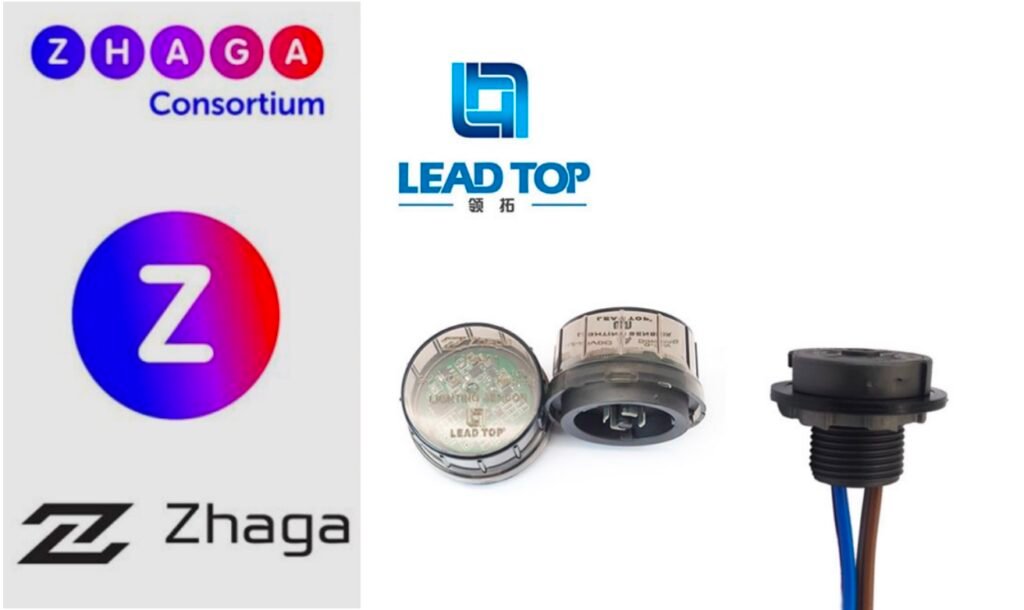
Жага Книга 18 Поддержка интерфейса
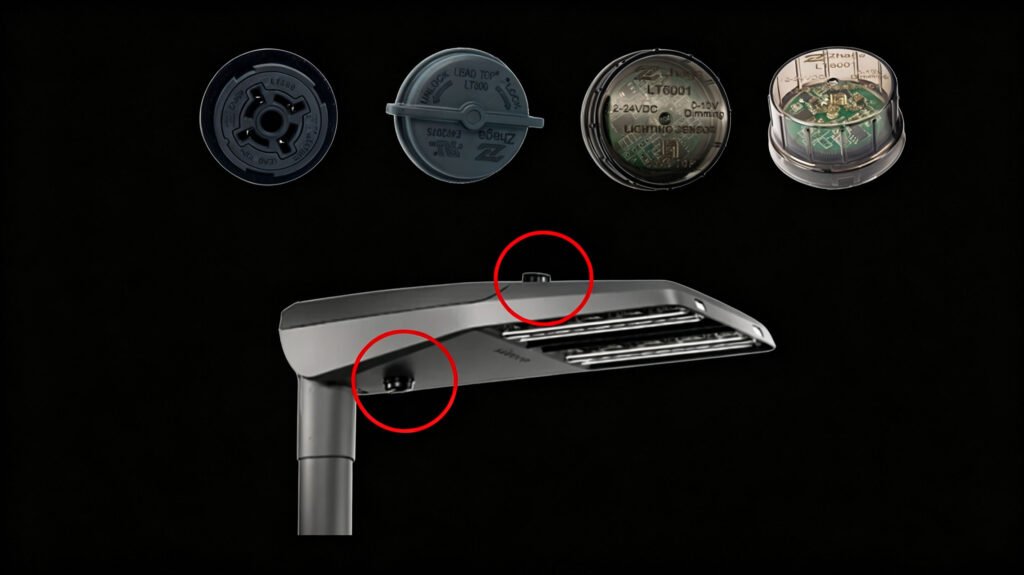
В Европе стандарт контроллеров Zhaga быстро становится популярным для компактных и модульных интеллектуальных светильников.
В книге «Жага, том 18» представлены следующие материалы:
- Меньший размер интерфейса
- Однородное внедрение интеллектуальных узлов
- Совместимость с будущими технологиями Интернета вещей
- Улучшена эстетика светильника.
Защита от перенапряжения
Для наружных систем требуется высокая устойчивость к скачкам напряжения из-за молний и несбалансированных электросетей.
Типичные требования к «умному городу»:
- Защита от перенапряжений 10–20 кВ
- Укрепление МОВ
- Устойчивость к перенапряжению
Долгая продолжительность жизни
Классические ожидания:
- Жизненный цикл функционирования составляет более 10 лет.
- 10 000+ циклов переключения
- Номинальные требования к содержанию
Как фотоэлементы эволюционируют от простых датчиков до интеллектуальных узлов?
Современные интеллектуальные фотоэлементные системы функционируют как интеллектуальные узлы в рамках подключенной инфраструктуры.
Таблица сравнения эволюции
| Особенность | Традиционный фотоэлемент | Современный интеллектуальный фотоэлемент |
| Функция | Включение/выключение | Многофункциональный интеллектуальный узел |
| Коммуникация | Никто | Беспроводные технологии / поддержка Интернета вещей |
| Мониторинг | Никто | Отчеты о состоянии в режиме реального времени |
| Затемнение | Нет | Да |
| Интеграция | Автономный | Совместимость с платформой «Умный город» |
| Сбор данных | Никто | Экологические/эксплуатационные данные |
Этот прогресс важен, поскольку современные муниципалитеты постепенно внедряют инфраструктуру «умных столбов», объединяя множество технологий в одной точке установки.
Фотоэлементы теперь помогают реализовать следующие возможности:
- Освещение, учитывающее особенности дорожного движения
- Настройка бликов в зависимости от погодных условий
- Аварийное освещение
- мониторинг общественной безопасности
- Аналитика оптимизации энергопотребления
Какие фотоэлементные решения лучше всего подходят для проектов «умных городов», таких как Генуя?
Для проектов «умного города», подобных инициативе по модернизации Генуи, муниципалитеты все чаще нуждаются в современных фотоэлектрических системах управления, поддерживающих интеллектуальные сети, регулировку яркости и будущие обновления IoT.
Рекомендуемые решения для «умных городов»
| Модель | Тип | Лучшее приложение | Основные характеристики |
| LT100 (0-10 В и Dali) | Фоторегулятор с поворотным фиксатором ANSI C136.41 | Интеллектуальное уличное освещение | 0-10 В / Диммирование в полночь, защита от перенапряжения |
| LT635-7PIN | Поворотный разъем ANSI | Развертывание интеллектуальных столбов | Вращение на 360°, готовность к установке беспроводного узла. |
| LT6002 | Датчик Zhaga Book 18 | Компактные «умные» светильники | Поддержка DALI, модульный интерфейс |
Эти товары соответствуют растущему европейскому спросу на:
- Zhaga умный город Европа согласие
- Готовность к адаптивному уличному освещению
- Долговечная устойчивость к воздействию окружающей среды
- Гибкое развертывание IoT
Почему стандарты NEMA и Zhaga важны для интеллектуального освещения?
В зависимости от проектных решений и региональных особенностей, внедрение интеллектуальных систем освещения, вероятно, будет осуществляться как по стандартам NEMA, так и по стандартам Zhaga.
Таблица сравнения интерфейсов
| Стандарт | Общий регион | Главное преимущество | Типичное применение |
| NEMA (ANSI C136.41) | Северная Америка / Глобальный муниципальный | Энергичный, устоявшийся, взаимозаменяемый | Крупные уличные фонари / Коммунальные проекты |
| Жага Книга 18 | Европа / Проекты «умного города» | Компактный, модульный, готовый к использованию с интеллектуальными системами. | Современные светодиодные светильники / Умные городские опоры |
Как адаптивное и основанное на данных освещение повлияет на будущее?
В будущем системы станут адаптивными и предиктивными.
Развивающиеся способности включают в себя:
Управление освещением на основе искусственного интеллекта
Искусственный интеллект может усиливать блики на основе следующих факторов:
- Плотность транспортного потока
- Пешеходное движение
- Погодные условия
- Исторические данные об использовании
Освещение, реагирующее на дорожное движение
Освещение динамически изменяется в зависимости от наличия автомобилей или пешеходов.
Преимущества включают в себя:
- Дополнительная экономия энергии
- Повышенная безопасность
- Сокращенное описание светового загрязнения
Мониторинг на основе облачных технологий
Централизованные панели мониторинга позволяют городам:
- Дистанционно контролируйте каждый светильник.
- Сбои в работе датчиков происходят незамедлительно.
- Планирование профилактического технического обслуживания
- Тщательно изучите данные о долгосрочной эффективности.
Эти функции в значительной степени зависят от интеллектуального оборудования для управления освещением через Интернет вещей, что делает фотоэлементы более важными, чем когда-либо.
Часто задаваемые вопросы
В1: Какова роль фотоэлемента в интеллектуальном уличном освещении?
Фотоэлемент служит устройством автоматического управления, которое регулирует включение и выключение уличных фонарей в зависимости от уровня освещенности окружающей среды.
В2: Почему города переходят на интеллектуальные системы освещения?
Муниципалитеты переходят на интеллектуальные системы освещения главным образом для повышения эффективности, снижения эксплуатационных расходов и поддержки широкого спектра целей развития «умных городов».
В3: Какие стандарты важны для интеллектуальных фотоэлементов?
Двумя наиболее важными стандартами для современных интеллектуальных фотоэлементов являются NEMA (ANSI C136.41) и Zhaga Book 18, поскольку они определяют интерфейсы, используемые для внедрения интеллектуального управления освещением.
Заключение: Почему фотоэлементы становятся основой европейских «умных городов»?
Революция в области интеллектуального освещения в Генуе является примером широко распространенной проблемы в Европе: уличное освещение – это уже не просто освещение.
По мере того как мегаполисы инвестируют в взаимосвязанные, адаптивные и управляемые данными системы освещения, роль фотоэлемента меняется: из простого датчика освещенности в критически важную интеллектуальную платформу на основе фотоэлементов.
Современным городам теперь необходимы фотоэлементы, поддерживающие следующие функции:
- внедрение системы «умного» городского освещения
- Платформы управления освещением на основе Интернета вещей
- Адаптивные стратегии уличного освещения
- Взаимодействие контроллера Zhaga и фотоэлемента NEMA
- Долговечная надежность в сложных условиях эксплуатации на открытом воздухе.
Подрядчики, способные поставлять интеллектуальные, защищенные от перенапряжения и соответствующие стандартам решения с фотоуправлением, будут иметь наилучшие возможности для поддержки развития интеллектуального наружного освещения в Европе.



 English
 Portuguese (Brazil)
 Spanish
 Russian
 Dutch
Dutch Japanese
 Portuguese (Portugal)