info@leaditop.com

メッセージを残す

+86 13391004727

専門家に相談する

2026年のスマート光電セルのトレンド

目次

Introduction: Why Are Smart Photocell Trends Reshaping the Lighting Industry in 2026?

The lighting industry is experiencing a major revolution because municipalities and infrastructure systems become more connected and data-driven. Old-style 光電池, once restricted to simple dusk-to-dawn switching, are now progressing into smart devices that play a vital role in contemporary illumination networks.

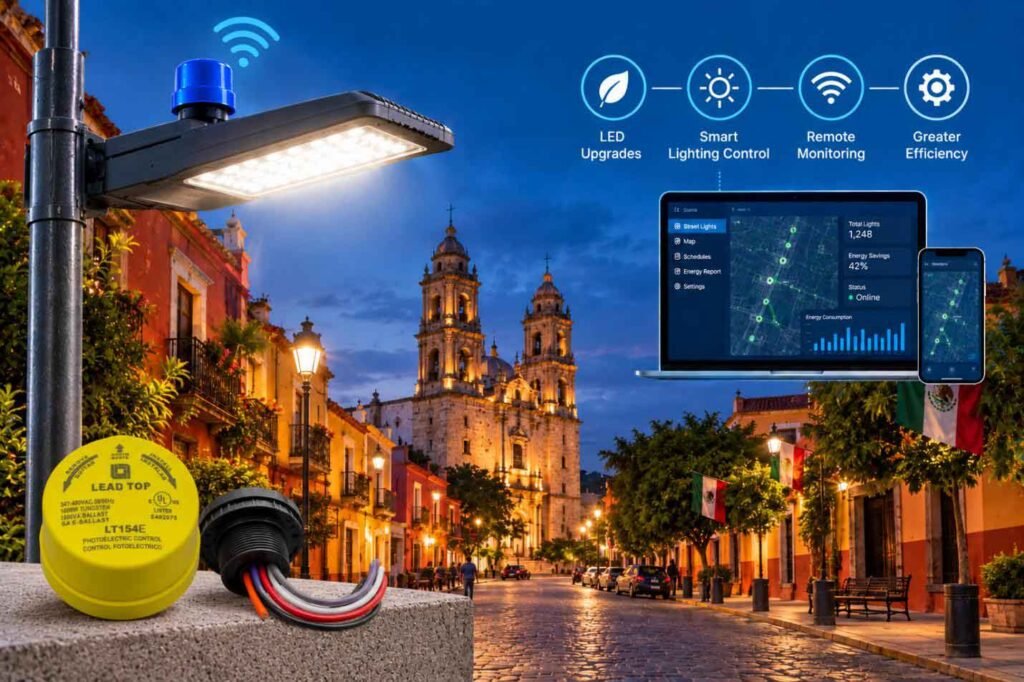
These smart photocell trends are driven by the necessity for improved energy proficiency, actual monitoring, and improved operative control. Administrations and cities are spending in IoT lighting control systems that permit them to manage thousands of illumination points remotely.

Consequently, the customary notion of a photocell is being swapped by progressive solutions that incorporate sensors, communication modules, and data processing competences into a single smart photocontrol system.

How Is the Photocell Evolving from a Sensor to a Smart Node?

The most important move in smart photocell trends is the conversion from a simple sensor to an smart control node.

What Was a Traditional Photocell?

  • Basic light sensor
  • ON/OFF switching based on environmental light
  • No communication ability

What Is a Smart Photocell Today?

  • Incorporated IoT-enabled device
  • Capable of data collection and analysis
  • Supports remote control and mechanization

Contemporary photocells are now part of a wide-ranging IoT lighting control environment. They can communicate with central management systems, allowing features such as:

  • Actual status monitoring
  • Remote switching and dimming
  • Error sensing and reporting

This development permits municipalities to scale their illumination systems proficiently while improving performance and decreasing costs.

What Technologies Power Smart Photocontrol Systems?

At the basic of every smart photocontrol system are communication technologies that empower devices to connect and exchange data.

Key Communication Technologies Include:

  • ジグビー
    A short-range wireless protocol perfect for local mesh networks. It is normally used in metropolitan illumination systems where numerous devices need to communicate with each other.
  • NB-IoT (Narrowband IoT)
    Made for wide-area networks, NB-IoT is appropriate for comprehensive deployments where long-distance communication is compulsory. It is often used in national or city-wide IoT lighting control systems.
  • LoRa (Long Range)
    It is popular for its low power consumption and wide ranging capability, ローラ is best for rural area or low-density districts.

Each technology serves different applications, and choosing the correct one depends on Project size, infrastructure, and connectivity requirements.

How Are Interface Standards Evolving in Smart Photocells?

Additional important feature of smart photocell trends is the development of interface standards. These interfaces define how photocells connect to illumination fittings and control systems.

何ですか NEMA 7-Pin Smart Photocell?

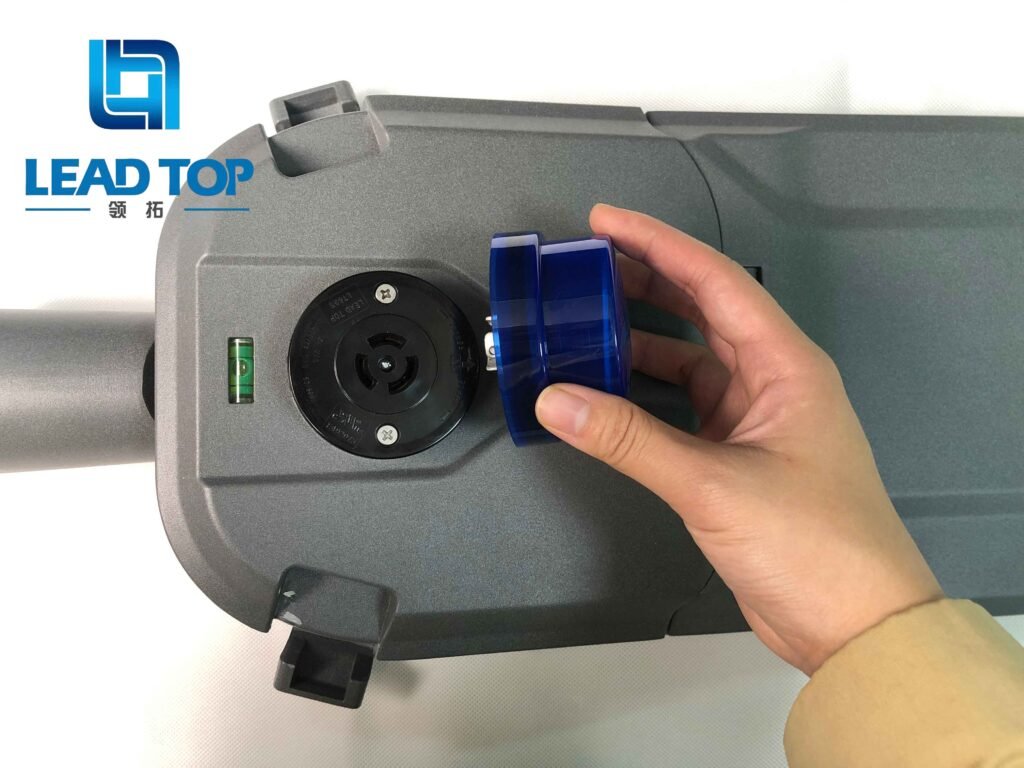
A nema 7 pin smart photocell is an innovative version of the old-fashioned NEMA interface. It supports extra communication pins, allowing:

  • リモコン
  • Data transmission
  • Incorporation with smart systems

This makes it a popular choice in North America for upgrading current illumination infrastructure.

What Is a Zhaga Smart Lighting Node?

A zhaga smart lighting node is a compact, modular interface made for contemporary smart illumination systems.

Key benefits include:

  • Homogeneous modular design
  • 簡単な設置と交換
  • Full compatibility with intelligent municipality platforms

ジャガ is quickly gaining popularity in Europe and other sections accepting progressive smart photocontrol systems.

What Are the Key Differences Between ネマ and Zhaga Smart Interfaces?

Table 1: NEMA 7-Pin vs Zhaga Smart Lighting Node

特徴NEMA 7-Pin Smart PhotocellZhaga Smart Lighting Node
DesignLarger, externalCompact, integrated
インストールツイストロックPlug-and-play
Smart Capability高い非常に高い
Regional Use北米Europe & global

Why Is Smart City Demand Driving Photocell Innovation?

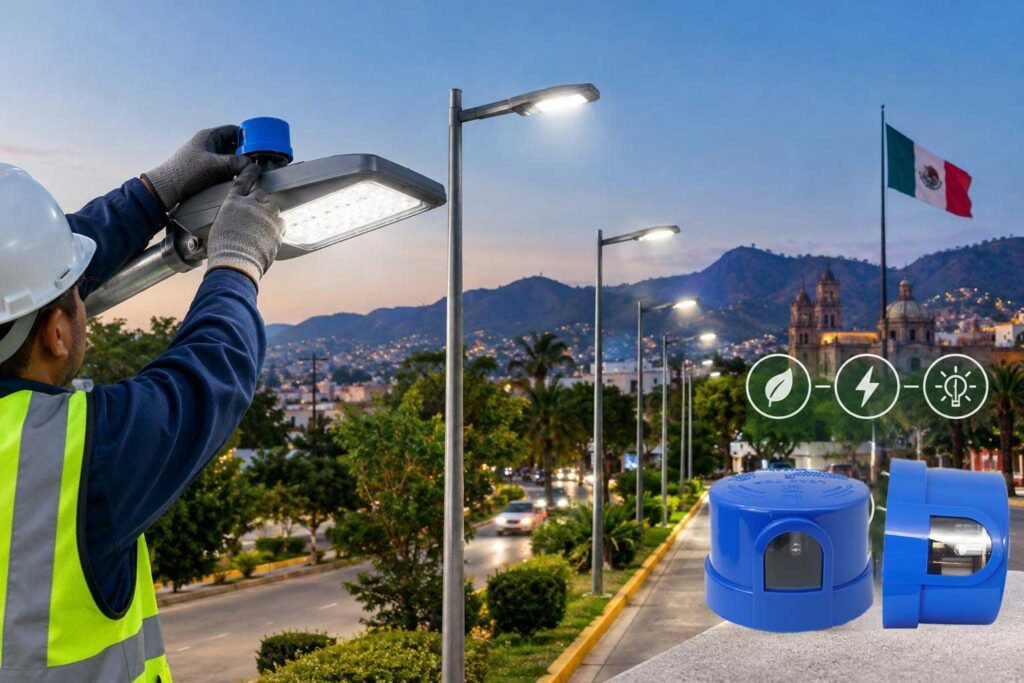
The upswing of smart cities is one of the biggest drivers behind smart photocell trends. Contemporary municipalities need illumination systems that are not only energy- proficient but also smart and reactive.

What Do Smart Cities Require?

  • Energy savings: Adaptive illumination decreases power usage
  • Remote monitoring: Actual control of illumination systems
  • Predictive maintenance: Early sensing of errors

A well-designed IoT lighting control system permits cities to improve illumination based on traffic, climate, and time of day.

It improves public security and infrastructure proficiency and at same time lower down operative costs.

How Do Smart Photocells Improve Energy Efficiency?

Smart photocells go beyond simple ON/OFF control by permitting innovative features such as dimming and scheduling.

例えば:

  • Illuminations can control at lower intensity during low-traffic hours
  • Glare can be attuned based on ecological situations

These abilities make smart photocontrol systems a main component in attaining sustainability goals.

What Is the Future of Smart Photocell Technology?

The prospect of smart photocell trends is engrossed on greater intelligence, tractability, and incorporation.

Key Future Developments Include:

  • Digital Control Systems
    Fully digital platforms will swap old-fashioned analog switching with accurate control and monitoring.
  • Modular Design
    Systems like zhaga smart lighting node allow easy improvements and scalability.
  • AI-Optimized Lighting
    Artificial intelligence will examine data to enhance illumination performance robotically.

These progressions will further improve the abilities of IoT lighting control systems.

What Are the Benefits of Adopting Smart Photocells?

Table 2: Benefits of Smart Photocontrol Systems

利点説明
エネルギー効率Reduces electricity consumption
Remote ControlEnables centralized management
予知保全Minimizes downtime
スケーラビリティSupports large-scale deployments

Do You Really Need a Smart Photocell?

The need for a smart photocontrol system be subject to your project necessities.

You Need a Smart Photocell If:

  • Your project includes smart city infrastructure
  • You need remote monitoring and control
  • Energy management is a primacy

For simple applications, old-fashioned photocells may still be enough. But, for contemporary infrastructure, smart solutions are becoming the standard.

Which Communication Protocol Should You Choose?

Selecting the correct communication protocol is important for system performance.

  • NB-IoT: Best for wide-area networks
  • ZigBee: Perfect for local mesh networks
  • LoRa: Appropriate for distant, low-power applications

The choice hinge on your network infrastructure and project scale.

Are Smart Photocells More Expensive?

Yes, 頭いい 光電池 normally have a greater upfront cost matched to old-fashioned models. Though, they offer long-lasted savings through:

  • Abridged energy usage
  • Lesser maintenance expenditures
  • Better system proficiency

This makes them a valued investment in contemporary IoT lighting control systems.

Conclusion: Why Are Smart Photocells the Future of Lighting?

The development of smart photocell trends replicates the wide-ranging change of the illumination industry toward connected, intelligent systems.

From simple sensors to progressive smart photocontrol systems, photocells are now important components of smart city infrastructure.

Technologies such as nema 7 pin smart photocell and zhaga smart lighting node are allowing new levels of control, proficiency, and scalability.

The only thing that can help producers, suppliers, and cities to be proactive in this swiftly changing market is acceptance of these novelties.

Eventually, smart photocells are not just a trend—they are the prospect of IoT lighting control, proposing smarter, safer, and more maintainable illumination solutions.

参考文献:

フェイスブック
ツイッター
リンクトイン
ワッツアップ
Sophiaの写真
ソフィア

こんにちは。この記事の著者です。照明業界で10年間働いてきた経験から、イノベーションと繋がりに情熱を注いでいます。業界の洞察を探求し、未来を形作るために、ぜひご参加ください。一緒に光を灯しましょう!

無料見積もり
無料見積もり

コメントを残す

メールアドレスが公開されることはありません。 が付いている欄は必須項目です

jaJapanese

メーリングリストにご参加ください!

独占アップデートで最新情報を入手してください。.

“「照明制御市場のトレンド、業界ニュース、新製品リリースを受け取るため。」”