Por que a modernização da iluminação inteligente de Gênova é importante para o futuro das cidades europeias?
A cidade de Gênova está perto de concluir um dos projetos de modernização da iluminação pública mais notáveis da Europa: uma atualização de € 34 milhões com iluminação LED, abrangendo mais de 55.000 pontos de iluminação. A iniciativa deverá gerar uma economia de energia superior a 701.000 toneladas, reduzir drasticamente os custos de manutenção e aumentar a satisfação da população com a infraestrutura noturna.
No entanto, a verdadeira importância do projeto de Gênova vai muito além da redução nas contas de luz.
Isso reflete uma transformação abrangente que está ocorrendo em toda a Europa: os sistemas de iluminação pública estão evoluindo de simples redes de iluminação para infraestruturas digitais inteligentes. Os postes de iluminação contemporâneos não são mais luminárias isoladas — estão se tornando ativos conectados em ambientes de iluminação urbana inteligente.
No epicentro desse desenvolvimento está a fotocélula inteligente contemporânea.
Normalmente usado apenas como sensor crepuscular, hoje em dia fotocélulas Estão sendo reformuladas em nós de controle inteligentes capazes de comunicação, dimerização, monitoramento e integração com plataformas metropolitanas de IoT. Consequentemente, as fotocélulas estão se tornando componentes fundamentais no desenvolvimento de infraestrutura de postes inteligentes, sistemas de tráfego adaptativos, redes de monitoramento ambiental e plataformas de segurança pública conectadas.

Como o projeto de Gênova demonstra uma mudança que vai além da simples economia de energia?
O investimento da cidade revela uma mudança estratégica em direção a uma infraestrutura metropolitana digital de longo prazo.
Os principais resultados do projeto incluem:
- Mais de 55.000 luminárias LED avançadas
- Diminuição do consumo de eletricidade acima de 70%
- Menores custos de manutenção e substituição
- Maior satisfação e visibilidade pública.
- Anseio pela futura integração de cidades inteligentes
Isso demonstra que os municípios já não se contentam apenas com a instalação de novos equipamentos. LIDERADO acessórios. Em vez disso, estão construindo redes de iluminação capazes de suportar:
- Sensores ecológicos
- Câmeras de segurança
- sistemas de controle de tráfego
- Wi-Fi público
- Dispositivos de comunicação de emergência
Nesse contexto, os componentes de controle para iluminação pública em LED precisam evoluir de interruptores passivos para dispositivos inteligentes e prontos para conexão em rede.
Por que as fotocélulas são essenciais nos modernos sistemas de iluminação inteligente?
As fotocélulas continuam sendo um dos componentes mais importantes na automação da iluminação externa, pois controlam quando os sistemas de iluminação são ativados e desativados com base nas condições de luz do ambiente.
As principais funções das fotocélulas contemporâneas incluem:
- Comutação programada do anoitecer ao amanhecer
- Interrupção do desperdício de energia diurno
- Melhor constância em grandes redes de iluminação
- Intervenção abreviada que exige muita mão de obra
- Segurança pública aprimorada por meio de operação confiável.
Os sistemas de fotocélulas inteligentes progressivos agora podem oferecer:
- Capacidade de monitoramento remoto
- Relatórios de dados de consumo de energia
- Diagnóstico de falhas
- Incorporação de escurecimento adaptativo
- Comunicação com plataformas de gerenciamento baseadas em nuvem
Isso transforma a fotocélula de um interruptor básico em um nó central da arquitetura de controle de iluminação da IoT.
Quais são os novos requisitos que as fotocélulas das cidades inteligentes devem atender?
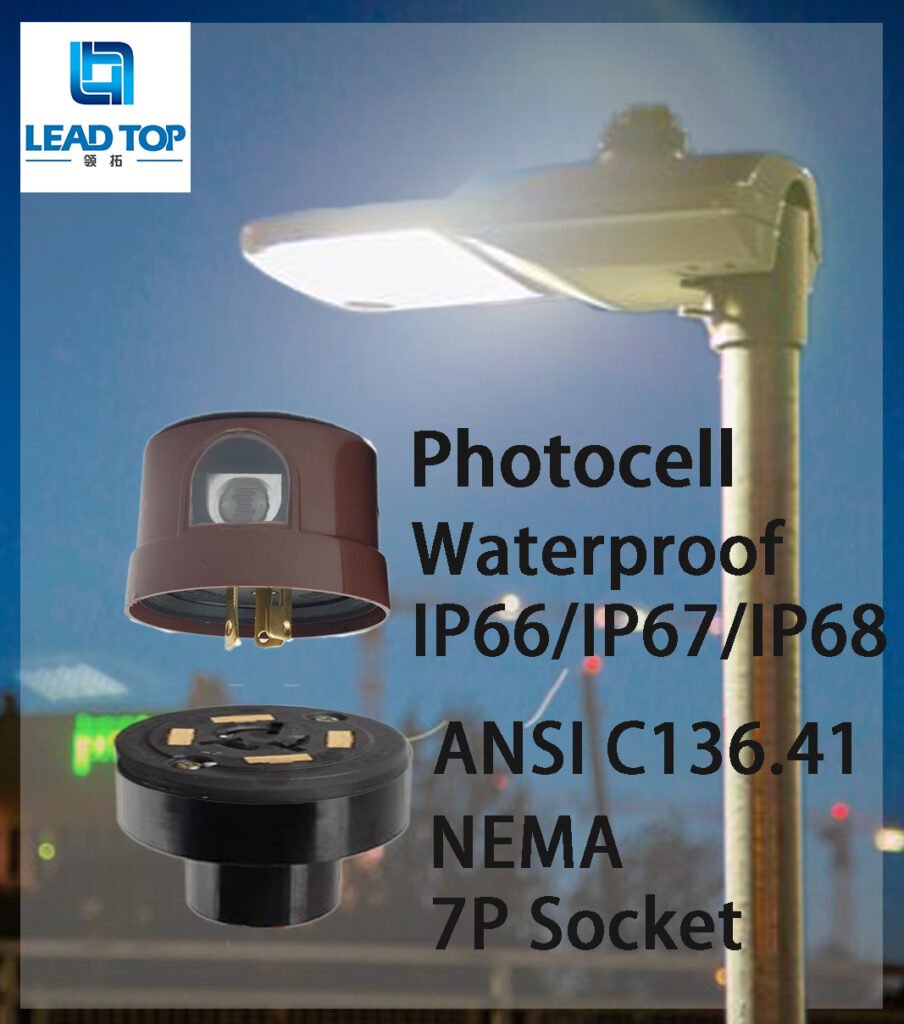
À medida que as cidades instalam infraestruturas de iluminação mais sofisticadas, as fotocélulas do modelo antigo deixam de ser adequadas.
Os principais requisitos técnicos incluem:
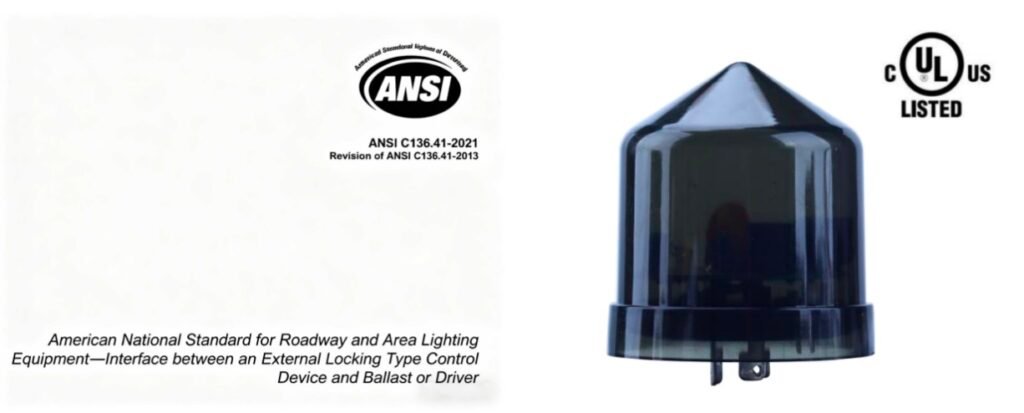
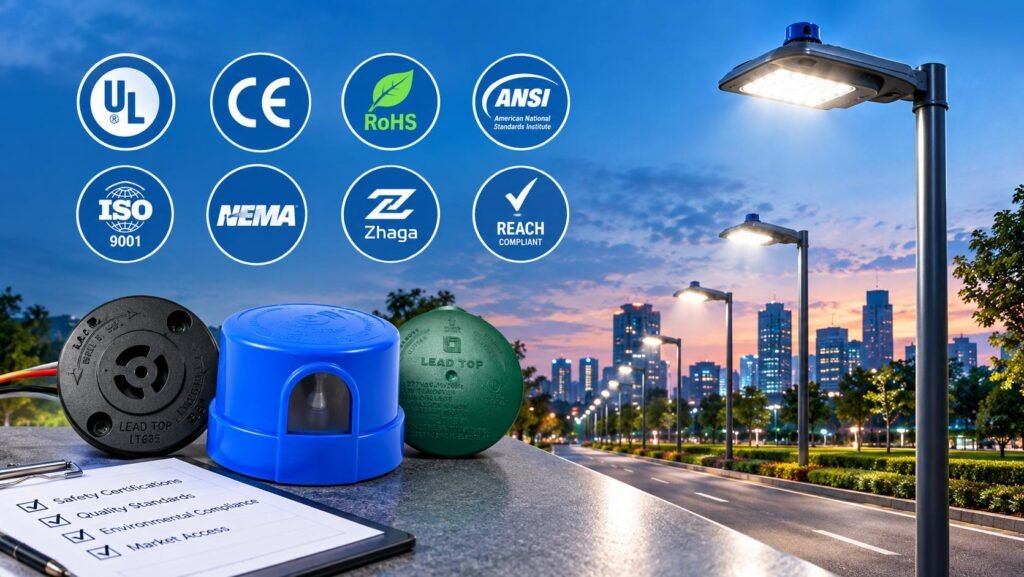
NEMA Compatibilidade com ANSI C136.41
O padrão NEMA para fotocélulas é amplamente utilizado em diversas aplicações de iluminação urbana inteligente, pois oferece suporte a:
- Instalação plug-and-play
- Interoperabilidade homogênea
- Compatibilidade com nós inteligentes
- Funções de dimerização e comunicação
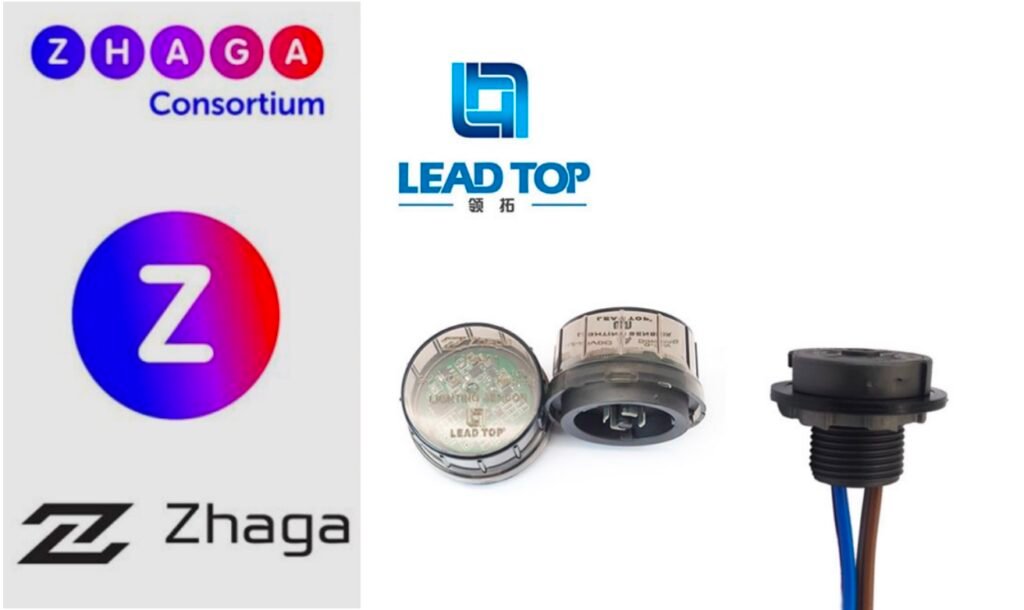
Zhaga Livro 18 Suporte de interface
Na Europa, o padrão de controlador Zhaga está rapidamente se tornando o preferido para luminárias inteligentes compactas e modulares.
O livro Zhaga 18 oferece:
- Área de interface reduzida
- Incorporação homogênea de nós inteligentes
- Compatibilidade com a IoT preparada para o futuro
- Estética das luminárias aprimorada
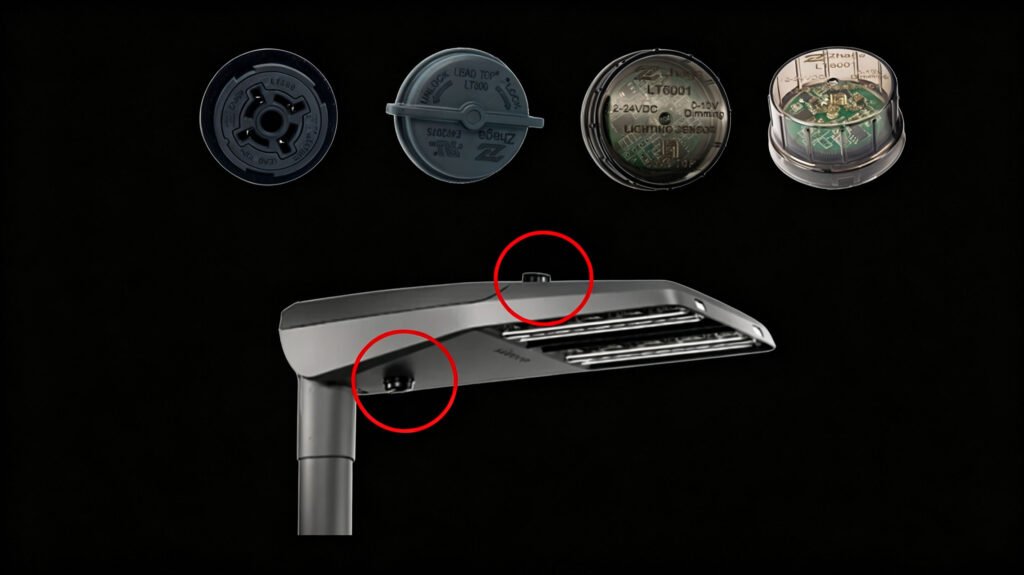
Proteção contra surtos
Sistemas externos necessitam de alta resistência a surtos devido a raios e redes elétricas desequilibradas.
Requisitos típicos de uma cidade inteligente:
- Defesa contra surtos de 10KV–20KV
- fortificação MOV
- Resistência à sobretensão
Longa vida
Expectativas clássicas:
- Ciclo de vida útil de mais de 10 anos
- Mais de 10.000 ciclos de comutação
- Requisitos nominais de manutenção
Como as fotocélulas estão evoluindo de sensores simples para nós inteligentes?
Os sistemas fotocélulas inteligentes contemporâneos funcionam agora como nós inteligentes dentro de infraestruturas conectadas.
Tabela de comparação da evolução
| Recurso | Fotocélula tradicional | Fotocélula inteligente moderna |
| Função | Ligar/Desligar | Nó inteligente multifuncional |
| Comunicação | Nenhum | Habilitado para conexão sem fio/IoT |
| Monitoramento | Nenhum | Relatórios de status em tempo real |
| Escurecimento | Não | Sim |
| Integração | Independente | Compatível com a plataforma de Cidade Inteligente |
| Coleta de dados | Nenhum | Dados ambientais/operacionais |
Essa evolução é importante porque os municípios contemporâneos utilizam cada vez mais a infraestrutura de postes inteligentes para combinar diversas tecnologias em um único ponto de instalação.
As fotocélulas agora ajudam a viabilizar:
- Iluminação sensível ao tráfego
- Ajuste de brilho baseado nas condições climáticas
- Iluminação de resposta a emergências
- Monitoramento de segurança pública
- Análise de otimização de energia
Quais soluções de fotocélulas são as melhores para projetos de cidades inteligentes como Gênova?
Para projetos de cidades inteligentes semelhantes à iniciativa de modernização de Gênova, os municípios exigem cada vez mais produtos avançados de fotocontrole que suportem redes inteligentes, controle de luminosidade e futuras atualizações de IoT.
Soluções de produtos recomendadas para cidades inteligentes
| Modelo | Tipo | Melhor aplicativo | Principais características |
| LT100 (0-10V e Dali) | Fotocontrolador de dimerização com trava giratória ANSI C136.41 | Iluminação pública inteligente | 0-10V / D ali Escurecimento noturno, proteção contra surtos |
| LT635-7PIN | Tomada ANSI rotativa | Implantação de postes inteligentes | Rotação de 360°, pronto para nó sem fio |
| LT6002 | Sensor Zhaga Book 18 | Luminárias compactas e inteligentes | Suporte DALI, Interface Modular |
Esses produtos estão em consonância com a crescente demanda europeia por:
- Aquiescência da cidade inteligente Zhaga na Europa
- Preparação para iluminação pública adaptativa
- Resistência duradoura ao ar livre
- Implantação flexível de IoT
Por que as normas NEMA e Zhaga são importantes na iluminação inteligente?
A perspectiva de iluminação inteligente provavelmente incluirá os padrões NEMA e Zhaga, dependendo do projeto e das tendências regionais.
Tabela de comparação de interfaces
| Padrão | Região Comum | Principal vantagem | Aplicação típica |
| NEMA (ANSI C136.41) | América do Norte / Municípios Globais | Vigoroso, estabelecido, intercambiável | Grandes projetos de iluminação pública/serviços públicos |
| Zhaga Livro 18 | Europa / Projetos Urbanos Inteligentes | Compacto, modular e pronto para tecnologia inteligente. | Luminárias LED contemporâneas / Postes urbanos inteligentes |
Como a iluminação adaptativa e orientada por dados moldará o futuro?
Os sistemas futuros serão adaptativos e preditivos.
As habilidades em desenvolvimento incluem:
Controle de iluminação baseado em IA
A inteligência artificial pode intensificar o brilho com base em:
- Densidade de tráfego
- Movimento de pedestres
- Situação climática
- Dados históricos de utilização
Iluminação sensível ao tráfego
A iluminação se altera dinamicamente de acordo com a presença de automóveis ou pedestres.
Os benefícios incluem:
- Mais economia de energia
- Segurança reforçada
- Poluição luminosa resumida
Monitoramento baseado em nuvem
Painéis de controle centralizados permitem que as cidades:
- Monitore cada luminária remotamente.
- Falhas de detecção imediatas
- Agende a manutenção preditiva.
- Analise os dados de desempenho a longo prazo.
Essas funções dependem fortemente de hardware inteligente de controle de iluminação IoT, tornando as fotocélulas mais cruciais do que nunca.
Perguntas frequentes
P1: Qual é o papel de uma fotocélula na iluminação pública inteligente?
Uma fotocélula funciona como um dispositivo de controle automático que gerencia quando os postes de iluminação pública ligam e desligam, com base nos níveis de luz ambiente.
P2: Por que as cidades estão atualizando seus sistemas de iluminação para sistemas inteligentes?
Os municípios estão a modernizar os seus sistemas de iluminação, principalmente para melhorar a eficiência, reduzir os custos de funcionamento e apoiar os objetivos abrangentes do desenvolvimento de cidades inteligentes.
P3: Quais são as normas importantes para as fotocélulas inteligentes?
Os dois padrões mais importantes para fotocélulas inteligentes contemporâneas são o NEMA (ANSI C136.41) e o Zhaga Book 18, pois definem as interfaces utilizadas para a incorporação do controle de iluminação inteligente.
Conclusão: Por que as fotocélulas estão se tornando a espinha dorsal das cidades inteligentes europeias?
A revolução da iluminação inteligente em Gênova exemplifica uma realidade abrangente em toda a Europa: a iluminação pública não se resume mais apenas à iluminação.
À medida que as metrópoles investem em sistemas de iluminação conectados, adaptáveis e orientados por dados, o papel da fotocélula está mudando de um simples sensor de crepúsculo para uma plataforma de fotocélula inteligente de missão crítica.
As cidades contemporâneas agora precisam de fotocélulas que suportem:
- Incorporação de iluminação urbana inteligente
- plataformas de controle de iluminação IoT
- estratégias adaptativas de iluminação pública
- Interoperabilidade entre o controlador Zhaga e a fotocélula NEMA
- Confiabilidade duradoura em ambientes externos exigentes.
Os fornecedores que conseguirem fornecer soluções de fotocontrole inteligentes, com proteção contra surtos e em conformidade com as normas estarão em melhor posição para apoiar a perspectiva de iluminação externa inteligente na Europa.



 English
 Portuguese (Brazil)
 Spanish
 Russian
 Dutch
Dutch Japanese
 Portuguese (Portugal)