Introdução
Municípios em todo o mundo investiram fortemente em iluminação pública LED para diminuir o consumo de energia e reduzir os custos de manutenção. Embora a tecnologia LED tenha proporcionado melhorias de eficiência impressionantes, as cidades estão agora entrando em uma segunda fase de modernização da iluminação: a iluminação adaptativa.
Ao contrário dos sistemas de iluminação pública tradicionais, que operam com brilho fixo durante toda a noite, a iluminação adaptativa ajusta automaticamente os níveis de luz de acordo com as condições reais, como densidade do tráfego, movimento de pedestres, condições climáticas e horário do dia. Essa mudança permite que as cidades otimizem o consumo de energia, mantendo a segurança pública e a eficiência operacional.
Hoje, os planejadores urbanos estão aceitando cada vez mais os sistemas inteligentes de iluminação pública, e o motivo dessa aceitação é a sua capacidade de reagir dinamicamente às variações do ambiente. Com o aumento contínuo dos preços da energia e o endurecimento das diretrizes de sustentabilidade, a iluminação adaptativa está se tornando rapidamente a abordagem preferida para as cidades modernas.

O que é iluminação adaptativa nas cidades modernas?
Iluminação adaptativa refere-se a um sistema de iluminação capaz de ajustar seu brilho com base em situações ecológicas e operacionais reais.
Os sistemas de iluminação tradicionais geralmente seguem um modelo simples de LIGADO/DESLIGADO. As luzes acendem ao pôr do sol e permanecem em potência máxima até o amanhecer. Embora essa abordagem ofereça iluminação confiável, muitas vezes desperdiça energia durante períodos de baixa atividade.
Um sistema adaptativo de iluminação pública introduz inteligência ao processo. Em vez de manter a intensidade máxima durante toda a noite, o sistema pode reduzir automaticamente a emissão de luz quando as ruas estão vazias e aumentá-la quando o movimento aumenta.
Por exemplo:
- Cruzamentos movimentados podem permanecer bem iluminados durante toda a noite.
- As ruas residenciais podem ficar com visibilidade reduzida após a meia-noite devido à diminuição do tráfego.
- As vias públicas podem ficar mais iluminadas quando pedestres são detectados.
- Os níveis de iluminação podem ser ajustados durante nevoeiro, chuva ou situações climáticas adversas.
Essa capacidade transforma a infraestrutura de iluminação, de um serviço público inativo, em um componente ativo da estratégia operacional de uma cidade.
Além disso, para permitir que as cidades gerenciem milhares de luminárias a partir de um local central, a iluminação adaptativa geralmente se integra a plataformas abrangentes de controle de iluminação para cidades inteligentes.
Por que as cidades estão abandonando a iluminação pública fixa?
Diversos fatores estão impulsionando a transição internacional dos sistemas de brilho fixo tradicionais.
Aumento dos custos de energia
Nos sistemas convencionais, as luzes geralmente permanecem com brilho máximo (100%), independentemente da demanda real. Isso resulta em um desperdício substancial de energia durante os horários de menor tráfego.
Os municípios podem reduzir o consumo de energia sem comprometer a visibilidade ou a segurança, implementando o controle dinâmico da iluminação.
Requisitos de sustentabilidade
Governos em diversas regiões da Europa e da América Latina introduziram metas ambiciosas de redução de carbono. Inúmeras cidades precisam melhorar a eficiência energética e diminuir suas emissões. gás de efeito estufa emissões.
A iluminação adaptativa apoia firmemente esses objetivos, minimizando o uso desnecessário de eletricidade e reduzindo o impacto ecológico geral.
Expectativas do público
As pessoas esperam cada vez mais que os municípios utilizem os recursos de forma eficiente. Os contribuintes desejam investimentos em infraestrutura que proporcionem benefícios mensuráveis e, ao mesmo tempo, reduzam as despesas operacionais.
A iluminação adaptativa ajuda as cidades a demonstrarem uma gestão energética responsável, mantendo ao mesmo tempo serviços públicos confiáveis.
Crescimento urbano
À medida que os municípios crescem, a gestão de redes de iluminação maiores torna-se mais complexa. As tecnologias de iluminação inteligente oferecem soluções escaláveis capazes de controlar milhares de luminárias com eficiência.
Que tecnologias tornam possível a iluminação adaptativa?
Diversas tecnologias trabalham em conjunto para criar sistemas de iluminação adaptativa eficientes.
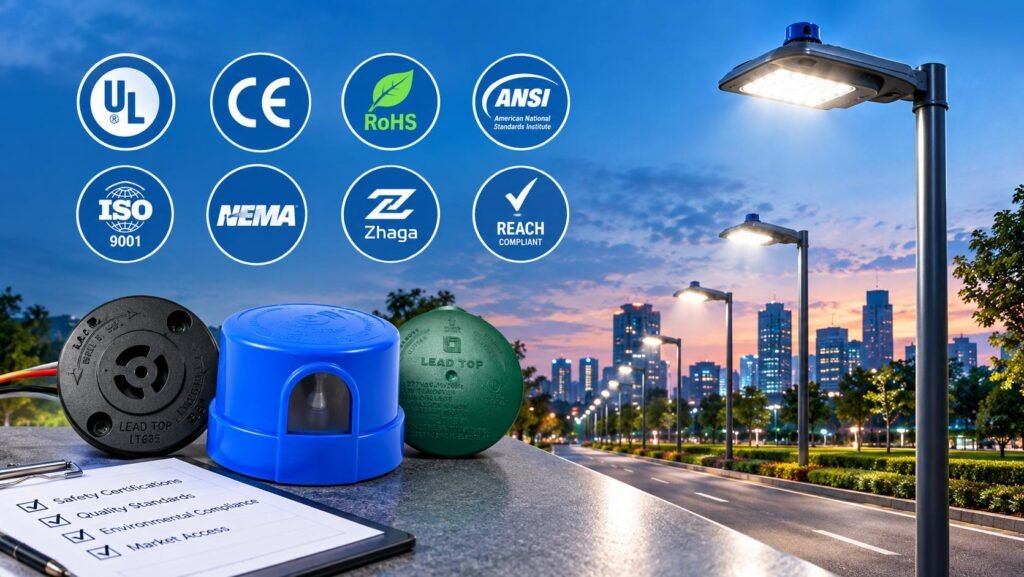
Um sistema inteligente de fotocélulas serve como a primeira camada de automação da iluminação.
Fotocélulas As fotocélulas detectam os níveis de luz ambiente e controlam o funcionamento da iluminação de forma robótica. Em vez de depender de interruptores físicos ou temporizadores, as fotocélulas garantem que as luzes sejam ativadas somente quando a luz natural estiver abaixo de limites predefinidos.
As fotocélulas contemporâneas oferecem:
- Operação precisa do anoitecer ao amanhecer
- Maior confiabilidade
- Resumido desperdício de energia
- Melhoria da eficiência operacional
DALI e dimerização 0–10V
Os sistemas de controle DALI (Digital Addressable Lighting Interface) e 0-10V permitem o ajuste contínuo da iluminação, em vez da simples operação liga/desliga.
Essas tecnologias permitem que as cidades:
- Diminua a iluminação durante períodos de baixa demanda.
- Crie programações de iluminação personalizadas.
- Aprimorar a eficiência energética
- Prolongar o ciclo de vida do acessório
Sensores de movimento e tráfego
Sensores de movimento e sensores de monitoramento de tráfego permitem que os sistemas de iluminação respondam à atividade real.
Por exemplo:
- A iluminação aumenta quando os automóveis se aproximam.
- As vias para pedestres são iluminadas quando detectam movimento.
- As áreas de estacionamento ajustam os níveis de iluminação de acordo com a ocupação.
Conectividade IoT
Os sistemas contemporâneos de controle de iluminação pública em LED dependem cada vez mais da conectividade da Internet das Coisas (IoT).
As redes de iluminação habilitadas para IoT oferecem:
- Monitoramento remoto
- Diagnóstico real
- Coleta de dados
- Manutenção preditiva
- Controle central
Consequentemente, a infraestrutura de iluminação torna-se um componente essencial de ambientes urbanos inteligentes de amplo alcance.
Como os projetos de iluminação inteligente do México estão demonstrando os benefícios da iluminação adaptativa?
O México se consolidou como um importante exemplo de como a iluminação adaptativa está transformando a infraestrutura metropolitana.
Um desenvolvimento notável inclui instalações de iluminação conectadas em larga escala, que interligaram mais de 18.000 pontos de iluminação em sistemas de gerenciamento central.
Esses projetos demonstram uma mudança crucial no setor:
A economia de energia não se resume mais à substituição de lâmpadas antigas por LEDs. Em vez disso, as cidades estão priorizando a otimização sistêmica por meio de tecnologias inteligentes de controle de iluminação urbana.
Os principais benefícios observados incluem:
- Consumo de eletricidade reduzido
- Melhor eficiência em manutenção
- Detecção de falhas mais rápida
- Gestão de ativos aprimorada
- Maior segurança pública
Essa evolução demonstra que a infraestrutura de iluminação está funcionando progressivamente como uma plataforma operacional orientada por dados, em vez de um simples sistema de iluminação.
Qual solução é recomendada para sistemas de iluminação adaptativa?
Solução recomendada: Conector LT600 Zhaga + Controlador DALI LT6002

Essa mistura foi especialmente desenvolvida para suportar aplicações de iluminação adaptativa de última geração.
| Recurso | Beneficiar |
| Conformidade com o Livro 18 de Zhaga | Interface de iluminação inteligente padronizada |
| Integração DALI | Controle e regulagem de intensidade avançados |
| Design modular | Atualizações e manutenção fáceis |
| Compatibilidade com IoT | Integração futura de cidades inteligentes |
| Proteção externa | Operação confiável em ambientes hostis |
Principais vantagens
- Suporta controle dinâmico de iluminação
- Permite funções de escurecimento inteligente
- Simplifica a manutenção e os avanços.
- Suporta gerenciamento remoto
- Compatível com as futuras disposições de cidades inteligentes.
Em que situações os fotocontroles tradicionais ainda desempenham um papel importante?
Apesar do rápido crescimento dos sistemas adaptativos, as tecnologias de fotocontrole tradicionais continuam sendo muito aplicáveis.
Diversos municípios continuam a operar redes de iluminação híbridas que combinam LEDs com controle convencional baseado em fotocélulas.
Inúmeras razões explicam essa aceitação contínua:
Sensibilidade ao custo
Nem todas as cidades têm o orçamento necessário para a implementação completa de uma cidade inteligente.
Os sistemas básicos de fotocélulas oferecem:
- Automação confiável
- Baixo custo de instalação
- Requisitos de manutenção insignificantes
Transição gradual da infraestrutura
Diversos municípios preferem atualizações faseadas em vez da substituição completa do sistema.
Uma estratégia comum envolve:
- Instalação de luminárias LED.
- Adicionando mecanização às fotocélulas.
- A capacidade de ajustar a intensidade da luz será introduzida posteriormente.
- Rumo à plena integração das cidades inteligentes.
Confiabilidade comprovada
As fotocélulas possuem anos de desempenho comprovado em campo e continuam a proporcionar operação confiável do anoitecer ao amanhecer.
Quais são os principais benefícios da iluminação adaptativa em comparação com os sistemas tradicionais?
Tabela 1: Iluminação tradicional vs. Iluminação adaptativa
| Recurso | Iluminação tradicional | Iluminação Adaptativa |
| Operação | Brilho fixo | Ajuste dinâmico de brilho |
| Eficiência Energética | Moderado | Muito alto |
| Manutenção | Monitoramento manual | Monitoramento remoto |
| Capacidade de escurecimento | Limitado | Avançado |
| Integração de IoT | Cru | Comum |
| Flexibilidade Operacional | Baixo | Alto |
| Coleta de dados | Nenhum | Extenso |
| Compatibilidade com Cidades Inteligentes | Limitado | Excelente |
Conclusão
A perspectiva para a iluminação urbana reside no controle inteligente, e não na simples iluminação. Embora a tecnologia LED tenha trazido a primeira onda de economia de energia, a iluminação adaptativa está impulsionando a próxima geração de melhorias de eficiência.
Os municípios podem criar redes de iluminação mais receptivas, sustentáveis e econômicas simplesmente integrando sistemas inteligentes de fotocélulas, controles baseados em DALI, conectividade IoT e monitoramento inteligente.
A iluminação adaptativa está se tornando rapidamente o novo padrão global para o desenvolvimento urbano inteligente e energeticamente eficiente, à medida que as cidades continuam modernizando sua infraestrutura.
CTA
Para projetos de iluminação inteligente e controle adaptativo, a Lead-Top oferece soluções OEM escaláveis que se conectam em cadeia. Zhaga, A Lead-Top oferece soluções personalizadas para o seu próximo projeto de iluminação municipal, utilizando tecnologias como DALI e fotocontrole, para auxiliar municípios na transição de infraestrutura básica de LED para sistemas de iluminação totalmente inteligentes. Entre em contato com a Lead-Top para explorar soluções sob medida para o seu próximo projeto de iluminação pública.
Referências:
- https://en.wikipedia.org/wiki/Greenhouse_gas
- https://leaditop.com/twist-lock-photocontrollers/
- https://leaditop.com/product/customizable-upgraded-models-highly-waterproof-zhaga-socket-lt600/
- https://leaditop.com/product/zhaga-socket-connected-dali-2-0-protocol-and-0-10v-dimming-control-luminaire-lighting-2/
- https://en.wikipedia.org/wiki/Zhaga_Consortium




 Portuguese (Brazil)
  English
  Spanish
  Russian
  Dutch
Dutch  Japanese
  Portuguese (Portugal)