Introdução
Os parques públicos deveriam ser locais onde as famílias se reúnem após o pôr do sol e os bairros se sentem seguros depois de escurecer. Mas quando a infraestrutura de iluminação pública envelhece, essa segurança desaparece rapidamente.
Foi isso que aconteceu em Joinville. A cidade realizou um dos projetos de iluminação municipal mais notáveis dos últimos tempos. As equipes instalaram 196 luminárias de LED, adicionaram 67 novos pontos de iluminação e ergueram 54 novos postes em toda a rede de parques da cidade.
Não se tratava de uma simples troca de lâmpadas. Anos de furto de cabos haviam danificado a rede. Os equipamentos antigos estavam desgastados. O projeto exigia a reconstrução do sistema, e não apenas a substituição de lâmpadas.
A verdadeira lição de Joinville não se resume à tecnologia LED. Trata-se de encarar a modernização da iluminação de um parque como um projeto de infraestrutura. A seguir, analisamos os problemas enfrentados por Joinville. Examinamos por que os controles de iluminação são tão importantes quanto o próprio chip de LED. E destacamos as principais lições que qualquer cidade pode aplicar em seu próximo projeto de iluminação de parque público.
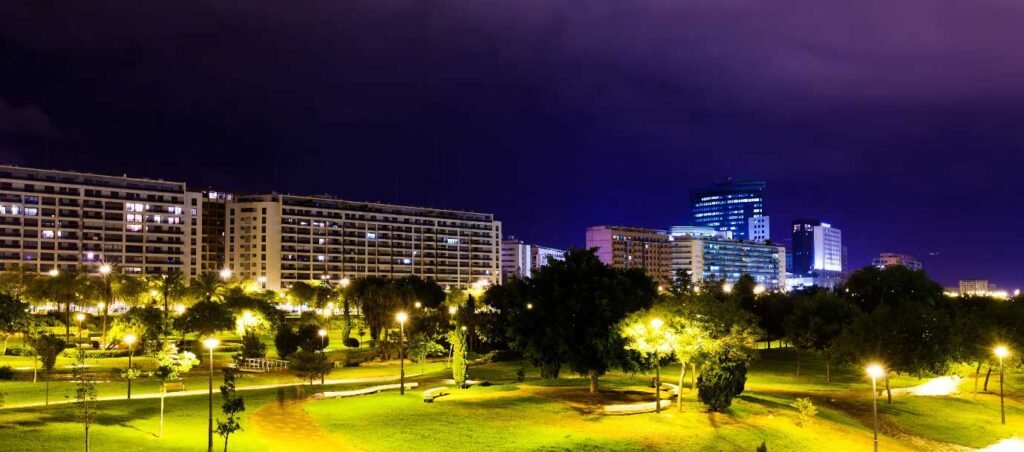
1. O Desafio: Infraestrutura Envelhecida e Segurança Noturna Insuficiente
Muitos parques públicos sofrem com sistemas de iluminação obsoletos, redes elétricas danificadas e iluminação insuficiente. Os cabos se deterioram. Os fotocélulas param de funcionar corretamente. Algumas permanecem acesas durante o dia, desperdiçando energia. Outras desligam à noite, deixando os caminhos escuros.
Joinville tinha um problema adicional: roubo de cabos e infraestrutura deteriorada. Os ladrões visam a fiação de cobre dentro dos sistemas de iluminação. Um único roubo pode interromper um circuito inteiro. Isso significa que uma seção inteira de um parque pode ficar às escuras por semanas enquanto os reparos são agendados e financiados.
Adicione postes desgastados e pontos de conexão defeituosos, e você terá uma rede de iluminação pública em parques na qual ninguém pode confiar. Os visitantes deixam de confiar no espaço após o pôr do sol. A iluminação precária também reduz a vigilância natural. Isso pode levar a mais vandalismo, o que, por sua vez, causa mais danos.
A equipe de Joinville enxergou esse ciclo com clareza. Uma solução parcial não o interromperia. A reforma precisava substituir postes, fiação e sistemas de controle, não apenas as fontes de luz.
2. Por que os projetos de iluminação de parques exigem mais do que apenas luminárias de LED?
A simples substituição das luminárias não resolve problemas de manutenção a longo prazo. É fácil pensar na modernização da iluminação como a troca de luminárias antigas por novas de LED. Os LEDs realmente trazem benefícios, pois consomem menos energia e oferecem melhor qualidade de luz do que as antigas lâmpadas de sódio e vapor de mercúrio.
Mas Joinville demonstra algo importante. Uma fotocélula de LED e o sistema de controle ao seu redor são tão importantes quanto a própria luminária.
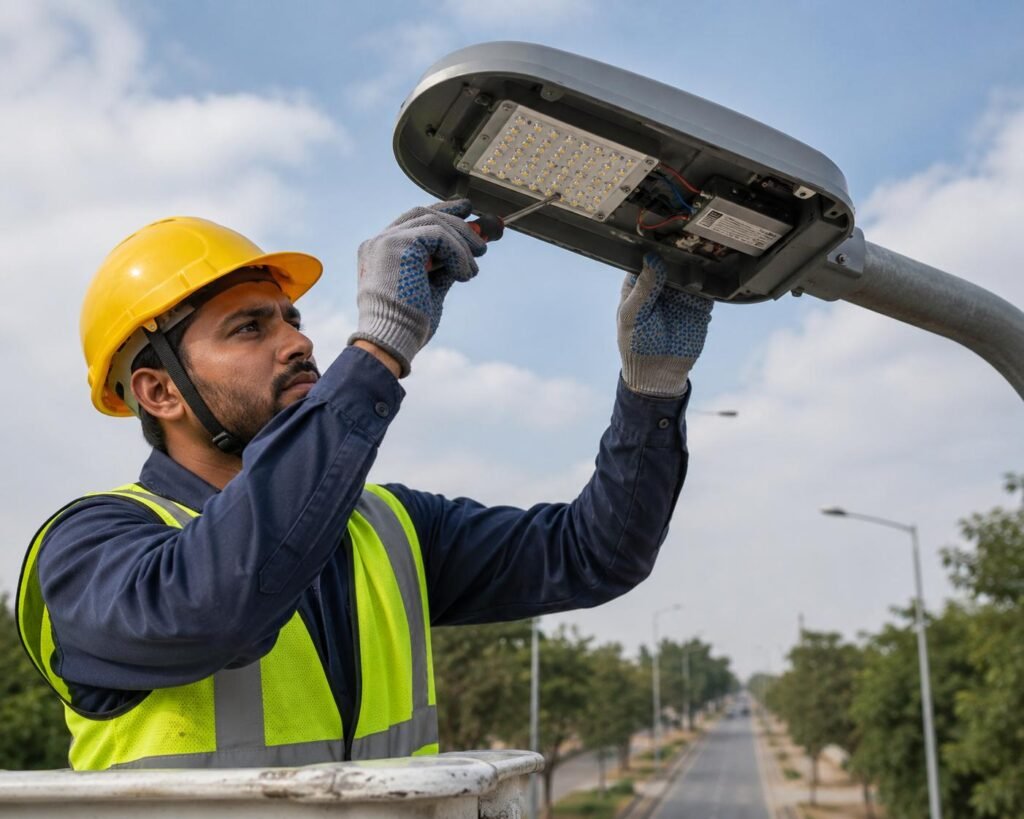
Eis o porquê. Um Luminária LED A eficácia de uma luminária depende diretamente do sistema que a controla. Se o fotocontrolador falhar, as novas luminárias perdem rapidamente grande parte de sua utilidade. Lâmpadas que permanecem acesas o dia todo têm sua vida útil reduzida. Lâmpadas que não acendem ao anoitecer representam exatamente o problema de segurança que o projeto visava solucionar.
Uma boa modernização da iluminação de um parque deve se basear em três pilares principais: controles de iluminação confiáveis, componentes elétricos duráveis e uma infraestrutura adequada. Todos esses elementos devem ser projetados para suportar condições climáticas adversas.
- Componentes elétricos projetados para suportar exposição ao ar livre e variações de temperatura por anos.
- Um confiável do anoitecer ao amanhecer Fotocontrolador que liga e desliga as luzes sem intervenção manual.
- Postes, fiação e acessórios de montagem construídos para resistir ao desgaste, adulteração e roubo.
Cidades que planejam projetos semelhantes devem escolher a fotocélula LED e o hardware de controle adequados desde o início. Tratar isso como uma reflexão tardia é o que leva os sistemas a voltarem a apresentar defeitos em poucos anos.
Produtos Lead-Top recomendados
Duas opções de fotocontrole se encaixam bem em parques municipais como o de Joinville.

| Produto | Melhor para | Benefício principal |
| Fotocontrolador LT134 de longa duração com trava giratória | Parques que necessitam de baixa manutenção | Projetado para uso externo de longo prazo com menos necessidade de substituições. |
| Fotocontrolador eletrônico padrão LT124 | Controle geral do anoitecer ao amanhecer em espaços públicos | Comutação estável e consistente para circuitos de estacionamento padrão. |
Um sistema de fotocontrole adequado, do anoitecer ao amanhecer, projetado para uso municipal externo em vez de uso residencial, reduz as falhas que afetavam o antigo sistema de Joinville.

3. Lições importantes para futuros projetos de iluminação de parques municipais
A renovação de Joinville oferece a outras cidades um guia prático para futuros projetos de iluminação de parques. Isso inclui aspectos como resiliência da infraestrutura, planejamento de manutenção, eficiência energética e seleção de soluções confiáveis de fotocontrole para maximizar o desempenho dos sistemas de iluminação LED.
Considere a modernização como um projeto de infraestrutura, não apenas como uma simples troca de luminárias. Os maiores ganhos vieram da substituição dos postes e da fiação, e não apenas dos LEDs.
Projete contra roubo. O roubo de cabos prejudicou seriamente o sistema antigo. Futuros projetos de iluminação pública devem utilizar conduítes protegidos, fixação segura e circuitos que limitem os danos causados por uma única falha.
Não dispense o fotocontrolador. Uma boa fotocélula de LED mantém o sistema funcionando de forma eficiente sem a necessidade de verificação diária.
Planeje a manutenção desde o início. Componentes de longa duração, como fotocélulas com trava giratória, reduzem as chamadas de reparo posteriormente.
Não se limite à economia de energia. A eficiência é importante, mas a segurança dos visitantes, o uso do parque à noite e a redução de problemas de manutenção são igualmente importantes.
A renovação de 196 luminárias em Joinville demonstra o que funciona. A moderna tecnologia LED, aliada a uma infraestrutura robusta e controles confiáveis, supera qualquer uma delas isoladamente.
Perguntas frequentes
Quantas luminárias foram instaladas na reforma de Joinville?
O projeto adicionou 196 luminárias LED, 67 novos pontos de iluminação e 54 novos postes. O foco do projeto não foi apenas a melhoria da eficiência energética, mas também o restabelecimento da segurança.
Por que o antigo sistema de iluminação falhou?
Cabos antigos, equipamentos desgastados e repetidos roubos de cabos deixaram grandes partes da rede do parque instáveis ou completamente sem energia.
A simples troca por luminárias LED é suficiente?
Geralmente não. A confiabilidade a longo prazo exige postes robustos, fiação sólida e um fotocontrolador confiável que ligue e desligue ao anoitecer, e não apenas lâmpadas novas.
O que uma cidade deve procurar em um sistema de fotocontrole para iluminação de parques?
Procure componentes resistentes às intempéries e de longa duração, como fotocélulas com trava giratória ou fotocélulas eletrônicas padrão, projetadas para uso contínuo em áreas urbanas.
Como um fotocontrole do anoitecer ao amanhecer Precisa de ajuda com o consumo de energia?
Ele liga as luzes ao anoitecer e desliga ao amanhecer automaticamente. Isso evita o desperdício de energia durante o dia e mantém a iluminação constante à noite.
CTA
Planejando modernizar a iluminação de parques da sua cidade com LED? Uma iluminação externa confiável em LED começa com controladores robustos. Confira as opções de fotocélulas da Lead-Top, incluindo os modelos LT134 e LT124, projetados para oferecer desempenho de longa duração em iluminação de parques.
Referências:

 Portuguese (Brazil)
  English
  Spanish
  Russian
  Dutch
Dutch  Japanese
  Portuguese (Portugal)