This is one of the most regularly asked technical questions in outdoor illumination projects:
Can you adjust photo control after installation?
The short answer is: it depends completely on the structural design of the device.
Whether post-installation controle de fotos adjustment is probable is not determined by the electrical circuit—but by the mechanical structure. Understanding this difference is vital for installers, engineers, and procurement squads assessing long-lasted flexibility.
In this article, we inspect the difference between fixed and flexible designs, when adjustment is useful, what it can and cannot solve, and how products such as the Série LT210CH support practical field alignment.
Why Does Structural Design Determine Post-Installation Adjustability?
A photo control works by reacting to the light that reaches its sensor. The sensor’s orientation determines its exposure. If the structure locks the sensor in a fixed direction, its behavior is permanently tied to that installation angle.
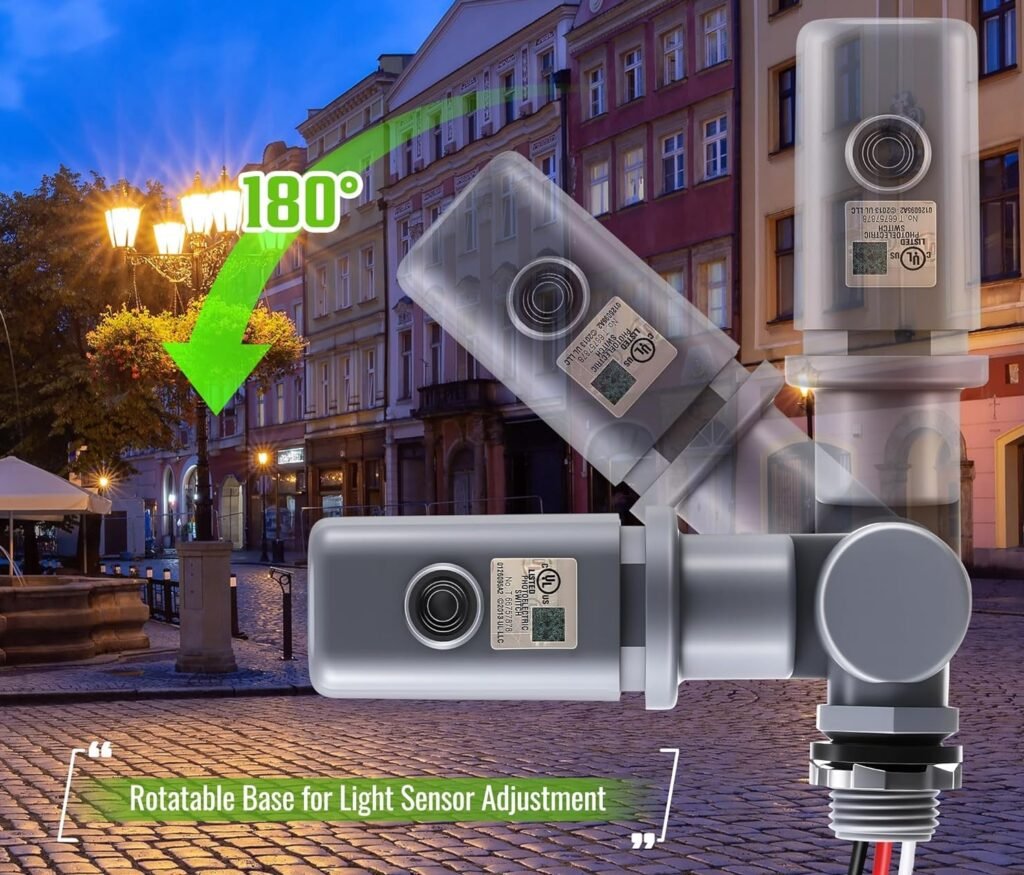
If the structure permits controlled rotation—such as in a swivel stem photo control—then orientation can be enhanced even after installation.
In other words:
- Electrical sensitivity controls how the device reacts.
- Structural orientation controls what the device sees.
Only the second factor can be rectified mechanically after installation.
This is why the capability to adjust photo control after installation is a design feature—not a configuration setting.
What Happens With Fixed-Direction Photo Controls?
Are Fixed Photo Controls Adjustable After Installation?
Most old-fashioned photo controls use fixed-direction housings. Once fixed and wired, the sensor’s orientation cannot be changed devoid of removing the device.
If switching problems appear—for example:
- Early turn-on
- Postponed shutoff
- Erratic timing across fixtures
The available choices are restricted:
- Reinstall the unit
- Change the mounting angle
- Add external sheltering
- Reposition the device
These actions need extra labor and often site distraction. For large projects, this can considerably increase functioning costs.
With fixed designs, true post-installation photo control adjustment is generally not possible without physical reinstallation.
How Do Adjustable Outdoor Photo Sensors Solve This Limitation?
What Makes an Adjustable Outdoor Photo Sensor Different?
An adjustable outdoor photo sensor integrates a structural mechanism that permits directional alignment after installation.
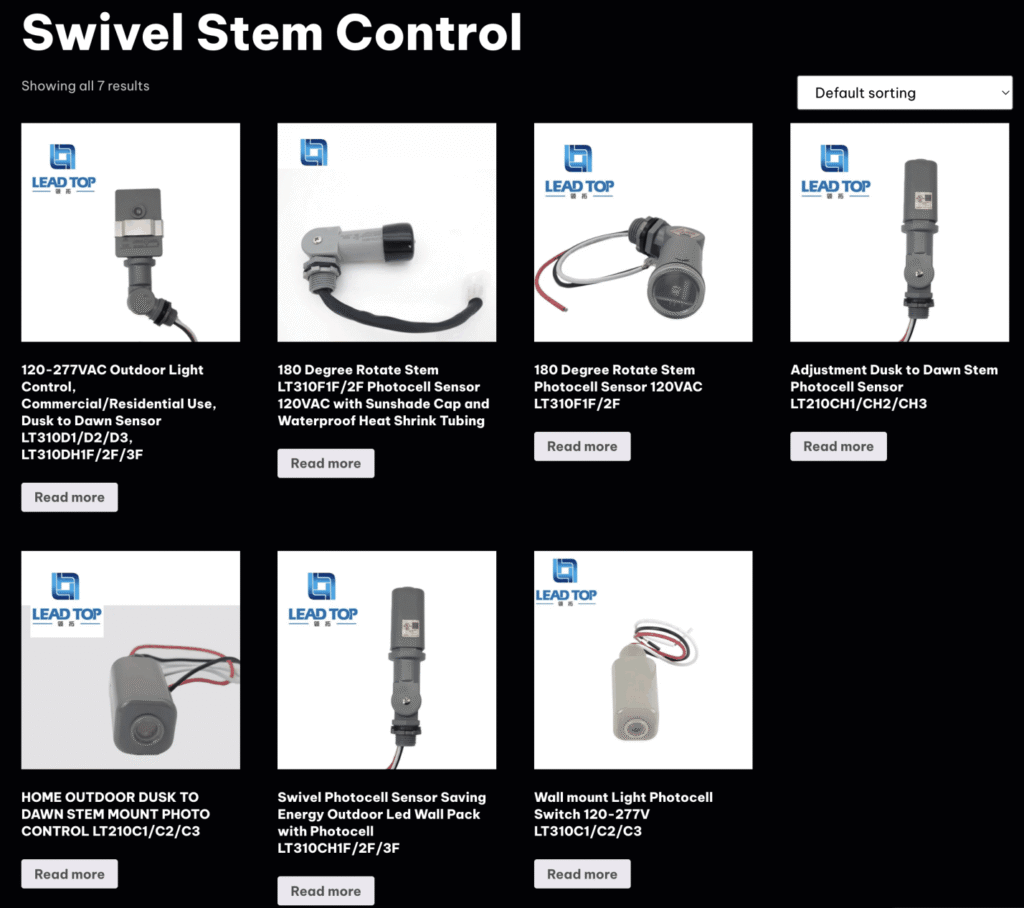
In a swivel stem photo control, for example:
- The mounting base remains fixed
- Wiring remains untouched
- Only the sensor body revolves
This allows installers to:
- Complete mounting and wiring
- Energize the system
- Observe real switching behavior
- Perform post-installation photo control adjustment without exclusion
The distinction is applied and important. Rather than resuming the installation process, the engineer simply re-optimizes exposure.
How Does Swivel Stem Photo Control Enable Adjustment?
What Is a Swivel Stem Photo Control?
UM fotocontrole de haste giratória incorporates controlled orientation movement directly into the housing structure. This movement is intended for installation and comissionamento—not constant operation.
The mechanism permits:
- Fine directional regulation
- Steady positioning after rotation
- Sealed enclosure fortification
- No disturbance of internal wiring
Dissimilar to improvised solutions like adding protections or relocating brackets, the swivel structure is made to maintain mechanical reliability.
Products like the LT210CH series use swivel wire-in thermal type photo control designs specially to support safe and dependable post-installation photo control adjustment.
When Is It Most Useful to Adjust Photo Control After Installation?
What Field Conditions Make Post-Installation Adjustment Necessary?
The need to adjust photo control after installation typically rises when ecological settings differ from initial anticipations.
Common situations comprise:
- Neighboring luminaires impelling the sensor
- Reflective building surfaces generating brightness
- Installation adjacent to lightened signage
- Seasonal greenery changes changing sky exposure
- Erratic switching amongst similar fixtures
In such cases, the problem is not electrical sensitivity—it is exposure.
Post-installation photo control adjustment rectifies what the sensor sees, reinstating planned switching behavior devoid of electrical alteration.
What Does Post-Installation Adjustment NOT Do?
Can Adjustment Fix Electrical or Sensitivity Problems?
It is essential to explain what adjustment cannot achieve.
Adjustment:
- Doesn’t change internal sensitivity
- Doesn’t recalibrate switching thresholds
- Doesn’t repair wiring problems
- Doesn’t rectify power supply complications
This difference is critical when assessing whether to adjust photo control after installation or initiate technical troubleshooting.
How Much Adjustment Is Typically Required?
Are Large Rotations Necessary?
In most field conditions, only slight rotation is required.
Small orientation changes can considerably modify light exposure. Large relocation is hardly required.
Best practice for post-installation photo control adjustment comprises:
- Make one small alteration
- Note at least one full evening or dawning cycle
- Evade quick recurrent changes
- Document alignment in large-scale projects
How Do Fixed and Adjustable Designs Compare?
| Recurso | Controle fotográfico de direção fixa | Adjustable Outdoor Photo Sensor |
| Can adjust photo control after installation? | Não | Sim |
| Reinstallation required for correction | Often | Não |
| Wiring disturbed during correction | Sim | Não |
| Flexibilidade de comissionamento | Limitado | Alto |
| Adaptability to environmental change | Baixo | Alto |
| Lifecycle correction cost | Mais alto | Mais baixo |
What Are the Practical Advantages of Swivel Stem Structures?
| Vantagem | Impacto prático |
| Controlled rotation mechanism | Fine exposure tuning |
| No need for disassembly | Reduced labor |
| Wiring remains sealed | Maintains safety |
| Adjustment during commissioning | Improved installation accuracy |
| Corrective realignment over time | Extended functional lifespan |
| Reduced need for shielding accessories | Cleaner installation |
How Does the LT210CH Series Support Post-Installation Adjustment?
Why Is the LT210CH Series Designed for Adjustability?
O Série LT210CH incorporates swivel stem functionality into the housing itself. The mechanism is not an add-on feature but a structural component of the enclosure.
This design guarantees:
- Sealed enclosure reliability
- Steady orientation after rotation
- Safe post-installation photo control adjustment
- No give and take to electrical safety
What Is the Final Answer?
É possível ajustar o controle de fotos após a instalação?
The answer depends on the design.
- Fixed-direction photo controls usually cannot be attuned without reinstallation.
- Adjustable outdoor photo sensors, specifically those using swivel stem photo control structures, permit safe and effective post-installation photo control adjustment.
- Products like the LT210CH series are specially made for this purpose.
What Is Lead-Top’s Customer Guidance?
At Lead-Top, Swivel Stem Control is established to support actual installation workflows. By allowing engineers to adjust photo control after installation devoid of rewiring or disassembly, projects can resolve common switching problems rapidly and proficiently.
The design thinking behind the LT210CH series focuses on:
- Structural flexibility
- Long-lasted steadiness
- Sealed defense
- Abridged rework
In contemporary outdoor illumination systems, the capability to perform post-installation photo control adjustment is no more a luxury feature—it is everyday requirement for upholding precision and minimalizing lifespan cost.
When structure permits flexibility, performance can be reestablished without interruption.
And that makes all the difference.


 Portuguese (Brazil)
  English
  Spanish
  Russian
  Dutch
Dutch  Japanese
  Portuguese (Portugal)