Como modernizar toda a rede de iluminação de uma cidade? Substituir as luminárias é apenas o primeiro passo. No entanto, Ponta Grossa, no Brasil, está realizando esse desafio com sucesso. Aqui estão os principais pontos do projeto de modernização de 47.500 pontos de iluminação:
- 38.000 luminárias LED já foram instaladas.
- 80% da iluminação da cidade é LED.
- As 9.500 luzes restantes serão instaladas até o final de 2026.
Mas será que substituir as luminárias antigas é suficiente? Não, quando milhares de luzes precisam funcionar de forma confiável todas as noites. Fotocontroles, A qualidade dos receptáculos, o desempenho de comutação e a manutenção também se tornam cruciais. Os componentes de controle adequados podem ajudar os municípios a manter grandes redes de LED eficientes, confiáveis e fáceis de manter. A modernização de Ponta Grossa oferece um exemplo útil do porquê. fotocélula do sensor de luz A seleção merece atenção desde o início.

Por que as cidades brasileiras estão acelerando a modernização da iluminação pública com lâmpadas de LED?
O principal fator é a eficiência. O moderno sensor de luzLEDs baseados em - podem:
- Reduzir o consumo de eletricidade
- Ajude a construir um futuro verde.
- Custos de iluminação mais baixos
- Melhorar a visibilidade em áreas urbanas.
Para o Ministério de Minas e Energia do Brasil, a iluminação pública é uma área fundamental onde os resultados em termos de conservação de energia poderiam ser exemplares.
O investimento também está se expandindo. Em 2025, A Procel Reluz anunciou mais de R$ 1.000.000,00 (cento e cinquenta mil reais). para a modernização da iluminação pública com LED em municípios das cinco regiões do Brasil. Mais de 104.000 pontos de iluminação já haviam sido incluídos em projetos anteriores da Procel.
Para os municípios, o objetivo não é mais apenas substituir lâmpadas. Trata-se de construir redes de iluminação mais eficientes, confiáveis e gerenciáveis.
| Desafio Municipal | Consequências | Resposta à Modernização de LEDs |
| Alto consumo de eletricidade | Custos operacionais mais elevados | Luminárias LED mais eficientes |
| Equipamentos de iluminação antigos | Falhas frequentes | Infraestrutura LED moderna |
| Necessidades crescentes de manutenção | Mais visitas de serviço | Componentes de maior durabilidade |
| Iluminação irregular ou desatualizada | Visibilidade noturna reduzida | Distribuição de luz aprimorada |
| Pressão sobre os orçamentos municipais | Investimento limitado em infraestrutura | Economia de energia e manutenção |
| Crescentes exigências tecnológicas | Atualizações futuras difíceis | Sistemas padronizados e prontos para tecnologia inteligente |
O que torna uma extensa modernização para LED mais complicada do que a simples substituição de luminárias?
Substituir milhares de luminárias é suficiente para concluir uma modernização para LED? Não exatamente.
Uma rede de iluminação pública também depende dos componentes que controlam e protegem cada ponto de iluminação. No Brasil, INMETRO As diretrizes tratam a modernização de LEDs como um processo mais amplo, que abrange desde o projeto até a execução.
Em larga escala, problemas em componentes pequenos podem se tornar grandes problemas de manutenção. Os engenheiros devem avaliar:
- Controle de iluminação compatibilidade com o driver de LED
- Desempenho de comutação para operação repetida em ambientes externos
- Padronização dos receptáculos para facilitar a substituição.
- Durabilidade ambiental para instalações expostas
- Acesso para manutenção em milhares de pontos de iluminação.
Interfaces padronizadas também são importantes. ANSI A norma C136.10 define a intercambialidade física e elétrica entre fotocontroladores do tipo com trava e receptáculos correspondentes.
Por isso, uma modernização bem-sucedida deve ser projetada como um sistema de iluminação completo, e não simplesmente como um programa de substituição de luminárias.
Como tornar confiável Tomadas de fotocontrole Melhorar os projetos de iluminação LED municipais?
Em sua forma mais básica, um interruptor de fotocélula Detecta a luz ambiente e aciona a luminária de acordo. Em uma grande rede municipal, essa função simples deve operar de forma consistente em milhares de pontos de iluminação. A norma ANSI C136.10-2023 abrange a intercambialidade física e elétrica, bem como os testes de fotocélulas com trava e seus respectivos receptáculos.
Um sistema de fotocontrole confiável ajuda os municípios a evitar horas de funcionamento desnecessárias e a reduzir a intervenção manual. Seu desempenho também influencia as necessidades de manutenção. Os testes ANSI incluem ciclos de comutação repetidos e testes de carga eletrônica, o que é particularmente relevante para sistemas de LED.
O que os municípios devem observar?
- Sensores de luz precisos para operação confiável do anoitecer ao amanhecer.
- Comutação compatível com LED para cargas eletrônicas
- Proteção contra surtos para ambientes elétricos externos
- Conexões padronizadas para substituição mais rápida
- Longa vida útil para reduzir as visitas de manutenção.
Para uma rede do tamanho da de Ponta Grossa, a confiabilidade em cada ponto de iluminação pode afetar diretamente o custo e o desempenho geral do sistema de iluminação municipal.
Qual Interruptor do fotossensor A combinação de tomada e soquete é adequada para grandes reformas de LED no Brasil?
Para uma modernização padrão de iluminação pública com LED, um fotocontrolador com trava giratória A combinação com um receptáculo padronizado é uma abordagem prática. O Lead-Top posiciona o LT134 como um fotocontrolador de trava giratória com proteção contra surtos e o LT605 como um receptáculo ANSI C136.41 para aplicações de iluminação externa.
Essa combinação funciona para modernizações de iluminação LED em áreas municipais.
A combinação permite o controle automático do anoitecer ao amanhecer, mantendo o ponto de controle acessível para substituição. LT605 Oferece uma interface padronizada com três contatos de alimentação e contatos adicionais para controle de intensidade/sinal.
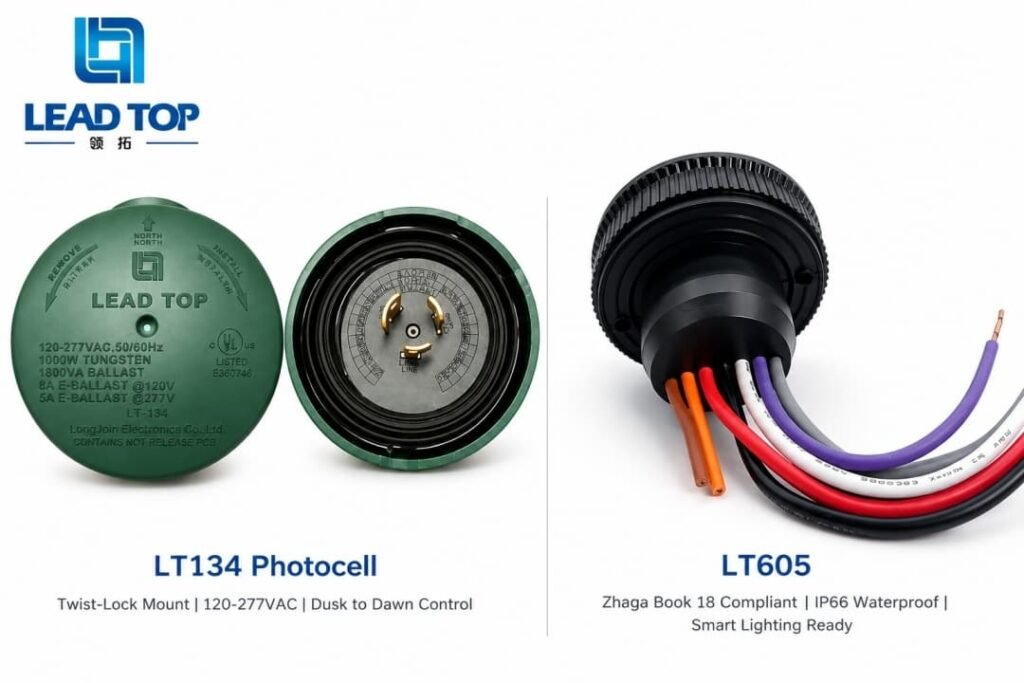
Os principais benefícios incluem:
- Instalação com sistema de encaixe por torção para substituição simples em campo.
- Interface ANSI C136.41 para conexões de controle padronizadas
- Proteção contra surtos através do LT134
- Compatibilidade de iluminação LED para aplicações rodoviárias
- Manutenção simplificada em grandes redes de iluminação
Aplicações
É adequado para aplicações como:
- Iluminação pública municipal
- Melhorias nas vias urbanas
- Ruas residenciais
- Parques públicos
- Projetos de retrofit de LED em larga escala
A norma ANSI C136.41 também estabelece requisitos mecânicos e elétricos para controles do tipo trava e receptáculos correspondentes, oferecendo suporte a interfaces padronizadas de controle de iluminação.
Os municípios devem se preparar para a iluminação inteligente durante uma modernização para LED?
Em muitos casos, sim. O Brasil já está indo além da simples conversão para LED. Projetos municipais agora incluem monitoramento remoto, detecção de falhas e controle remoto de redes de iluminação. Por exemplo, Maceió utiliza a telegestão para monitorar a iluminação pública em tempo real e identificar falhas remotamente.
Considerações importantes durante uma modernização para LED
Uma modernização pode preparar a rede para futuras atualizações, considerando:
- Tomadas padronizadas para facilitar a substituição do dispositivo de controle.
- Capacidade de dimerização para estratégias de iluminação adaptativa
- Monitoramento remoto para detecção de falhas mais rápida
- Interfaces de controle compatíveis para futura integração com a IoT.
- Infraestrutura expansível para sistemas de iluminação conectados.
Essa abordagem já está presente em projetos municipais brasileiros. Manaus utiliza telegestão em mais de 801 pontos de iluminação, enquanto Erechim está implementando controle inteligente em mais de 16.000 pontos.
Para infraestruturas públicas de longa duração, a preparação para essas capacidades durante a modernização inicial com LED pode reduzir a necessidade de modificações dispendiosas posteriormente.
Segue abaixo uma tabela comparativa entre as necessidades atuais e as necessidades futuras.
| Requisitos de iluminação | Retrofit básico de LED | Modernização para o futuro |
| Controle automático liga/desliga | Sim | Sim |
| Receptáculo padronizado | Sim | Sim |
| Substituição do fotocontrolador | Sim | Sim |
| Escurecimento de 0 a 10 V | Não necessariamente | Sim |
| DALI compatibilidade | Não necessariamente | Sim |
| Iluminação adaptativa | Limitado | Possível |
| Monitoramento remoto | Não necessariamente | Possível |
| integração de cidades inteligentes | Limitado | Melhor preparado |
Qual Controle de iluminação A solução pode dar suporte a futuros projetos de municípios inteligentes?
Solução Smart-Ready recomendada
Para uma rede LED preparada para o futuro, considere o LT154E Fotocontrolador de escurecimento eletrônicol com o LT635 Tomada de dimerização de 7 pinos. Esta configuração adiciona a capacidade de dimerização à interface padrão de fotocontrole. A norma ANSI C136.41 atual abrange interfaces entre controles de travamento e luminárias, incluindo dimerização 0-10V e DALI.
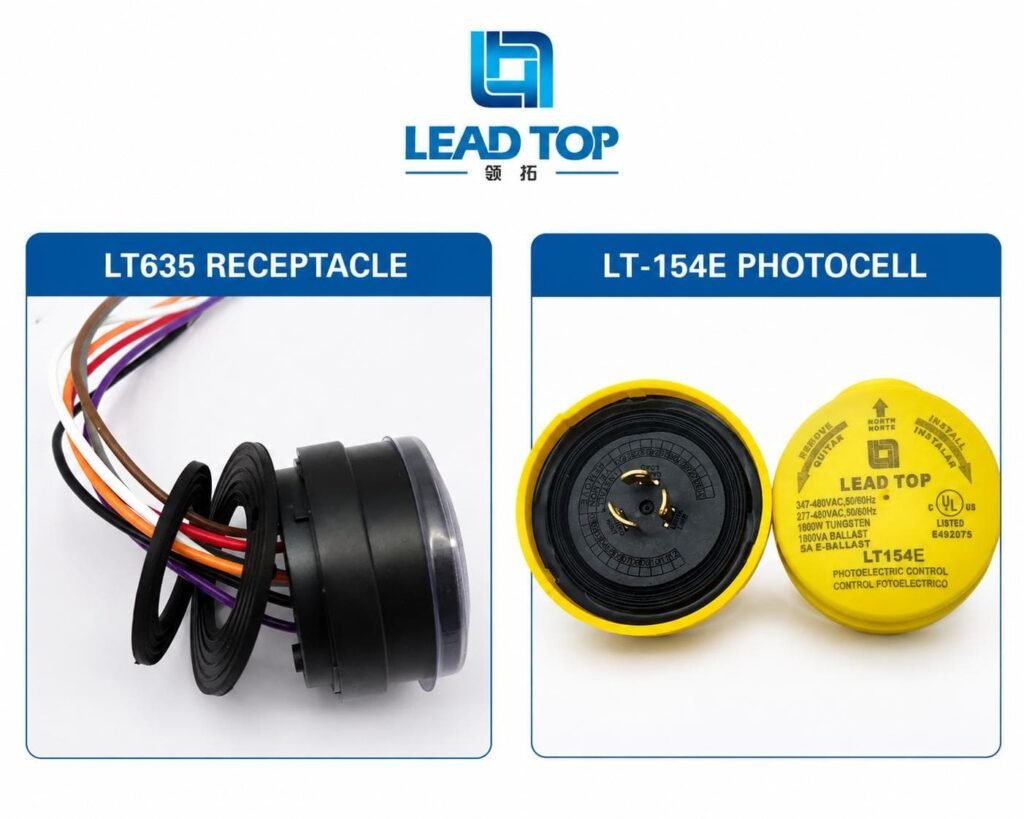
Essa combinação é adequada para iluminação preparada para o futuro.
Essa combinação pode ajudar os municípios a se prepararem para estratégias de controle mais avançadas sem precisar redesenhar a interface básica das luminárias.
As principais vantagens incluem:
- Suporte para dimerização de 0 a 10 V
- Suporte para escurecimento DALI
- Interface de controle de sete pinos
- Infraestrutura preparada para tecnologia inteligente
- Atualizações de controle futuras mais simples
A norma ANSI C136.41 estabelece especificamente os requisitos mecânicos e elétricos para dispositivos de controle de dimerização e receptáculos correspondentes.
Aplicações
Essa arquitetura é adequada para:
- Iluminação inteligente para cidades
- Iluminação pública adaptativa
- Programas municipais de economia de energia
- Projetos de rodovias interligadas
- Redes de iluminação pública preparadas para o futuro
Para uma modernização a longo prazo, adicionar essa funcionalidade desde o início pode dar aos municípios mais flexibilidade à medida que os requisitos de controle de iluminação evoluem.
O que os engenheiros municipais devem verificar antes de selecionar fotocontroladores para uma grande modernização de iluminação LED?
Selecionando um interruptor fotocélula do sensor de luz Para uma grande reforma, é necessário mais do que verificar a tensão e a potência. O controle deve ser compatível com a luminária, a tomada, as condições de operação e os planos futuros. A norma ANSI C136.41-2025 define os requisitos mecânicos e elétricos para controles com trava e tomadas correspondentes, incluindo dimerização 0-10V e DALI.
1. O fotocontrolador é compatível com o driver de LED e a luminária?
Verifique primeiro os requisitos elétricos do driver. Os drivers de LED podem ter características de operação e corrente de pico diferentes. A NEMA destaca especificamente a compatibilidade do driver e a corrente de pico como considerações importantes.
2. O receptáculo utiliza uma interface padronizada?
Uma interface padronizada simplifica a instalação e a substituição. A norma ANSI C136.41 estabelece os requisitos para interfaces de controle e receptáculo do tipo trava.
3. Pode o Fotossensor Garantir uma comutação confiável a longo prazo?
Avalie o desempenho de comutação, a proteção ambiental, a resistência a surtos e a vida útil esperada. Pequenas taxas de falha podem gerar um trabalho de manutenção substancial em milhares de luminárias.
4. Quão fácil é o Fotocontrole Substituir em campo?
Escolha um projeto que permita a substituição rápida sem a necessidade de refazer a fiação. Componentes padronizados também podem simplificar o gerenciamento de peças de reposição.
5. A infraestrutura de iluminação suporta expansões futuras?
Antes da aquisição, determine se a rede poderá necessitar posteriormente de:
- Escurecimento 0–10V ou DALI
- Monitoramento remoto
- Iluminação adaptativa
- controles de iluminação inteligentes
- Integração de IoT
O planejamento prévio dessas necessidades pode evitar mudanças dispendiosas na infraestrutura posteriormente.
O que a modernização com iluminação LED em Ponta Grossa pode ensinar a outros municípios brasileiros?
O que outras cidades podem aprender com Ponta Grossa? A escala muda as prioridades. A cidade já converteu 38.116 pontos de iluminação, atingindo uma cobertura de 80%. Seu programa de Parceria Público-Privada (PPP) abrange mais de 47.000 pontos e inclui gestão a longo prazo.
A lição é clara: os projetos municipais de LED devem planejar mais do que apenas luminárias eficientes. Devem também priorizar:
- Controle de iluminação confiável
- Componentes padronizados
- Manutenção mais fácil
- Futuras atualizações de iluminação inteligente
Perguntas frequentes sobre fotocontroladores para projetos de LED em grande escala
1. O que os engenheiros devem considerar ao selecionar fotocontroladores?
Verifique a compatibilidade do driver de LED, o desempenho de comutação, a corrente de pico, a proteção contra surtos, a vida útil e a proteção ambiental. As normas ANSI C136.10 e C136.41 fornecem os requisitos relevantes para interfaces e receptáculos de fotocontrole.
2. Por que um recipiente padronizado é importante?
Uma interface padronizada simplifica a instalação e a substituição em campo. Também ajuda os municípios a manterem componentes consistentes em grandes redes.
3. Como os municípios podem reduzir os custos de manutenção?
Utilize fotocontroladores confiáveis e componentes padronizados. A substituição rápida por encaixe pode reduzir o tempo de manutenção e simplificar o gerenciamento de peças de reposição.
4. Os municípios devem se preparar para a iluminação inteligente?
Sim, quando atualizações futuras forem planejadas. O controle de intensidade e a iluminação adaptativa podem ser mais fáceis de implementar quando a infraestrutura inteligente já estiver incluída.
Palavras Finais
Ponta Grossa demonstra que a modernização extensiva da iluminação LED exige mais do que luminárias eficientes. Fotocontroladores confiáveis e interfaces padronizadas podem ajudar os municípios a gerenciar essas redes a longo prazo. Para projetos que necessitam de componentes de controle de iluminação confiáveis, Chumbo-Top Oferece fotocélulas NEMA, tomadas e soluções preparadas para tecnologia inteligente para aplicações municipais e de infraestrutura.
Links externos
- https://cpreluz.procel.gov.br/2025/08/14/enbpar-e-mme-anunciam-mais-de-r-150-milhoes-para-modernizacao-da-iluminacao-publica-em-municipios/
- https://en.wikipedia.org/wiki/National_Institute_of_Metrology,_Standardization_and_Industrial_Quality
- https://www.ansi.org/
- https://en.wikipedia.org/wiki/0-10_V_lighting_control
- https://www.dali-alliance.org/



 English
 Portuguese (Brazil)
 Spanish
 Russian
 Dutch
Dutch Japanese
 Portuguese (Portugal)