¿Por qué es importante la modernización del alumbrado inteligente de Génova para el futuro de las ciudades europeas?
La ciudad de Génova está a punto de finalizar uno de los proyectos de modernización de alumbrado público más destacados de Europa: una inversión de 34 millones de euros en la actualización del alumbrado público mediante tecnología LED que abarca más de 55 000 puntos de iluminación. Se prevé que esta iniciativa genere un ahorro energético de más de 701 TP3T, reduzca drásticamente los gastos de mantenimiento y mejore la satisfacción general de los ciudadanos con la infraestructura nocturna.
Sin embargo, la verdadera importancia del proyecto de Génova va mucho más allá de la reducción en las facturas de electricidad.
Esto refleja una profunda transformación que se está produciendo en toda Europa: los sistemas de iluminación exterior están evolucionando de simples redes de alumbrado a infraestructuras digitales inteligentes. Las farolas modernas ya no son elementos aislados, sino que se están convirtiendo en activos conectados dentro de entornos de iluminación urbana inteligente.
En el epicentro de este desarrollo se encuentra la fotocélula inteligente contemporánea.
Utilizado habitualmente solo como sensor del anochecer al amanecer, hoy en día fotocélulas Actualmente, las fotocélulas se están transformando en nodos de control inteligentes capaces de comunicarse, regular la intensidad de la luz, monitorizar e integrarse con plataformas de IoT metropolitanas. En consecuencia, se están convirtiendo en componentes fundamentales para el desarrollo de infraestructuras de postes inteligentes, sistemas de tráfico adaptativos, redes de monitorización ecológica y plataformas de seguridad pública conectadas.

¿Cómo demuestra el proyecto de Génova un cambio que va más allá del simple ahorro energético?
La inversión de la ciudad revela un giro estratégico hacia una infraestructura metropolitana digital duradera.
Los principales resultados del proyecto comprenden:
- Más de 55.000 luminarias LED avanzadas
- Por encima de 70%, disminución del consumo de electricidad.
- Menores costos de mantenimiento y sustitución.
- Mayor satisfacción y visibilidad del público.
- Entusiasmo por la futura integración de las ciudades inteligentes
Esto demuestra que los municipios ya no están satisfechos con simplemente instalar CONDUJO accesorios. En su lugar, están construyendo redes de iluminación capacitadas para soportar:
- sensores ecológicos
- Cámaras de seguridad
- Sistemas de control de tráfico
- Wi-Fi público
- Dispositivos de comunicación de emergencia
En este contexto, los componentes de control del alumbrado público LED deben evolucionar desde interruptores pasivos hasta convertirse en dispositivos inteligentes preparados para la conexión en red.
¿Por qué son esenciales las fotocélulas en los sistemas de iluminación inteligente modernos?
Las fotocélulas siguen siendo uno de los componentes más importantes en la automatización de la iluminación exterior, ya que controlan cuándo se activan y desactivan los sistemas de iluminación en función de las condiciones de luz del entorno.
Las funciones centrales de las células fotovoltaicas contemporáneas comprenden:
- Conmutación programada del anochecer al amanecer
- Detención del desperdicio de energía diurna
- Mayor constancia en grandes redes de iluminación
- Intervención intensiva en mano de obra abreviada
- Mayor seguridad pública gracias a un funcionamiento fiable.
Los sistemas fotoeléctricos inteligentes progresivos ahora pueden ofrecer:
- Capacidad de monitoreo remoto
- Informe de datos de consumo de energía
- Diagnóstico de fallas
- Incorporación de atenuación adaptativa
- Comunicación con plataformas de gestión basadas en la nube
Esto convierte la fotocélula de un interruptor básico en un nodo central de la arquitectura de control de iluminación IoT.
¿Qué nuevos requisitos deben cumplir las fotocélulas de las ciudades inteligentes?
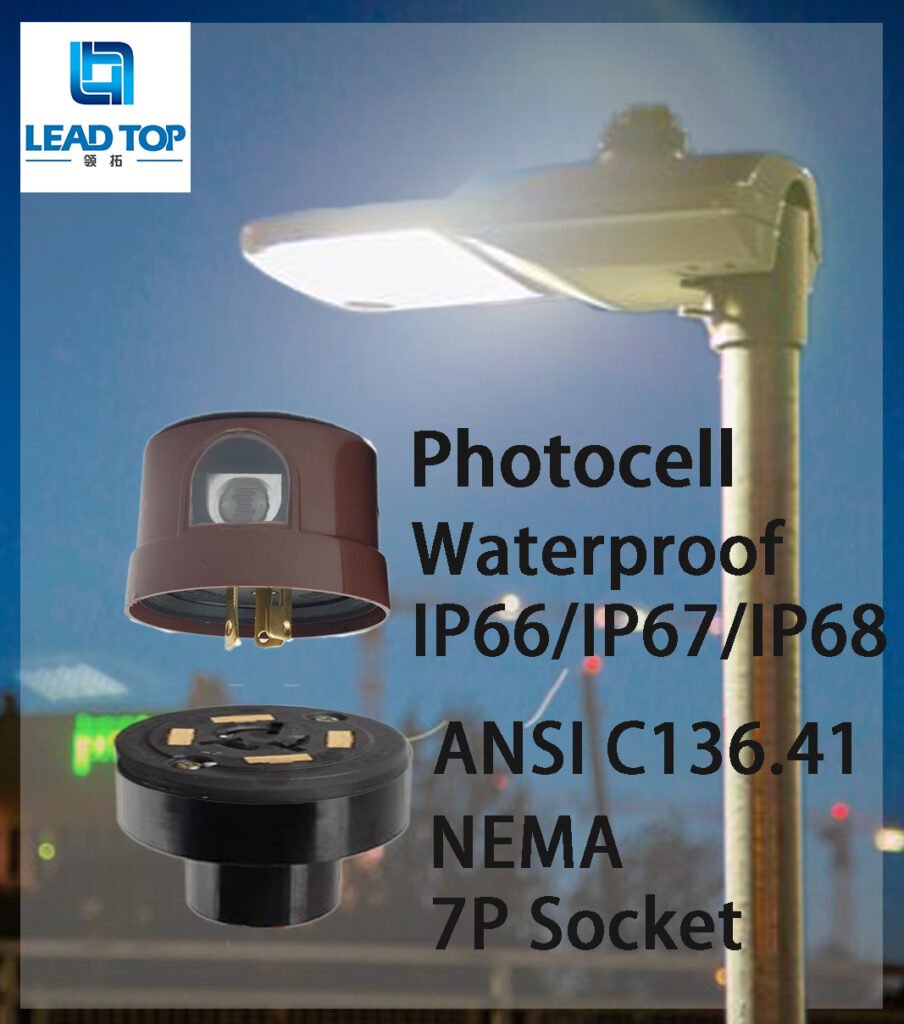
A medida que las ciudades instalan infraestructuras de iluminación más sofisticadas, las fotocélulas de estilo antiguo ya no son adecuadas.
Los requisitos técnicos clave incluyen:
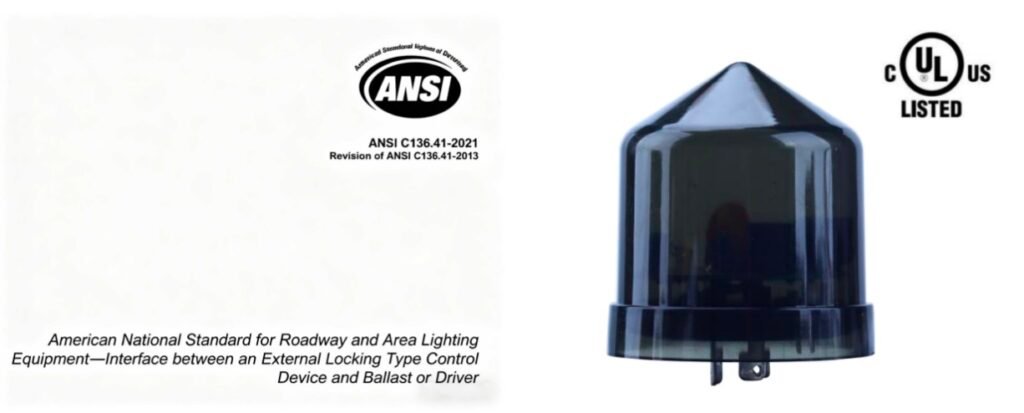
NEMA Compatibilidad (ANSI C136.41)
El estándar de fotocélulas NEMA prevalece en varias aplicaciones de iluminación inteligente urbana, ya que admite:
- Instalación plug-and-play
- Interoperabilidad homogénea
- Compatibilidad con nodos inteligentes
- Funciones de atenuación y comunicación
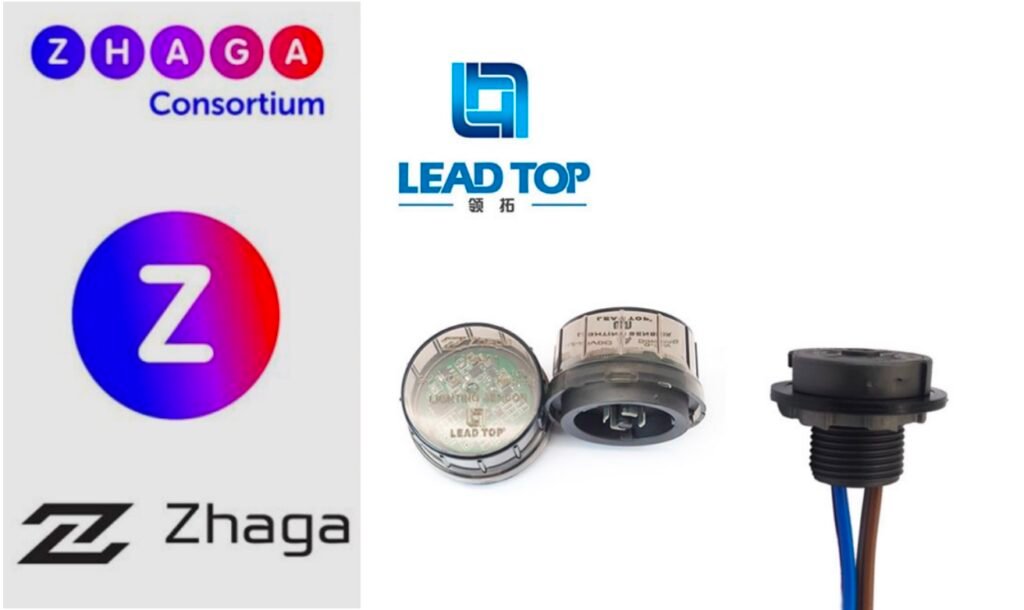
Libro Zhaga 18 Soporte de interfaz
En Europa, el estándar de controlador Zhaga se está convirtiendo rápidamente en el favorito para las luminarias inteligentes compactas y modulares.
Zhaga Book 18 ofrece:
- Menor huella de interfaz
- Incorporación homogénea de nodos inteligentes
- Compatibilidad con IoT preparada para el futuro
- Estética mejorada de las luminarias
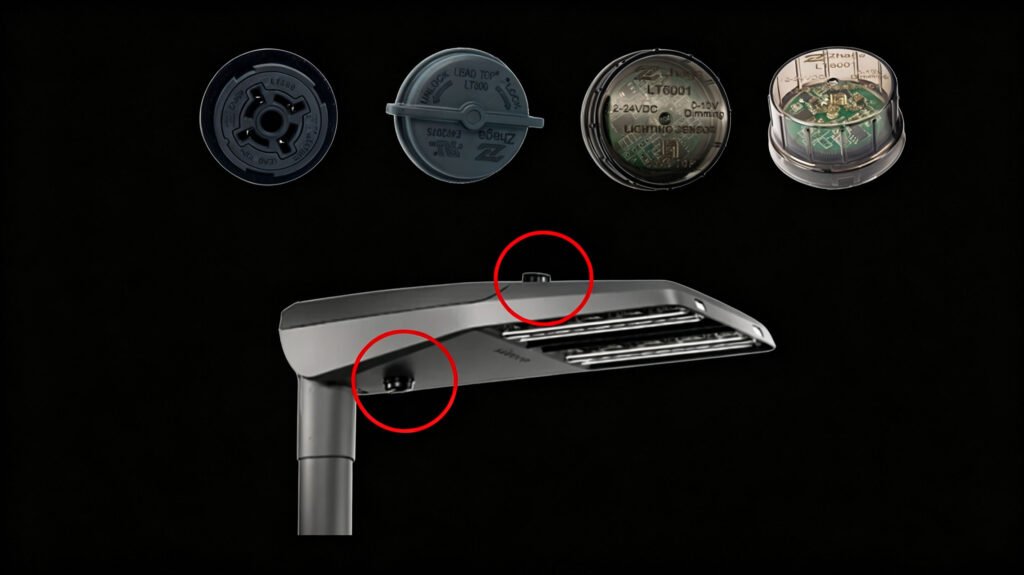
Protección contra sobretensiones
Los sistemas exteriores necesitan una alta resistencia a las sobretensiones debido a los rayos y a las redes eléctricas desequilibradas.
Requisitos típicos de una ciudad inteligente:
- Protección contra sobretensiones de 10 kV a 20 kV
- Fortificación del MOV
- Resistencia a sobretensiones
Larga vida útil
Expectativas clásicas:
- Ciclo de vida funcional de más de 10 años
- Más de 10.000 ciclos de conmutación
- Requisitos de mantenimiento nominales
¿Cómo están evolucionando las fotocélulas, pasando de ser simples sensores a nodos inteligentes?
Los sistemas de fotocélulas inteligentes contemporáneos funcionan ahora como nodos inteligentes dentro de la infraestructura conectada.
Tabla comparativa de evolución
| Característica | Fotocélula tradicional | Fotocélula inteligente moderna |
| Función | Interruptor de encendido/apagado | Nodo inteligente multifuncional |
| Comunicación | Ninguno | Inalámbrico / Habilitado para IoT |
| Escucha | Ninguno | Informes de estado en tiempo real |
| Atenuación | No | Sí |
| Integración | Autónomo | Plataforma de ciudad inteligente compatible |
| Recopilación de datos | Ninguno | Datos ambientales/operacionales |
Este avance es importante porque los municipios contemporáneos utilizan cada vez más la infraestructura de postes inteligentes para combinar numerosas tecnologías en un único punto de instalación.
Las fotocélulas ahora ayudan a posibilitar:
- Iluminación adaptada al tráfico
- Ajuste del deslumbramiento en función de las condiciones meteorológicas
- Iluminación de respuesta a emergencias
- Vigilancia de la seguridad pública
- Análisis de optimización energética
¿Qué soluciones de fotocélulas son las mejores para proyectos de ciudades inteligentes como Génova?
Para proyectos de ciudades inteligentes similares a la iniciativa de modernización de Génova, los municipios requieren cada vez más productos de fotocontrol avanzados que admitan redes inteligentes, atenuación de luz y futuras actualizaciones de IoT.
Soluciones de productos recomendadas para ciudades inteligentes
| Modelo | Tipo | Mejor aplicación | Características principales |
| LT100 (0-10V y Dali) | Fotocontrol de atenuación con bloqueo giratorio ANSI C136.41 | Alumbrado público inteligente | Atenuación nocturna de 0-10 V / D ali, protección contra sobretensiones |
| LT635-7PIN | Receptáculo giratorio ANSI | Despliegue de postes inteligentes | Rotación de 360°, listo para nodo inalámbrico. |
| LT6002 | Zhaga Libro 18 Sensor | Luminarias inteligentes compactas | Compatibilidad con DALI, interfaz modular |
Estos productos se ajustan a la creciente demanda europea de:
- Zhaga ciudad inteligente Europa aquiescencia
- Preparación para el alumbrado público adaptativo
- Resistencia exterior de larga duración
- Implementación flexible de IoT
¿Por qué son importantes las normas NEMA y Zhaga en la iluminación inteligente?
La posibilidad de implementar iluminación inteligente probablemente incluirá tanto los estándares NEMA como los Zhaga, dependiendo del diseño del proyecto y las tendencias regionales.
Tabla comparativa de interfaces
| Estándar | Región común | Ventaja principal | Aplicación típica |
| NEMA (ANSI C136.41) | América del Norte / Municipios globales | Vigoroso, establecido, intercambiable | Farolas de gran tamaño / Proyectos de servicios públicos |
| Zhaga Libro 18 | Europa / Proyectos Urbanos Inteligentes | Compacto, modular, preparado para funciones inteligentes. | Luminarias LED contemporáneas / Postes inteligentes urbanos |
¿Cómo influirán la iluminación adaptativa y basada en datos en el futuro?
Los sistemas futuros serán adaptativos y predictivos.
Las habilidades en evolución comprenden:
Control de iluminación basado en IA
La inteligencia artificial puede mejorar el deslumbramiento en función de:
- Densidad de tráfico
- Movimiento de peatones
- Situaciones meteorológicas
- Datos de uso histórico
Iluminación adaptativa al tráfico
La iluminación cambia dinámicamente según la presencia de automóviles o peatones.
Los beneficios incluyen:
- Mayor ahorro energético
- Mayor seguridad
- Contaminación lumínica abreviada
Monitorización basada en la nube
Los paneles de control centralizados permiten a las ciudades:
- Supervise cada luminaria de forma remota.
- Detectar fallos de inmediato
- Programar el mantenimiento predictivo
- Analice detenidamente los datos de rendimiento a largo plazo.
Estas funciones dependen en gran medida del hardware de control de iluminación IoT inteligente, lo que hace que las fotocélulas sean más cruciales que nunca.
Preguntas frecuentes
P1: ¿Cuál es la función de una fotocélula en el alumbrado público inteligente?
Una fotocélula actúa como dispositivo de control automático, gestionando el encendido y apagado de las farolas en función de los niveles de luz ambiental.
P2: ¿Por qué las ciudades están modernizando sus sistemas de iluminación con sistemas inteligentes?
Los municipios están modernizando sus sistemas de iluminación con sistemas inteligentes principalmente para mejorar la eficiencia, reducir los costos operativos y respaldar los objetivos de desarrollo de ciudades inteligentes de amplio alcance.
P3: ¿Qué estándares son importantes para las fotocélulas inteligentes?
Las dos normas más importantes para las fotocélulas inteligentes contemporáneas son NEMA (ANSI C136.41) y el Libro 18 de Zhaga, ya que definen las interfaces utilizadas para la incorporación del control de iluminación inteligente.
Conclusión: ¿Por qué las células fotovoltaicas se están convirtiendo en la columna vertebral de las ciudades inteligentes europeas?
La revolución de la iluminación inteligente en Génova ejemplifica una realidad que se extiende por toda Europa: la iluminación de las calles ya no se limita solo a la iluminación.
A medida que las metrópolis invierten en sistemas de iluminación conectados, adaptativos y basados en datos, el papel de la fotocélula está cambiando, pasando de ser un simple sensor del anochecer al amanecer a una plataforma de fotocélula inteligente de misión crítica.
Las ciudades contemporáneas ahora necesitan fotocélulas que soporten:
- Incorporación de iluminación inteligente en la ciudad
- Plataformas de control de iluminación IoT
- Estrategias de alumbrado público adaptativo
- Interoperabilidad entre el controlador Zhaga y la fotocélula NEMA
- Fiabilidad duradera en entornos exteriores exigentes.
Los contratistas que puedan ofrecer soluciones de fotocontrol inteligentes, con protección contra sobretensiones y que cumplan con los estándares, estarán en la mejor posición para respaldar la perspectiva de la iluminación exterior inteligente en Europa.



 English
 Portuguese (Brazil)
 Spanish
 Russian
 Dutch
Dutch Japanese
 Portuguese (Portugal)