Introducción
Los municipios de todo el mundo han invertido considerablemente en alumbrado público LED para reducir el consumo energético y los costes de mantenimiento. Si bien la tecnología LED ha aportado mejoras significativas en la eficiencia, las ciudades están entrando ahora en una segunda fase de modernización de la iluminación: la iluminación adaptativa.
A diferencia de los sistemas de alumbrado público tradicionales, que mantienen una intensidad fija durante toda la noche, la iluminación adaptativa ajusta automáticamente los niveles de luz según las condiciones reales, como la densidad del tráfico, el movimiento de peatones, las condiciones meteorológicas y la hora del día. Este cambio permite a las ciudades optimizar el consumo energético, al tiempo que garantizan la seguridad pública y la eficiencia operativa.
Actualmente, los urbanistas están adoptando cada vez más los sistemas de alumbrado público inteligente, gracias a su capacidad de adaptación dinámica a entornos cambiantes. A medida que los precios de la energía siguen subiendo y las normativas de sostenibilidad se vuelven más estrictas, la iluminación adaptativa se está convirtiendo rápidamente en la opción preferida para las ciudades modernas.

¿Qué es la iluminación adaptativa en las ciudades modernas?
La iluminación adaptativa se refiere a un sistema de iluminación capaz de ajustar su intensidad en función de las situaciones ecológicas y operativas reales.
Los sistemas de iluminación tradicionales suelen funcionar con un sencillo sistema de encendido/apagado. Las luces se encienden al atardecer y permanecen encendidas a máxima potencia hasta el amanecer. Si bien este método proporciona una iluminación fiable, a menudo supone un desperdicio de energía durante los periodos de baja actividad.
Un sistema de alumbrado público adaptativo incorpora inteligencia al proceso. En lugar de mantener la máxima intensidad durante toda la noche, el sistema puede reducir automáticamente la potencia lumínica cuando las calles están vacías y aumentar la iluminación cuando aumenta la actividad.
Por ejemplo:
- Los cruces de calles más concurridos pueden permanecer bien iluminados durante toda la noche.
- Las calles residenciales pueden oscurecerse después de la medianoche debido a la reducción del tráfico.
- Los senderos públicos pueden iluminarse cuando se detecta la presencia de peatones.
- Los niveles de iluminación pueden ajustarse en caso de niebla, lluvia o condiciones climáticas adversas.
Esta capacidad transforma la infraestructura de iluminación, pasando de ser un servicio público inactivo a un componente activo de la estrategia operativa de una ciudad.
Además, para permitir que las ciudades gestionen miles de luminarias desde una ubicación central, la iluminación adaptativa suele integrarse con plataformas integrales de control de iluminación para ciudades inteligentes.
¿Por qué las ciudades están abandonando el alumbrado público fijo?
Numerosos factores impulsan la transición internacional hacia el abandono de los sistemas antiguos de brillo fijo.
Aumento de los costes energéticos
En los sistemas convencionales, las luces suelen mantener un nivel de deslumbramiento constante, independientemente de la demanda real. Esto genera un considerable desperdicio de energía durante las horas de menor tráfico.
Los municipios pueden reducir el consumo de energía sin comprometer la visibilidad ni la seguridad mediante la implementación de un control dinámico de la iluminación.
Requisitos de sostenibilidad
Los gobiernos de diferentes zonas de Europa y América Latina han introducido ambiciosos objetivos de reducción de carbono. Numerosas ciudades necesitan mejorar la eficiencia energética y reducir las emisiones. gas de efecto invernadero emisiones.
La iluminación adaptativa respalda de manera inquebrantable estos objetivos al minimizar el consumo innecesario de electricidad y reducir el impacto ecológico general.
Expectativas del público
La ciudadanía espera cada vez más que los municipios utilicen los recursos de manera eficiente. Los contribuyentes desean inversiones en infraestructura que aporten beneficios cuantificables y, al mismo tiempo, reduzcan los gastos operativos.
La iluminación adaptativa ayuda a las ciudades a demostrar una gestión energética responsable al tiempo que mantiene unos servicios públicos fiables.
Crecimiento urbano
A medida que los municipios crecen, la gestión de redes de iluminación más grandes se vuelve más compleja. Las tecnologías de iluminación inteligente ofrecen soluciones escalables capaces de controlar miles de luminarias de manera eficiente.
¿Qué tecnologías hacen posible la iluminación adaptativa?
Numerosas tecnologías trabajan conjuntamente para crear sistemas de iluminación adaptativos y eficientes.
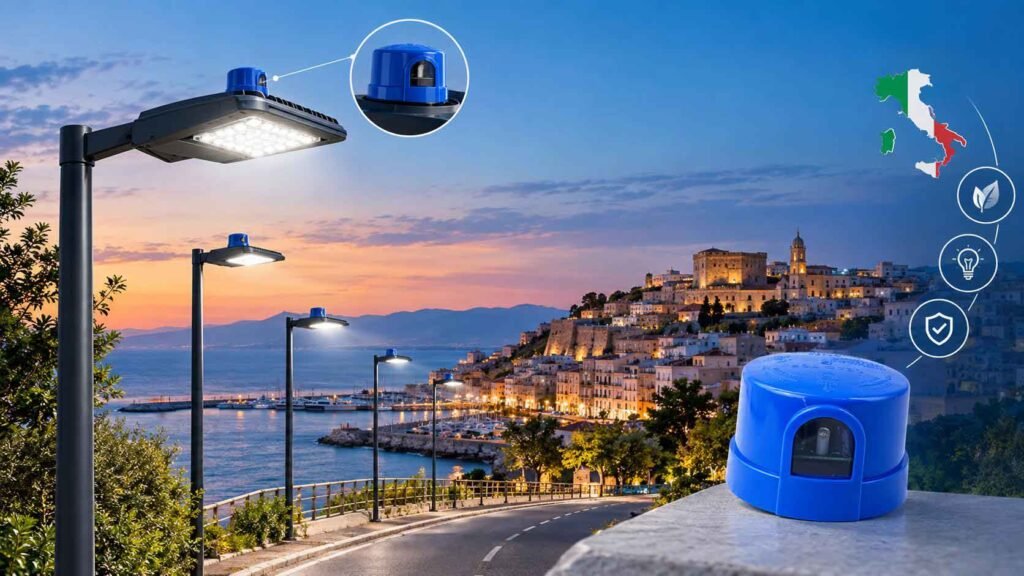
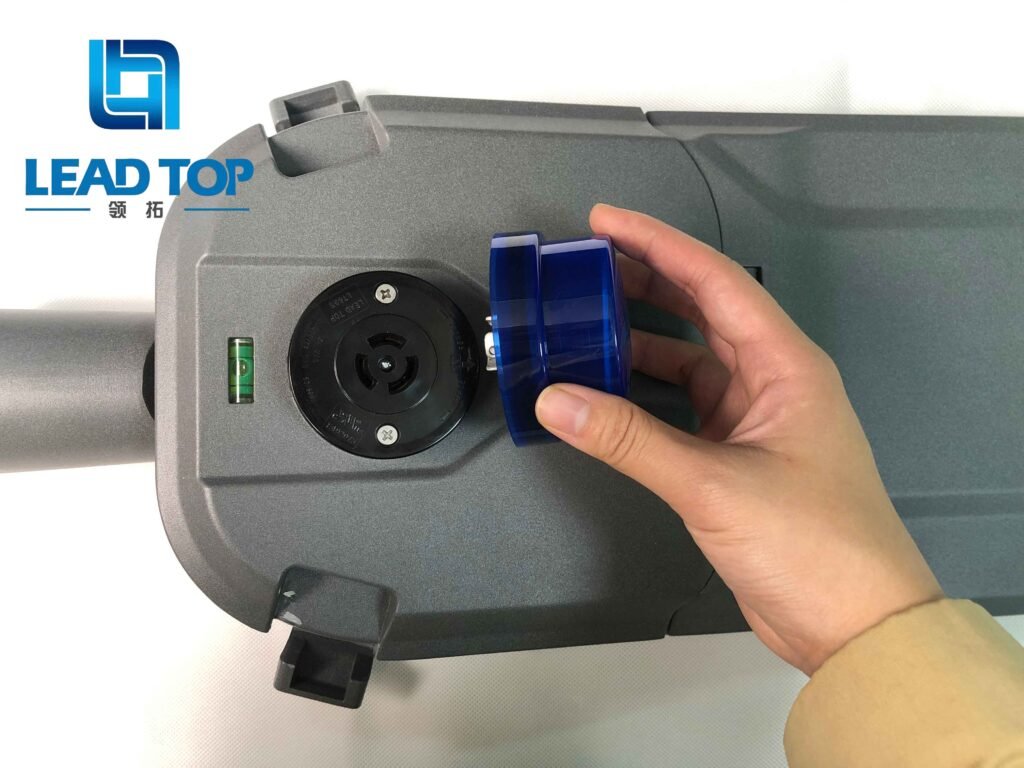
Un sistema de fotocélulas inteligentes constituye la primera capa de automatización de la iluminación.
Fotocélulas Detectan los niveles de luz ambiental y controlan robóticamente el funcionamiento de la iluminación. En lugar de depender de interruptores físicos o temporizadores, las fotocélulas garantizan que las luces se activen solo cuando la luz natural cae por debajo de umbrales predefinidos.
Las fotocélulas contemporáneas ofrecen:
- Funcionamiento preciso desde el anochecer hasta el amanecer.
- Mayor fiabilidad
- Desperdicio de energía reducido
- Mayor eficiencia operativa
Atenuación DALI y 0–10V
Los sistemas de control DALI (Interfaz de Iluminación Digital Direccionable) y de 0 a 10 V permiten un ajuste continuo de la iluminación en lugar de un simple funcionamiento de encendido/apagado.
Estas tecnologías permiten a las ciudades:
- Disminuir la iluminación durante los períodos de baja demanda.
- Cree programas de iluminación personalizados.
- Mejorar la eficiencia energética
- Prolongar el ciclo de vida de los accesorios
Sensores de movimiento y tráfico
Los sensores de movimiento y los sensores de control de tráfico permiten que los sistemas de iluminación respondan a la actividad real.
Por ejemplo:
- La iluminación aumenta cuando se acercan los automóviles.
- Los senderos peatonales se iluminan al detectar movimiento.
- Las zonas de aparcamiento ajustan los niveles de iluminación según la ocupación.
Conectividad IoT
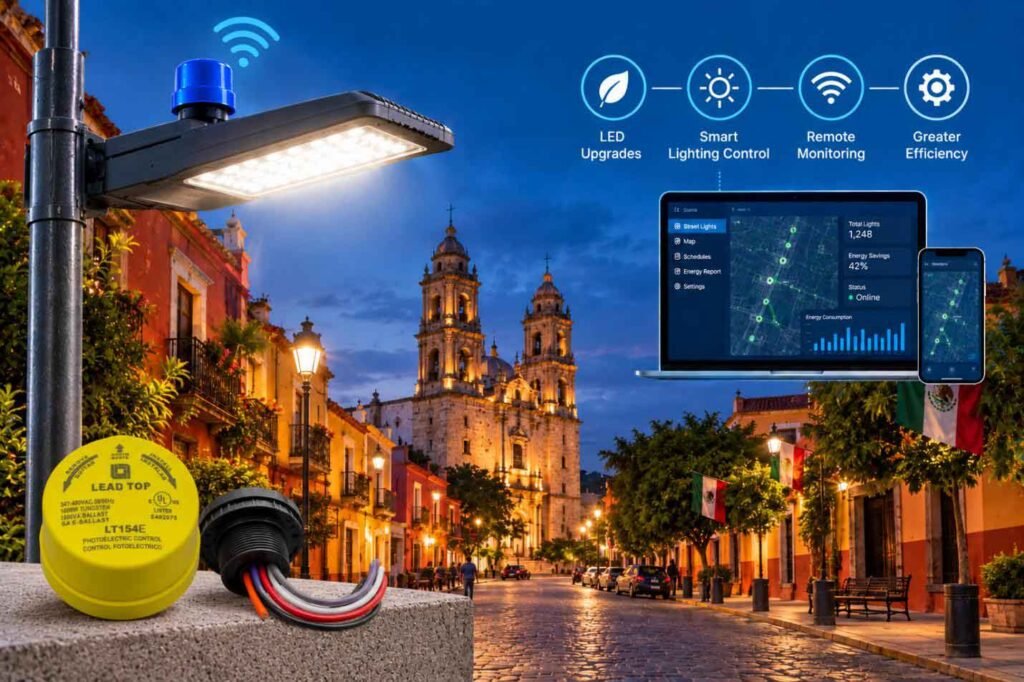
Los sistemas de control de alumbrado público LED contemporáneos dependen cada vez más de la conectividad del Internet de las Cosas (IoT).
Las redes de iluminación habilitadas para IoT ofrecen:
- Monitoreo remoto
- Diagnóstico real
- Recopilación de datos
- Mantenimiento predictivo
- Control central
En consecuencia, la infraestructura de iluminación se convierte en un componente esencial de los entornos de ciudades inteligentes de gran alcance.
¿Cómo demuestran los proyectos de iluminación inteligente de México los beneficios de la iluminación adaptativa?
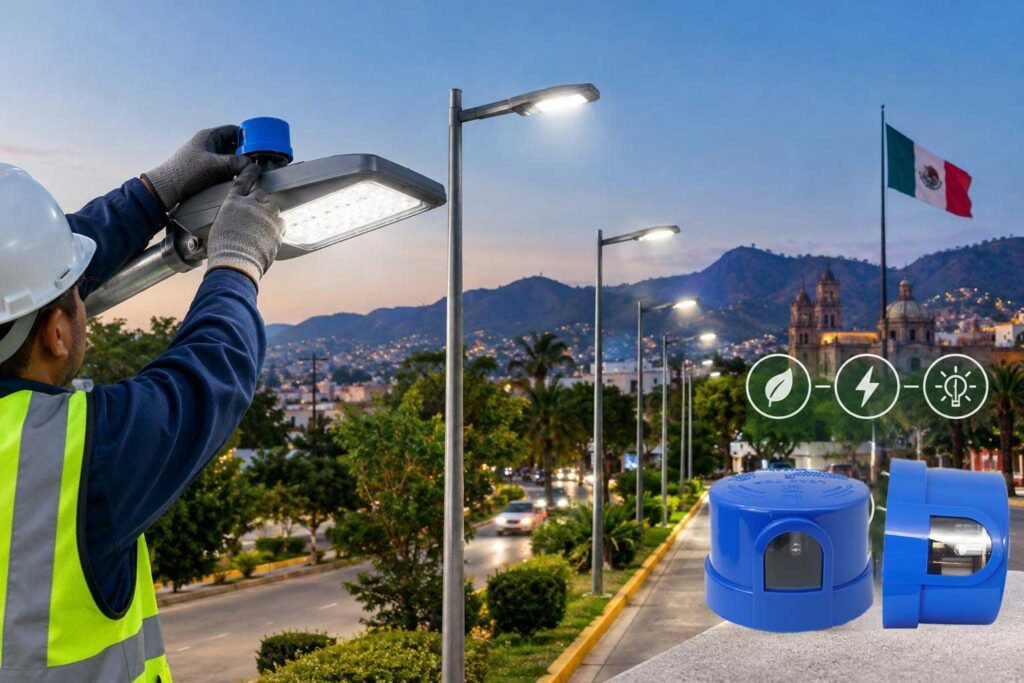
México se ha erigido como un ejemplo importante de cómo la iluminación adaptativa está transformando la infraestructura metropolitana.
Un avance destacable son las redes de iluminación conectadas a gran escala que han vinculado más de 18.000 puntos de iluminación a sistemas de gestión centralizados.
Estos proyectos muestran un cambio clave en la industria:
El ahorro energético ya no se consigue exclusivamente sustituyendo las bombillas antiguas por LED. En su lugar, las ciudades están haciendo hincapié en la optimización a nivel de sistema mediante tecnologías de control de alumbrado público inteligente.
Entre los principales beneficios observados se incluyen:
- Uso abreviado de electricidad
- Mayor eficiencia en el mantenimiento
- Detección de fallos más rápida
- Mejor gestión de activos
- Mayor seguridad pública
Esta evolución demuestra que la infraestructura de iluminación está funcionando progresivamente como una plataforma operativa basada en datos, en lugar de un simple sistema de iluminación.
¿Qué solución se recomienda para los sistemas de iluminación adaptativa?
Solución recomendada: Conector LT600 Zhaga + Controlador DALI LT6002

Esta mezcla está especialmente diseñada para dar soporte a las aplicaciones de iluminación adaptativa de última generación.
| Característica | Beneficio |
| Cumplimiento del Libro 18 de Zhaga | Interfaz estandarizada para iluminación inteligente |
| Integración DALI | Atenuación y control avanzados |
| Diseño modular | Actualizaciones y mantenimiento sencillos |
| Compatibilidad con IoT | Integración de ciudades inteligentes futuras |
| Protección al aire libre | Funcionamiento fiable en entornos adversos. |
Ventajas clave
- Admite control de iluminación dinámico
- Permite funciones de atenuación inteligente
- Optimiza el mantenimiento y los avances.
- Admite la gestión remota
- Compatible con las futuras infraestructuras de ciudades inteligentes.
¿En qué aspectos siguen desempeñando un papel importante los fotocontroles tradicionales?
A pesar del rápido desarrollo de los sistemas adaptativos, las tecnologías de fotocontrol tradicionales siguen siendo muy aplicables.
Numerosos municipios siguen utilizando redes de iluminación híbridas que combinan LED con sistemas de control convencionales basados en fotocélulas.
Existen numerosas razones que explican esta continua aceptación:
Sensibilidad al costo
No todas las ciudades cuentan con el presupuesto necesario para el despliegue a gran escala de una ciudad inteligente.
Los sistemas básicos de fotocélulas ofrecen:
- Automatización confiable
- Costes de instalación bajos
- Requisitos de mantenimiento mínimos
Transición gradual de la infraestructura
Numerosos municipios prefieren las mejoras por fases en lugar de la sustitución completa del sistema.
Una estrategia común implica:
- Instalación de luminarias LED.
- Incorporación de mecanización de fotocélulas.
- Más adelante se introducirán las funciones de atenuación.
- Avanzando hacia la plena integración de la ciudad inteligente.
Confiabilidad comprobada
Las fotocélulas cuentan con años de rendimiento comprobado en el campo y siguen ofreciendo un funcionamiento fiable desde el anochecer hasta el amanecer.
¿Cuáles son las principales ventajas de la iluminación adaptativa en comparación con los sistemas tradicionales?
Tabla 1: Iluminación tradicional frente a iluminación adaptativa
| Característica | Iluminación tradicional | Iluminación adaptativa |
| Operación | Brillo fijo | Ajuste dinámico del brillo |
| Eficiencia energética | Moderado | Muy alto |
| Mantenimiento | Monitoreo manual | Monitoreo remoto |
| Capacidad de atenuación | Limitado | Avanzado |
| Integración de IoT | Extraño | Común |
| Flexibilidad operativa | Bajo | Alto |
| Recopilación de datos | Ninguno | Extenso |
| Compatibilidad con ciudades inteligentes | Limitado | Excelente |
Conclusión
El futuro de la iluminación urbana reside en el control inteligente, más que en la simple iluminación. Si bien la tecnología LED propició la primera ola de ahorro energético, la iluminación adaptativa está impulsando la próxima generación de mejoras en la eficiencia.
Los municipios pueden crear redes de iluminación más receptivas, sostenibles y rentables simplemente combinando sistemas de fotocélulas inteligentes, controles basados en DALI, conectividad IoT y monitorización inteligente.
La iluminación adaptativa se está convirtiendo rápidamente en el nuevo estándar mundial para el desarrollo urbano inteligente y energéticamente eficiente, a medida que las ciudades continúan modernizando su infraestructura.
CTA
Para proyectos de iluminación inteligente y control adaptativo, Lead-Top ofrece soluciones OEM escalables que encadenan Zhaga, Tecnologías DALI y de fotocontrol para ayudar a los municipios a migrar de la infraestructura LED básica a sistemas de iluminación totalmente inteligentes. Contacte con Lead-Top para explorar soluciones personalizadas para su próximo proyecto de iluminación municipal.
Referencias:
- https://en.wikipedia.org/wiki/Greenhouse_gas
- https://leaditop.com/twist-lock-photocontrollers/
- https://leaditop.com/product/customizable-upgraded-models-highly-waterproof-zhaga-socket-lt600/
- https://leaditop.com/product/zhaga-socket-connected-dali-2-0-protocol-and-0-10v-dimming-control-luminaire-lighting-2/
- https://en.wikipedia.org/wiki/Zhaga_Consortium

 Spanish
  English
  Portuguese (Brazil)
  Russian
  Dutch
Dutch  Japanese
  Portuguese (Portugal)