There are some engineers who do not trust the electronics in the control loop. They want the most basic switching mechanism between the light photodetector and the light itself. This article is written specifically for such engineers and others who consider the same thing versus modern LEDs.
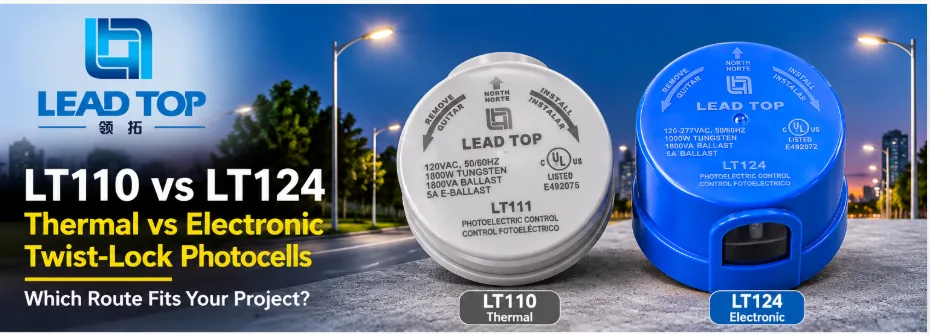
The comparison is very straightforward. The LT164 light photocell detector makes the control system purely electromagnetic and instant in action. The LT124 photo switch detector uses an additional IR sensor, zero-cross relay, and MOV protection. It is a true trade-off analysis and not just another "new is always better" story.
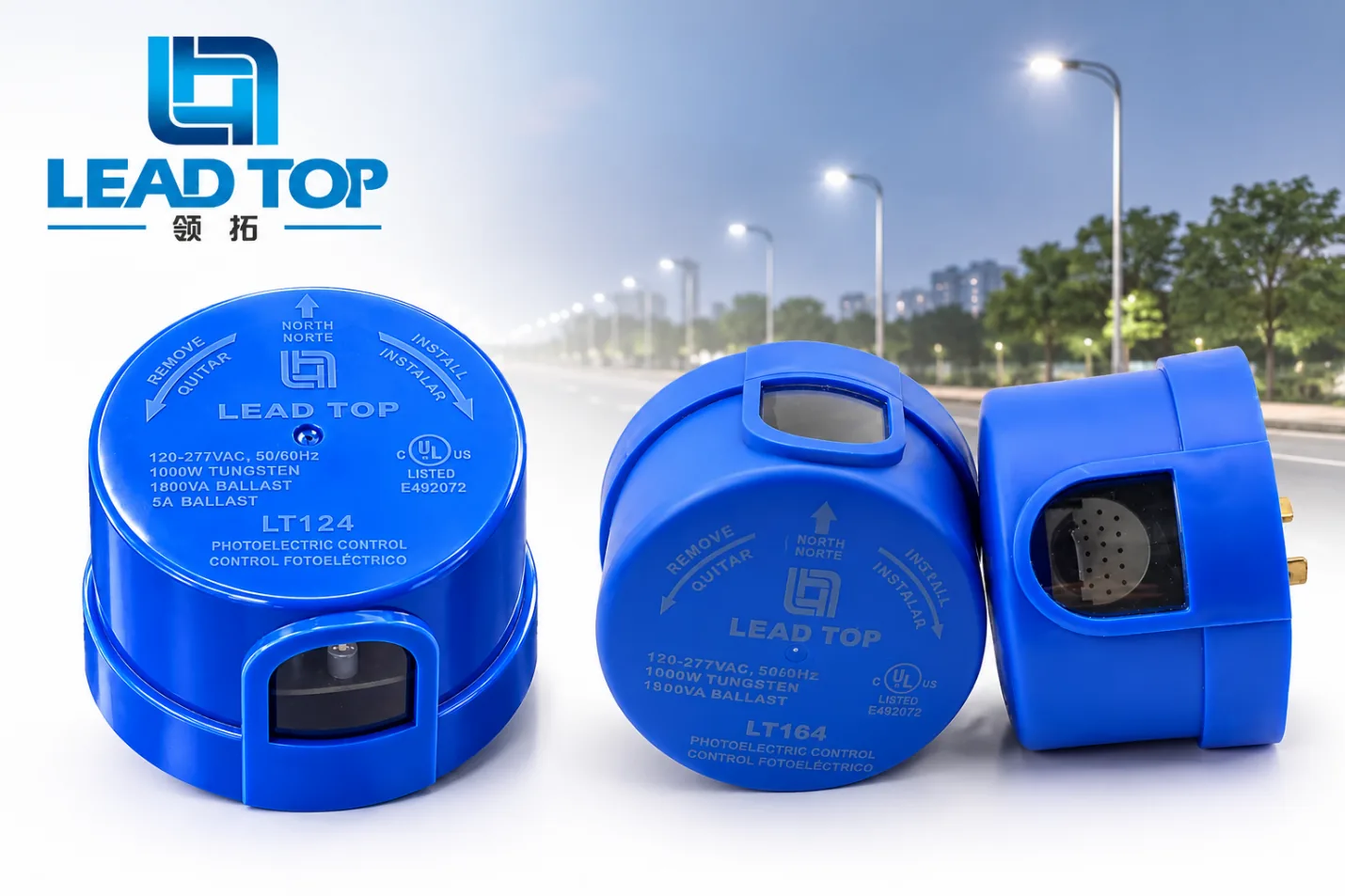
What an Electromagnetic Light Sensor Control Is, and Why It Still Exists
In the LT164, the light sensor actuates the switch directly via an electromagnetic system. There is no PCB, and there is no relay coil energized by electronics. There is no MOV array to degrade over time. The connection between light and contact is simple and straightforward, making it easier for the engineer when defending a specification against an operator or an auditor.
There are reasons for this type of device to remain in the family of products:
- One-second response time
The lamp turns on quickly.
- Fail-on default setting
In case of malfunction, the light remains on.
- Small component list
Certain utilities and railway/industrial customers specifically desire this.
Electromagnetic lighting control is not outdated technology. It is simply an alternative solution to the same problem. A control with fewer components gives these customers fewer variables to consider, and that can outweigh the other options sometimes.
What Differences Decide the Order?
1. Switching Design and Response Time
LT164 employs a straightforward electromagnetic design that lacks any electronics on the PCB. Its response time is below 1 second. LT124 incorporates IR sensor, relay and MOV, and has 3-6 seconds delay according to the specifications.
2. Switching Cycles and Fail Mode
The LT164 has more than 5000 switching cycles and features standard Fail ON functionality. LT124 has more than 10000 switching cycles and provides Fail ON and Fail OFF versions. That gives an opportunity to use LT124 in projects with defined road safety specifications.
3. Surge Protection
LT164 does not have an energy rating of MOV, whereas LT124 has three versions of MOV – 475J, 950J, 1425J. Thus, LT124 is better suited for areas that are prone to lightning and require surge protection.
4. Power Consumption
Both LT164 and LT124 operate within the same 120–277V voltage range, but LT124 offers lower power consumption. At 120VAC, LT124 consumes ≤ 0.5W, compared with ≤ 0.7W for LT164. This makes LT124 the more energy-efficient option, with up to 0.2W lower power consumption (approximately 28.6% less) under the specified test voltage.
5. Warranty Coverage
LT164 has a standard warranty, whereas the LT124 provides you with five years of warranty coverage. In case you are looking for municipal projects, then this could be a critical aspect to consider in terms of future maintenance expenses.
Which Model to Buy?
Buy the LT164 model if you want an easy electromechanical switching process, lightning-fast responses, and standard Fail ON functionality. If you want longevity, surge protection, and extended warranty coverage, go for LT124.
LT164 TWIST-LOCK PHOTOELECTRIC SWITCH: Where the Electromagnetic Route Wins?
The LT164 outdoor light sensor switch is better suited for the following circumstances:
- Electronics minimalist
Utility and industrial customers who require the shortest chain of the switching process.
- Critical roadways
"Fail ON" as the default mode saves one thing to think about when placing the bid.
- Swift response
Locations requiring almost immediate reaction at twilight.
Avoiding the LT164
Don’t ignore the drawbacks. Don’t use the product if your project demands:
- LED bidding process that demands zero crossing or E-Ballast class
- Lightning-prone areas needing Joule certification
- Clients requiring a certain level of warranty
There is one additional disadvantage. A delay shorter than a second means lower natural resistance to temporary lighting compared to slow devices. Headlights and lightning may get through even before a slow switch would reject them.
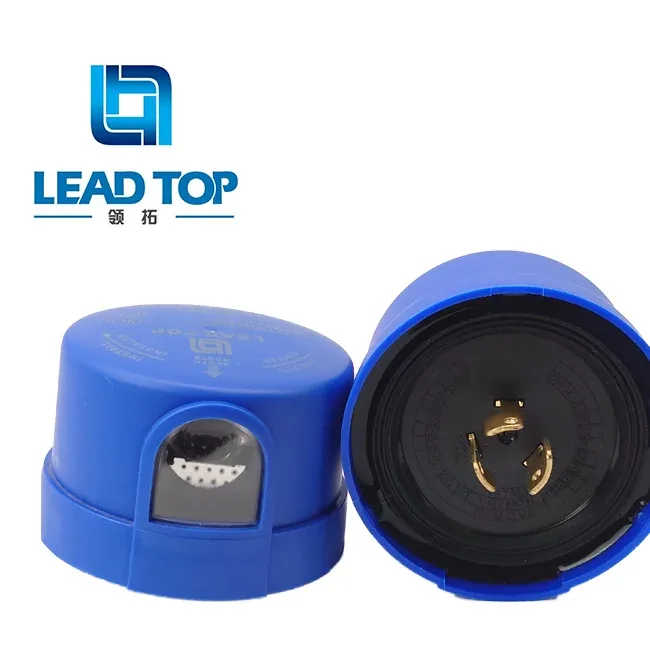
LT124 Foto-elektrische lichtschakelaar: Where the Electronic Route Wins?
LT124 light sensor becomes the right choice when you need documentation and LED compatibility above all else:
- Compatibiliteit met LED-drivers
Nuldoorgangschakeling keeps the contacts safe from inrush.
- Surge energy documented
MOV choices of 475J, 950J, or 1425J accommodate lighting conditions.
- Winter voltage sag
80VAC lower limit ensures that the device works with low supply voltage.
- Garantie
It is possible to include it in fleet quotations.
When to Avoid LT124
Consider an alternative if:
- Your clients don’t trust relay-operated electronics in principle
- This tender is strictly money-oriented
- This project sees 3–6 seconds’ delay as too slow
How to Decide Which Photoelectric Sensor Option Is Best?
Answer these questions in order. Most projects get decided between the second and the third.
- Is there a need for delay band/zero cross switching in the tender?
Yes, select LT124.
- Is Fail ON a must-have or flexible per data sheet?
If it is a must-have, then go for LT164. Flexible leaves both options open.
- Does the installation take place in a lightning zone?
Yes, then it needs joules to be documented, and that means LT124.
- Does the quotation have a warranty line?
Yes, then LT124 is the only one to offer that level.
Productaanbeveling
Select the appropriate option for each program:
- Minimal electronics program and Fail ON standard: LT164
- LEDs fleet and lightning zone/warranty: LT124
Veelgestelde vragen
What is meant by a sub-one-second time delay?
LT164 has an instant reaction to variations in the ambient light level and switches ON the lights at dusk. However, its time delay has lower rejection capability to light disturbances, such as headlights or lightning.
Which one would be more appropriate for the LED lighting load?
The LT124. It has zero-cross switching and thus closes the relay contact at the zero crossing of the AC signal. Thus, there will be no inrush current that charges LED driver input capacitors and destroys switch contacts. In addition, it has an E-Ballast rating and therefore is rated for the LED loads.
The electromagnetic switch of the LT164 can work with LED loads within its rating; however, it does not have zero-crossing and E-Ballast ratings.
Is there any surge protection in the LT164?
LT164 does not have a MOV joule rating in the current catalogue. There are 475J, 950 J, and 1425J available in the LT124.
Which model do safety-critical road specifications prefer?
The LT164 Fail ON specification meets the safety criterion directly. The light remains lit in case of control failure, which is the desired fail direction for unlit-road danger zones.
Depending on the configured order, the fail direction of the LT124 differs. For fail-ON specifications, refer to your datasheet. The easy choice would be the LT164 if standard Fail-ON has to be guaranteed.
De kern van de zaak
The right choice depends on your project’s switching, surge, and safety requirements. LT164 offers simplicity, while LT124 brings greater control and documented protection. For dependable performance and project-specific options, consider Lood-Top as your reliable supplier of photocontrollers. Its team can help you find the right fit for your lighting needs.

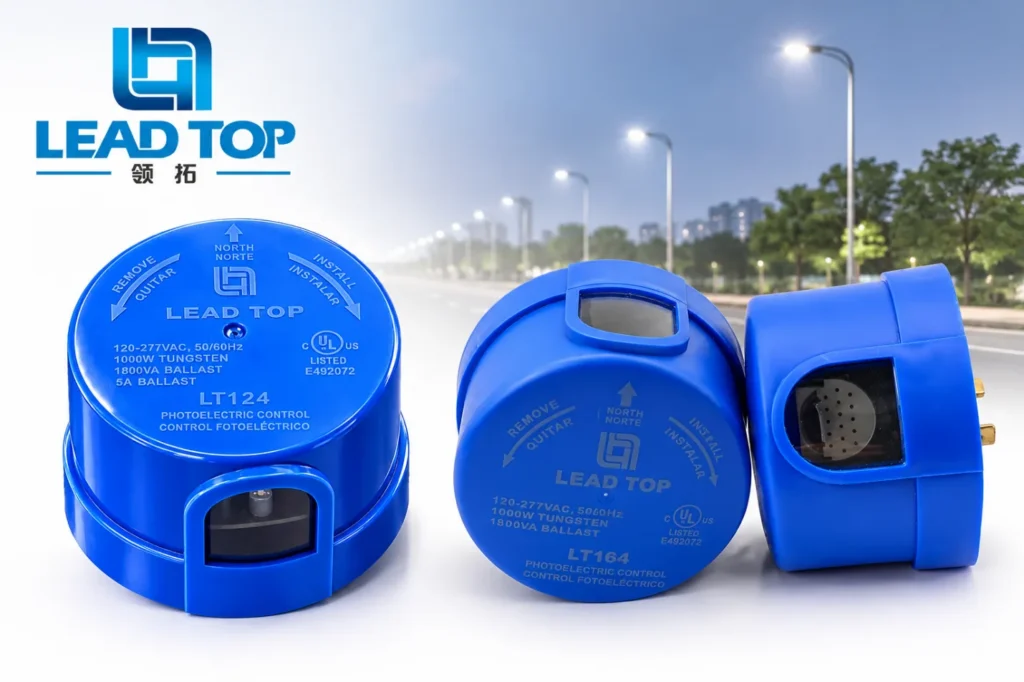

 English
 Portuguese (Brazil)
 Spanish
 Russian
 Dutch
 Japanese
 Portuguese (Portugal)