Outdoor illumination projects in tropical expanses face a distinctive combination of ecological and operating challenges. Across Southeast Asia—mainly in countries such as Indonesia, Thailand, Vietnam, and Philippines—numerous performance problems in tropical outdoor lighting systems are not caused by product flaws. Instead, they stem from slight installation imprecisions that become intensified under severe ecological conditions.
High moistness, strong rain, strong UV exposure, fast cloud movement, and dense artificial lighting environs create a setting where even small alignment mistakes can produce noticeable operating irregularities. When installation is rushed or mounting conditions are less than ideal, the margin for error becomes extremely small.
Understanding how installation errors outdoor lighting occur in tropical areas is the first step toward decreasing long-lasted dependability issues.
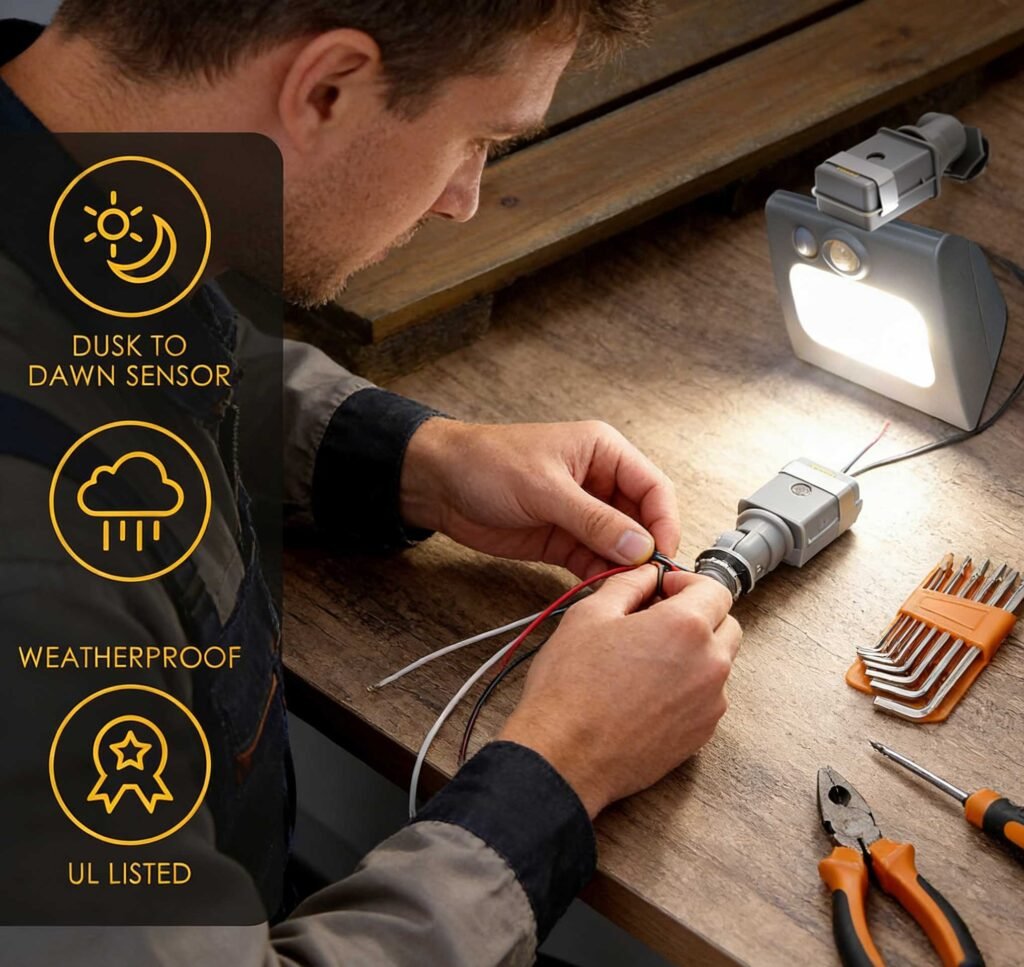
Why installation errors are more common in tropical regions?
In temperate weathers, ecological inconsistency is moderate and anticipated. However, in Southeast Asia, environmental factors interact constantly with installed components.
Some realities increase the likelihood of installation errors outdoor lighting in tropical zones:
- Poles may not be flawlessly vertical due to soil conditions or coastline wind exposure.
- Mounting arms vary in angle between locations.
- Installation staffs often work under tight time limit.
- Nearby artificial lighting may increase after installation due to urban development.
- Rain and storms can restrict visibility during inbedrijfstelling.
In such environs, fixed-direction photo controls leave no room for adjustment. A small misalignment during installation becomes a long-lasting performance limitation.
This is especially critical for Southeast Asia photo control deployments where dozens or hundreds of units must work constantly across a large project footprint.
What Common Problems Appear in Southeast Asia Photo Control Installations?
Numerous frequent issues are observed crosswise tropical outdoor illumination projects.
Unintended Light Exposure
Reflected light from neighboring buildings, glass facades, lightened signage, or nearby luminaires can enter the sensor’s field of view. This may create late activation at evening or early shutoff at night.
Inconsistent schakelgedrag
When many units are installed with small orientation differences, switching times may vary noticeably across the site. This creates irregular illumination patterns and working complaints.
False Switching During Weather Changes
Unexpected tropical showers or heavy cloud cover can momentarily decrease environmental light levels. Without proper filtering, controls may react too quickly, leading to needless ON/OFF cycles.
Limited Opportunity for Correction
Once installation teams leave the project site, reexamining installations becomes expensive. Rewiring or remounting controls rises labor expenses and disturbs operations.
These challenges highlight the necessity for flexible tropical outdoor lighting systems instead of rigid, installation-dependent designs.
How Does Adjustable Design Reduce Installation Risk?
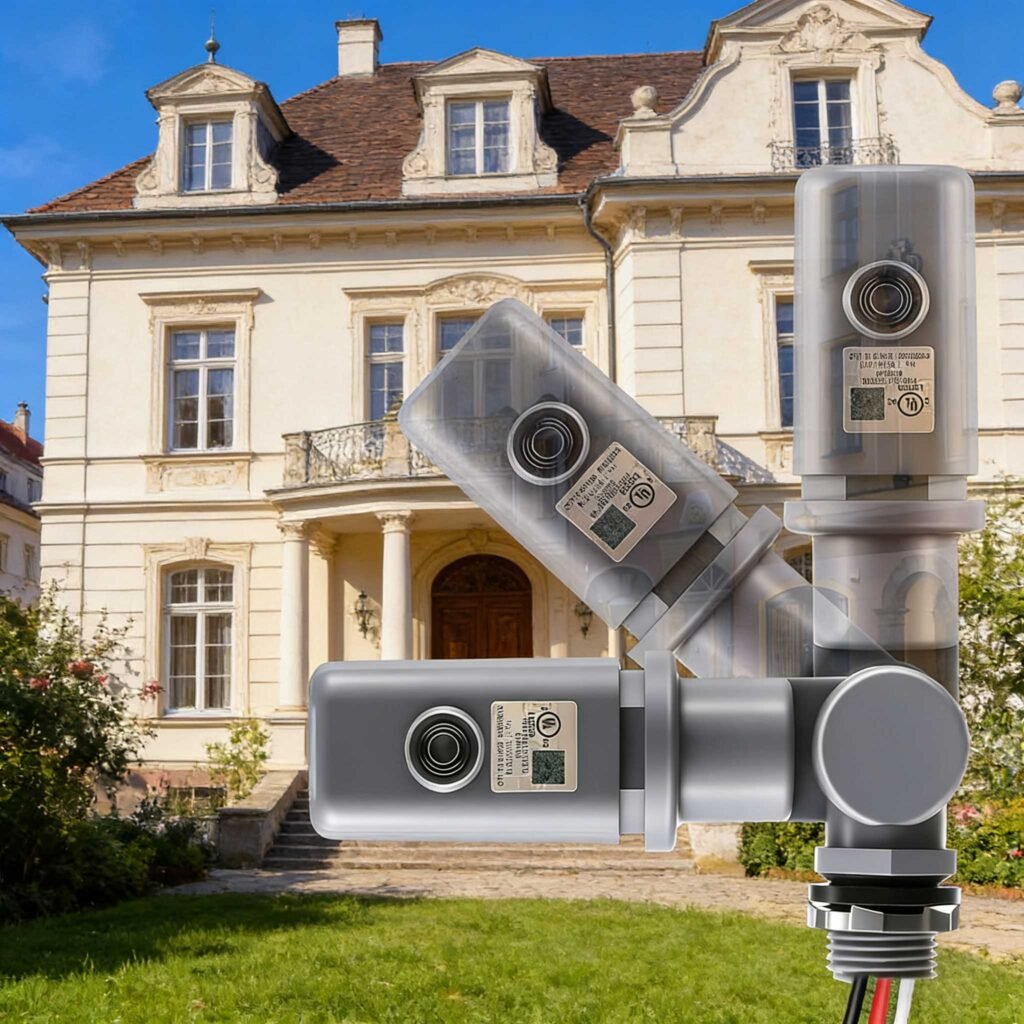
Adjustable design fundamentally changes how installation accuracy is managed. Rather than needing perfect alignment at the moment of mounting, an adaptable fotocontrole tropical climate solution lets orientation rectification during commissioning.
With swivel stem architecture, the mounting base remains fixed while the sensing head can rotate autonomously. This structural flexibility permits experts to:
- Observe real evening conditions before final alignment
- Fine-tune direction to evade reflected artificial light
- Standardize switching angles across multiple units
- Correct orientation mistakes without disassembly
This converts alignment from a high-risk installation step into a controlled commissioning procedure.
In tropical surroundings where ecological light inconsistency is high, adjustability considerably lowers the possibility of long-lasted performance irregularity.
Why Does Delay Time Management Matter in Tropical Environments?
Tropical weathers are characterized by abrupt ecological changes. A heavy rain cloud can darken the sky melodramatically for several minutes devoid of indicating true nightfall.
Without proper delay configuration, a sensor may stimulate lighting during short-term weather changes and turn off again once brightness returns. Recurrent cycling rises wear on luminaires and electrical components.
Enhanced delay time settings filter out temporary light reductions. By reacting only to sustained environmental changes, the system evades needless switching.
This ability fortifies Southeast Asia photo control performance by guaranteeing stability instead of hypersensitivity.
Lead-Top supports configurable delay times, permitting project executives to match settings to regional climate behavior. In areas with recurrent storms, lengthier delay periods provide improved dependability.
How Does Electrical Tolerance Serve as an Installation Error Buffer?
Not all performance issues instigate from mechanical misalignment. In some tropical areas, voltage variation can mimic sensor breakdown.
Mixed urban-rural projects common in Indonesia and Philippines often come across unpredictable grid conditions. Narrow operative voltage ranges increase sensitivity to supply variation.
Photo controls with extensive voltage tolerance act as a protecting buffer. They uphold stable functioning even when supply conditions vary, decreasing misdiagnosed installation issues.
Wide voltage ability supports:
- Operative constancy
- Abridged early replacement
- Lesser service call frequency
- Better system endurance
In tropical outdoor lighting systems, electrical tolerance complements structural adjustability to lessen risk from multiple directions.
Why Is LT310DH Swivel Stem Photo Control Suitable for Tropical Conditions?
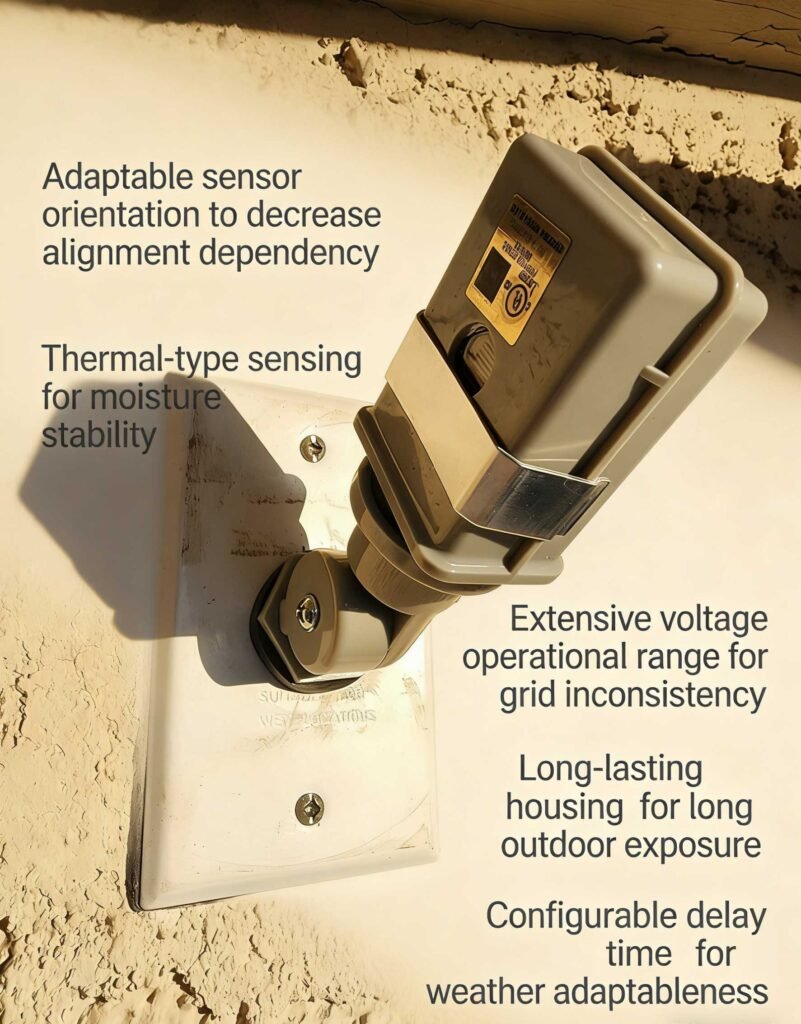
The LT310DH swivel stem photo control is made specially to accommodate installation realities in tropical atmospheres.
Key features comprise:
- Adaptable sensor orientation to decrease alignment dependency
- Thermal-type sensing for moisture stability
- Extensive voltage operational range for grid inconsistency
- Long-lasting housing for long outdoor exposure
- Configurable delay time for weather adaptableness
Instead of assuming perfect site conditions, the design anticipates practical variability common in Southeast Asia.
By joining structural flexibility, electrical tolerance, and ecological resilience, the LT310DH decreases both instant installation risk and long-lasted operating uncertainty.
How Does Customization Reduce Project-Level Friction?
Beyond technical features, customization supports smoother positioning crosswise varied Southeast Asian markets.
Lead-Top biedt:
- Housing color range to match fixtures
- Custom logo marking for identification
- Adaptable delay configurations
- Packing customization for regional logistics
These options simplify asset management and decrease confusion during multi-site installations.
Below is a summary of how customization enhances tropical deployments:
| Customization Feature | Installation & Operational Benefit |
| Housing Color Options | Visual integration with fixtures |
| Custom Logos | Simplified asset tracking |
| Delay Time Selection | Climate-specific performance tuning |
| Regional Packaging | Streamlined logistics |
Customization reduces friction without increasing technical complexity.
What Practical Strategies Help Minimize Installation Errors Outdoor Lighting?
| Risicofactor | Mitigatiestrategie |
| Misaligned Mounting | Use adjustable draaibare steelconstructie |
| Reflected Artificial Light | Optimize sensor orientation during commissioning |
| Weather-Triggered False Switching | Configure appropriate delay times |
| Voltage Instability | Select wide voltage compatible controls |
| Environmental Degradation | Choose thermal-type durable designs |
These strategies work together to fortify general system dependability in tropical outdoor lighting systems.
What are the Final considerations and recommended soutions?
Installation excellence is hardly achievable in large-scale outdoor projects. Tropical regions magnify small irregularities due to ecological stress and electrical inconsistency.
Decreasing installation errors outdoor lighting is not about demanding perfect workmanship. It is about choosing components that bear practical conditions.
Effective Southeast Asia photo control solutions incorporate:
- Adjustable photo control tropical climate structures
- Stable thermal sensing technology
- Extensive voltage electrical tolerance
- Practical customization options
De LT310DH swivel stem photo control exemplifies this approach by shifting accuracy from installation to controlled adjustment.
In tropical outdoor illumination systems, dependability comes from flexibility. When products are manufactured to accommodate ecological volatility, installation variation, and electrical variability, long-lasted performance becomes constant and anticipated. Designing for actual conditions—not ideal ones—is the most effective way to decrease installation risk and increase operating stability crosswise Southeast Asia’s challenging outdoor environs.

 Dutch
Dutch  English
  Portuguese (Brazil)
  Spanish
  Russian
  Japanese
  Portuguese (Portugal)