¿Cómo se moderniza la red de alumbrado de toda una ciudad? Reemplazar las luminarias es solo el primer paso. Sin embargo, Ponta Grossa, Brasil, lo está logrando con éxito. A continuación, se destacan los aspectos más importantes de su proyecto para modernizar 47.500 puntos de luz:
- Ya se han instalado 38.000 luminarias LED.
- El sistema de alumbrado público de la ciudad, que cumple con el estándar 80%, es LED.
- Las 9.500 luces restantes estarán terminadas a finales de 2026.
Pero, ¿basta con sustituir las luminarias antiguas? No cuando miles de luces deben funcionar de forma fiable cada noche. Fotocontroles, Los receptáculos, el rendimiento de la conmutación y el mantenimiento también se vuelven críticos. Los componentes de control adecuados pueden ayudar a los municipios a mantener grandes redes LED eficientes, confiables y más fáciles de mantener. La actualización de Ponta Grossa ofrece un ejemplo útil de por qué. fotocélula con sensor de luz La selección merece atención desde el principio.

¿Por qué las ciudades brasileñas están acelerando la modernización de su alumbrado público con tecnología LED?
El principal impulsor es la eficiencia. El moderno sensor de luzLos LED basados en pueden:
- Reducir el consumo de electricidad
- Ayuda para un futuro verde
- Menores costos de iluminación
- Mejorar la visibilidad en las zonas urbanas.
Para el Ministerio de Minas y Energía de Brasil, el alumbrado público es un área clave donde los resultados en materia de ahorro energético podrían ser ejemplares.
La inversión también se está expandiendo. En 2025, Procel Reluz anunció más de R$150 millones para la modernización del alumbrado público LED en municipios de las cinco regiones de Brasil. Más de 104.000 puntos de luz ya estaban incluidos en proyectos anteriores de Procel.
Para los municipios, el objetivo ya no es solo reemplazar las lámparas, sino construir redes de iluminación más eficientes, fiables y fáciles de gestionar.
| Desafío municipal | Consecuencias | Respuesta a la modernización de la tecnología LED |
| Alto consumo de electricidad | Mayores costos operativos | Luminarias LED más eficientes |
| Equipos de iluminación obsoletos | Fallos frecuentes | Infraestructura LED moderna |
| Aumento de las necesidades de mantenimiento | Más visitas de servicio | Componentes de mayor duración |
| Iluminación desigual o desactualizada | Menor visibilidad nocturna | Distribución de luz mejorada |
| Presión sobre los presupuestos municipales | Gasto limitado en infraestructura | Ahorro de energía y mantenimiento |
| Requisitos tecnológicos crecientes | Futuras actualizaciones difíciles | Sistemas estandarizados y preparados para la inteligencia artificial. |
¿Qué hace que una reforma integral con tecnología LED sea más complicada que la simple sustitución de luminarias?
¿Basta con sustituir miles de luminarias para completar una modernización con tecnología LED? No del todo.
Una red de alumbrado municipal también depende de los componentes que controlan y protegen cada punto de luz. INMETRO Las directrices consideran la modernización mediante tecnología LED como un proceso más amplio que abarca el diseño y la ejecución del proyecto.
A gran escala, los problemas con componentes pequeños pueden convertirse en problemas de mantenimiento importantes. Los ingenieros deben evaluar:
- Control de iluminación compatibilidad con el controlador LED
- Rendimiento de conmutación para funcionamiento repetido en exteriores
- Estandarización de los receptáculos para facilitar su reemplazo.
- Durabilidad ambiental para instalaciones expuestas
- Acceso para mantenimiento en miles de puntos de iluminación
Las interfaces estandarizadas también son importantes. Normas ANSI La norma C136.10 define la intercambiabilidad física y eléctrica entre los fotocontroles de tipo bloqueo y los receptáculos correspondientes.
Por eso, una modernización exitosa debe diseñarse como un sistema de iluminación completo, y no simplemente como un programa de reemplazo de luminarias.
¿Cómo se hacen confiables? Receptáculos de fotocontrol ¿Mejorar los proyectos municipales de iluminación LED?
En su forma más básica, un interruptor de fotocélula Detecta la luz ambiental y enciende la luminaria en consecuencia. En una red municipal extensa, esta sencilla función debe operar de forma consistente en miles de puntos de iluminación. La norma ANSI C136.10-2023 abarca la intercambiabilidad física y eléctrica, así como las pruebas de los fotocontroles con bloqueo y sus receptáculos correspondientes.
Un sistema de fotocontrol fiable ayuda a los municipios a evitar horas de funcionamiento innecesarias y a reducir la intervención manual. Su rendimiento también influye en los requisitos de mantenimiento. Las pruebas ANSI incluyen ciclos de conmutación repetidos y pruebas de carga electrónica, lo cual es especialmente relevante para los sistemas LED.
¿Qué deben buscar los municipios?
- Detección precisa de la luz para un funcionamiento fiable desde el anochecer hasta el amanecer.
- Conmutación compatible con LED para cargas electrónicas
- Protección contra sobretensiones para entornos eléctricos exteriores.
- Conexiones estandarizadas para una sustitución más rápida.
- Larga vida útil para reducir las visitas de mantenimiento.
En una red del tamaño de la de Ponta Grossa, la fiabilidad en cada punto de iluminación puede afectar directamente al coste y al rendimiento general del sistema de alumbrado municipal.
Cual Interruptor fotosensor ¿Y qué combinación de tomacorrientes es adecuada para modernizaciones LED a gran escala en Brasil?
Para una modernización estándar de la iluminación LED en la carretera, se necesita una fotocontrol con bloqueo giratorio emparejado con un receptáculo estandarizado es un enfoque práctico. Lead-Top posiciona el LT134 como un fotocontrol de bloqueo giratorio protegido contra sobretensiones y el LT605 como receptáculo ANSI C136.41 para aplicaciones de iluminación exterior.
Esta combinación funciona para la modernización de sistemas LED municipales.
La combinación permite el control automático del anochecer al amanecer, manteniendo el punto de control accesible para su reemplazo. LT605 Proporciona una interfaz estandarizada con tres contactos de alimentación y contactos adicionales de atenuación/señalización.
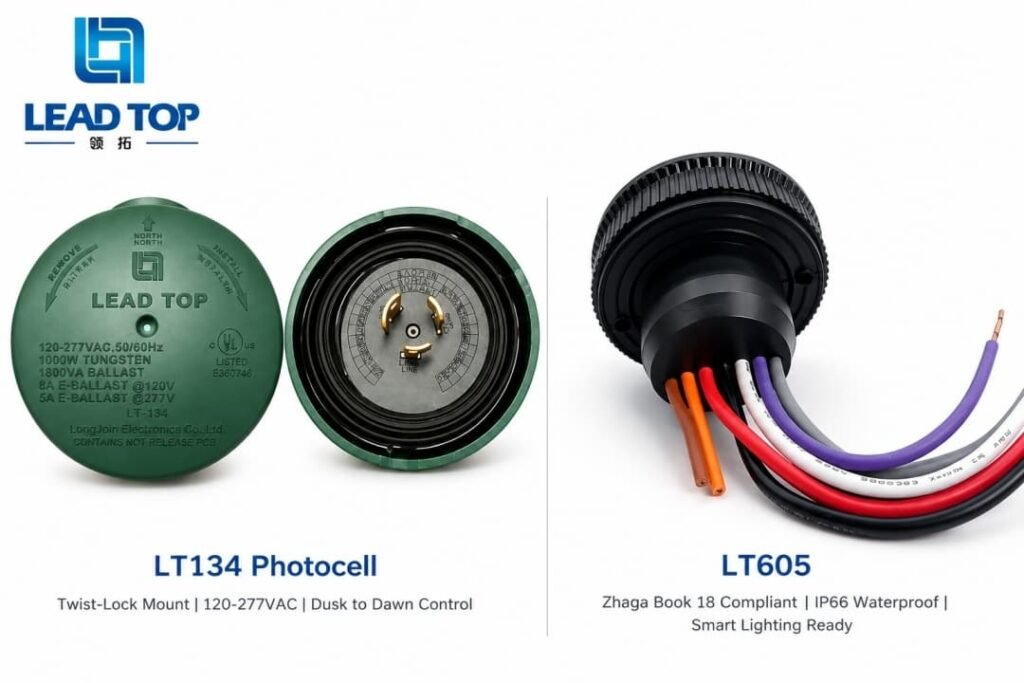
Entre los principales beneficios se incluyen:
- Instalación con sistema de bloqueo giratorio para una sustitución sencilla en el lugar de instalación.
- Interfaz ANSI C136.41 para conexiones de control estandarizadas.
- Protección contra sobretensiones a través de la LT134
- Compatibilidad de la iluminación LED para aplicaciones viales
- Mantenimiento más sencillo en grandes redes de iluminación.
Aplicaciones
Se adapta a aplicaciones como:
- Alumbrado público municipal
- Mejoras en las carreteras urbanas
- Calles residenciales
- parques públicos
- Proyectos de modernización LED a gran escala
La norma ANSI C136.41 también establece los requisitos mecánicos y eléctricos para los controles de tipo bloqueo y los receptáculos correspondientes, lo que permite el uso de interfaces estandarizadas para el control de la iluminación.
¿Deberían los municipios prepararse para la iluminación inteligente durante una modernización con tecnología LED?
En muchos casos, sí. Brasil ya está yendo más allá de la simple conversión a LED. Los proyectos municipales ahora incluyen monitoreo remoto, detección de fallas y control remoto de las redes de iluminación. Por ejemplo, Maceió utiliza telegestión para monitorear el alumbrado público en tiempo real e identificar fallas de forma remota.
Consideraciones importantes durante una modernización con iluminación LED.
Una modernización puede preparar la red para futuras actualizaciones teniendo en cuenta lo siguiente:
- Receptáculos estandarizados para facilitar la sustitución de los dispositivos de control.
- Capacidad de atenuación para estrategias de iluminación adaptativa
- Monitorización remota para una detección de fallos más rápida.
- Interfaces de control compatibles para la futura integración de IoT.
- Infraestructura ampliable para sistemas de iluminación conectados.
Este enfoque ya se está implementando en proyectos municipales brasileños. Manaus utiliza telegestión en más de 801 puntos de alumbrado público, mientras que Erechim está desplegando control inteligente en más de 16 000 puntos.
En el caso de infraestructuras públicas de larga duración, la preparación para estas capacidades durante la modernización inicial con tecnología LED puede reducir la necesidad de modificaciones costosas posteriormente.
Aquí hay una tabla comparativa de las necesidades actuales frente a las necesidades futuras.
| Requisitos de iluminación | Reemplazo básico de LED | Modernización preparada para el futuro |
| Control automático de encendido/apagado | Sí | Sí |
| Receptáculo estandarizado | Sí | Sí |
| Reemplazo del fotocontrol | Sí | Sí |
| Atenuación de 0 a 10 V | No necesariamente | Sí |
| Dalí compatibilidad | No necesariamente | Sí |
| Iluminación adaptativa | Limitado | Posible |
| Monitoreo remoto | No necesariamente | Posible |
| Integración de ciudades inteligentes | Limitado | Mejor preparados |
Cual Control de iluminación ¿Esta solución puede respaldar futuros proyectos municipales inteligentes?
Solución Smart-Ready recomendada
Para una red LED preparada para el futuro, considere lo siguiente: LT154E Fotocontrol de atenuación electrónical con el LT635 Receptáculo regulable de 7 pines. Esta configuración añade capacidad de atenuación a la interfaz de fotocontrol estándar. La norma ANSI C136.41 actual cubre las interfaces entre controles de tipo bloqueo y luminarias, incluyendo atenuación de 0-10 V y DALI.
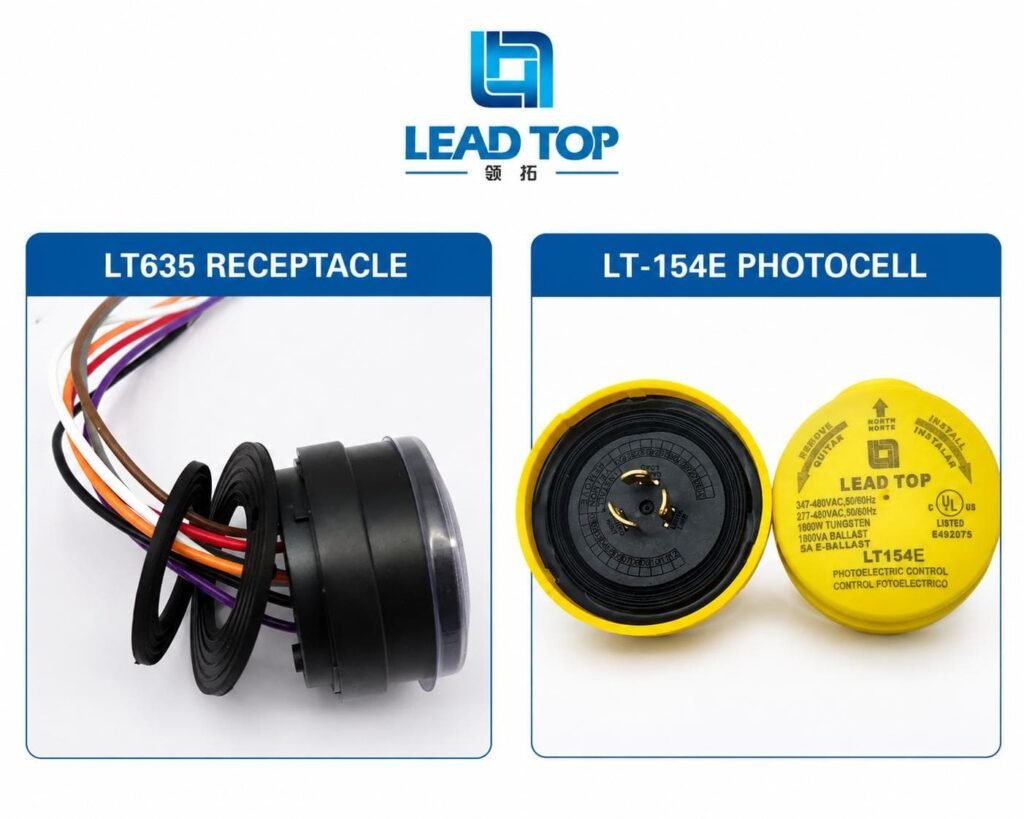
Esta combinación es adecuada para una iluminación preparada para el futuro.
Esta combinación puede ayudar a los municipios a prepararse para estrategias de control más avanzadas sin necesidad de rediseñar la interfaz básica de la luminaria.
Entre las principales ventajas se incluyen:
- Soporte de atenuación de 0 a 10 V
- Compatibilidad con atenuación DALI
- Interfaz de control de siete pines
- Infraestructura preparada para la tecnología inteligente
- Actualizaciones de control futuras más sencillas
La norma ANSI C136.41 establece específicamente los requisitos mecánicos y eléctricos para los dispositivos de control de atenuación y los receptáculos correspondientes.
Aplicaciones
Esta arquitectura es adecuada para:
- Iluminación inteligente para ciudades
- Iluminación pública adaptativa
- Programas municipales de ahorro energético
- Proyectos de carreteras conectadas
- Redes de alumbrado público preparadas para el futuro
Para una modernización a largo plazo, incorporar esta capacidad desde el principio puede brindar a los municipios mayor flexibilidad a medida que evolucionan los requisitos de control de la iluminación.
¿Qué deben comprobar los ingenieros municipales antes de seleccionar fotocélulas para una gran instalación de iluminación LED?
Seleccionar un interruptor de fotocélula con sensor de luz Para una modernización a gran escala, se requiere más que verificar el voltaje y la potencia. El control debe ser compatible con la luminaria, el receptáculo, las condiciones de funcionamiento y los planes futuros. La norma ANSI C136.41-2025 define los requisitos mecánicos y eléctricos para controles de tipo bloqueo y receptáculos compatibles, incluyendo atenuación de 0 a 10 V y DALI.
1. ¿Es compatible el fotocontrolador con el controlador LED y la luminaria?
Primero, verifique los requisitos eléctricos del controlador. Los controladores LED pueden tener diferentes características de funcionamiento y de corriente de arranque. NEMA destaca específicamente la compatibilidad del controlador y la corriente de arranque como consideraciones importantes.
2. ¿El receptáculo utiliza una interfaz estandarizada?
Una interfaz estandarizada simplifica la instalación y el reemplazo. La norma ANSI C136.41 establece los requisitos para las interfaces de control y receptáculos con sistema de bloqueo.
3. ¿Puede el Fotosensor ¿Ofrecer una conmutación fiable a largo plazo?
Evalúe el rendimiento de conmutación, la protección ambiental, la resistencia a sobretensiones y la vida útil prevista. Pequeñas tasas de fallos pueden generar un trabajo de mantenimiento considerable en miles de dispositivos.
4. ¿Qué tan fácil es? Fotocontrol ¿Para reemplazar en el campo?
Elija un diseño que permita un reemplazo rápido sin necesidad de recableado. Los componentes consistentes también pueden simplificar la gestión de repuestos.
5. ¿Puede la infraestructura de iluminación soportar una futura expansión?
Antes de realizar la adquisición, determine si la red podría requerir posteriormente lo siguiente:
- Atenuación de 0–10 V o DALI
- Monitoreo remoto
- Iluminación adaptativa
- Controles de iluminación inteligentes
- Integración de IoT
Planificar estos requisitos con antelación puede evitar costosos cambios en la infraestructura más adelante.
¿Qué lecciones puede enseñar la modernización con tecnología LED de Ponta Grossa a otros municipios brasileños?
¿Qué pueden aprender otras ciudades de Ponta Grossa? La escala cambia las prioridades. La ciudad ya ha adaptado 38.116 puntos de alumbrado público, alcanzando una cobertura 80%. Su programa de colaboración público-privada (PPP) abarca más de 47.000 puntos e incluye una gestión a largo plazo.
La lección es clara: los proyectos municipales de iluminación LED deben planificar algo más que luminarias eficientes. También deben priorizar:
- Control de iluminación fiable
- Componentes estandarizados
- Mantenimiento más sencillo
- Futuras actualizaciones de iluminación inteligente
Preguntas frecuentes sobre fotocontroles para proyectos LED a gran escala
1. ¿Qué deben tener en cuenta los ingenieros al seleccionar fotocontroles?
Verifique la compatibilidad del controlador LED, el rendimiento de conmutación, la corriente de irrupción, la protección contra sobretensiones, la vida útil y la protección ambiental. Las normas ANSI C136.10 y C136.41 establecen los requisitos pertinentes para las interfaces y los receptáculos de fotocontrol.
2. ¿Por qué es importante un receptáculo estandarizado?
Una interfaz estandarizada simplifica la instalación y el reemplazo en campo. Además, ayuda a los municipios a mantener la uniformidad de los componentes en redes extensas.
3. ¿Cómo pueden los municipios reducir los costos de mantenimiento?
Utilice fotocontroles fiables y componentes estandarizados. La rápida sustitución mediante conexión directa puede reducir el tiempo de mantenimiento y simplificar la gestión de repuestos.
4. ¿Deberían los municipios prepararse para la iluminación inteligente?
Sí, cuando se planifican futuras actualizaciones. La atenuación y la iluminación adaptativa pueden ser más fáciles de implementar cuando la infraestructura inteligente ya está incluida.
Palabras finales
Ponta Grossa demuestra que la modernización integral de la tecnología LED requiere más que luminarias eficientes. Los fotocontroles fiables y las interfaces estandarizadas pueden ayudar a los municipios a gestionar estas redes a largo plazo. Para proyectos que necesitan componentes de control de iluminación fiables, Punta de plomo Ofrece fotocélulas NEMA, enchufes y soluciones preparadas para tecnología inteligente para aplicaciones municipales y de infraestructura.
Enlaces externos
- https://cpreluz.procel.gov.br/2025/08/14/enbpar-e-mme-anunciam-mais-de-r-150-milhoes-para-modernizacao-da-iluminacao-publica-em-municipios/
- https://en.wikipedia.org/wiki/National_Institute_of_Metrology,_Standardization_and_Industrial_Quality
- https://www.ansi.org/
- https://en.wikipedia.org/wiki/0-10_V_lighting_control
- https://www.dali-alliance.org/


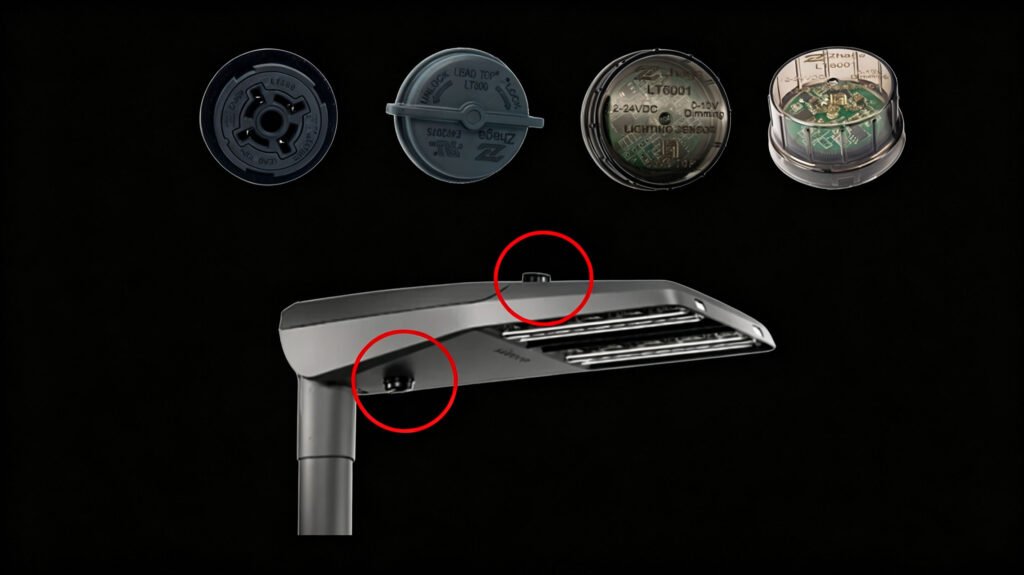

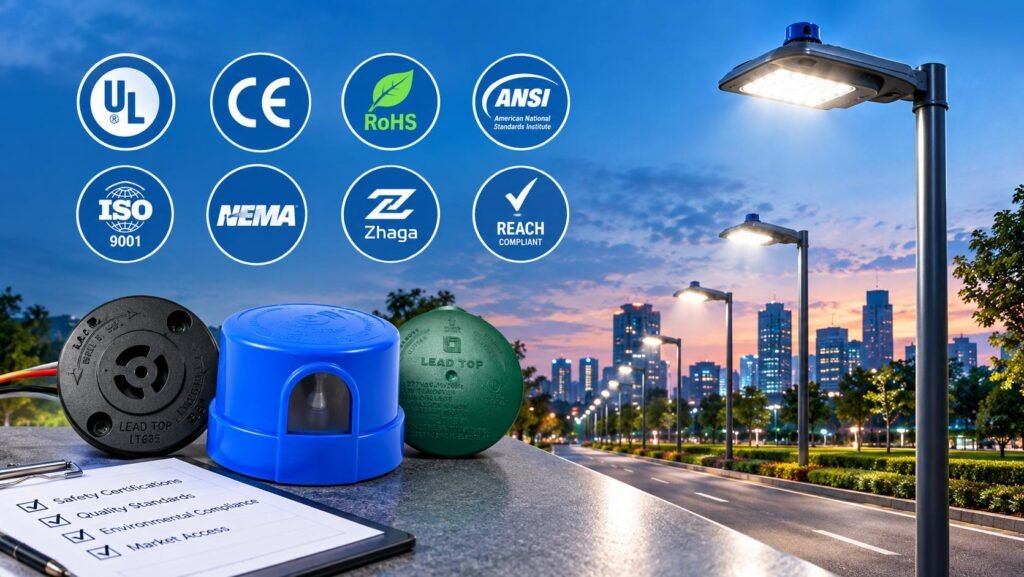
 English
 Portuguese (Brazil)
 Spanish
 Russian
 Dutch
Dutch Japanese
 Portuguese (Portugal)