El alumbrado público es uno de los mayores gastos recurrentes para las metrópolis, las instalaciones comerciales y los proyectos de infraestructura. Desde autopistas y espacios públicos hasta zonas industriales y calles céntricas, los sistemas de iluminación consumen una cantidad considerable de electricidad y requieren mantenimiento constante.
Con el aumento de los precios de la energía y la presión acumulada para mejorar la sostenibilidad, las metrópolis y las organizaciones buscan activamente formas inteligentes de reducir los costos operativos. Una de las soluciones más eficientes y ampliamente aceptadas es el uso de célula fotoeléctrica controladores.
Estos dispositivos inteligentes gestionan automáticamente la iluminación en función de las condiciones de luz ambiental, asegurando que las farolas funcionen solo cuando sea necesario. Al incorporar fotocélulas a los sistemas de iluminación, las ciudades pueden lograr un ahorro energético considerable, reducir los costes de mantenimiento y mejorar la eficiencia general del sistema.
Esta guía explica en detalle cómo las fotocélulas ayudan a reducir los costes de alumbrado público y cómo elegir la solución adecuada para su proyecto.
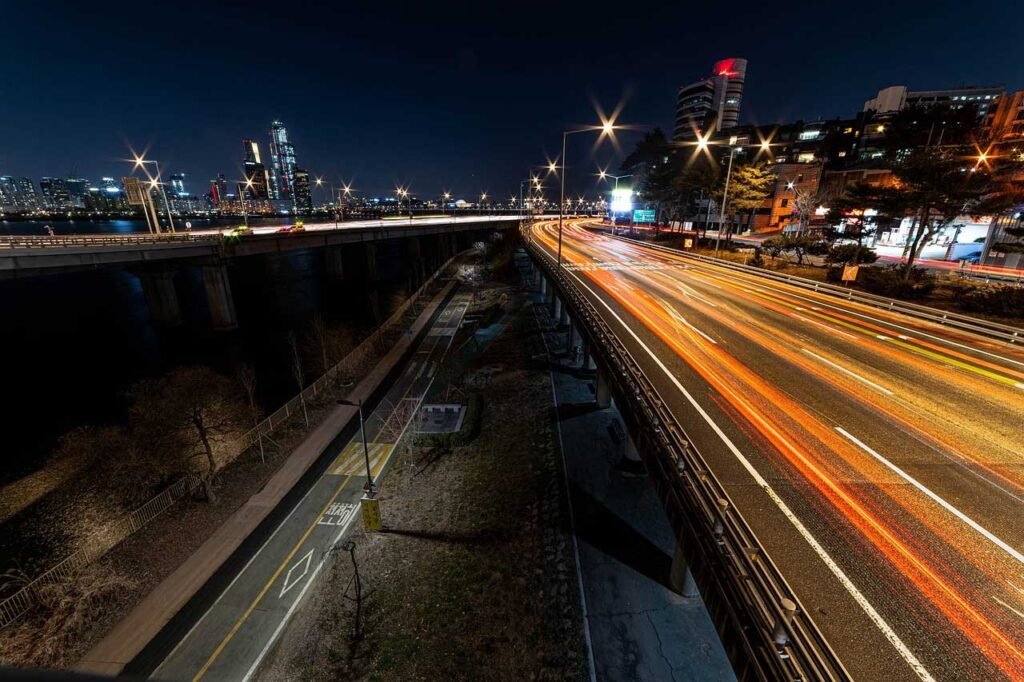
¿Cómo contribuyen las fotocélulas a lograr ahorros de energía en el alumbrado público?
La principal ventaja de utilizar controladores fotoeléctricos radica en su capacidad para ofrecer un considerable ahorro energético mediante la automatización. A diferencia de los sistemas físicos o basados en temporizadores, las fotocélulas detectan los niveles de luz natural y encienden automáticamente las farolas al anochecer y las apagan al amanecer.
Esta función, sencilla pero muy eficiente, elimina el consumo innecesario de energía. En los sistemas convencionales, las luces a veces permanecen encendidas durante el día debido a errores humanos o temporizadores incorrectos. Las fotocélulas eliminan por completo esta ineficiencia.
En sistemas de alumbrado público de máxima potencia, el uso de fotocélulas puede reducir el consumo eléctrico entre 40 y 60 TP/T, dependiendo de los patrones de uso y las condiciones ecológicas. Este nivel de ahorro puede traducirse en importantes beneficios económicos, especialmente para proyectos comunitarios de gran envergadura.
Además del control básico de encendido/apagado, los sistemas fotoeléctricos progresivos ofrecen funciones adicionales que aumentan aún más el consumo de energía. Por ejemplo:
- La capacidad de atenuación permite que las luces funcionen con un deslumbramiento reducido durante las horas de menor afluencia.
- La incorporación de un temporizador permite programar la iluminación de forma personalizada.
- Los sistemas de control adaptativo regulan la iluminación en función de las variaciones periódicas de la luz natural.
En los sistemas de alumbrado público inteligente, se prevé la conexión de fotocélulas a las redes integradas, ya que estas redes pueden monitorizar situaciones reales como el flujo de tráfico, las condiciones meteorológicas y otras actividades. Esto permite ajustar con precisión los niveles de iluminación, garantizando una visibilidad óptima y minimizando el consumo energético.
Por ejemplo, durante la noche, cuando el tráfico es mínimo, se puede reducir la intensidad de la iluminación sin comprometer la seguridad. Del mismo modo, en situaciones de niebla o lluvia, se puede aumentar el deslumbramiento de forma automatizada.
Las fotocélulas transforman los sistemas de iluminación tradicionales en soluciones inteligentes de bajo consumo energético, convirtiéndose así en un componente crucial de la infraestructura contemporánea al fusionar la informatización con el control inteligente.,
¿Cómo reducen las fotocélulas los costes de mantenimiento y prolongan la vida útil del sistema?
Además de reducir el consumo de energía, los controladores de fotocélulas desempeñan un papel fundamental en la disminución de los gastos de mantenimiento. Los sistemas de alumbrado público requieren revisiones, reparaciones y sustituciones periódicas, lo que contribuye a los gastos operativos.
Una de las principales causas de los problemas de mantenimiento son las horas de funcionamiento innecesarias. Cuando las luces permanecen encendidas más tiempo del necesario, los componentes eléctricos o las luminarias se estropean prematuramente. Las fotocélulas ayudan a prolongar la vida útil de estos componentes, ya que garantizan que la iluminación funcione solo cuando se requiere.
Esta reducción en el tiempo de trabajo conlleva inevitablemente menos fallos y reemplazos. En consecuencia, los equipos de mantenimiento dedican menos tiempo a reparaciones rutinarias y más a desarrollos estratégicos.
Otra ventaja importante es la eliminación de la interferencia física. Los sistemas convencionales suelen requerir personal para encender y apagar las luces o regular los temporizadores. Este proceso no solo es ineficiente, sino también propenso a errores. Las fotocélulas automatizan estas tareas, reduciendo los costos laborales y mejorando la fiabilidad.
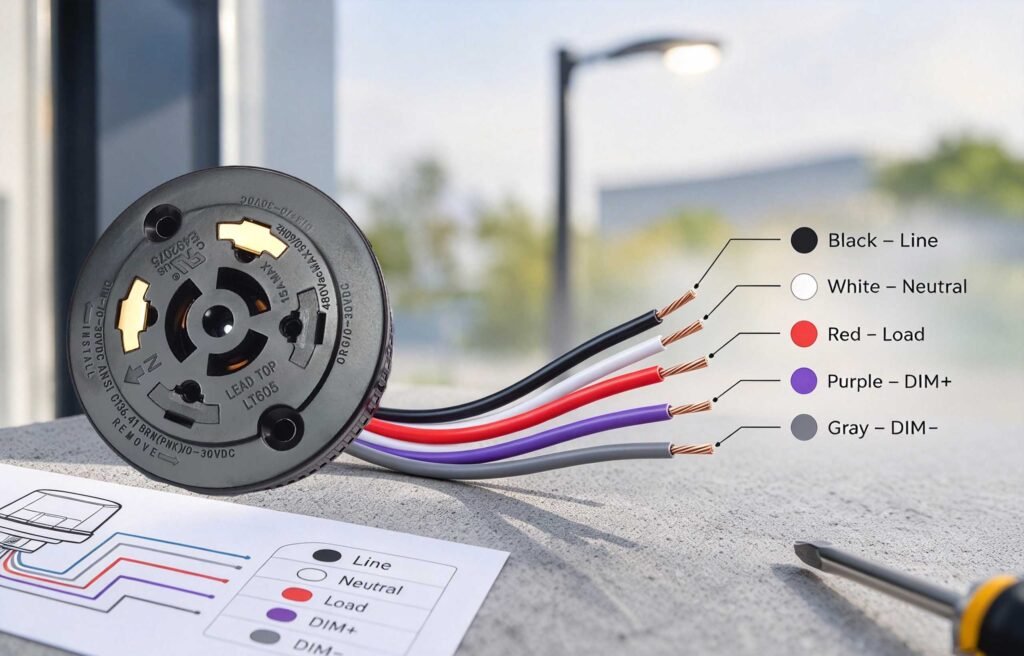
Sistemas innovadores reforzados con 5 pines o fotocélulas de 7 pines Ofrecen ventajas aún mayores mediante el mantenimiento predictivo. Estos controladores inteligentes pueden integrarse en sistemas de iluminación en red que monitorizan el rendimiento en tiempo real.
Cuando se detecta un error, como irregularidades en el voltaje o degradación de las lámparas, el sistema puede enviar alertas a los equipos de mantenimiento antes de que ocurra una catástrofe. Esta táctica preventiva ayuda a:
- Evite interrupciones imprevistas.
- Reducir los gastos de reparación de emergencia
- Mejorar el tiempo de actividad general del sistema
Al minimizar tanto el mantenimiento rutinario como el de emergencia, las fotocélulas reducen considerablemente el coste total de propiedad de los sistemas de alumbrado público.

¿Cómo elegir la fotocélula adecuada para lograr la máxima reducción de costes?
Para lograr el máximo ahorro energético y un funcionamiento óptimo, es fundamental elegir el controlador de fotocélula adecuado. Dado que existen diferentes tipos de fotocélulas fabricadas para aplicaciones específicas, seleccionar la correcta garantiza el mejor rendimiento.
Tabla 1: Tipos de fotocélulas y sus aplicaciones
| Tipo de fotocélula | Área de aplicación | Características principales |
| 3 pines | Zonas residenciales / de bajo tráfico | Control básico de encendido/apagado |
| 5 pines | Iluminación comercial | Admite atenuación y compatibilidad con LED. |
| 7 pines | Proyectos industriales/ciudades inteligentes | Control en red y funciones avanzadas |
¿Qué factores debe tener en cuenta al seleccionar una fotocélula?
Al seleccionar una fotocélula, deben tenerse en cuenta numerosos factores importantes:
- Compatibilidad de carga: Asegúrese de que la fotocélula pueda soportar la carga eléctrica de su sistema de iluminación.
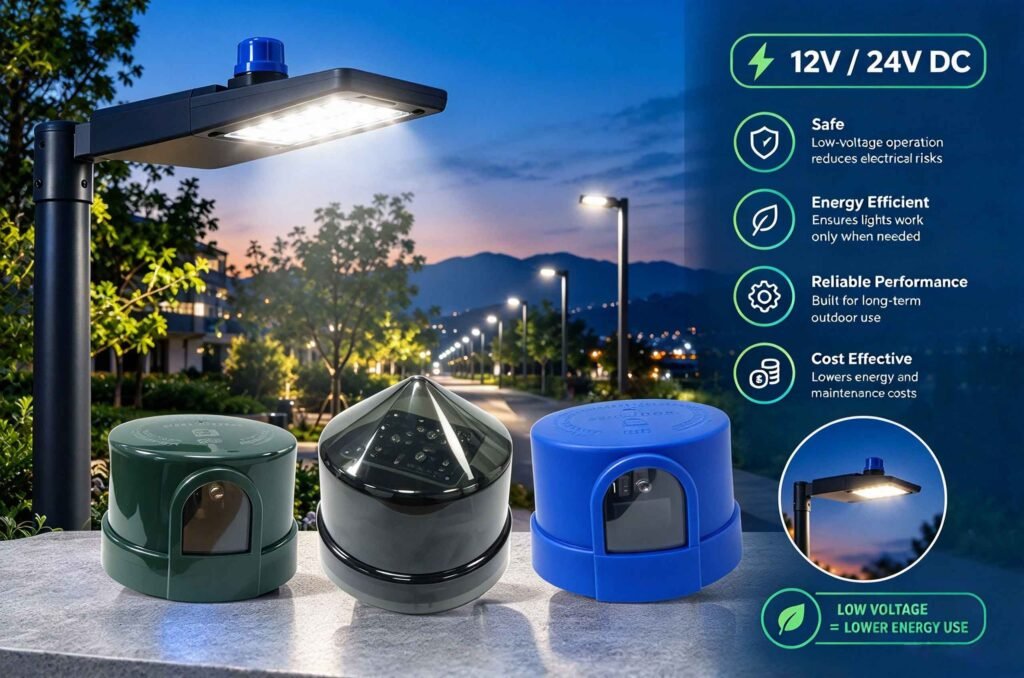
- Rango de voltajeIntenta elegir un dispositivo que sea compatible con tu fuente de alimentación local.
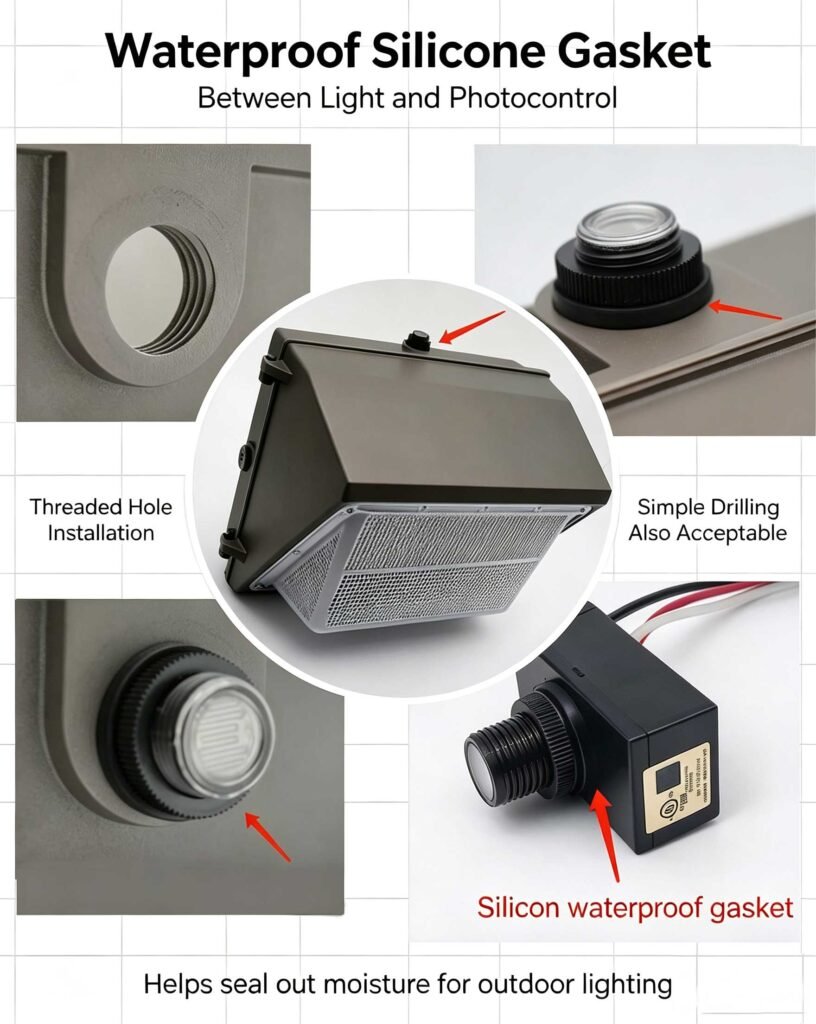
- Condiciones ecológicas: Elija siempre aquellos modelos que tengan clasificación de resistencia a la intemperie (IP65 o superior) para uso en exteriores.
- Funciones inteligentes: Decide si tu proyecto necesita atenuación, monitorización remota o integración de IoT.
Una fotocélula seleccionada adecuadamente no solo mejora la eficiencia, sino que también aumenta la fiabilidad y la durabilidad del sistema.
Aceptar el impacto económico de las células fotovoltaicas ayuda a validar su aceptación tanto en proyectos pequeños como en proyectos de gran envergadura.
Tabla 2: Beneficios de las fotocélulas en la reducción de costos
| Factor de costo | Impacto de las fotocélulas |
| Consumo de energía | Reducido en 40–60% |
| Costos de mantenimiento | Menor debido a un menor número de fallos. |
| Costos laborales | Reducción de la intervención manual |
| Vida útil del equipo | Prolongado debido al uso controlado |
Preguntas frecuentes (FAQ)
¿Cuánta energía se puede ahorrar con células fotovoltaicas?
Dependiendo del diseño del sistema y los patrones de uso, el ahorro de energía suele oscilar entre 40% y 60%.
¿Pueden las células fotovoltaicas reducir los costes de mantenimiento?
Sí, al informatizar las operaciones y reducir el tiempo de funcionamiento, las fotocélulas prolongan la vida útil de los equipos y minimizan las necesidades de mantenimiento.
¿Dónde se pueden conseguir fotocélulas fiables?
Fabricantes como Lead Top ofrecen fotocélulas de alta calidad diseñadas para proyectos públicos y comerciales, brindando soluciones confiables y con licencia.
¿Pueden funcionar las células fotoeléctricas en diferentes condiciones climáticas?
Sí, dado que las fotocélulas modernas se someten siempre a pruebas en condiciones climáticas adversas para garantizar su resistencia a altas temperaturas, humedad y exposición ambiental, por eso pueden garantizar un rendimiento constante durante todo el año.
Conclusión:
A medida que las ciudades y las organizaciones se esfuerzan por reducir los gastos y mejorar la sostenibilidad, los controladores de fotocélulas se han convertido en un componente importante de los sistemas de iluminación contemporáneos.
Al generar un importante ahorro energético, reducir los gastos de mantenimiento y permitir una mecanización inteligente, las fotocélulas ofrecen una solución práctica y rentable para los concursos de alumbrado público.
Su capacidad para adaptarse a entornos ecológicos, integrarse con sistemas inteligentes y prolongar la vida útil de los equipos las convierte en una valiosa inversión para cualquier proyecto de iluminación.
Empresas como Lead Top ofrecen soluciones fotoeléctricas innovadoras que combinan fiabilidad, eficiencia y resistencia, ayudando a ciudades y empresas a conseguir ahorros duraderos sin comprometer el alto rendimiento.
Llamada a la acción (CTA)
- Obtén una muestra gratuita: prueba las células fotovoltaicas de bajo consumo antes de comprarlas.
- Contacta con Lead Top: optimiza tu proyecto de iluminación con asistencia experta.
- Solicite la lista de precios – Disponible para pedidos al por mayor y municipales.
Referencias:
- https://leaditop.com/product-2/
- https://leaditop.com/product/3-pin-nema-base-high-quality-photocell-3pin-electronic-photo-control-switch-outdoor-sensor-day-night-light-switch/?_gl
- https://elehub.com/what-are-voltage-ranges/
- https://leaditop.com/product/0-10v-dali-dimming-street-lightcontrol-receptacle-lt605-0-10v-dali-dimming7-pin-photocell-receptacle0-10v/?_gl


 English
 Portuguese (Brazil)
 Spanish
 Russian
 Dutch
Dutch Japanese
 Portuguese (Portugal)