Introducción
La rápida urbanización, el creciente consumo de energía, la congestión del tráfico, las preocupaciones ecológicas y la creciente demanda de servicios públicos están obligando a los gobiernos a replantearse el funcionamiento de los municipios, y debido a todos estos factores, los municipios se enfrentan a desafíos extraordinarios.
Esta transformación está creando una nueva generación de infraestructuras inteligentes, donde la iluminación, el transporte, los servicios públicos, las redes de comunicación y los servicios públicos trabajan conjuntamente mediante tecnologías digitales.
Uno de los pilares fundamentales de esta revolución es el ecosistema de iluminación inteligente, donde los sistemas de iluminación modernos hacen mucho más que simplemente iluminar. Funcionan como sensores, plataformas de comunicación y puntos de control operativo que contribuyen a alcanzar objetivos más amplios de gestión urbana.
A medida que los municipios continúan su proceso de renovación digital, tecnologías como las fotocélulas para alumbrado exterior, las células fotoeléctricas para iluminación exterior y los sistemas avanzados de control de iluminación se están convirtiendo en componentes importantes del futuro desarrollo metropolitano.

¿Por qué la infraestructura se está volviendo inteligente?
Los municipios contemporáneos generan enormes cantidades de información cada día.
Los patrones de tráfico cambian minuto a minuto.
La demanda de energía varía a lo largo del día.
Las condiciones meteorológicas afectan al transporte y a la seguridad pública.
Los activos de infraestructura requieren supervisión y mantenimiento constantes.
Las infraestructuras tradicionales carecen de la capacidad de responder dinámicamente a estas situaciones cambiantes.
La infraestructura inteligente resuelve este problema mediante la incorporación de:
- Sensores
- Redes de comunicación
- Plataformas en la nube
- Inteligencia artificial
- Sistemas de control automático
Esto permite a los municipios pasar de una gestión reactiva a una toma de decisiones proactiva.
Infraestructura tradicional frente a infraestructura inteligente.
| Característica | Infraestructura tradicional | Infraestructura inteligente |
| Operación | Manual | Automatizado |
| Recopilación de datos | Limitado | Continuo |
| Mantenimiento | Reactivo | Profético |
| Gestión de la energía | Horarios fijos | Optimización dinámica |
| Escucha | Inspección in situ | Monitoreo remoto |
| Escalabilidad | Limitado | Altamente escalable |
Mediante el IoT urbano, los activos de infraestructura se convierten en dispositivos conectados capaces de compartir información y respaldar la toma de decisiones en toda la ciudad.
En lugar de funcionar de forma autónoma, los sistemas pasan a formar parte de una red inteligente más amplia.
Esta es la base de la ciudad moderna conectada.
¿Por qué la iluminación exterior es la base de las ciudades inteligentes?
Entre todos los activos metropolitanos, los sistemas de iluminación ofrecen una ventaja distintiva:
A estas alturas, existen por todas partes.
Las farolas iluminan carreteras, autopistas, jardines, zonas de aparcamiento, zonas industriales, comunidades residenciales y lugares públicos.
Dado que las redes de iluminación ya están ampliamente distribuidas, ofrecen una plataforma ideal para el posicionamiento de tecnologías inteligentes.
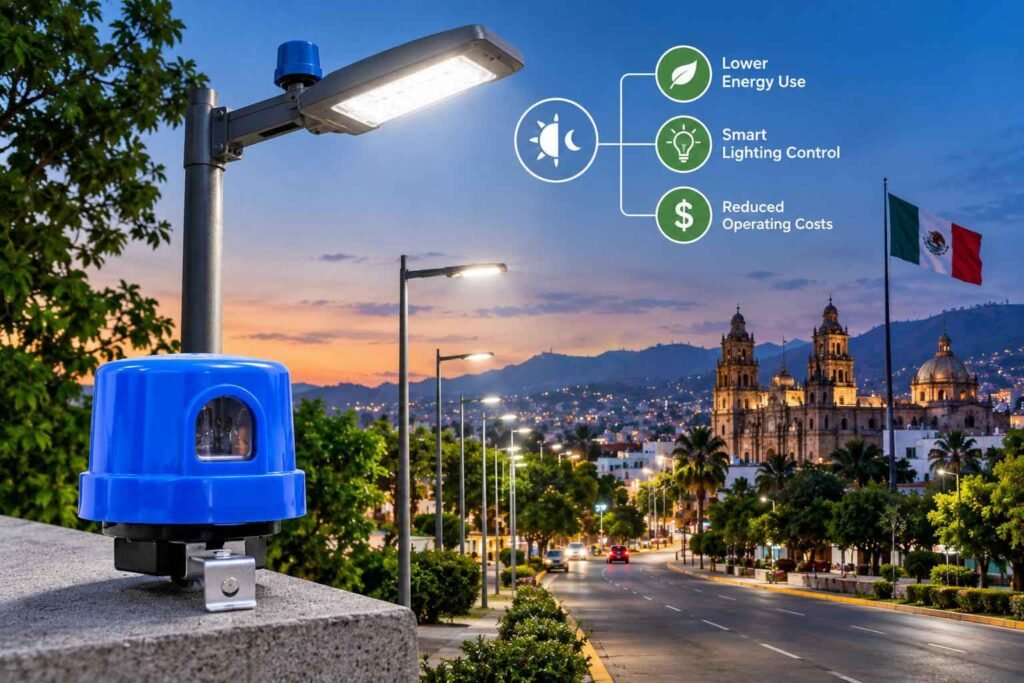
Una fotocélula moderna para alumbrado exterior puede ser mucho más que un simple dispositivo de conmutación. Puede integrarse en una plataforma de infraestructura inteligente a nivel de ciudad.
Los beneficios incluyen:
- Conexión eléctrica existente
- Amplia cobertura geográfica
- Funcionamiento ininterrumpido
- Fácil integración con sensores
- Implementación rentable
En consecuencia, en lugar de ser un simple accesorio de iluminación, la tecnología de fotocélulas para iluminación exterior se considera cada vez más una inversión estratégica en infraestructura.
¿Cómo conectan los sensores inteligentes los sistemas urbanos?
Las ciudades inteligentes dependen de los datos.
Sin sensores, los municipios no pueden recopilar la información necesaria para tomar decisiones inteligentes.
Es aquí donde tecnologías como los sistemas de sensores de cable fotoeléctrico y las soluciones de sensores de fotocélulas de iluminación se vuelven cruciales.
La infraestructura de iluminación moderna con sensores puede brindar soporte a:
- Monitoreo de la luz ambiental
- Seguimiento del consumo de energía
- Informes sobre el estado de los equipos
- Detección de fallos
- Monitoreo del tráfico
- Detección ecológica
Funciones comunes de los sensores de iluminación inteligentes
| Función del sensor | Beneficio urbano |
| Detección de luz ambiental | Control automático de iluminación |
| Monitorización de fallos | Respuesta de mantenimiento más rápida |
| Medición de energía | Costes de electricidad reducidos |
| Detección ambiental | Monitoreo de la calidad del aire |
| Análisis de tráfico | Mejor planificación del transporte |
| Diagnóstico remoto | Costos de mantenimiento más bajos |
A medida que avanza la tecnología de sensores, las redes de iluminación se convierten en componentes cada vez más importantes de los sistemas de automatización urbana.
¿Por qué las ciudades necesitan redes de control de iluminación fiables?
Los sistemas de iluminación se encuentran entre los mayores consumidores de energía en las zonas urbanas.
Incluso una pequeña ineficacia puede generar costes operativos considerables.
Las redes de control de iluminación fiables ayudan a los municipios a lograr:
Optimización energética
Los sistemas de iluminación inteligentes ajustan su funcionamiento de forma robótica en función de las condiciones ecológicas.
Esto reduce el consumo innecesario de energía al tiempo que se mantiene la seguridad pública.
Reducción de los costos de mantenimiento
La monitorización remota permite a los equipos de mantenimiento detectar problemas antes de que provoquen fallos.
Esto reduce los costos de reparación y disminuye las interrupciones del servicio.
Escalabilidad de la infraestructura
A medida que los municipios crecen, los sistemas estandarizados de control de iluminación facilitan la ampliación y la hacen más rentable.
Fiabilidad operativa
Los sistemas avanzados de fotocontrol mejoran la precisión de la conmutación y reducen los arranques falsos.
¿Cómo influyen las diferentes regiones en la adopción de la iluminación inteligente?
Europa
Los municipios europeos siguen persiguiendo ambiciosos objetivos de reducción de emisiones de carbono y de sostenibilidad.
Muchas ciudades están pasando de simples adaptaciones de LED a sistemas de iluminación totalmente conectados.
Oriente Medio
Los proyectos de ciudades inteligentes de gran envergadura integran cada vez más redes de iluminación inteligente como parte de iniciativas de infraestructura digital más amplias.
América Latina
Los programas de modernización urbana están impulsando la demanda de sistemas de control de iluminación fiables y rentables que mejoren la eficiencia energética y la seguridad pública.
¿Qué soluciones de iluminación inteligente se adaptan a las diferentes etapas del desarrollo urbano?
Solución de modernización inteligente de nivel básico
Combinación recomendada:
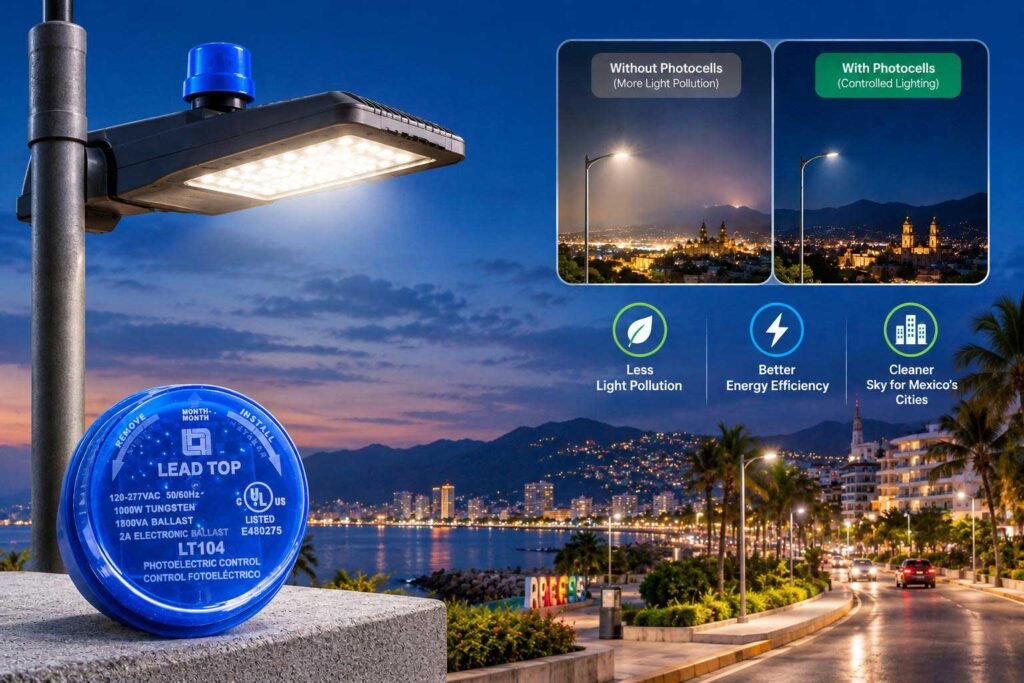
Fotocontrol electrónico de bajo costo LT104 + receptáculo de montaje NEMA LT645 / LT645B
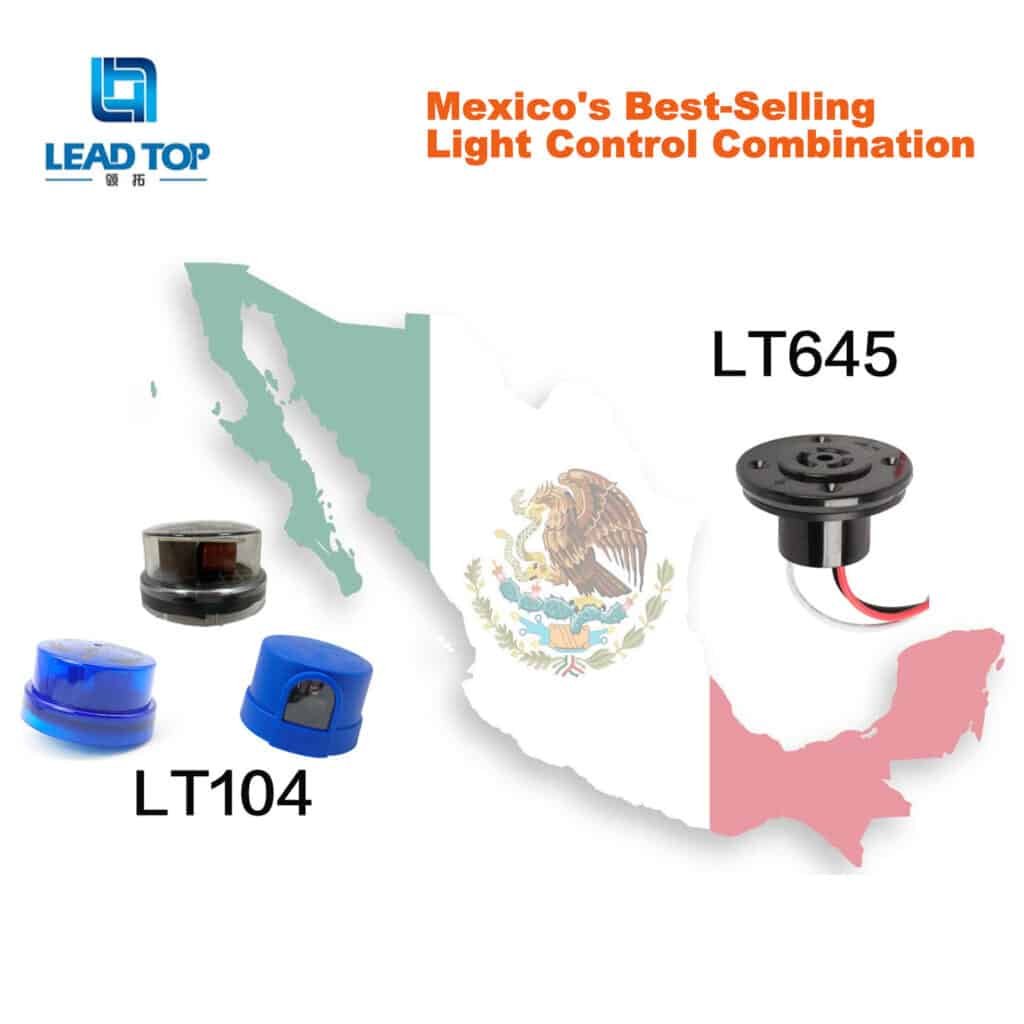
Mejor para
- proyectos de modernización con LED
- ciudades sudamericanas
- Avances en infraestructura con presupuesto ajustado
Beneficios
- Implementación rentable
- Rendimiento de conmutación fiable
- Fácil instalación
- Diseño compatible con ANSI
Solución estándar para carreteras inteligentes
Combinación recomendada:
Fotocontrol LT124 con bloqueo giratorio + Receptáculo LT605 ANSI C136.41
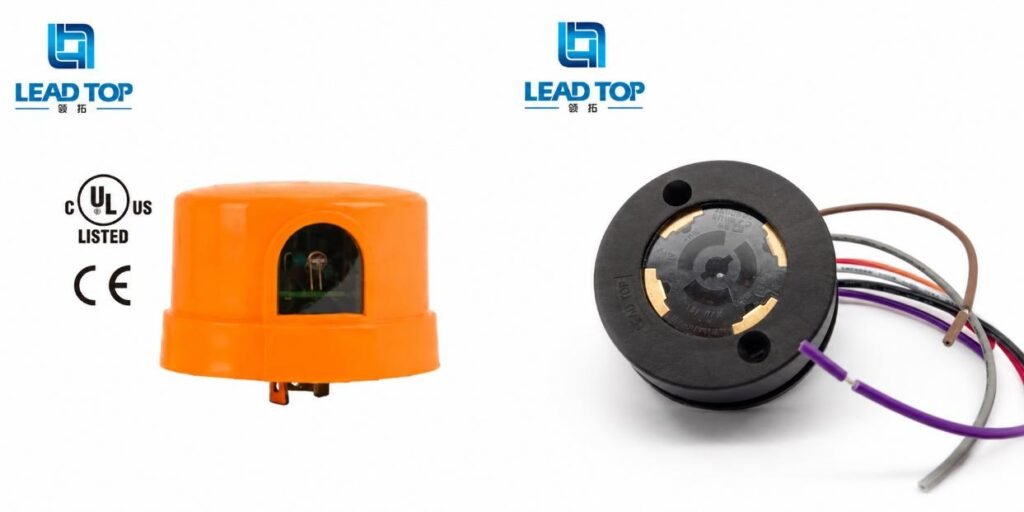
Mejor para
- sistemas de carreteras públicas
- Iluminación de la autopista
- Posicionamiento de infraestructura estándar
Beneficios
- Compatibilidad con LED
- Defensa contra sobretensiones
- Interfaces estandarizadas
- Fiabilidad a largo plazo
Solución de alumbrado municipal de alta fiabilidad
Combinación recomendada:
Fotocontrol de bloqueo giratorio de larga duración LT134 + Receptáculo giratorio LT605R
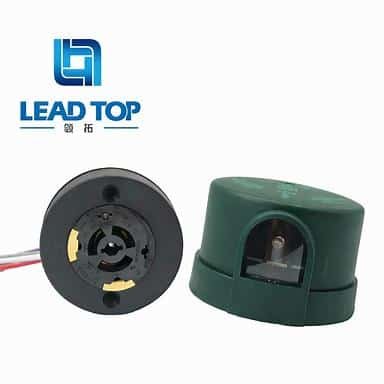
Mejor para
- regiones industriales
- Zonas de estacionamiento
- Entornos con altos costos de mantenimiento
Beneficios
- Ciclo de vida operativo prolongado
- Alta capacidad de corriente de arranque
- Instalación flexible
- Frecuencia de mantenimiento abreviada
Solución de iluminación para ciudades inteligentes del futuro
Combinación recomendada:
Conector LT600 Zhaga Book 18 + Controlador DALI LT6002
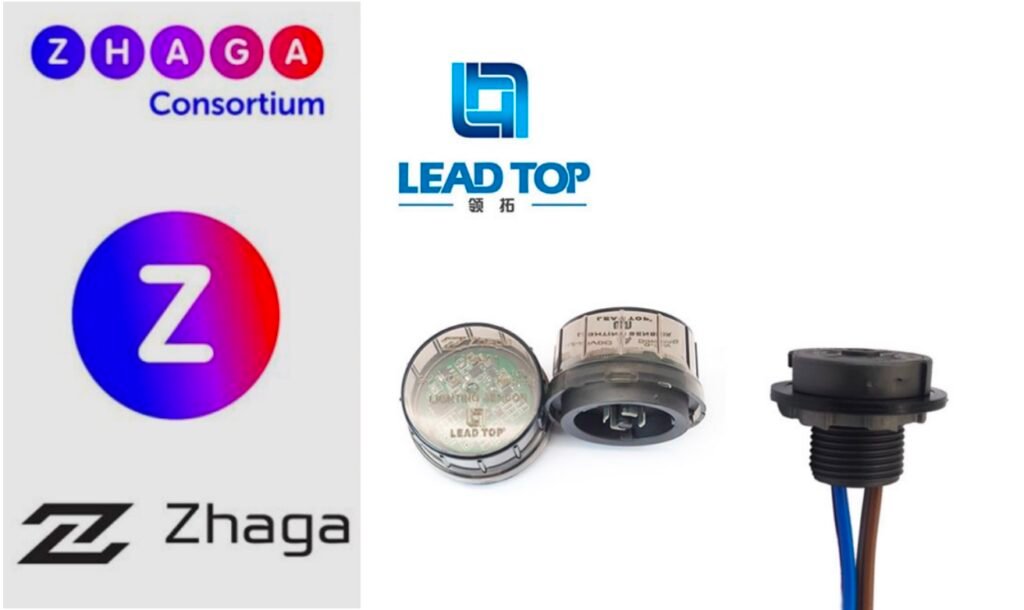
Mejor para
- Proyectos europeos de ciudades inteligentes
- Sistemas de iluminación adaptativa
- Posicionamiento inteligente de postes
Beneficios
- Zhaga Libro 18 aquiescencia
- Integración DALI
- Preparación para el IoT
- Flexibilidad para el avance futuro
¿Cómo está evolucionando la infraestructura de alumbrado urbano?
El alumbrado público ha sido objeto de varias renovaciones importantes.
Etapa 1: Iluminación tradicional
Las farolas funcionaban de forma autónoma, con poca automatización.
Etapa 2: Modernización con LED
Los municipios sustituyeron las tecnologías de iluminación ineficaces por LED para reducir el consumo de energía.
Etapa 3: Iluminación conectada
Los sistemas de iluminación se conectaron en red y se pudieron gestionar de forma remota.
Etapa 4: Infraestructura habilitada para IA
Las redes de iluminación se están convirtiendo en plataformas de infraestructura inteligente capaces de dar soporte a operaciones urbanas más amplias.
Los sistemas de iluminación del futuro podrían integrar:
- sensores ecológicos
- Módulos de comunicación
- Infraestructura de carga para vehículos eléctricos
- Wi-Fi público
- Dispositivos de monitoreo de tráfico
- Sistemas de respuesta a emergencias
¿Por qué las ciudades inteligentes necesitan socios de infraestructura más inteligentes?
Los profesionales de la iluminación centrados en la infraestructura desempeñan un papel importante para garantizar el éxito de los proyectos, ya que los proyectos de ciudades inteligentes son cada vez más complejos.
Lead-Top se centra en el desarrollo de tecnologías de control de iluminación que satisfagan las necesidades de la infraestructura urbana moderna.
Sus soluciones comprenden:
- Sistemas de fotocontrol inteligentes
- Normas ANSI Soluciones C136.10
- Interfaces preparadas para tecnología inteligente según la norma ANSI C136.41
- Conectividad del Zhaga Book 18
- Capacidades de personalización OEM
- Tecnologías de control para exteriores de larga duración
Estas capacidades ayudan a las ciudades, a los fabricantes de equipos originales y a los integradores de iluminación a prepararse para las futuras demandas de infraestructura.
Conclusión:
A medida que los municipios adoptan la automatización, la IA y la transformación digital, los sistemas de iluminación se están convirtiendo en una de las plataformas de infraestructura más importantes disponibles en la actualidad.
Para ir más allá de la iluminación básica y avanzar hacia entornos urbanos totalmente conectados, es importante utilizar tecnologías como fotocélulas para iluminación exterior, sensores de cable fotoeléctrico, iluminación adaptativa, IoT urbano y soluciones de ecosistemas de iluminación inteligente.
La iluminación inteligente se está convirtiendo en una capa fundamental de la infraestructura digital que respalda la optimización energética, el mantenimiento predictivo, la seguridad pública y la innovación futura de las ciudades inteligentes. Ya no se trata solo de encender y apagar las luces.
Llamada a la acción (CTA)
Explora las fotocélulas inteligentes, ZhagaSoluciones de control de iluminación inteligentes y compatibles, diseñadas para infraestructuras urbanas inteligentes preparadas para el futuro. Tanto si planea una modernización con tecnología LED, una mejora de la iluminación de carreteras, un posicionamiento inteligente de postes o un proyecto de ciudad conectada, Lead-Top ofrece soluciones escalables que garantizan una fiabilidad duradera, eficiencia energética y un desarrollo urbano inteligente.
Referencias:
- http://xn--https-ix3b//leaditop.com/product/lt104-conical-shell-12-48v-120-240v-twist-lock-photocontrollers-for-outdoor-landscape-barn-lighting/
- https://leaditop.com/product/ip66-ansi-c136-41-nema-3-pintwist-lock-photocell-socket-ip66-ultra-thin/
- https://leaditop.com/product/photo-electric-light-control-switch-120vac/
- https://leaditop.com/product/360-degree-rotation-nema-5-pin-360-degree-rotation-ansic136-41-nema-5-pin-twist-lock-photocell-connector/
- https://leaditop.com/product/outdoor-automatic-daylight-sensor-switch-for-led-light/
- https://leaditop.com/product/customizable-upgraded-models-ip68-highly-waterproof-zhaga-socket-lt600-2/
- https://en.wikipedia.org/wiki/American_National_Standards_Institute
- https://en.wikipedia.org/wiki/Zhaga_Consortium



 Spanish
  English
  Portuguese (Brazil)
  Russian
  Dutch
Dutch  Japanese
  Portuguese (Portugal)