Introducción: ¿Por qué es importante elegir el tipo de fotocélula adecuado?
Elegir lo correcto célula fotoeléctrica Siempre ha sido un paso importante en el diseño de sistemas de iluminación exterior eficientes y confiables. Con numerosos estándares disponibles, como cableado, NEMA o fotocélulas Zhaga, los compradores a menudo se confunden al decidir qué opción se adapta mejor a su proyecto.
Cada tipo de fotocélula está diseñado para métodos de instalación específicos, principios regionales y niveles de sofisticación tecnológica. Si se elige el tipo incorrecto, pueden surgir problemas como incompatibilidad, mayores costos de mantenimiento o un rendimiento limitado del sistema.
Sin embargo, conocer las diferencias entre estas opciones puede ayudar a los compradores a tomar decisiones sensatas que se ajusten a los requisitos del proyecto, las limitaciones presupuestarias y la escalabilidad futura.
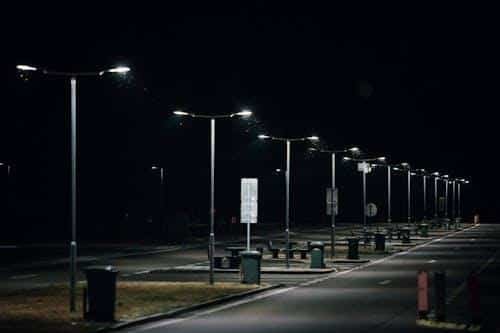
¿Cuáles son los principales tipos de fotocélulas que se utilizan en la iluminación exterior?
En el mercado internacional se utilizan principalmente tres tipos de fotocélulas: fotocélulas cableadas, fotocélulas NEMA y fotocélulas Zhaga. Cada una tiene una función específica y está diseñada para diferentes aplicaciones.
¿Qué es una fotocélula cableada?
A fotocélula con cable Se instala directamente en el interior de la luminaria y se conecta mediante cableado interno. Normalmente se utiliza en luminarias de fabricantes de equipos originales (OEM) y en proyectos donde el presupuesto es un factor importante.
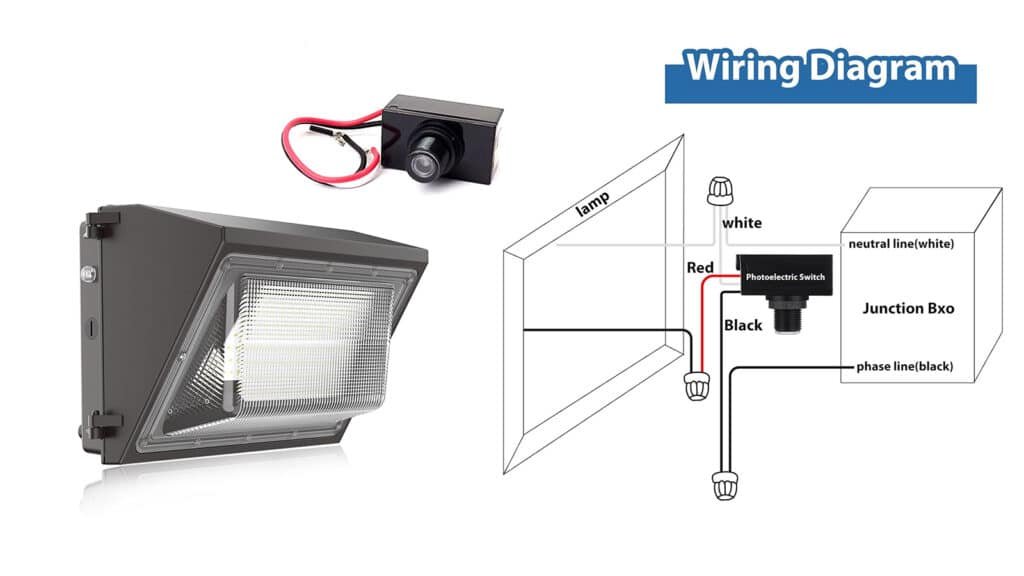
Características clave:
- Integrado en el interior de la luminaria.
- Diseño sencillo y de bajo coste
- Flexibilidad restringida para la sustitución
Este tipo se utiliza ampliamente en aplicaciones de fotocélulas cableadas, especialmente en mercados emergentes.
¿Qué es una fotocélula NEMA?
A fotocélula NEMA Es un dispositivo externo que utiliza un mecanismo de bloqueo giratorio basado en las normas ANSI. Es muy popular en Norteamérica.
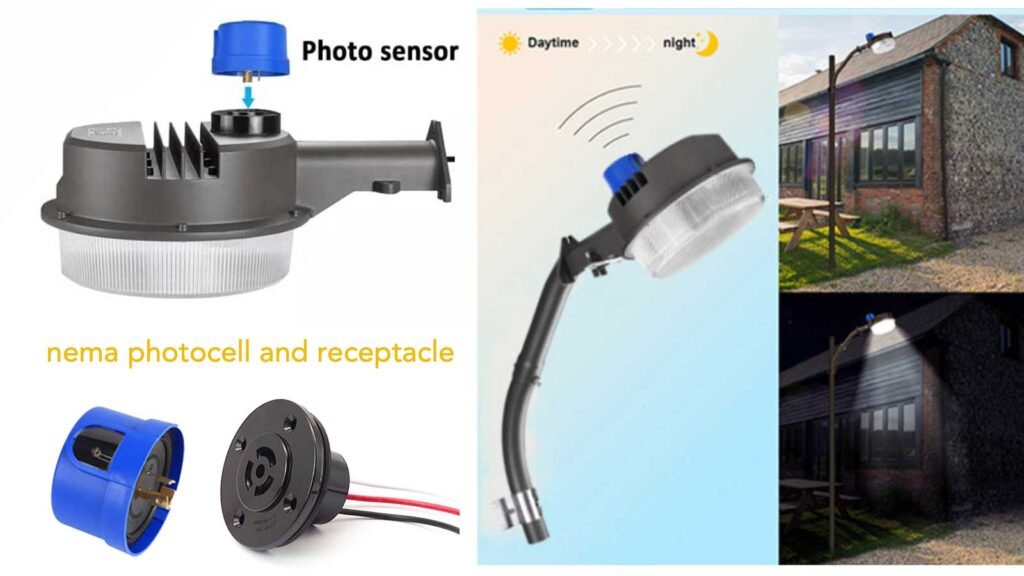
Características clave:
- Instalación plug-and-play
- Fácil sustitución y mantenimiento
- Disponible en versiones de 3, 5 y 7 pines.
Al comparar las fotocélulas NEMA y Zhaga, NEMA destaca por su simplicidad y amplia aceptación.
¿Qué es una fotocélula Zhaga?
A Fotocélula Zhaga Es una solución modular y contemporánea diseñada para sistemas de iluminación inteligentes. Cumple con la norma Zhaga Book 18 y su uso se está extendiendo en Europa.
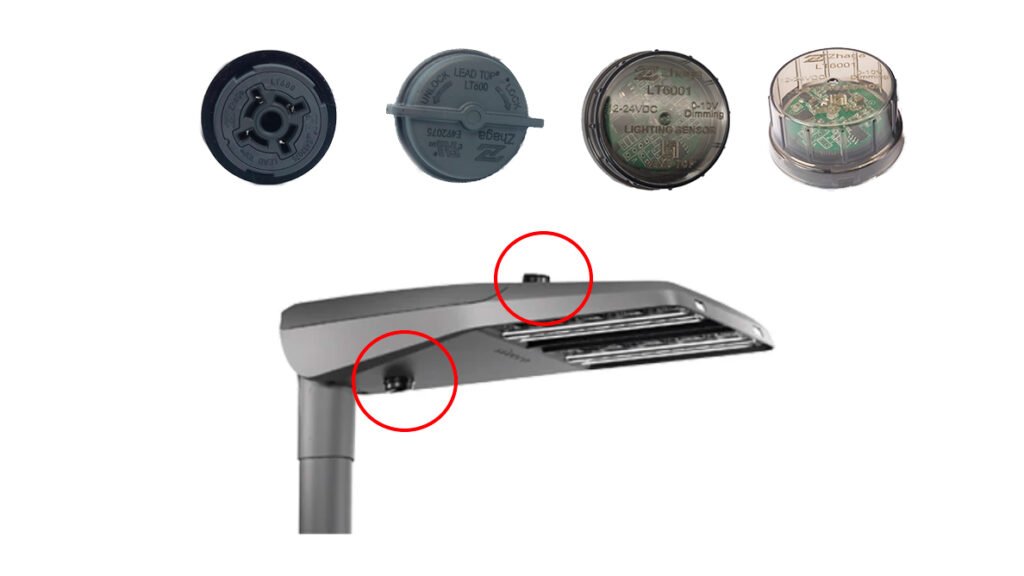
Características clave:
- Diseño compacto e integrado
- Soportes IoT y control inteligente
- Perfecto para sistemas preparados para el futuro.
Las fotocélulas de Zhaga se están convirtiendo en un elemento crucial en los sistemas progresivos de control de la iluminación exterior.
¿Cuáles son las principales diferencias técnicas entre las fotocélulas cableadas, NEMA y Zhaga?
Al evaluar las opciones de fotocélulas cableadas, NEMA y Zhaga, es importante conocer las diferencias técnicas.
Tabla 1: Comparación técnica de los tipos de fotocélulas
| Característica | Fotocélula cableada | Fotocélula NEMA | Fotocélula Zhaga |
| Método de instalación | Cableado interno | Cierre giratorio | Conector modular |
| Mantenimiento | Difícil | Fácil | Muy fácil |
| Capacidad inteligente | Limitado | Moderado (7 pines) | Avanzado |
| Nivel de costo | Bajo | Medio | Alto |
¿Cómo influyen los métodos de instalación en la selección de la fotocélula?
La instalación desempeña un papel fundamental a la hora de seleccionar el tipo de fotocélula adecuado.
- En el caso de las fotocélulas cableadas, requieren cableado interno, lo que hace que la instalación sea más compleja y requiera más tiempo.
- Una fotocélula NEMA utiliza un sistema de bloqueo giratorio, lo que permite una instalación rápida y, al mismo tiempo, una sustitución rápida sin necesidad de herramientas.
- La fotocélula Zhaga ofrece un diseño modular plug-and-play, lo que la hace perfecta para los sistemas inteligentes contemporáneos.
Para proyectos que requieren mantenimiento o renovaciones recurrentes, las soluciones de NEMA y Zhaga son más prácticas.
¿Qué tipo de fotocélula se prefiere en los diferentes mercados globales?
Las normas regionales influyen considerablemente en la elección entre fotocélulas cableadas, NEMA y Zhaga.
Preferencias del mercado:
- América del Norte: Las fotocélulas NEMA se imponen gracias a la estandarización ANSI.
- Europa: Las fotocélulas de Zhaga están ganando popularidad rápidamente gracias a su aceptación en las ciudades inteligentes.
- Sudeste Asiático y Oriente Medio: Las fotocélulas cableadas son las preferidas para proyectos con presupuestos ajustados.
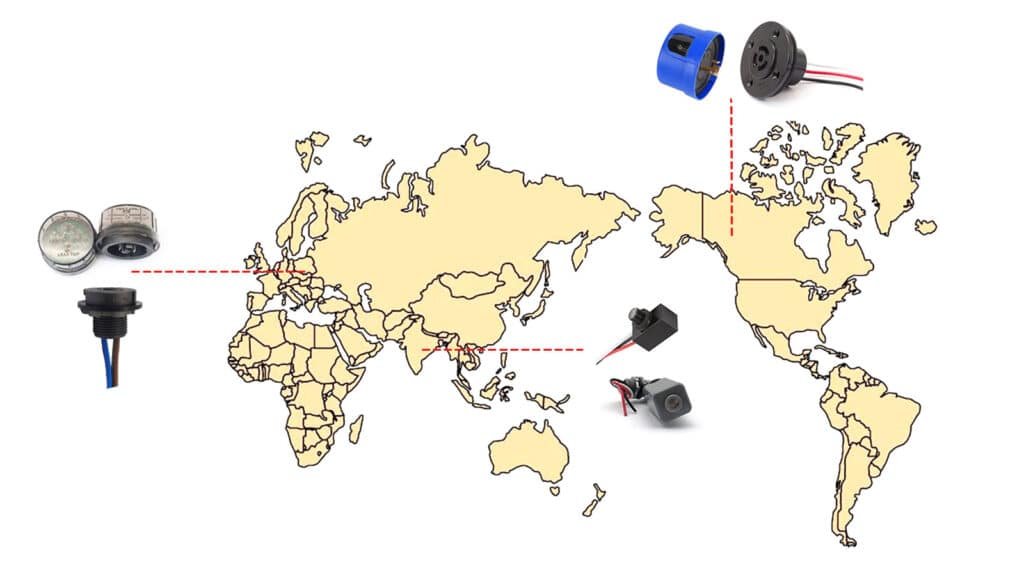
Comprender estas preferencias regionales ayuda a garantizar la compatibilidad y el reconocimiento en los mercados objetivo.
¿Cuáles son las ventajas y desventajas de cada tipo de fotocélula?
Cada tipo de fotocélula ofrece ventajas y limitaciones exclusivas.
Tabla 2: Comparación de ventajas y desventajas
| Tipo | Ventajas | Desventajas |
| Cableado | Diseño compacto y de bajo costo | Difícil de sustituir |
| NEMA | Fácil instalación, estandarizada | Diseño exterior visible |
| Zhaga | Preparado para la tecnología inteligente, compacto y a prueba de futuro. | Mayor costo |
¿Cómo influyen los requisitos de iluminación inteligente en su elección?
Los sistemas de iluminación contemporáneos requieren cada vez más funcionalidades inteligentes como la monitorización remota, la regulación de la intensidad luminosa y el análisis de datos.
- Fotocélula cableada: Funcionalidad inteligente limitada
- Fotocélula NEMA: Admite control inteligente con versiones de 5 y 7 pines.
- Fotocélula Zhaga: Diseñada para una integración inteligente completa.
Al comparar las fotocélulas de Nema y Zhaga, Zhaga ofrece características más innovadoras, lo que la convierte en la mejor opción para proyectos de ciudades inteligentes.
¿Cómo elegir la fotocélula adecuada para su proyecto?
La selección de la fotocélula correcta depende de algunos factores clave:
1. Estándar de mercado
Seleccione un tipo de fotocélula que se ajuste a los requisitos regionales.
2. Tipo de proyecto
- Pequeños proyectos → Cableado
- Proyectos comunitarios → NEMA
- Proyectos de ciudades inteligentes → Zhaga
3. Presupuesto
- Presupuesto bajo → Cableado
- Presupuesto medio → NEMA
- Alto presupuesto → Zhaga
4. Requisitos inteligentes
Si su proyecto requiere integración de IoT, elija los modelos Zhaga o los modelos NEMA avanzados.
¿Siguen siendo relevantes hoy en día las fotocélulas cableadas?
Sí, la aplicación de fotocélulas cableadas sigue siendo extremadamente pertinente, especialmente en:
- Luminarias OEM
- Mercados sensibles a los costos
- Sistemas de iluminación sencillos
Las fotocélulas cableadas siguen utilizándose ampliamente a pesar del auge de las tecnologías inteligentes debido a su asequibilidad y simplicidad.
Preguntas frecuentes (RFQ)
¿Qué tipo de fotocélula es la más adecuada para mi proyecto?
Depende de tu mercado. NEMA es perfecto para Norteamérica, Zhaga para Europa y cableado para regiones donde el costo es un factor importante.
¿Necesito una solución preparada para dispositivos inteligentes?
Si su proyecto incluye infraestructura inteligente, seleccione fotocélulas Zhaga o NEMA de 7 pines.
¿Están obsoletas las fotocélulas cableadas?
No, todavía se utiliza ampliamente en aplicaciones OEM y en aquellas centradas en presupuestos ajustados.
Conclusión: ¿Cómo elegir entre fotocélulas cableadas, NEMA y Zhaga?
La decisión de qué tipo de fotocélula elegir entre cableada, NEMA o Zhaga depende de los requisitos específicos de su proyecto, incluidos los estándares del mercado, las preferencias de instalación, el presupuesto y el nivel de inteligencia del sistema deseado.
- Las fotocélulas cableadas son perfectas para diseños integrados y sensibles al costo.
- Las fotocélulas NEMA ofrecen facilidad de uso y estandarización, especialmente en Norteamérica.
- Zhaga Las fotocélulas ofrecen capacidades inteligentes progresivas para sistemas preparados para el futuro.
Para que los compradores de sistemas de control de iluminación exterior tomen decisiones inteligentes, más eficientes y con visión de futuro, es fundamental comprender las diferencias entre las distintas opciones. En definitiva, seleccionar la fotocélula adecuada garantiza un mejor rendimiento, menores costes de mantenimiento y una fiabilidad a largo plazo.
Si tiene alguna pregunta o inquietud sobre este asunto, no dude en contactarnos. Contáctanos; Un profesional le responderá para ayudarle en un plazo de 12 horas.


 Spanish
  English
  Portuguese (Brazil)
  Russian
  Dutch
Dutch  Japanese
  Portuguese (Portugal)