Selecting the right photo control for an outdoor illumination project is often approached as a checklist-driven task. Engineers review voltage ratings, load capacities, enclosure ratings, and wiring methods, then move rapidly to procurement. While these specifications are unquestionably significant, numerous real-life performance problems do not initiate from electrical incongruity—they instigate from structural mismatch.
This is why a true photo control selection guide must go beyond datasheets and emphasis on how the control physically interacts with its surroundings. The structural design of a photo control determines how it is installed, how precisely it senses light, how reliably it performs across a site, and how easily it can acclimatize with the time.
Understanding structural choices early helps engineers to evade commissioning delays, unpredictable switching behavior, and early substitution. The following sections break down how to approach outdoor lighting control selection from a structural viewpoint instead of a purely electrical one.
Why Is Photo Control Structure a Critical Selection Factor?
The structure of a photo control defines how the sensor is oriented comparative to environmental light. This orientation unswervingly affects when lights turn on and off, how dependably twilight and dawning thresholds are sensed, and how resilient the system is to wrong initiating caused by reflected or non-natural light.
Several outdoor illumination letdowns occur not because the photo control is faulty, but because it is exposed to the wrong light input. A sensor that “sees” neighboring luminaires, reflective surfaces, or shaded zones will behave erratically irrespective of its electrical quality.
That is why outdoor lighting control selection should treat structure as part of the sensing system, not as a mechanical afterthought. The right structure certifies that sensitivity, delay, and threshold values operate as designed in real conditions.
What Are the Main Photo Control Structure Types?
At the structural level, photo controls can be divided into two main categories:
- Fixed-direction photo controls
- Adjustable photo control structures
The dissimilarity between these two is not cosmetic. It defines how much flexibility installers and commissioning squads have once the device is mounted.
Understanding the trade-offs between adjustable vs fixed photo sensor designs is the first main decision in any project.
When Is a Fixed-Direction Photo Control the Right Choice?
Fixed-direction photo controls have a sensor window that is eternally oriented relative to the housing. Once installed, the direction the sensor faces cannot be changed without physically re-mounting the device.
These designs perform good in environs where mounting situations are anticipated and tightly controlled. Typical use cases comprise:
- Factory-assembled luminaires
- Standardized pole-top installations
- Open-area sites with negligible neighboring light interfering
In these situations, the sensor dependably faces open sky, and reflected light from adjacent sources is unlikely to effect operation. For such controlled atmospheres, fixed-direction designs bid simplicity and cost proficiency.
Though, fixed designs place all obligation on the installation orientation. If the pole leans to some extent, the conduit forces an unexpected mounting angle, or the luminaire layout changes, the sensor’s exposure changes as well.
Why Do Many Outdoor Projects Exceed Fixed Design Assumptions?
Practical outdoor illumination environs hardly match perfect assumptions. Urban streets, parking areas, university grounds, industrial facilities, and wall-mounted luminaires introduce inevitable inconsistency.
Common contests comprise:
- Poles that are not perfectly vertical
- Wall mounts with unpredictable orientation
- Neighboring luminaires generating reflected light
- Architectural features generating shadow zones
In these circumstances, fixed-direction photo controls increase installation risk. A small orientation mistake at installation becomes an everlasting performance restraint.
This is where the limits of adjustable vs fixed photo sensor designs become most visible. Fixed designs assume perfection; adjustable designs acknowledge reality.
How Do Adjustable Photo Control Structures Address Installation Variability?
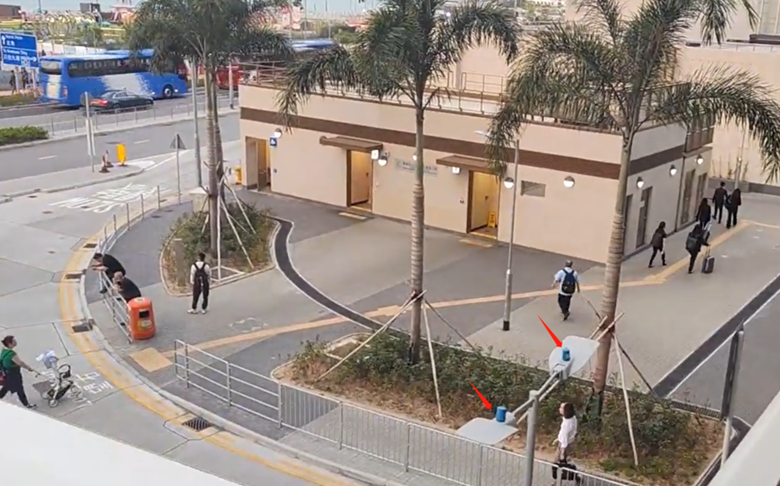
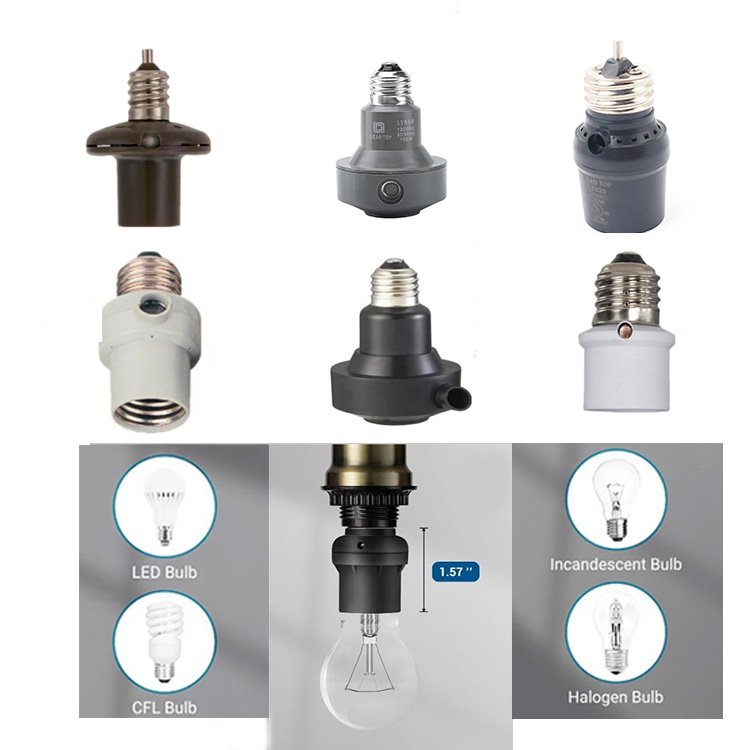
Adjustable photo control structures are manufactured to isolated mechanical mounting from sensor orientation. The most common example is Swivel Stem Control, which permits the sensor head to revolve autonomously after installation.
With swivel stem control application, installers can emphasis on safeguarding the device mechanically first. Once power is applied, sensor orientation can be enhanced during commissioning based on real light behavior instead of assumptions.
This flexibility converts commissioning from a corrective task into a controlled alignment process.
Adjustable designs are particularly valued when:
- Installation orientation cannot be guaranteed
- Numerous mounting surfaces are used in one project
- Neighboring light sources may interfere with sensing
- Performance constancy crosswise numerous fixtures is necessary
How Does Swivel Stem Control Improve Commissioning Consistency?
Commissioning is where theoretical design meets real behavior. In large projects, even small variations in sensor exposure can lead to evident differences in switching times.
Fixed designs often result in:
- Some lights turning on earlier than others
- Uneven shutoff at dawn
- Increased service calls to “fix” perceived defects
Swivel stem control application permits commissioning squads to line up each sensor to a common reference direction. This standardization guarantees that matching products behave identically across a site.
In large-scale placements, this constancy is one of the strongest arguments in any photo control selection guide preferring adjustable structures.
How Does Project Scale Influence Structure Selection?
Project scale changes the effect of small errors.
In a single or small installation, an orientation problem may be overlooked or manually rectified. In a large public or commercial project, the same problem multiplied across hundreds of fixtures becomes a systemic problem.
Fixed-direction designs tend to amplify inconsistency as project size increases. Adjustable designs, by contrast, permit controlled homogeneity irrespective of scale.
This makes adjustable structures mainly well suited for:
- Street illumination networks
- Industrial sites
- Parking areas
- Multi-building commercial sites
How Does Long-Term Environmental Change Affect Structure Choice?
Outdoor illumination environs are not stagnant. Over time, situations change due to:
- New buildings or signage
- Changes in luminaire layout
- Tree growth and landscaping
- Seasonal sun angle variation
Fixed-direction sensors cannot acclimatize to these changes. Reinstating proper performance often needs physical replacement or reinstallation.
Adjustable photo controls permit repositioning instead. A simple orientation adjustment can restore correct sensing devoid of substituting the device.
From a lifespan viewpoint, this flexibility prolongs service life and decreases upkeep costs—an essential consideration in any comprehensive photo control selection guide.
Products such as the LT210CH series exemplify how adjustable structures support real-life deployment. These swivel wire-in thermal type photo controls permit a single model to be used crosswise various installation points.
This decreases the need for many SKUs and custom mounting solutions while improving commissioning proficiency.
By supporting swivel stem control application, such products line up with contemporary outdoor lighting control selection priorities: flexibility, constancy, and lifespan value.
Structural Comparison Table: Fixed vs Adjustable Photo Controls
| Selection Aspect | Fixed-Direction Photo Control | Adjustable Photo Control |
| Sensor Orientation | Fixed at installation | Adjustable after mounting |
| Installation Tolerance | Low | High |
| Commissioning Flexibility | Minimal | High |
| Suitability for Variable Sites | Limited | Excellent |
| Long-Term Adaptability | None | Strong |
Application-Based Selection Table
| Project Condition | Recommended Structure | Reason |
| Standardized pole assemblies | Fixed-direction | Predictable orientation |
| Urban street lighting | Adjustable | Variable surroundings |
| Parking lots | Adjustable | Reflected light control |
| Wall-mounted luminaires | Adjustable | Orientation uncertainty |
| Factory-installed fixtures | Fixed-direction | Controlled environment |
What Is the Lead-Top Engineering Perspective on Structure Selection?
At Lead-Top, product selection initiates with application reality instead of perfect assumptions. By proposing adjustable designs such as Swivel Stem Control in products like the LT210CH and LT310DH series, engineers are given tools that acclimatize to actual installation situations.
This methodology supports reliable commissioning, decreases field rectifications, and maintains dependable operation all through the product lifespan.
Eventually, effective outdoor lighting control selection depends upon knowing that structure is not just a mechanical choice—it is a performance decision.

 English
  Portuguese (Brazil)
  Spanish
  Russian
  Dutch
Dutch  Japanese
  Portuguese (Portugal)