Why Does IoT Streetlighting Matter in Today’s Urban Transformation?
As metropolises change into smart urban ecosystems, outdoor illumination has become one of the utmost noticeable — and valued — structures all set for renovation. Old-fashioned streetlamps, however useful, are energy exhaustive, required expensive maintenance, and largely isolated systems. They switch on and off built on fixed timers or separate photocells, offering slight understanding or control to city operators.
With the evolution of IoT streetlighting, a different paradigm is evolving. By combining connected photocells and smart sensor integration, metropolises are constructing illumination networks that communicate, react, and adjust in real time.
IoT-enabled lighting systems produce a connected grid of luminaires that can brighten roads and transmit urban lighting data — from energy use to environmental metrics. All this data is transmitted to the centralized management platform that allows city mangements to take decisions regarding troubleshooting and maintenance, light dimming schedules, and other performance parameters.
In short, IoT transforms streetlights into vibrant, data driven systems rather than passive and stanbnant ones. This helps enhance the safety and reduces overall costs.

What Makes Traditional Streetlighting Inefficient in the Modern Era-The Key Challenges?
Before the evolution of IoT, outdoor illumination systems were designed for uncomplicatedness, not intelligence. Although old-fashioned photocells offered dusk-to-dawn operation, they are still short of the capability to communicate or adjust to real-world situations.
The important shortcomings include:
- Disconnected Systems: Maximum streetlights works as isolated units. There’s no central visibility into performance, blackout, or energy consumption.
- Energy Inefficiency: Timers and fixed photocells do not alter to environmental factors like climate, traffic flow, or periodic light of day variations.
- High Maintenance: Deprived of remote diagnostics, maintenance staffs needs to physically examine fittings, wasting time and resources.
- Limited Data Utilization: Every photocell unit sends precious data. This may include useful insights related to power consumption, fluctuations in voltage, or sensor readings. However, without IoT integration, all this precious data is wasted and cannot be used for timely decision making.
How Does Smart Sensor Integration Provide Solutions to These Challenges?
The resolve lies in smart sensor integration, combining IoT connectivity with intelligent photocell control.
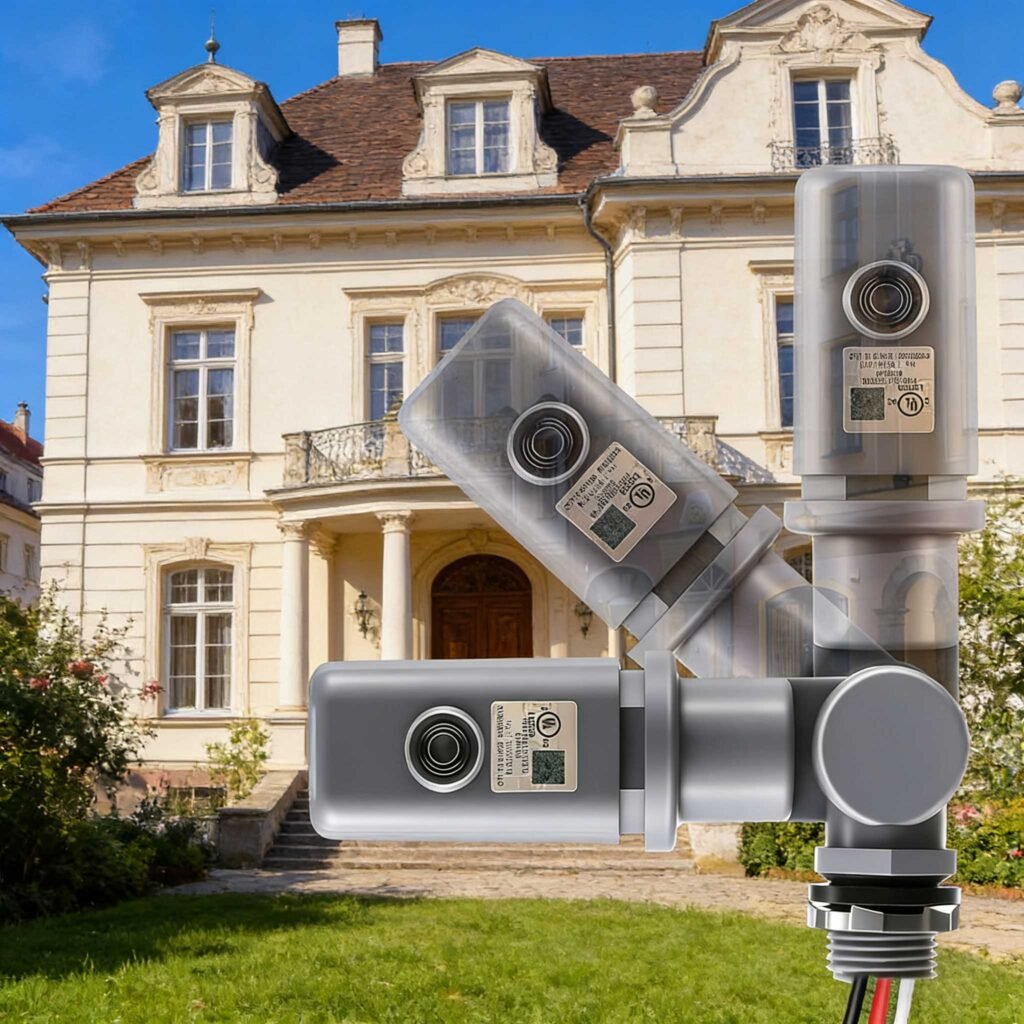
Contemporary connected photocells go further than just detecting ambient light. They interact with central management systems using wireless protocols for example Zigbee, LoRaWAN, or NB-IoT, allowing complete brightness and control over the lighting network.
Thus is how IoT streetlighting bridging old-style gaps:
Connected Photocells for Real-Time Monitoring
Workers can distantly validate performance and sense irregularities instantaneously, instead of waiting for objections or labor-intensive checks all just because of smart sensors.
Adaptive Lighting Control
IoT systems permit lights to alter illumination vigorously based on presence, traffic flow, or climate. Such as, illuminations can dim for the duration of low-traffic times or brighten during rain or fog. This adjustable approach enhances energy proficiency and safety all together.
Predictive Maintenance
Smart photocells and sensors constantly report system health data. When a light indicate signs of voltage instability or component wear, the platform produces an alert, permitting proactive maintenance earlier instead of complete fiasco. This in turn means there would be fewer instances of downtime and it also reduces cost of frequent troubleshooting.
Data-Driven Decision Making
By examining urban lighting data, metropolises can pinpoint usage tendencies, plan up gradations, and make sustainability reports. These understandings support acquiescence with environmental procedures and assist to validate investments in smart infrastructure.
Lead-Top plays a vital part in proceeding this revolution by its range of IoT-ready smart photocells and integrated control systems.
Its technology supports both impartial and networked applications, guaranteeing flexibility crosswise numerous project scales.
Lead-Top’s connected photocells incorporate flawlessly with cloud-based illumination managing systems. They are produced for universal voltage compatibility and feature vigorous surge defense, guaranteeing permanency in challenging atmospheres.
The company’s focuss on smart sensor integration guarantees that every light gives significant data to the network — refining dependability, proficiency, and decision-making ability. By offering IoT-enabled lighting solutions, Lead-Top assist metropolises to accomplish the trio of proficiency, connectivity, and sustainability.
| Aspect | Description |
| Connected Photocells for Real-Time Monitoring | Enable remote supervision of performance and proactive detection of flaws, reducing manual inspections. |
| Adaptive Lighting Control | Automatically adjusts brightness based on motion, traffic, or weather, improving energy efficiency and safety. |
| Predictive Maintenance | Sensors send alerts for voltage or component issues, allowing proactive repairs and minimizing downtime. |
| Data-Driven Decision Making | Precious data collection and analysis allows for planning, sustainability reporting, and smart decision making |
| Lead-Top’s Role | Provides IoT-equipped smart photocells with cloud integration, universal voltage compatibility, and solid surge protection. |
| Overall Impact | Enhances reliability, efficiency, and connectivity, helping cities achieve smart, sustainable lighting networks. |

What Regional Factors Must Be Considered When Deploying IoT Streetlighting?
Although the assurance of connected photocell systems is universal, effective execution rest on regional conditions. Smart lighting positioning must account for power criterions, weather, and monitoring frameworks exclusive to each area.
Power and Voltage Standards
Different areas work under fluctuating grid voltages and frequencies. Lead-Top’s photocell controllers support an extensive range of input standards — from 120V to 480V — guaranteeing compatibility with local electrical infrastructures.
Weather Conditions
Street lights are always exposed to harsh weather including rains, storms, head, pollutants, UV rays, and extreme temperatures. These factors cannot be countered without IP66/IP67-rated enclosures. These enclosures promise UV-resistant housings and integrated surge protection. This helps enhance durability and performance even under challenging weathers of deserts or coastlines.
Urban Layouts
Towns with thick high-rise sectors need cautious network formation to uphold strong communication signals among fittings. In rural and remote areas, LoRaWAN or IoT can be a better suited choice for a comprehensive coverage.
Regulatory Compliance
Local laws frequently dictate energy proficiency principles, environmental limitations, and light pollution limits. Smart lighting systems permit workers to amend illumination and color temperature, confirming both acquiescence and public well-being.
By means of associating with local establishments and integrators, Lead-Top alters its IoT lighting solutions to indigenous structure and governance models.
| Regional Factor | Description |
| Power and Voltage Standards | Different regions have different voltage range and frequency; Lead-Top’s controllers (120–480V) ensure compatibility with these varying conditions. |
| Weather Conditions | IP66/IP67 exclosures, UV-stabilized housings, and surge protection maintain reliability under unreliable conditions. |
| Urban Layouts | Dense city zones need strong signal planning; rural areas benefit from LoRaWAN or cellular IoT for broader coverage. |
| Regulatory Compliance | Smart lighting adjusts brightness and color temperature to meet local energy efficiency, environmental, and light pollution standards. |
| Lead-Top’s Adaptation | Collaborates with local partners to tailor IoT lighting systems to regional infrastructure and governance requirements. |
Conclusion: How Does IoT and Photocell Integration Define the Future of Streetlighting?
The incorporation of IoT streetlighting and connected photocell systems characterizes more than a high-tech renovation — it’s a structural change to intelligent urban management.
By linking each light into a combined data network, metropolises gets actual brightness, control, and predictive competences that old-fashioned illumination never offer.
Lead-Top’s smart sensor integration solutions make this future achievable now — joining together dependability, proficiency, and scalability into one connected platform.
As metropolises struggle for sustainability and security, urban lighting data will turn out to be their most valued assets — igniting not just the roads, but the track to a rightly connected and intelligent city.


 English
  Portuguese (Brazil)
  Spanish
  Russian
  Dutch
Dutch  Japanese
  Portuguese (Portugal)