Why Waterproof Rating Matters More Than You Think?

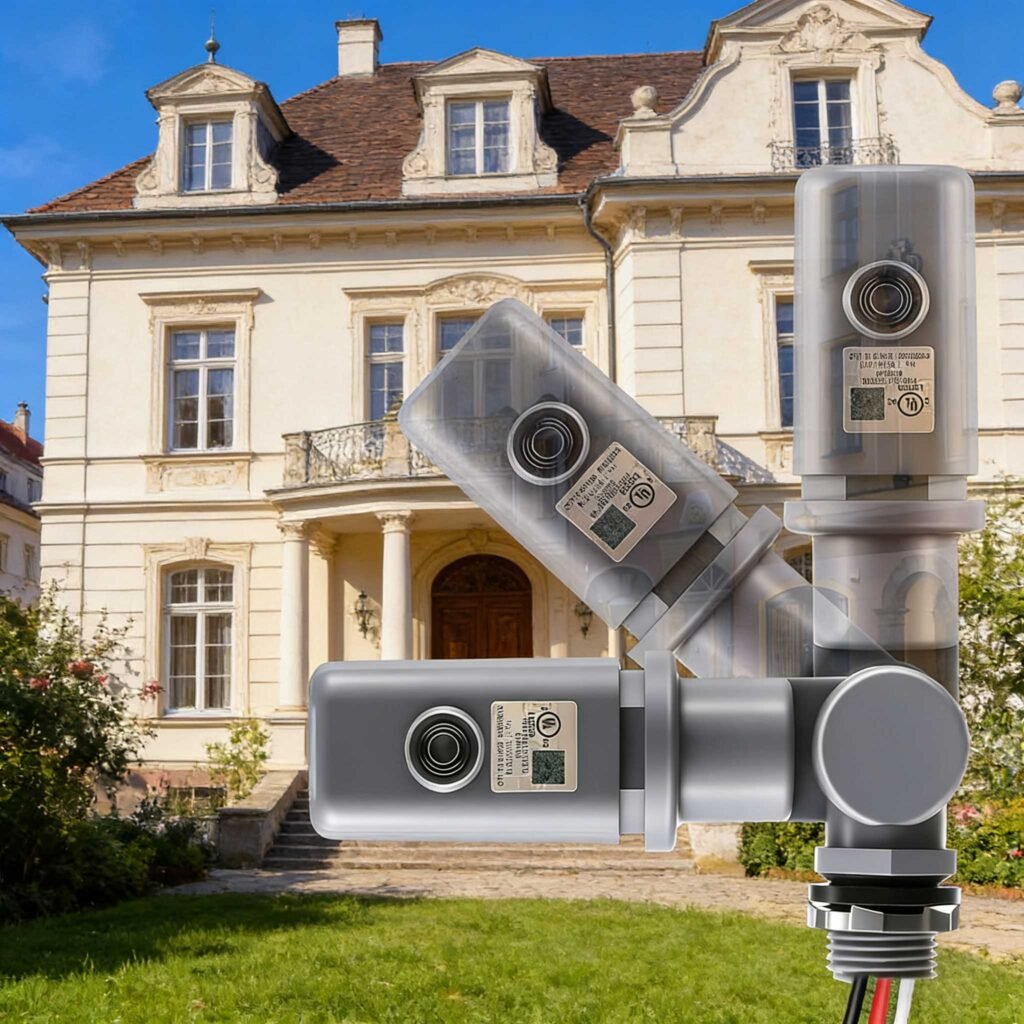
In outdoor lighting systems, the dependability of a illumination control component is every so often determined not by its electronics, but by how well it repels the environment. For street illuminations, patio fittings, passageway illumination, industrial luminaires, and communal infrastructure, the outdoor lighting control waterproof rating of a photocell unswervingly effects system uptime, security, and upkeep cost.
Numerous field fiascoes blamed on “poor-quality electronics” are, in actuality, the result of water ingress, condensation accumulation, or long-lasted humidity contact. A waterproof wire-in photocell that is under-specified may continue working for months or even years—but its letdown is almost predictable.
Selecting the right street light photocell IP rating is thus not a cosmetic or marketing judgment. It is a long-lasted risk management tactic that affects lifespan cost, substitution occurrence, and working trustworthiness.
What Does an IP Rating Actually Mean in Simple Terms?
The IP (Ingress Protection) rating is a global standard that outlines how well an enclosure defends against outdoor elements.
It assesses resistance to two things:
- Solid particles (such as dirt)
- Liquids (such as water)
In the case of IP65, IP66, and IP67:
- The first digit 6 means the device is fully dirt-tight
- The second digit (5, 6, or 7) describes the level of water protection
All three ratings symbolize dustproof designs. The actual dissimilarity lies wholly in how every wire-in photocell handles water contact.
Understanding this difference helps purchasers to pick the right outdoor lighting control waterproof rating devoid of reckless spending or under-protecting their project.
What Level of Protection Does an IP65 Wire-In Photocell Provide Against Rain and Splashing Water?
An IP65 wire-in photocell is made to endure daily outdoor experience. It bids defense against:
- Rainfall
- Water splashes
- Low-pressure water jets from any direction
This level of defense is enough for the mainstream standard outdoor illumination installations, particularly when the photocell is fixed inside a luminaire or housed within a semi-protected enclosure.
Where Is IP65 Most Commonly Used?
Typical applications include:
| Application Area | Typical Use Case |
| Courtyards & Gardens | Ornamental and purposeful outdoor illumination |
| Wall-Mounted Fixtures | Outside building and frontage illumination |
| Residential Outdoors | Home passageways, lawns, and entries |
| Enclosed Luminaires | Internal installation inside box lights |
For home, retail, and light commercial projects, an IP65 wire-in photocell time and again provides numerous years of dependable service when fitted properly.
Because of its balance between protection and price, IP65 remains the most extensively used and most cost-effecient waterproof wire-in photocell option on the international market.
How Does IP66 Photocontrol Improve Protection in Harsh Environments?
An IP66 photocontrol builds upon the defense of IP65 and adds confrontation to:
| Protection Feature | IP66 Capability |
| Water Jets | Repels high-pressure water jets |
| Rainfall | Survives heavy thunderstorms |
| Wind Exposure | Guards against wind-driven rain |
This rating is exactly designed for environs where water does not just fall vertically, but is forced into enclosures by pressure, wind, or storm conditions.
Where Is IP66 Most Commonly Used?
An IP66 photocontrol is strongly suggested when wire-in photocells are unswervingly wide-open to the atmosphere devoid of extra sheltering.
Common use cases comprise:
- Street illuminations with external wiring compartments
- Parking lots and open-area luminaires
- Industrial patios and logistics centers
- Municipal infrastructure in humid or monsoon weathers
In areas with recurrent storms, such as Southeast Asia or coastline zones, IP66 considerably decreases the risk of moistness infiltration caused by pressure-driven rain. For numerous metropolises, IP66 represents the perfect balance between cost and ecological resistance when choosing a street light photocell IP rating.
What Makes an IP67 Outdoor Photocell Different from IP65 and IP66?
An IP67 outdoor photocell offers the utmost waterproof protection normally used in wire-in photocell applications.
In addition to defense against rain and high-pressure water, IP67 permits:
- Short-term immersion in water up to 1 meter for 30 minutes
This does not mean the photocell is made to function underwater. In its place, it certifies endurance during flooding, standing water exposure, or thrilling condensation events.
Where Is IP67 Most Commonly Used?
An IP67 outdoor photocell is most often stated in high-risk environs such as:
- Coastline illumination projects
- Flood-prone areas
- Freeway illumination with severe weather exposure
- Underground or pole-base installations
For EPC contractors and metropolitan authorities focused on long-lasted dependability and nominal upkeep, IP67 offers the maximum margin of protection in terms of ecological protection.
Do You Always Need IP67?
The answer is no—not each project needs the maximum waterproof rating.
A higher outdoor lighting control waterproof rating rises product cost because of:
- Improved sealing materials
- More multifaceted housing structures
- Extra production and testing procedures
For numerous applications, an IP65 wire-in photocell or IP66 photocontrol is technically appropriate and more cost-effective.
The smarter question is not “Which IP rating is the best?” but rather:
“What environmental risks will this wire-in photocell actually face?”
Over-specifying leads to needless cost. Under-specifying leads to early letdown and greater upkeep costs.
Why Does Installation Quality Matter as Much as the IP Rating Itself?
Even the highest-rated IP67 outdoor photocell can nosedive if fitting quality is meagre.
Common installation-related fiasco reasons comprise:
- Inappropriately wrapped cable glands
- Inappropriate wiring procedures
- Absent or below par applied heat-shrink tubing
- Erratically compressed gaskets
Waterproof performance must be assessed as a comprehensive system—not just a number printed on a datasheet.
This is why knowledgeable producers highlight installation accessories and assembly guidance as part of a real waterproof wire-in photocell solution.
Selecting the right street light photocell IP rating becomes easier when matched to real experience conditions:
- IP65: Domestic illumination, internal fixture installation, box illuminations
- IP66: Street illuminations, parking areas, completely uncovered outdoor fittings
- IP67: Coastline projects, freeways, flood-prone or thrilling environs
How Does Lead-Top Approach Waterproof Wire-In Photocell Design?

Lead-Top designs waterproof wire-in photocell solutions based on real-world installation surroundings—not just laboratory specifications.
Dependent on project requirements, Lead-Top supports:
- IP65 wire-in photocell choices for cost sensitive markets
- IP66 photocontrol models for severe outside experience
- IP67 outdoor photocell made for thrilling environments
All models go through virtual outdoor testing to authenticate long-lasted sealing reliability, thermal stability, and electrical performance.
This application-driven methodology certifies that clients receive the accurate outdoor lighting control waterproof rating—not unnecessary protection and not inadequate protection.
Conclusion: What Are the Final Takeaways When Choosing an IP Rating for Wire-In Photocells?
Waterproof rating is not just a technical specification. It is a tactical decision that unswervingly affects project trustworthiness, upkeep cost, and operating lifecycle.
By understanding the real dissimilarities between IP65, IP66, and IP67, purchasers can:
- Evade early field fiascoes
- Decrease long-lasted upkeep expenditures
- Choose smarter, not just stronger, protection
With the accurate street light photocell IP rating and correct installation practices, a wire-in photocell can bring unchanging and dependable performance for several years—even in challenging outdoor environs.
Lead-Top Electrical continues to support international clients with application-based recommendations, confirming each illumination project receives the protection it truly desires—no more, no less.


 English
  Portuguese (Brazil)
  Spanish
  Russian
  Dutch
Dutch  Japanese
  Portuguese (Portugal)