Invoering
Stedelijke infrastructuur wordt in hoog tempo slimmer en meer onderling verbonden. Overal ter wereld beschouwen gemeenten straatverlichting niet langer als simpele verlichtingsapparaten. In plaats daarvan transformeren moderne verlichtingssystemen zich tot digitale infrastructuurplatforms die dataverzameling, verkeersoptimalisatie, ecologische monitoring en energiebeheer ondersteunen.
Deze omslag is nauw verbonden met de opkomst van slimme stadsverlichting en verbonden verlichtingstechnologieën. Moderne steden willen verlichtingssystemen die meer doen dan alleen aan- en uitschakelen bij schemering. Ze hebben systemen nodig die kunnen communiceren, informatie verzamelen, de operationele kosten verlagen en toekomstige uitbreidingen van de slimme stad ondersteunen.
De fotocel voor buitenverlichting staat centraal in deze transformatie. Traditioneel werd deze sensor gebruikt als een eenvoudige schemerschakelaar, maar de huidige lichtsensor ontwikkelt zich nu tot een essentieel onderdeel van de verbonden stedelijke infrastructuur.
Naarmate gemeenten slimme palen, IoT-sensoren, draadloze communicatiesystemen en adaptieve snelwegverlichting inzetten, fotocellen transformeren zich tot slimme infrastructuurknooppunten die in staat zijn om de volgende generatie stedelijke beheersystemen te ondersteunen.
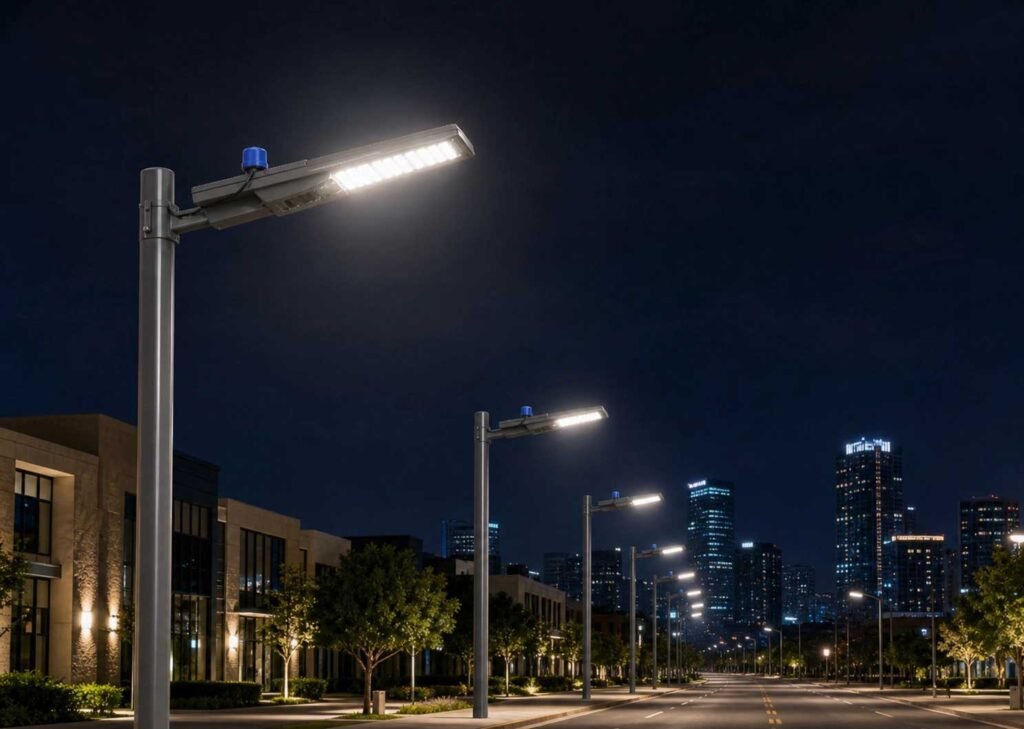
Waarom straatverlichting niet langer alleen maar om verlichting draait
Moderne gemeenten staan voor steeds grotere uitdagingen op het gebied van energie-efficiëntie, verkeersopstoppingen, openbare veiligheid en infrastructuuronderhoud. Omdat straatverlichting tegenwoordig overal in stedelijke gebieden verspreid is, gebruiken steden deze steeds vaker als ideale platforms voor de implementatie van slimme stadstechnologie.
Traditionele straatverlichting diende slechts één doel: verlichting. Moderne slimme verlichtingssystemen ondersteunen nu:
- Verkeersmonitoring
- Luchtkwaliteitsmeting
- Openbare wifi
- Beveiligingscamera's
- Ecologische monitoring
- Adaptieve verlichtingsregeling
- Noodcommunicatiesystemen
Deze verschuiving versnelt de ontwikkeling van slimme verlichtingsinfrastructuur in Europa, Latijns-Amerika, het Midden-Oosten en Azië.
Gemeenten besteden steeds meer aan:
- Slimme palen
- Sensornetwerken
- Metropolitaans IoT-systemen
- AI-gestuurde infrastructuur
- Aangesloten openbare nutsvoorzieningen
Straatverlichtingssystemen worden steeds vaker ingezet als een van de meest kostenefficiënte manieren om slimme stadstechnologieën te implementeren, omdat de stroomvoorziening en infrastructuur langs snelwegen al aanwezig zijn.
Het bescheiden fotocelsensor voor buitenverlichting wordt daardoor een onmisbare schakel tussen fysieke infrastructuur en digitale beheersystemen.
Hoe zijn fotocellen voor buitenverlichting uitgegroeid tot slimme infrastructuurknooppunten?
De ouderwetse fotocel voor buitenverlichting was voornamelijk ontworpen voor automatische schakeling van schemering naar zonsopgang. Hij detecteerde de omgevingslichtniveaus en activeerde de armaturen wanneer het daglicht afnam.
Hoewel deze functionaliteit nog steeds belangrijk is, voert de huidige lichtsensor met fotocel veel onconventionelere taken uit.
Moderne fotocellen ondersteunen nu:
- Draadloze communicatie
- Slimme dimsystemen
- Bewaking op afstand
- Foutdetectie
- Energieoptimalisatie
- Slimme knooppuntintegratie
- Adaptieve verlichtingsregeling
In plaats van autonoom te werken, zijn tal van moderne lichtregelsystemen met fotocellen geïntegreerd in centrale slimme stadsplatformen.
Deze ontwikkeling stelt steden in staat om de verlichtingsprestaties op afstand te monitoren, waardoor de onderhoudskosten dalen en de operationele efficiëntie verbetert.
Bijvoorbeeld:
| Traditionele fotocel | Slimme fotocelinfrastructuur |
| Eenvoudig AAN/UIT schakelen | Intelligente netwerkcommunicatie |
| zelfstandige werking | Geïntegreerde slimme verlichting |
| Handmatige onderhoudsdetectie | Diagnose op afstand |
| Vast verlichtingsschema | Adaptieve lichtregeling |
| Beperkte functionaliteit | Compatibiliteit van IoT-infrastructuur |
De overgang van geïsoleerde schakelapparaten naar verbonden infrastructuurcomponenten is een van de grootste veranderingen in de hedendaagse stadsverlichting.
Hoe ontwikkelen schemeringssensoren zich tot realtime data-instrumenten voor stedelijke omgevingen?
De ouderwetse schemeringssensor was ontworpen om de werking van straatverlichting te automatiseren op basis van omgevingslicht. Dit maakte arbeidsintensief schakelen overbodig en verbeterde de energie-efficiëntie.
Tegenwoordig is de moderne fotocelschakelaar voor buitengebruik echter een integraal onderdeel geworden van daadwerkelijke stedelijke beheersystemen.
Geavanceerde fotocelsystemen kunnen nu:
- Detecteer storingen in de verlichting
- Rapporteer het stroomverbruik
- Ondersteuning voor adaptieve dimming
- Sta gecentraliseerde monitoring toe.
- Communiceer met IoT-platformen
- Integreren met verkeerssystemen
In een verbonden verlichtingsomgeving wordt elke lantaarnpaal onderdeel van een uitgebreid stedelijk datanetwerk.
Deze omrekening is met name belangrijk voor:
- Slimme verkeerssystemen
- AI-gestuurd snelwegbeheer
- optimalisatie van noodhulp
- Voorspellend infrastructuuronderhoud
- Energiebesparende programma's
Moderne lichtregelsystemen met fotocellen helpen gemeenten ook om onnodige bedrijfsuren te verminderen, wat direct leidt tot een lager elektriciteitsverbruik en minder CO2-uitstoot.
Waarom hebben steden verbonden verlichtingsnetwerken nodig?
Aangesloten verlichtingsnetwerken bieden veel meer dan alleen energiebesparing. Ze helpen gemeenten de operationele efficiëntie te verbeteren, de onderhoudskosten te verlagen en schaalbare, slimme infrastructuur op te bouwen.
Tal van belangrijke wereldwijde trends liggen ten grondslag aan deze omslag.
Energie-efficiëntie-eisen
De elektriciteitskosten blijven wereldwijd stijgen. Steden staan onder druk om het energieverbruik te verlagen en tegelijkertijd veilige openbare verlichting te garanderen.
Gekoppelde verlichtingssystemen helpen bij het optimaliseren van:
- Verlichtingsschema's
- Dimniveaus
- Onderhoudscycli
- Energieverbruikspatronen
Voorspellend onderhoud
Bij onderhoud volgens de traditionele methoden wordt vaak handmatig geïnspecteerd nadat er storingen zijn opgetreden.
Gekoppelde systemen maken het volgende mogelijk:
- Storingsdetectie op afstand
- Realtime monitoring
- Snellere reactie op onderhoudsverzoeken
- Lagere operationele onderbrekingen
Dit verbetert de betrouwbaarheid van de infrastructuur aanzienlijk.
Gecentraliseerd lichtbeheer
Gemeenten willen steeds vaker gecentraliseerde platforms die duizenden verlichtingspunten tegelijk kunnen aansturen.
Dit geeft operators de mogelijkheid om:
- Verstel de schittering op afstand.
- Detecteer systeemstoringen onmiddellijk.
- Analyseer het energieverbruik
- Optimaliseer de operationele efficiëntie.
Wereldwijde voorbeelden van slimme steden
Europa
Europese gemeenten investeren fors in slimme stadsverlichtingsinfrastructuur via Zhaga-gebaseerde systemen, slimme palen en verbonden stedelijke netwerken.
Midden-Oosten
Door AI aangedreven initiatieven voor slimme steden versnellen de acceptatie van intelligente snelweginfrastructuur en adaptieve verlichtingssystemen.
Latijns-Amerika
Grootschalige programma's voor de vervanging van verlichting door LED-lampen zorgen voor een grote vraag naar schaalbare fotocelsystemen voor buitenverlichting die compatibel zijn met toekomstige upgrades voor slimme steden.
Wat zijn de beste configuraties voor slimme verlichting in stedelijke omgevingen?
Kostenefficiënte renovatieoplossing voor gemeentelijke projecten
Aanbevolen combinatie


Beste toepassingen
- Zuid-Amerikaanse renovatieprojecten
- Kostenbewuste stedelijke moderniseringen
- LED-transitieprojecten
Belangrijkste voordelen
| Functie | Voordeel |
| ANSI-compatibiliteit | Eenvoudige integratie met bestaande systemen |
| Lage implementatiekosten | Geschikt voor grootschalige renovatieprogramma's. |
| Betrouwbare prestaties buitenshuis | Stabiele werking op lange termijn |
| Eenvoudige installatie | Snellere implementatie in gemeenten |
| LED-compatibiliteit | Ondersteunt moderne verlichtingssystemen. |
Slimme infrastructuuroplossing voor verbonden steden
Aanbevolen combinatie


Beste toepassingen
- Europese smart city-projecten
- Slimme paal-ecosystemen
- Adaptieve verlichtingssystemen
- IoT-verlichtingsinfrastructuur
Belangrijkste voordelen
| Slimme functie | Infrastructuurvoordeel |
| Naleving van Zhaga Boek 18 | Gestandaardiseerde slimme integratie |
| DALI-compatibiliteit | Geavanceerde digitale lichtregeling |
| IoT-geschikte architectuur | Toekomstige uitbreiding van slimme steden |
| Compact modulair ontwerp | Eenvoudiger onderhoud en upgrades |
| Ondersteuning voor slimme knooppunten | Aaneengesloten stedelijke infrastructuur |
Deze oplossing ondersteunt hedendaagse, verbonden verlichtingssystemen en de schaalbaarheid van toekomstige slimme steden.
Hoe ondersteunen slimme fotocellen AI-gestuurde stedelijke infrastructuur?
Kunstmatige intelligentie wordt steeds meer onderdeel van stedelijke beheersystemen.
Op AI gebaseerde stedelijke platforms zijn sterk afhankelijk van dataverzameling door gedistribueerde infrastructuurapparaten. Straatverlichtingssystemen zijn hiervoor perfect, omdat ze alomtegenwoordig zijn in gemeenten en continu in werking zijn.
Moderne fotocellen bieden ondersteuning bij:
- AI-verkeersbeheer
- Ecologische monitoring
- Adaptieve snelwegverlichting
- Energieoptimalisatiealgoritmen
- Slim energiebeheer
Fotocellen functioneren niet langer als geïsoleerde regelapparaten, maar worden onderdeel van de AI-sensorlaag van moderne gemeenten.
Dit is met name belangrijk voor:
- Onafhankelijke verkeerssystemen
- Dynamische lichtregeling
- Slimme noodrouteplanning
- Voorspellende infrastructuuranalyse
Naarmate de AI-infrastructuur zich ontwikkelt, zal de technologie van fotocelsensoren voor buitenverlichting zich blijven ontwikkelen en verder gaan dan eenvoudige automatisering van verlichting.
Waarom begint de toekomst van slimme steden bij de lantaarnpaal?
Lantaarnpalen worden strategische infrastructuuronderdelen omdat ze al het volgende bieden:
- Elektrische aansluiting
- Uitgebreide geografische dekking
- Verhoogde installatiepunten
- Bestaande onderhoudsnetwerken
Bij de huidige projecten voor de vervanging van lichtsensoren in lantaarnpalen wordt steeds vaker gebruikgemaakt van slimme hardware in plaats van ouderwetse schakelaars.
Toekomstige slimme masten kunnen de volgende functies bieden:
- Verkeerscamera's
- Ecologische sensoren
- 5G-communicatieapparatuur
- Openbare wifi
- EV-laadsystemen
- Slimme bewaking
- Adaptieve snelwegverlichting
Naarmate deze renovatie vordert, wordt de ouderwetse lichtsensor in de lantaarnpaal een belangrijke schakel tussen verlichtingssystemen en digitale stedelijke infrastructuur.
Conclusie
Straatverlichting verandert van eenvoudige verlichtingsapparaten in slimme stedelijke infrastructuurnetwerken die op bekwame wijze ondersteuning bieden aan:
- Aangesloten verlichting
- AI-gestuurde verkeerssystemen
- Slim stadsmanagement
- Energieoptimalisatie
- Voorspellend onderhoud
- verbetering van de openbare veiligheid
Het middelpunt van deze renovatie is de moderne fotocel voor de buitenverlichting.
Moderne slimme fotocellen zijn niet langer alleen een schakelaar die de verlichting aan- en uitschakelt bij schemering, maar fungeren als infrastructuurknooppunten binnen uitgebreide, verbonden stedelijke omgevingen.
Naarmate steden steeds meer slimme palen, IoT-systemen en adaptieve verlichtingsnetwerken omarmen, zal slimme fotoceltechnologie steeds belangrijker worden voor de toekomstige stedelijke ontwikkeling.
CTA
Ontdek de slimme fotocel- en Zhaga-compatibele verlichtingsoplossingen van Lead-Top, speciaal ontworpen voor verbonden, slimme stedelijke projecten. Of u nu gemeentelijke LED-renovaties, slimme masten of AI-gestuurde verlichtingsinfrastructuur plant, schaalbare en betrouwbare fotocelsystemen kunnen bijdragen aan duurzame stedelijke moderniseringsdoelen.
Referenties:
- https://leaditop.com/product-2/
- https://en.wikipedia.org/wiki/Internet_of_things
- https://en.wikipedia.org/wiki/Zhaga_Consortium
- https://leaditop.com/product/3-pin-nema-base-high-quality-photocell-3pin-electronic-photo-control-switch-outdoor-sensor-day-night-light-switch/
- https://leaditop.com/product/lt104-conical-shell-12-48v-120-240v-twist-lock-photocontrollers-for-outdoor-landscape-barn-lighting/
- https://leaditop.com/product/zhaga-socket-connected-dali-2-0-protocol-and-0-10v-dimming-control-luminaire-lighting-2/
- https://leaditop.com/product/customizable-upgraded-models-highly-waterproof-zhaga-socket-lt600/
- https://leaditop.com/product/ip66-ansi-c136-41-nema-3-pintwist-lock-photocell-socket-ip66-ultra-thin/
- https://leaditop.com/product/zhaga-socket-connected-dali-2-0-protocol-and-0-10v-dimming-control-luminaire-lighting/

 Dutch
Dutch  English
  Portuguese (Brazil)
  Spanish
  Russian
  Japanese
  Portuguese (Portugal)