Flexible and standardized interfaces are critical for modern-day street lighting systems. That is where Zhaga Boek 18 comes in. These regulations standardize the interface for connecting devices to compatible outdoor LED luminaires.
A Zhaga connector can support:
- Lighting sensors
- Controllers
- Other smart-lighting components
This approach helps with production flexibility for manufacturers and makes future upgrades easier.
But how does a Zhaga socket work, and what should you check before sourcing one? This guide explains this all.
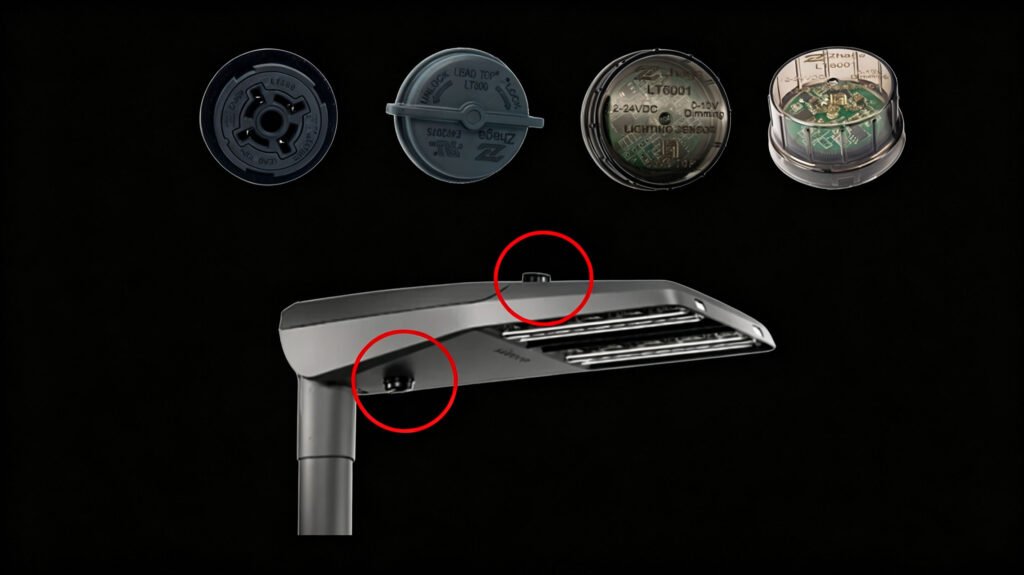
What Is Zhaga Book 18 and Why Was It Developed?
These standards define a smart interface between outdoor LED luminaires and sensing or communication modules. It covers:
- The mechanical fit
- Electrical pins
- Power
- Communication aspects of the interface
Why was this standard needed?
Different suppliers could otherwise use different interfaces. That can make sensor replacement and future upgrades more complicated. These standards provide a common platform to improve compatibility across products.
Certified nodes and luminaires can work together, even if they are from different suppliers. This helps simplify installation and technology upgrades.
In simple terms, Zhaga Book 18 helps:
- Connect fotocelsensoren and communication modules.
- Support modular luminaire designs.
- Enable easier upgrades over time.
- Reduce dependence on proprietary interfaces.
Which Markets and Applications Use Zhaga Lighting Solutions?
The standard primarily focuses on outdoor lighting. It is particularly relevant to smart street lighting and connected outdoor luminaires.
The standard is also expanding beyond conventional streetlights. Book 18 Edition 4.0 adds support for heritage and decorative luminaires, including applications using pole-mounted bracket assemblies.
In smart lighting projects, a Zhaga interface can accommodate devices such as:
- Ambient lichtsensoren
- Network lighting controllers
- Other communication modules
Zhaga-D4i certified control devices are specifically designed for this ecosystem. Common applications include:
| Market / Application | Typical Use | Typical Zhaga Use |
| European smart street lighting | Connected roadway and urban luminaires | Outdoor lighting control and sensing modules |
| Connected outdoor lighting | Networked luminaires with communication capabilities | Mounting interface for control or communication devices |
| Gemeentelijke straatverlichting | Centralized monitoring and lighting management | Integration of sensors and networked control nodes |
| DALI-based applications | Digital control of compatible LED lighting systems | Zhaga-D4i interface for D4i-enabled devices |
| Smart-city infrastructure | Data-enabled public lighting networks | Sensor and communication module integration |
| Future-ready LED luminaires | Long-term upgradeable lighting designs | Replaceable interface for newer control technologies |
| Decorative and heritage outdoor lighting | Connected control of specialized luminaires | Book 18 interface for compatible sensing or communication modules |
How Does a Zhaga Lighting Interface Work?
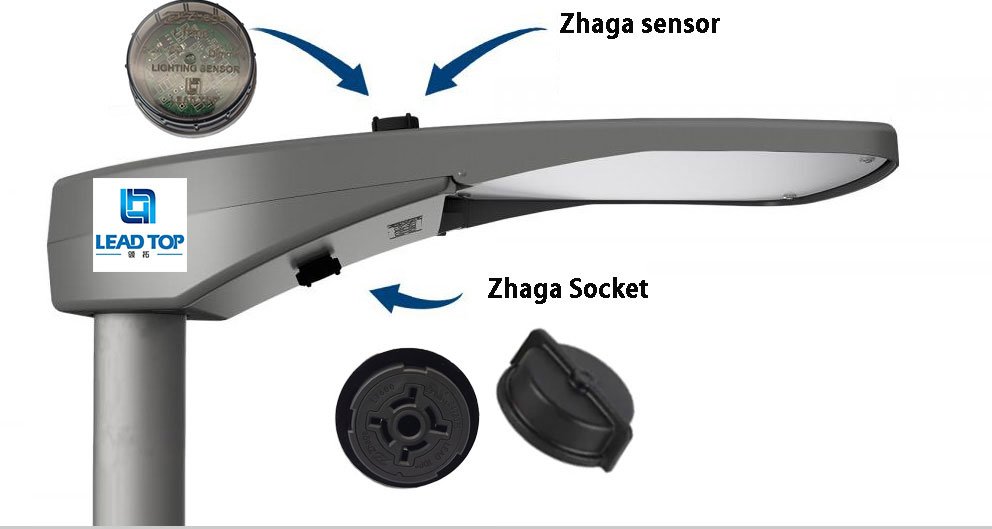
The basic setup is simple. A compatible Zhaga-aansluiting or receptacle is built into the luminaire. A matching control device then plugs into it. Book 18 defines the mechanical fit, electrical pins, power, and communication aspects of this interface.
The connection can support devices such as light-level sensors and wireless communication nodes. In Zhaga-D4i systems, the interface also supports D4i communication and power requirements.
The basic process is:
- Luminaire: Provides the Zhaga receptacle.
- Verbinding: Supplies power and communication.
- Control device: Adds sensing or connectivity.
- Upgrade: The device can be replaced as requirements change.
What Is the Difference Between a Zhaga Connector, Socket, and Lighting Sensor?
These three terms describe different parts of a Zhaga-based lighting system. Understanding the difference helps with specifying and sourcing components.
Zhaga-aansluiting
A Zhaga socket, also called a receptacle, is installed on the luminaire. It provides the standardized interface for attaching a compatible control device.
Zhaga-connector
A Zhaga connector is the matching connection on the control device. It fits into the luminaire’s Zhaga socket and provides the required electrical and communication connections.
Zhaga Lichtsensorschakelaar
A Zhaga fotocel lichtsensor is the functional device attached to the interface. It can measure ambient light or provide other control functions. Other Zhaga-D4i devices can provide wireless communication or network-control functions.
What Should Buyers Check When Selecting a Zhaga Connector?
Choosing a Zhaga connector is not only about matching the shape. The interface must suit the luminaire and the intended control device. Start by checking Zhaga Book 18 compliance. For certified interoperability, verify the relevant Zhaga or Zhaga-D4i certification.
Then check the electrical and environmental specifications. These affect how the connector performs in outdoor installations.
Key points to verify include:
- Voltage and current rating
- Number and assignment of contacts
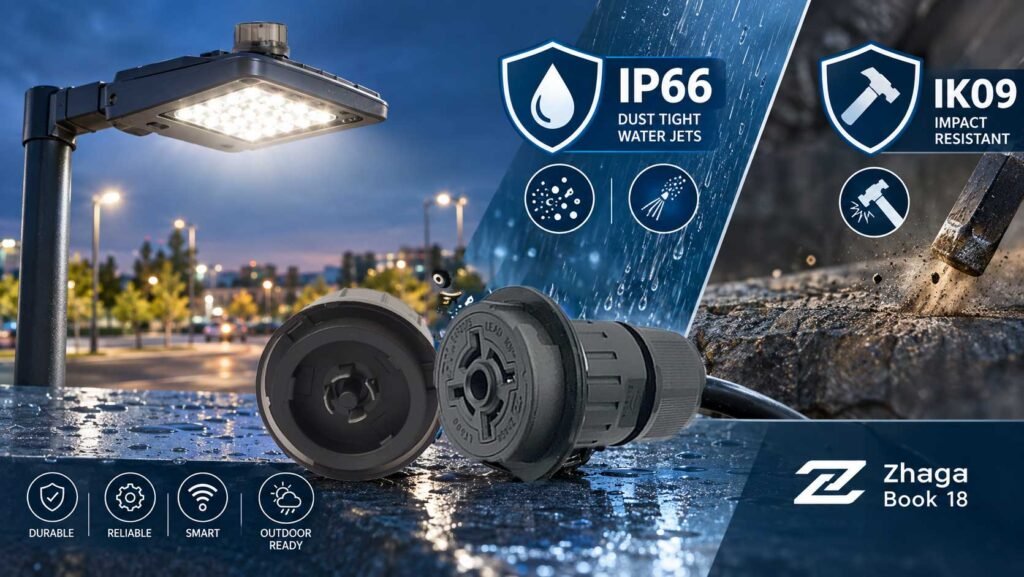
- IP En IK protection
- Operating temperature range
- Connector and luminaire compatibility
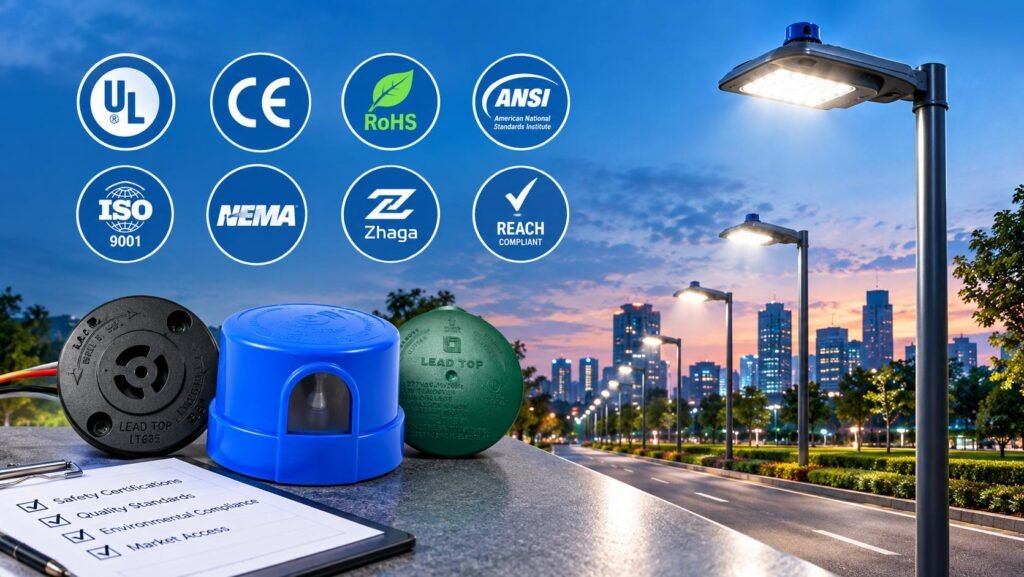
- Vereiste certificeringen
- Driver and control-system compatibility
Also check the connector’s mechanical dimensions. A compliant electrical interface still needs to fit the target luminaire correctly.
Which Lead-Top Zhaga Connector Solutions Support Smart Lighting Applications?

Lead-Top’s LT600 series is designed around the Zhaga Book 18 interface. The LT600 is a Book 18 receptacle with a 1.5A, 30V rating and four contacts. Its documented pin arrangement includes 24VDC, DALI+, DALI−, and general I/O. The current Lead-Top specification also lists IP66 and IK09 protection.
For control applications, Lead-Top lists two related models:
- LT6001: Designed for 0–10V driver applications.
- LT6002: Designed for DALI driver applications.
This gives lighting manufacturers options when designing Zhaga-based smart luminaires. The LT600 series is also listed in Zhaga’s product database as a Book 18 receptacle.
| Specificatie | LT600 | LT6001/LT6002 |
| Hoofdrol | Zhaga receptacle | Zhaga lighting controller |
| Standard / Interface | Zhaga Boek 18 | Zhaga Boek 18 |
| Intended control application | Sensor/control-module connection | Ambient-light sensing and 0–10V applications |
| Nominale spanning | 30V, 1,5A | 12–24 VDC |
| Contacts | 4-pin | Zhaga interface |
| Lichtdetectie | — | IR-gefilterde fototransistor |
| Schakel het lichtniveau in | — | 10–16 luxe |
| Tijdsvertraging | — | 3–10 seconden |
| Bedrijfstemperatuur | — | -40°C tot +70°C |
What Are the Main Benefits of Zhaga Book 18 for Smart Street Lighting?
Its main advantage is interoperability. Compatible luminaires can work with certified sensing and communication modules from different suppliers. This can reduce integration complexity and give lighting manufacturers more flexibility.
The standardized interface also supports serviceable and upgradeable luminaires. A lichtregeling or sensing module can be added or replaced as project needs change. This is useful for streetlights designed to operate for many years.
De belangrijkste voordelen zijn onder meer:
- Easier sensor and communication integration
- Greater component interoperability
- Simpler servicing and replacement
- Support for future upgrades
- More flexible luminaire design
- Access to components from multiple suppliers
For smart-city projects, this modular approach can help lighting systems adapt as connected-lighting requirements evolve.
What Should You Know Before Integrating a Zhaga Connector Into a Lighting System?
Start with the target application and interface requirements. Book 18 defines mechanical fit, electrical pins, power, and communication aspects. The connector must therefore match the luminaire design and intended control device.
Next, verify compatibility between the luminaire and the selected sensor or communication module. For a Zhaga-D4i installation, interoperability is guaranteed only when both sides meet the required certification conditions.
Before integration, check:
- Book 18 compliance and applicable edition
- Mechanical fit and mounting position
- Contact configuration and electrical requirements
- Power requirements of the connected device
- Communication protocol or control method
- IP and IK protection requirements
- Vereiste certificeringen
Proper matching helps prevent installation problems and supports reliable field servicing.
Veelgestelde vragen
1. What is Zhaga Book 18?
These standards set interface regulations for connecting sensing and communication modules to compatible outdoor LED luminaires.
2. What is a Zhaga connector used for?
They provide the interface needed to connect compatible sensors and controllers, along with communication modules, to an outdoor LED luminaire.
3. Why is Zhaga important for smart street lighting?
It supports modular and interoperable lighting systems. This makes sensor integration and future upgrades easier.
4. Is Zhaga suitable for outdoor lighting?
Yes. These standards are specifically designed for interfaces between outdoor luminaires and sensing modules.
5. What should I check when sourcing a Zhaga connector?
Rekening:
- Book 18 compliance
- Elektrische specificaties
- Contact configuration
- IP/IK protection
- Temperatuurbereik
- Certificering
- Luminaire compatibility
De kern van de zaak
Zhaga Book 18 brings a standardized and modular interface to smart outdoor lighting. It supports flexible sensor integration and easier future upgrades. Lead-Top offers the LT600 Zhaga connector series for different smart-lighting needs. Contact Lead-Top for Zhaga product selection and technical support.


 Dutch
Dutch  English
  Portuguese (Brazil)
  Spanish
  Russian
  Japanese
  Portuguese (Portugal)