Invoering
Gemeenten over de hele wereld hebben flink geïnvesteerd in LED-straatverlichting om het energieverbruik en de onderhoudskosten te verlagen. Hoewel LED-technologie indrukwekkende efficiëntieverbeteringen heeft opgeleverd, betreden steden nu een tweede fase van verlichtingsmodernisering: adaptieve verlichting.
Waar traditionele straatverlichtingssystemen de hele nacht een constante lichtsterkte hebben, past adaptieve verlichting de lichtsterkte automatisch aan op basis van actuele omstandigheden zoals verkeersdichtheid, voetgangersbewegingen, weersomstandigheden en tijdstip. Deze verandering stelt steden in staat om het energieverbruik te optimaliseren en tegelijkertijd de openbare veiligheid en operationele efficiëntie te waarborgen.
Stedenbouwkundigen omarmen tegenwoordig steeds vaker intelligente straatverlichtingssystemen, met name vanwege hun vermogen om dynamisch te reageren op veranderende omgevingsomstandigheden. Naarmate de energieprijzen blijven stijgen en de duurzaamheidsrichtlijnen strenger worden, wint adaptieve verlichting snel aan populariteit in moderne steden.

Wat is adaptieve verlichting in moderne steden?
Adaptieve verlichting verwijst naar een verlichtingssysteem dat de lichtsterkte kan aanpassen aan de actuele ecologische en operationele omstandigheden.
Ouderwetse verlichtingssystemen werken doorgaans volgens een eenvoudig aan/uit-principe. De lampen gaan aan bij zonsondergang en blijven op vol vermogen branden tot zonsopgang. Hoewel deze aanpak zorgt voor betrouwbare verlichting, gaat er vaak energie verloren tijdens perioden met weinig activiteit.
Een adaptief straatverlichtingssysteem voegt intelligentie toe aan het proces. In plaats van de hele nacht de maximale lichtintensiteit te handhaven, kan het systeem de lichtopbrengst automatisch verlagen wanneer de wegen leeg zijn en de verlichting verhogen wanneer de activiteit toeneemt.
Bijvoorbeeld:
- Drukke kruispunten kunnen de hele avond fel verlicht blijven.
- De straten in woonwijken kunnen na middernacht minder druk worden door de verkeersafname.
- Openbare wandelpaden kunnen oplichten wanneer voetgangers worden gedetecteerd.
- De lichtsterkte kan worden aangepast bij mist, regen of andere ongunstige weersomstandigheden.
Deze mogelijkheid transformeert de verlichtingsinfrastructuur van een inactieve nutsvoorziening tot een actief onderdeel van de operationele strategie van een stad.
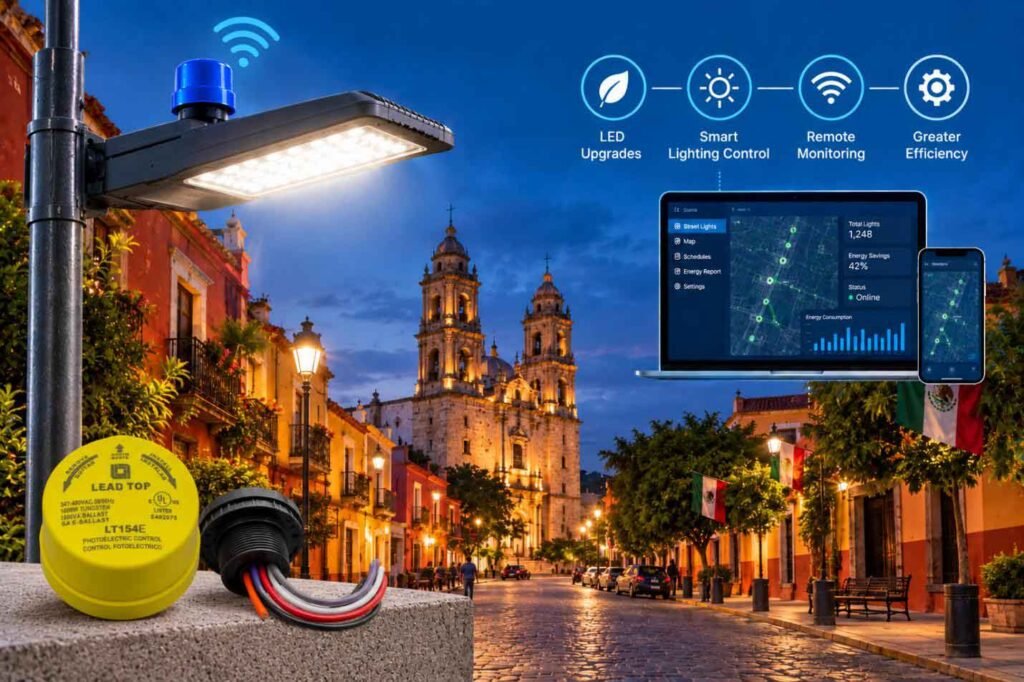
Daarnaast wordt adaptieve verlichting, om steden in staat te stellen duizenden armaturen vanuit een centrale locatie te beheren, vaak geïntegreerd met uitgebreide slimme stadsverlichtingsplatformen.
Waarom stappen steden af van vaste straatverlichting?
Tal van factoren dragen bij aan de internationale overgang van ouderwetse systemen met vaste helderheid naar modernere systemen.
Stijgende energiekosten
Bij traditionele systemen blijven de lichten vaak op een hoge verblindingsstand staan, ongeacht de werkelijke vraag. Dit leidt tot aanzienlijk energieverlies tijdens rustige uren.
Gemeenten kunnen hun energieverbruik verlagen zonder de zichtbaarheid of de veiligheid in gevaar te brengen door dynamische lichtregeling toe te passen.
Duurzaamheidseisen
Overheden in verschillende delen van Europa en Latijns-Amerika hebben ambitieuze doelstellingen voor de reductie van CO2-uitstoot vastgesteld. Talrijke steden moeten hun energie-efficiëntie verbeteren en hun uitstoot verlagen. broeikasgas emissies.
Adaptieve verlichting ondersteunt deze doelen onwrikbaar door onnodig elektriciteitsverbruik te minimaliseren en de algehele ecologische impact te verlagen.
Publieke verwachtingen
Mensen verwachten steeds vaker dat gemeenten hun middelen efficiënt inzetten. Belastingbetalers willen investeringen in infrastructuur die meetbare voordelen opleveren en tegelijkertijd de operationele kosten verlagen.
Adaptieve verlichting helpt steden om verantwoord energiebeheer te tonen en tegelijkertijd betrouwbare openbare diensten te blijven leveren.
Stedelijke groei
Naarmate gemeenten groeien, wordt het beheer van grotere verlichtingsnetwerken complexer. Slimme verlichtingstechnologieën bieden schaalbare oplossingen waarmee duizenden armaturen efficiënt kunnen worden aangestuurd.
Welke technologieën maken adaptieve verlichting mogelijk?
Tal van technologieën werken samen om efficiënte adaptieve verlichtingssystemen te creëren.
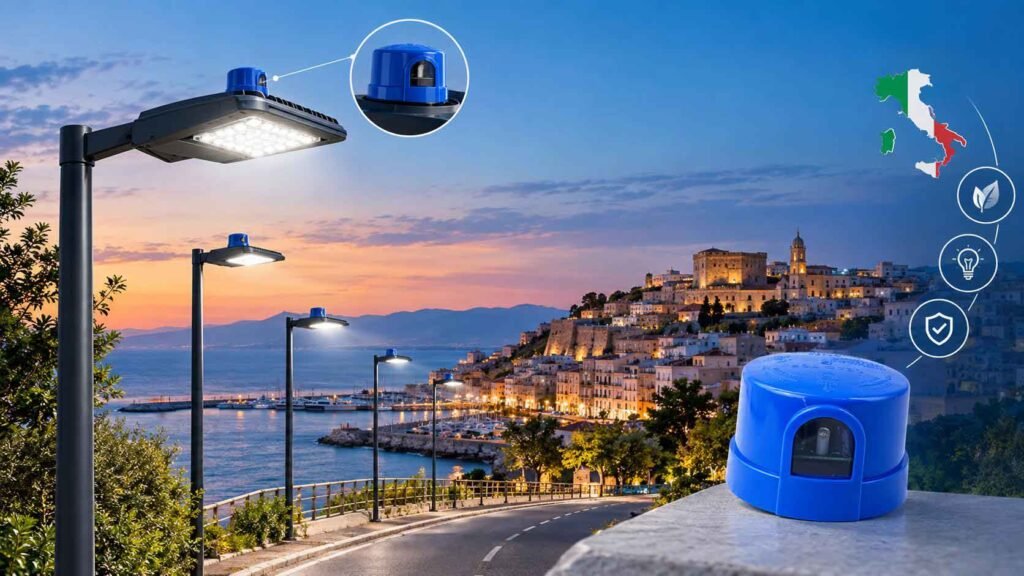
Een slim fotocelsysteem vormt de eerste laag van de verlichtingsautomatisering.
Fotocellen Ze detecteren de omgevingslichtniveaus en regelen de verlichting robotisch. In plaats van te vertrouwen op fysieke schakelaars of timers, zorgen fotocellen ervoor dat de verlichting alleen inschakelt wanneer het natuurlijke daglicht onder vooraf gedefinieerde drempelwaarden daalt.
Moderne fotocellen bieden:
- Nauwkeurige werking van zonsondergang tot zonsopgang
- Verbeterde betrouwbaarheid
- Verkorte energieverspilling
- Verbeterde operationele bekwaamheid
DALI en 0–10V dimmen
DALI (Digital Addressable Lighting Interface) en 0-10V-regelsystemen maken continue lichtregeling mogelijk in plaats van een simpele aan/uit-schakeling.
Deze technologieën stellen steden in staat om:
- Verminder de verlichting tijdens perioden met weinig vraag.
- Maak gepersonaliseerde verlichtingsschema's.
- Verbeter de energie-efficiëntie.
- Verleng de levensduur van de armaturen
Bewegings- en verkeerssensoren
Bewegingssensoren en verkeersmonitoringssensoren stellen verlichtingssystemen in staat te reageren op daadwerkelijke activiteit.
Bijvoorbeeld:
- De verlichting wordt sterker wanneer auto's naderen.
- Voetgangerspaden lichten op wanneer er beweging wordt gedetecteerd.
- Parkeerterreinen passen de verlichting aan de bezettingsgraad aan.
IoT-connectiviteit
Moderne LED-straatverlichtingssystemen zijn steeds meer afhankelijk van connectiviteit met het Internet of Things (IoT).
IoT-gebaseerde verlichtingsnetwerken bieden:
- Bewaking op afstand
- Werkelijke diagnose
- Gegevensverzameling
- Voorspellend onderhoud
- Centrale controle
Het gevolg hiervan is dat verlichtingsinfrastructuur een essentieel onderdeel vormt van uiteenlopende slimme stadsomgevingen.
Hoe tonen de slimme verlichtingsprojecten in Mexico de voordelen van adaptieve verlichting aan?
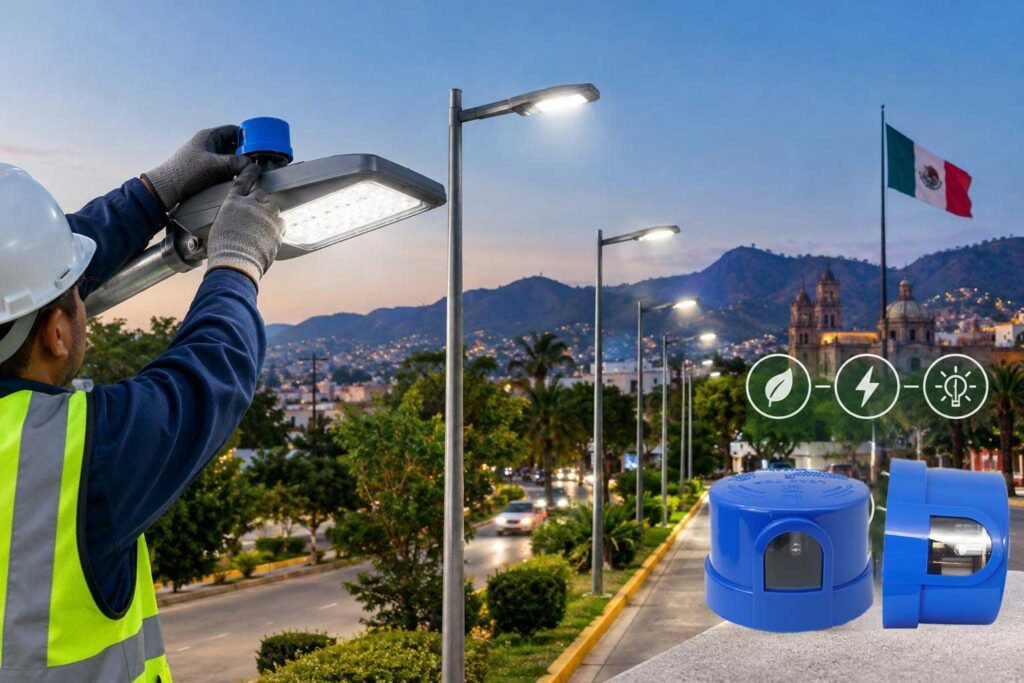
Mexico is een belangrijk voorbeeld gebleken van hoe adaptieve verlichting de stedelijke infrastructuur transformeert.
Een opvallende ontwikkeling is de realisatie van grootschalige, onderling verbonden verlichtingssystemen die meer dan 18.000 verlichtingspunten hebben gekoppeld aan centrale beheersystemen.
Deze projecten laten een belangrijke verschuiving in de sector zien:
Energiebesparing wordt niet langer uitsluitend bereikt door oude lampen te vervangen door ledlampen. Steden leggen nu de nadruk op optimalisatie op systeemniveau door middel van slimme stadsverlichtingstechnologieën.
De belangrijkste waargenomen voordelen zijn onder meer:
- Verkort elektriciteitsverbruik
- Betere onderhoudsvaardigheden
- Snellere foutdetectie
- Verbeterd vermogensbeheer
- Grotere openbare veiligheid
Deze ontwikkeling laat zien dat de verlichtingsinfrastructuur steeds meer functioneert als een datagestuurd operationeel platform in plaats van een eenvoudig verlichtingssysteem.
Welke oplossing wordt aanbevolen voor adaptieve verlichtingssystemen?
Aanbevolen oplossing: LT600 Zhaga-connector + LT6002 DALI-controller

Deze mix is speciaal ontwikkeld ter ondersteuning van de volgende generatie adaptieve verlichtingstoepassingen.
| Functie | Voordeel |
| Zhaga Boek 18 Naleving | Gestandaardiseerde interface voor slimme verlichting |
| DALI-integratie | Geavanceerde dim- en bedieningsmogelijkheden |
| Modulair ontwerp | Eenvoudige upgrades en onderhoud |
| IoT-compatibiliteit | Toekomstige integratie van slimme steden |
| Buitenbescherming | Betrouwbare werking in zware omstandigheden. |
Belangrijkste voordelen
- Ondersteunt dynamische lichtregeling.
- Maakt slimme dimfuncties mogelijk.
- Stroomlijnt onderhoud en verbeteringen.
- Ondersteunt beheer op afstand
- Compatibel met toekomstige slimme stadsconcepten.
Waar spelen traditionele lichtsensoren nog een belangrijke rol?
Ondanks de snelle ontwikkeling van adaptieve systemen blijven ouderwetse fotobesturingstechnologieën zeer toepasbaar.
Talrijke gemeenten blijven gebruikmaken van hybride verlichtingsnetwerken die ledverlichting combineren met conventionele, op fotocellen gebaseerde besturing.
Er zijn tal van redenen die deze aanhoudende acceptatie verklaren:
Kostengevoeligheid
Niet elke stad beschikt over het budget dat nodig is voor een grootschalige uitrol van een slimme stad.
Basisfotocelsystemen bieden:
- Betrouwbare automatisering
- Lage installatiekosten
- Verwaarloosbare onderhoudsvereisten
Geleidelijke infrastructuurtransitie
Talrijke gemeenten geven de voorkeur aan gefaseerde upgrades in plaats van volledige vervanging van het systeem.
Een veelgebruikte strategie omvat:
- Het installeren van LED-armaturen.
- Mechanisatie van de fotocel toevoegen.
- De mogelijkheid om de instellingen te dimmen wordt later geïntroduceerd.
- Op weg naar volledige integratie in de slimme stad.
Bewezen betrouwbaarheid
Fotocellen hebben zich jarenlang in de praktijk bewezen en blijven zorgen voor een betrouwbare werking van zonsondergang tot zonsopgang.
Wat zijn de belangrijkste voordelen van adaptieve verlichting ten opzichte van traditionele systemen?
Tabel 1: Traditionele verlichting versus adaptieve verlichting
| Functie | Traditionele verlichting | Adaptieve verlichting |
| Operatie | Vaste helderheid | Dynamische helderheidsaanpassing |
| Energie-efficiëntie | Gematigd | Zeer hoog |
| Onderhoud | Handmatige monitoring | Bewaking op afstand |
| Dimmogelijkheid | Beperkt | Geavanceerd |
| IoT-integratie | Zeldzaam | Gewoon |
| Operationele flexibiliteit | Laag | Hoog |
| Gegevensverzameling | Geen | Uitgebreid |
| Compatibiliteit met slimme steden | Beperkt | Uitstekend |
Conclusie
De toekomst van stedelijke verlichting ligt in slimme aansturing in plaats van eenvoudige verlichting. Hoewel led-technologie de eerste golf van energiebesparingen teweegbracht, zorgt adaptieve verlichting voor de volgende generatie efficiëntieverbeteringen.
Gemeenten kunnen slimmere, duurzamere en kostenefficiëntere verlichtingsnetwerken creëren door slimme fotocelsystemen, DALI-gebaseerde besturing, IoT-connectiviteit en slimme monitoring te combineren.
Adaptieve verlichting ontwikkelt zich snel tot de nieuwe wereldwijde standaard voor slimme, energiezuinige stadsontwikkeling, nu steden hun infrastructuur blijven moderniseren.
CTA
Voor slimme verlichtings- en adaptieve besturingsprojecten biedt Lead-Top schaalbare OEM-oplossingen die naadloos op elkaar aansluiten. Zhaga, Lead-Top biedt DALI- en fotoceltechnologieën om gemeenten te helpen bij de overstap van standaard LED-infrastructuur naar volledig slimme verlichtingssystemen. Neem contact op met Lead-Top voor oplossingen op maat voor uw volgende gemeentelijke verlichtingsproject.
Referenties:
- https://en.wikipedia.org/wiki/Greenhouse_gas
- https://leaditop.com/twist-lock-photocontrollers/
- https://leaditop.com/product/customizable-upgraded-models-highly-waterproof-zhaga-socket-lt600/
- https://leaditop.com/product/zhaga-socket-connected-dali-2-0-protocol-and-0-10v-dimming-control-luminaire-lighting-2/
- https://en.wikipedia.org/wiki/Zhaga_Consortium


 Dutch
Dutch  English
  Portuguese (Brazil)
  Spanish
  Russian
  Japanese
  Portuguese (Portugal)