Special Interview · Wenzhou, July 2025
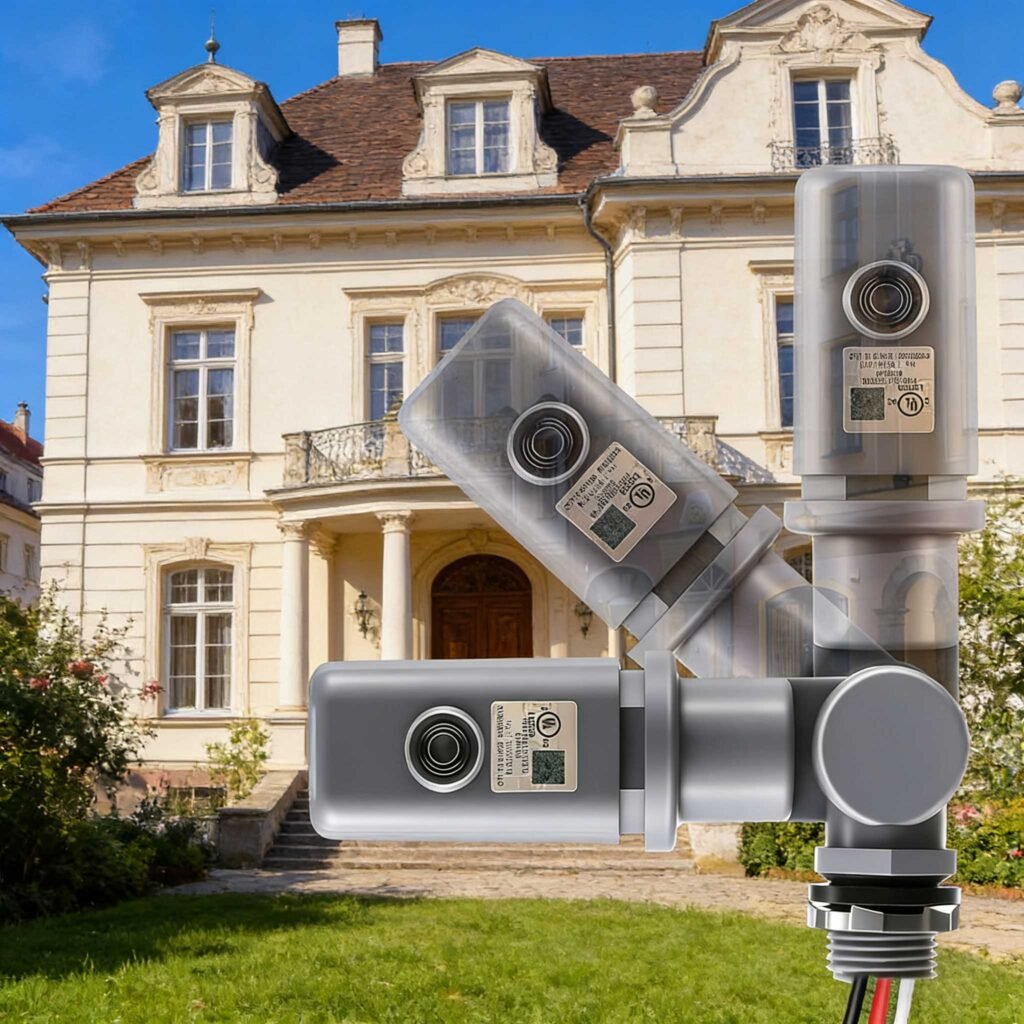
Over the last ten years, outdoor illumination has go through a revolution — but behind every main transformation lies one deceptively simple device: the photocell controller. This solid component defines whether a streetlight stimulates accurately at sunset, incorporates with smart-city platforms, meets international accreditations like UL773 and ANSI C136.10, and functions dependably for more than a decade in severe outside environments.
At the 2025 Guangzhou International Lighting Exhibition, the foreign business team of Zhejiang Lead-Top Electrical Co., Ltd. revealed how their company is remodeling this matured industry. By developing dual-standard interfaces, investing in product novelty, building local R&D, and bringing fast manufacturing cycles, Lead-Top is pushing photocontrol technology frontward — slightly, but progressively.
This is the “gentle slope evolution” of a market where transformation is steady, but the impression is extensive.

How Are NEMA and Zhaga Defining the Era of Dual-Interface Streetlights?
The worldwide move toward smart cities has shaped an atmosphere where two key socket standards — NEMA and Zhaga — not any more compete, but accompaniment each other.
Why Does the NEMA Standard Still Dominate?
The NEMA socket remains the mainstay of North American outdoor illumination. With authorization from ANSI C136.10 and ANSI C136.41, these connectors offer the machine-driven and electrical interface necessary for traditional photocells such as:
- LT134
- LT154
These photocells manage:
- Automatic on/off switching
- System-level power distribution
- Integration with legacy streetlight infrastructure
This makes NEMA the favored select for metropolises and EPC organizations supervising reconstruction of older illumination grids.
| Factor | Details |
| Primary Market | North American outside illumination systems |
| Standards Compliance | Certified under ANSI C136.10 and ANSI C136.41, guaranteeing compatibility and protection |
| Connector Function | Offers the essential machine-driven and electrical interface for customary photocells |
| Supported Photocells | • LT134 • LT154 |
| Central Roles Managed by NEMA Photocells | • Programmed dusk-to-dawn on/off switching • Power dissemination at system level • Unified incorporation with legacy streetlamp structure |
| Why It Remains Governing | NEMA bids constancy, compatibility, and extensive dependability, making it the favorite choice for metropolises and EPC workers controlling grid reconstruction projects |
What Makes Zhaga Book 18 a Rising Global Trend?
The Zhaga Book 18 standard is getting traction because it supports compact, low-voltage, smart-ready modules. These can include:
- PIR sensors
- Microwave sensors
- Environmental monitoring nodes
- IoT communication modules
Zhaga’s benefits include:
- Smaller size
- Low-voltage D4i communication
- Plug-and-play smart functionality
- Ideal for modern LED streetlights
| Aspect | Details |
| Main Reason for Worldwide Acceptance | Supports compact, low-voltage, smart-ready modules used in contemporary smart illumination systems |
| Compatible Smart Modules | • PIR sensors • Microwave sensors • Environmental monitoring nodes • IoT communication modules |
| Key Benefits of Zhaga Book 18 | • Smaller size for compact LED fixtures • Low-voltage D4i communication for intelligent control • True plug-and-play functionality for easy field upgrades • Optimized for modern LED streetlights and smart-city networks |
| Why It’s Trending Internationally | Allows stress-free smart upgrades, lower power needs, and modular IoT sensor integration, making it a favorite select for modernized outdoor illumination |
How Does the Two-Node Architecture Work?
A NEMA photocell
Placed on the top of the luminaire, responsible for:
- Main switching
- Power controlling
A Zhaga side or pole connector
Used for:
- Pedestrian sensing
- Automobile counting
- Dynamic dimming
Lead-Top’s portfolio includes:
- NEMA 3-pin, 5-pin, 7-pin receptacles
- Full Zhaga-D4i interfaces
- Hybrid-ready photocells
- Tool-free rotatable sockets
How Is Lead-Top Innovating Photocell Technology from LT134 to LT154?
In a market where numerous products seems alike, Lead-Top distinguishes through engineering depth, material advancements, and performance improvements. The firm’s product assortment unswervingly addresses the three key points:
- Reliability
- Surge protection
- Environmental durability
How Does the LT134 Become the Flagship Choice for Municipal Projects?
The LT134 photocell is Lead-Top’s flagship model for communal bids and administration illumination advancements. It features:
- Zero-crossing detection (decreases pressure on LED drivers)
- 8-year warranty (extended public safety)
- IP67 optional sealing
- Up to 1425J surge energy and 20KV/10KA protection
- Licensed under UL773 and ANSI C136.10
These characeristics make the LT134 the perfect way out for metropolises needing reliable dusk-to-dawn job for prolonged time.
Why Is the LT154 Heavy-Duty Series Built for Harsh Environments?
For regions prone to storms, lightning, and grid instability, Lead-Top developed the LT154:
- 10-year warranty
- 3.0mm reinforced polycarbonate cover
- 20KV/10KA surge protection
- Enhanced UV resistance and thermal stability
This makes the LT154 one of the most resilient photocells in the market, perfect for:
- Seaside main roads
- Storm-risk regions
- Desert fittings
- Countryside grid systems
How Does the LT600 Zhaga Series Enable Smart City Functions?
The LT600 series supports:
- DALI drivers
- 0–10V dimming
- IoT connectivity
- Sensor-based luminance adjustment
With IP66 and IK09, it is strong enough for severe outdoor atmospheres while upholding compacted size.

What Are Tool-Free Rotatable NEMA Sockets and Why Do They Matter?
The LT635 tool-free socket series offers:
- 360° rotation
- Quick installation
- Cleaner cable management
- Reduced labor cost
It removes faults instigated by misalignment, making it valued for large-scale fittings.
How Does Localized Manufacturing Give Lead-Top a Speed + Scale Advantage?
Contemporary illumination OEMs want suppleness, fast delivery, and customization — something old-style multinational firms seldom prioritize.
Lead-Top modifies its manufacturing approach around these requirements.
Localized R&D:
Lead-Top offers customer-driven design, including:
- Turn-on lux customization (10–100 lux)
- Turn-off delay adjustments
- Fail mode selection
- Color and housing shape options
- Private-label packaging
- OEM/ODM service without MOQ
This suppleness authorizes suppliers and lighting producers to create market oriented photocell solutions, especially for dissimilar regional needs.
Fast Delivery Cycle:
Lead-Top’s fast manufacturing is a main competitive benefit:
- Samples: 2–3 days
- 500–1000 pcs: 7 days
- 5000 pcs: 15 days
For EPC workers experiencing strict time limits, this dependability eradicates project delays.
Global Certifications:
Lead-Top products conform with:
- UL773
- ANSI C136.10
- Zhaga Book 18
- CE / CB / ISO9001
- IK09 / IK10
- IP66 / IP67
These certifications unlock markets across:
- North America
- LATAM
- Middle East
- Southeast Asia
- Europe
With over 5 million photocells transported yearly, Lead-Top stands as a topmost international supplier in metropolitan street illumination.
How Does Gentle Evolution Shape Lead-Top’s Long-Term Strategy?
The photocell industry develops gradually — but progressively. Not like consumer tech, where trends change annually, streetlights operate for 10–30 years, needing durability, acquiescence, constancy and upgrading compatibility
Lead-Top holds this reality by following a long-term strategy built on incremental advancement, not sudden disruption.
What Are the Pillars of This “long-termism” Approach?
Lead-Top emphases on:
Standard Compliance
Including UL773, ANSI C136.10, Zhaga Book 18, which are important for international bids.
Continuous Innovation
Improvements in:
- Surge suppression
- Waterproofing
- Anti-salt-spray performance
Customer-Centric Flexibility
Lead-Top evades low-cost competition by proposing:
- Customization
- No MOQ
- Rapid delivery
- Technical support
This creates maintainable partnerships with lighting OEMs and metropolitan establishments.
Conclusion
The blend of strong photocells like LT134, heavy-duty defense through LT154, and smart-city readiness via the LT600 Zhaga series demonstrates one thing:
Lead-Top is not just a photocell producer — it is a long-lasted engineering partner for international lighting transformation.
In a market that grows gradually, Lead-Top accelerates growth through:
- quality
- speed
- customization
- dual-standard architecture
- innovation rooted in customer needs
This is how the company drives the “gentle slope evolution” of lighting controls — creating stable, dependable growth within a mature industry.


 English
  Portuguese (Brazil)
  Spanish
  Russian
  Dutch
Dutch  Japanese
  Portuguese (Portugal)