In outdoor lighting design, adjustability is often observed as a superior feature. As adjustable photo controls become more extensively available, there is a growing tendency to specify them by default. Though from a manufacturing and system-cost viewpoint, this tactic can be unproductive. Not every project benefits equally from adjustability, and in some cases, it adds complication devoid of delivering quantifiable performance gains.
The actual challenge is not selecting between adjustable or fixed designs in isolation, but understanding which applications really need adjustability and which do not. This difference is central to effective outdoor lighting sensor selection and helps engineers evade both over-specification and under-performance.
This article inspects application characteristics, ecological inconsistency, project scale, and lifespan considerations to explain where adjustable photo controls add value—and where fixed designs remain the better choice.
Why Is Application Context More Important Than Product Features?
Photo controls do not function in isolation. Their performance is shaped by mounting orientation, neighboring light sources, ecological changes, and installation constancy. A sensor with perfect electrical specifications can still flop if its exposure to environmental light is compromised.
That is why outdoor lighting sensor selection must initiate with application context instead of product ability. The question engineers should ask is not “Can this photo control adjust?” but “Will this application benefit from that adjustment?”
Understanding application context permits players to choose the simplest structure that dependably brings the necessary performance.
What Defines Applications Suitable for Fixed Photo Controls?
Applications where fixed photo sensor use cases are suitable share a common trait: anticipated orientation.
Predictability means that the sensor can be dependably directed toward open sky during installation and that nearby light situations are improbable to interfere with sensing. Typical examples comprise:
- Factory-assembled luminaires with incorporated sensor mounts
- Standardized pole designs positioned evenly across a site
- Open-area installations with negligible neighboring non-natural lighting
In such environs, installation inconsistency is low, and the sensor’s field of view remains constant over time. Once installed, the photo control constantly sees the same light conditions day after day.
In such fixed photo sensor use cases, commissioning effort is negligible, switching behavior is anticipated, and long-lasted performance remains constant as long as the atmosphere does not change considerably.
Why Do Fixed Photo Controls Perform Reliably in Predictable Environments?
Fixed-direction photo controls are structurally simple. Because their sensor orientation is locked relative to the housing, performance depends almost completely on mounting accurateness.
In anticipated environs, this simplicity becomes a benefit. There are fewer mechanical components, fewer adjustment steps, and less chance for variation during installation.
When orientation can be assured, fixed designs bring dependable dusk-to-dawn working devoid of needing additional commissioning time. For these reasons, fixed photo sensor use cases remain extensive and appropriate in controlled installations.
Problems arise when installation conditions diverge from assumptions.
Numerous outdoor projects introduce inconsistency that cannot be eradicated through planning only. Even small deviances in pole alignment, wall orientation, or nearby light sources can meaningfully affect sensor exposure.
Once predictableness goes, fixed-direction designs start to show restrictions. Orientation mistakes become eternal, and performance problems arise that cannot be rectified without physical reinstallation.
This is the point at which adjustable photo control applications become not just advantageous, but essential.
Why Does Urban Street Lighting Demand Adjustability?
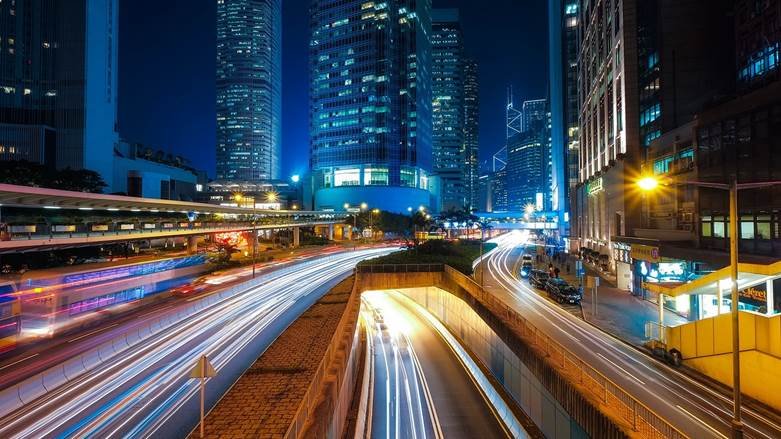
Urban street lighting is one of the most common examples of high-variability environs.
In urban settings:
- Poles may be installed at somewhat different angles
- Buildings and signage create reflections
- Neighboring luminaires overlap light spreading
Even small variances in orientation can create visible differences in switching times across a street. Fixed-direction sensors often react to reflected light from neighboring sources, leading to late shutoff or early activation.
In these circumstances, adjustable photo control applications permit installers to line up sensors away from interfering sources and toward constant environmental light references.
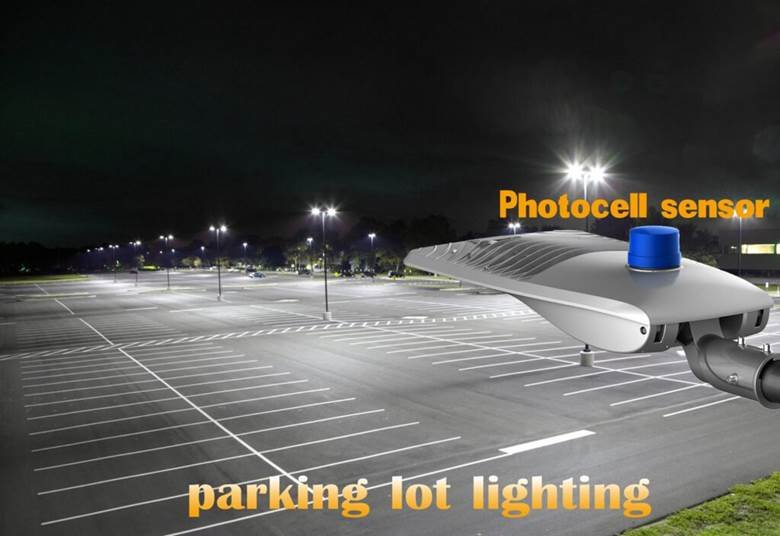
Why Are Parking Facilities Challenging for Fixed Sensors?
Parking facilities combine multiple sources of inconsistency:
- Automobile headlights
- Mixed illumination areas
- Reflective pavement surfaces
Fixed-direction sensors in parking environs recurrently “see” unintentional light sources. This can cause lights to remain on longer than planned or to cycle unpredictably.
Using adjustable photo control applications, commissioning squads can tune sensor orientation to minimalize exposure to headlights and reflective surfaces. This increases switching accurateness and decreases energy waste.
Why Do Wall-Mounted Installations Almost Always Require Adjustability?
Wall-mounted luminaires present one of the hardest contests for photo control design.
Dissimilar to pole-mounted installations, wall orientation is dictated by building architecture, not by ideal sensor exposure. As a result, the sensor time and again faces sideways or toward adjacent surfaces instead of open sky.
In such circumstances, accurate alignment is impossible devoid of adjustment ability. Swivel stem control application guide principles show that the capability to revolve the sensor autonomously is important for attaining acceptable performance.
How Do Industrial and Logistics Facilities Benefit From Adjustable Controls?
Industrial sites and logistics centers introduce complex illumination arrangements:
- High-mounted fixtures
- Metal structures causing reflections
- Irregular layouts
These factors generate erratic environmental light situations. Fixed-direction sensors often pick up light from neighboring fixtures or reflective surfaces.
Adjustable photo control applications permit installers to tune sensor orientation during commissioning, decreasing intrusion from non-natural illumination and guaranteeing dependable dusk-to-dawn behavior.
How Do Swivel Stem Designs Support High-Variability Applications?
Products made around swivel stem control application guide principles isolate mechanical mounting from sensor orientation. This permits safe installation first, followed by accurate alignment based on practical light behavior.
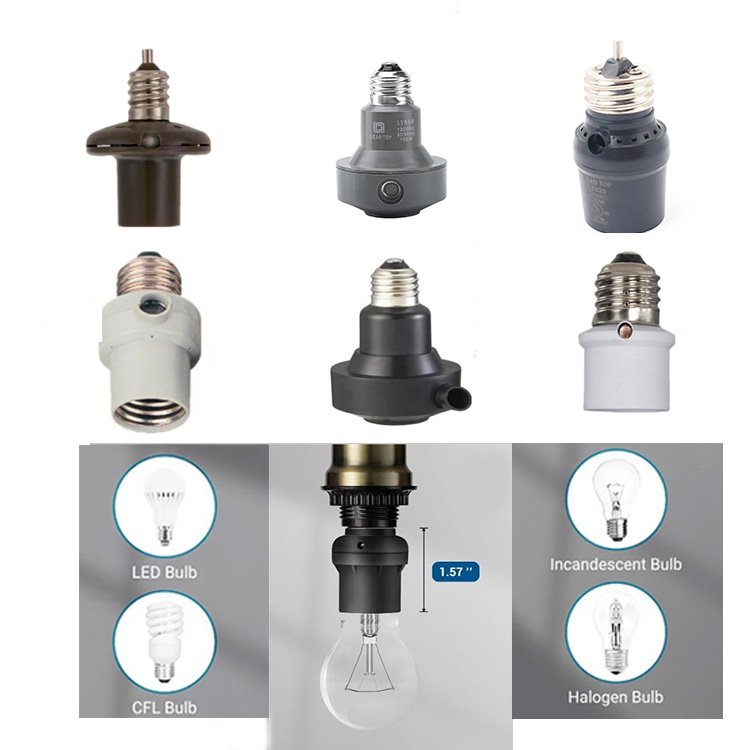
Series such as the LT210CH and LT310DH demonstrate this approach. As swivel wire-in thermal type photo controls, they allow a single product model to acclimatize crosswise numerous installation situations devoid of sacrificing constancy.
How Does Project Scale Influence the Need for Adjustability?
In small installations, a misaligned sensor may go unobserved or be rectified manually. In large-scale placements, the same mistake repeated across dozens or hundreds of fixtures becomes highly noticeable.
Fixed designs every so often produce varying switching behavior crosswise large sites. Adjustable designs permit commissioning squads to align all sensors to a common reference, improving homogeneity.
Is It a Mistake to Specify Adjustable Controls Everywhere?
A common misunderstanding is that adjustable designs should universally substitute fixed ones. In actuality, this can introduce needless cost and complexity in predictable environs.
The best approach is application-driven selection. Where unpredictability is low, fixed designs remain proficient and dependable. Where erraticism is unavoidable, adjustability becomes vital.
Application Comparison Table: Adjustable vs Fixed Photo Controls
| Application Condition | Fixed Photo Control | Adjustable Photo Control |
| Predictable orientation | Excellent | Acceptable |
| Variable mounting angles | Poor | Excellent |
| Reflected light present | Poor | Strong |
| Large-scale uniformity | Limited | Strong |
| Long-term adaptability | None | High |
Application-Based Selection Guide Table
| Application Type | Recommended Structure | Reason |
| Factory-assembled luminaires | Fixed | Controlled orientation |
| Standardized pole sites | Fixed | Low variability |
| Urban street lighting | Adjustable | Reflections and overlap |
| Parking facilities | Adjustable | Headlights and reflections |
| Wall-mounted lighting | Adjustable | Orientation constrained |
| Industrial facilities | Adjustable | Complex light patterns |
What Is the Lead-Top Engineering Perspective on Adjustability?
At Lead-Top, adjustable photo controls are not placed as a universal solution. Instead, swivel stem control series are manufactured exactly for environs where variability is unavoidable.
By aligning product structure with actual application situations, we help engineers choice solutions that bring dependable performance without needless complexity. This method guarantees that both fixed photo sensor use cases and adjustable photo control applications are addressed properly—based on engineering realism, not assumptions.

 English
  Portuguese (Brazil)
  Spanish
  Russian
  Dutch
Dutch  Japanese
  Portuguese (Portugal)