Introduction
Public parks are meant to be places where families gather after sunset, and neighborhoods feel safe after dark. But when public lighting infrastructure gets old, that safety fades fast.
This is what happened in Joinville. The city ran one of the more notable municipal lighting projects in recent memory. Crews installed 196 LED luminaires, added 67 new lighting points, and erected 54 new poles across the city’s park network.
This was not a simple lamp swap. Years of cable theft had damaged the network. Old equipment had worn out. The project had to rebuild the system, not just replace bulbs.
The real lesson from Joinville is not about LED technology alone. It is about treating a park lighting upgrade as an infrastructure job. Below, we look at the problems Joinville faced. We look at why lighting controls matter as much as the LED chip itself. And we pull out the key lessons any city can use for its next public park lighting project.

1. The Challenge: Aging Infrastructure and Poor Nighttime Safety
Many public parks suffer from outdated lighting systems, damaged electrical networks, and insufficient illumination. Cables degrade. Photocontrols stop working properly. Some stay stuck “on” during the day, wasting energy. Others fail “off” at night, leaving paths dark.
Joinville had an extra problem: cable theft and deteriorated infrastructure. Thieves target the copper wiring inside lighting systems. One theft can knock out an entire circuit. That means a whole section of a park can go dark for weeks while repairs get scheduled and funded.
Add in worn poles and failing connection points, and you get a public park lighting network nobody can rely on. Visitors stop trusting the space after sunset. Poor lighting also reduces natural surveillance. That can lead to more vandalism, which then causes more damage.
Joinville’s team saw this cycle clearly. A partial fix would not break it. The renovation had to replace poles, wiring, and control systems, not just the light sources.
2. Why Park Lighting Projects Require More Than Just LED Fixtures
Replacing luminaires alone cannot solve any long-term maintenance issues. It’s easy to think of a lighting upgrade as swapping old fixtures for new LED ones. LEDs do bring real benefits, as they use less energy and give better light quality than old sodium, mercury vapor lamps.
But Joinville shows something important. An LED photocell and the control system around it matter just as much as the fixture itself.
Here’s why. An LED luminaire is only as good as the system controlling it. If the photocontrol fails, the new fixtures lose most of their value fast. Lights that stay on all day burn through their lifespan faster. Lights that fail to turn on at dusk bring back the exact safety problem the project was meant to fix.
A solid park lighting upgrade should rest on three main things: reliable lighting controls, durable electrical components, and good infrastructure. All these are made to withstand harsh outdoor environments.
- Electrical components built to handle outdoor exposure and temperature swings for years
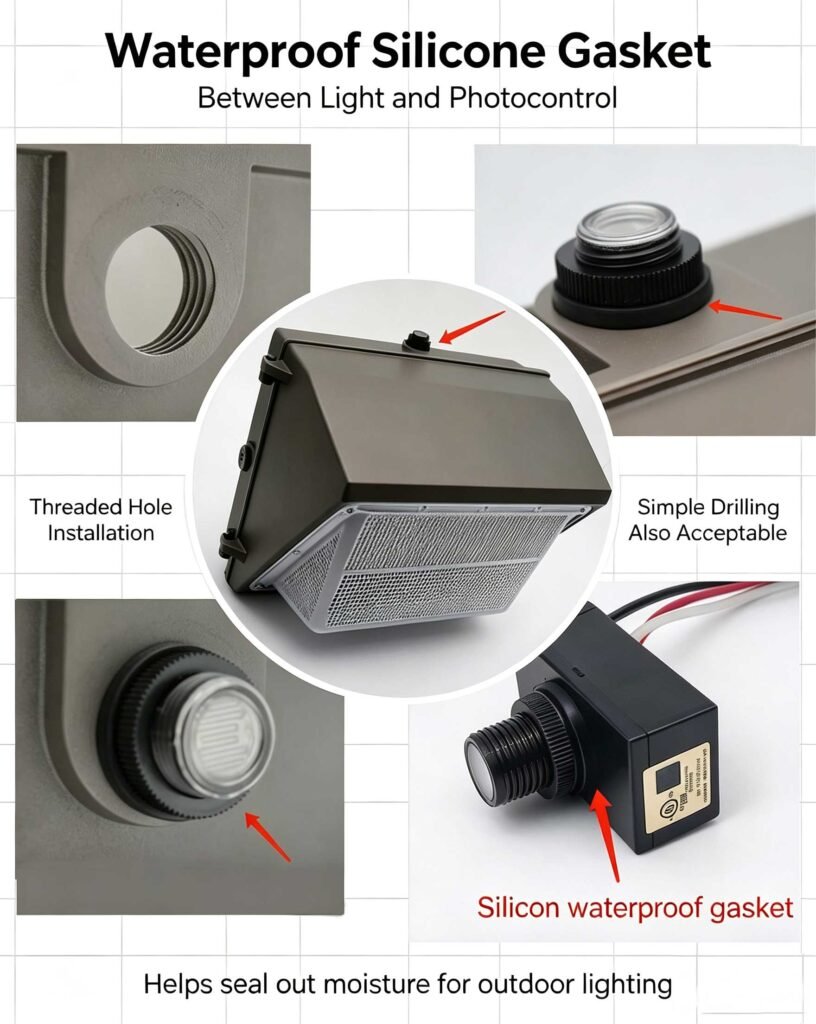
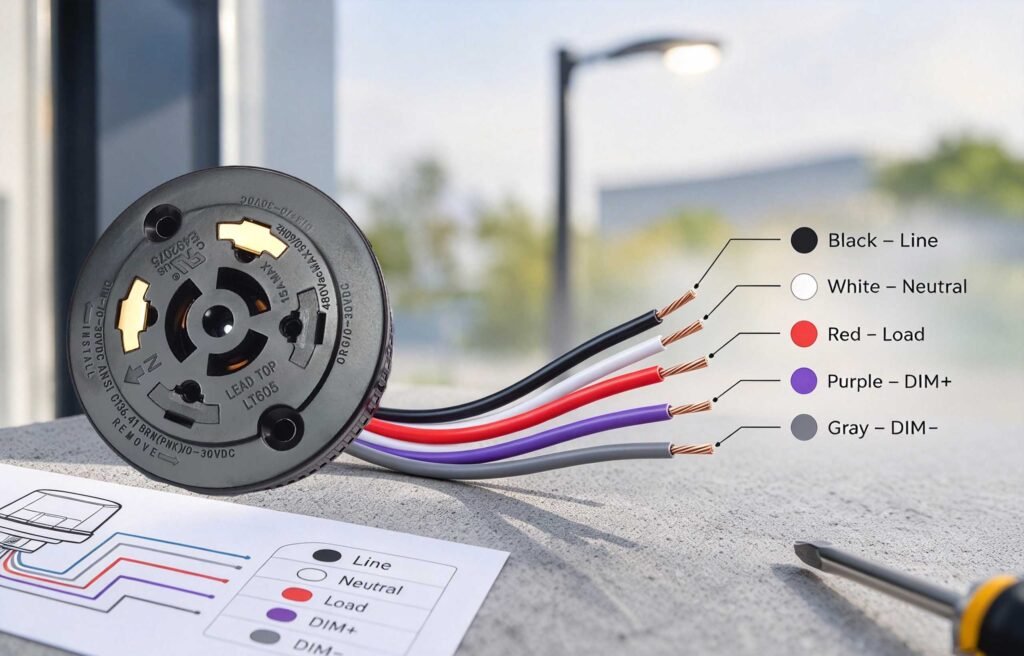
- A reliable dusk-to-dawn photocontrol that switches lighting on and off without manual help
- Poles, wiring, and mounting hardware built to resist wear, tampering, and theft
Cities planning similar projects should pick the right LED photocell and control hardware early. Treating it as an afterthought is how systems end up back in disrepair within a few years.
Recommended Lead-Top Products
Two photocontrol options fit well in municipal park settings like Joinville’s.

| Product | Best For | Key Benefit |
| LT134 Long-Life Twist-Lock Photocontrol | Parks needing low maintenance | Built for long-term outdoor use with fewer replacements needed |
| LT124 Standard Electronic Photocontrol | General dusk-to-dawn control for public spaces | Steady, consistent switching for standard park circuits |
A proper dusk-to-dawn photocontrol, rated for outdoor municipal use rather than home use, cuts down on the failures that hit Joinville’s old system.

3. Key Lessons for Future Municipal Park Lighting Projects
Joinville’s renovation gives other cities a practical guide for future park lighting projects. Including infrastructure resilience, maintenance planning, energy efficiency, and selecting reliable photocontrol solutions to maximize the performance of LED lighting systems.
Treat the upgrade as an infrastructure project, not a fixture swap. The biggest gains came from replacing poles and cabling too, not just the LEDs.
Design against theft. Cable theft badly hurt the old system. Future municipal lighting projects should use protected conduit, secure mounting, and circuits that limit damage from a single failure point.
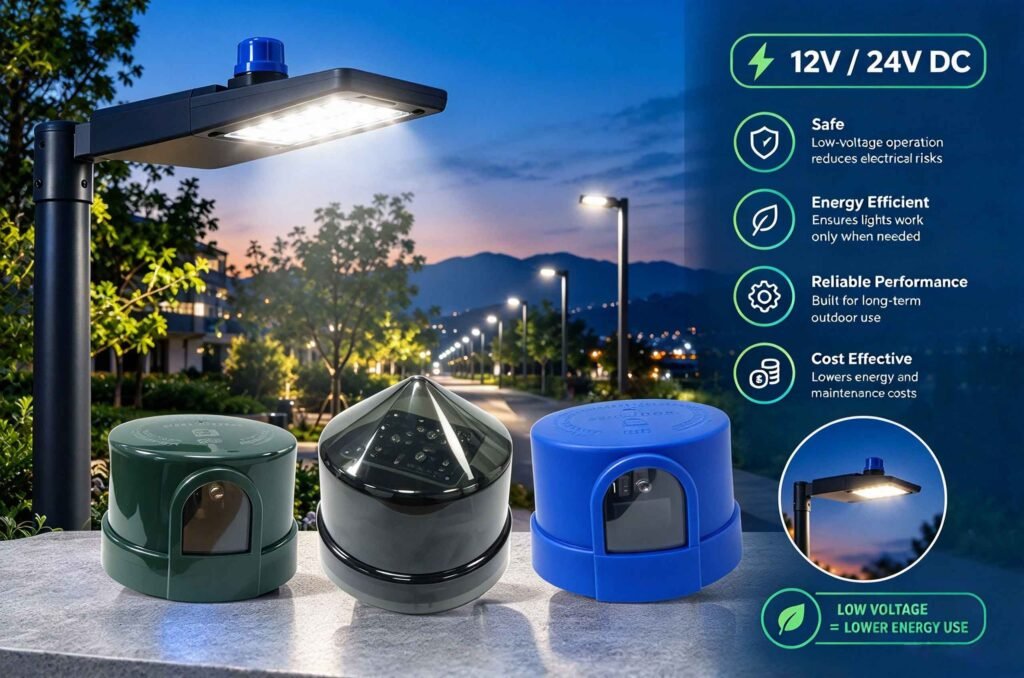
Don’t skip the photocontrol. A good LED photocell keeps the system running efficiently without someone checking on it every day.
Plan for maintenance from the start. Long-life components, like twist-lock photocontrols, cut down on repair calls later.
Look past energy savings alone. Efficiency matters. But visitor safety, evening park use, and fewer maintenance issues matter just as much.
Joinville’s 196-luminaire renovation shows what works. Modern LED technology paired with strong infrastructure and dependable controls beats either one on its own.
FAQ
How many luminaires were installed in Joinville’s renovation?
The project added 196 LED luminaires, 67 new lighting points, and 54 new poles. The project focused not only on improving energy efficiency but also on restoring safety.
Why did the old lighting system fail?
Aging cables, worn equipment, and repeated cable theft left large parts of the park network unreliable or completely dark.
Is switching to LED fixtures alone enough?
Usually not. Long-term reliability needs strong poles, solid wiring, and a dependable dusk-to-dawn photocontrol, not just new bulbs.
What should a city look for in a park lighting photocontrol?
Look for outdoor-rated, long-life components, like twist-lock or standard electronic photocontrols built for continuous municipal use.
How does a dusk-to-dawn photocontrol help with energy use?
It switches lights on at dusk and off at dawn automatically. This stops wasted daytime energy use and keeps nighttime coverage steady.
CTA
Planning a LED park lighting upgrade for your city? Reliable outdoor LED lighting starts with dependable controls. Check out Lead-Top’s photocontrol options, including the LT134 and LT124 photocontrols, built for long-term park lighting performance.
References:


 English
 Portuguese (Brazil)
 Spanish
 Russian
 Dutch
Dutch Japanese
 Portuguese (Portugal)