More lighting systems now use low-voltage DC power. This is especially true for solar installations. These systems need control devices that work directly with their DC architecture.
A 12V/24VDC light sensor control detects ambient light and automatically switches compatible lighting. This helps avoid unnecessary daytime operation and supports energy savings.
But how does a DC photocell compare with a conventional one?
This guide explains the benefits and key selection factors. It will also include Lead Top’s LT104-DC low-voltage photocell.
What Is a Low-Voltage Photocell?
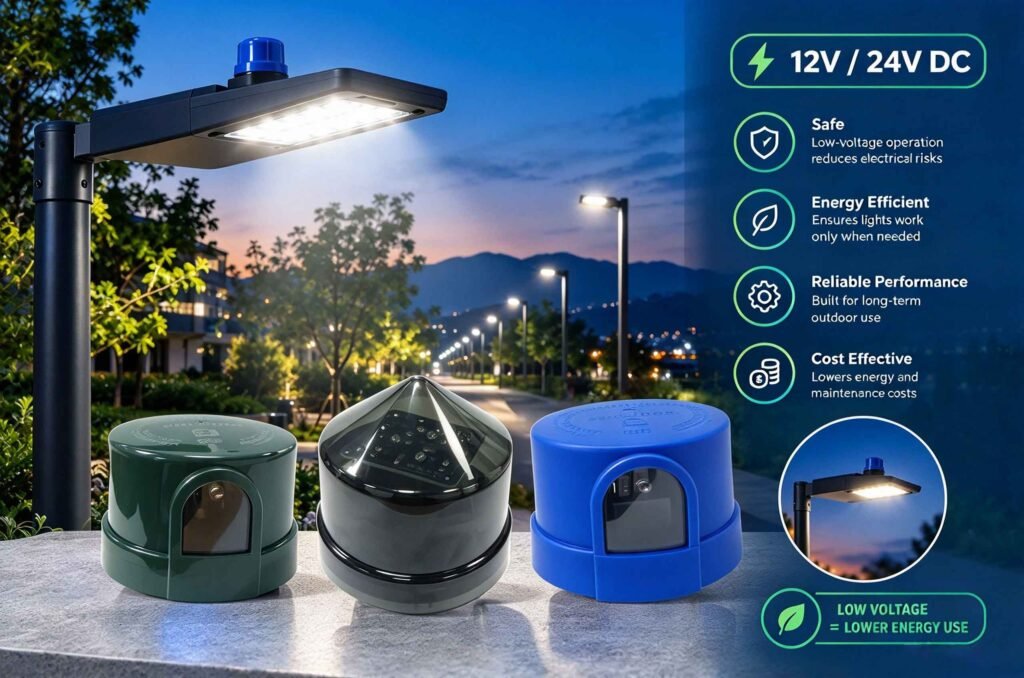
These products are designed for automatic control of DC-powered outdoor lighting. They switch compatible lighting according to changing daylight conditions. Unlike a conventional AC photocell, it is designed to work on a limited current supply. This makes voltage matching important during selection.
For example, Lead Top’s LT104-DC is rated for 12–24VDC and provides automatic control.
The basic control path is simple:
12V/24VDC Supply → DC Photocell → Outdoor Luminaire → Automatic Lighting Control
Why Are 12V and 24V DC Light Sensors Becoming More Important?
Solar systems naturally use DC power. Solar panels generate DC electricity, while batteries store and supply DC power to the lighting system.
This makes 12V and 24V DC photocells a direct fit for compatible low-voltage architectures. They can provide automatic light-based switching without requiring the control system to be treated like a conventional mains-powered installation.
Lead Top lists its LT104-DC for outdoor LED, street, parking, landscape, and other lighting applications.
The trend is especially relevant to:
- Solar street lighting
- Off-grid lighting
- Remote outdoor lighting
- Low-voltage LED systems
How Does Using a 12V/24VDC Photocell Benefit?
It provides automatic control without any additions to a DC lighting system. The sensor detects ambient light and switches lights accordingly.
This helps reduce unnecessary daytime operation. The LT104-DC also consumes < 0.5 W. This suits energy-conscious lighting systems.
For outdoor use, its practical features include:
- 10–16 Lux turn-on level
- 3–10 second time delay
- -40°C to +70°C operating range
- IP65 protection
- More than 10,000 ON/OFF operations

What Should You Look for in a 12V/24VDC Photocell?
Start with the system voltage. A 12VDC or 24VDC system needs a compatible lighting control. Using the wrong voltage rating can make the control unsuitable for the application. The LT104-DC is rated for 12–24VDC.
Then check the sensing and outdoor-performance specifications:
| Specification | Level | Specification | Level |
| Turn-on level | 10–16 Lux | Time delay | 3–10 seconds |
| Power consumption | ≤0.5W | Operating temperature | -40°C to +70°C |
| Ingress protection | IP65 | Switching life | More than 10,000 operations |
These specifications help match the photocell to the system’s operating and environmental requirements.
What Makes the LT104-DC a 12V/24VDC Photocell for Outdoor Lighting?
The answer starts with its electrical rating. The LT104-DC automatic light sensor operates at 12–24VDC and is designed for automatic control. It uses a phototransistor light sensor and provides a 10–16 Lux turn-on level. A 3–10 second time delay helps prevent switching from brief light changes.
Its specifications also suit exposed installations. Key features include:
- < 0.5 W power consumption
- -40°C to +70°C operating range
- IP65 protection
- More than 10,000 switching operations
- Anti-UV impact-resistant housing
Where Can a 12V/24VDC Photocell Be Used?
It’s applicable wherever compatible outdoor lighting operates from a limited DC power system. Solar street lighting is a key example. Power is stored and supplied as DC at 12V or 24V system voltages.
The LT104-DC street light controller is listed for several outdoor lighting applications, including:
- Solar and low-voltage outdoor lighting
- Street and highway lighting
- Parking-lot lighting
- Public-area lighting
- Landscape and barn lighting
- Farms, schools, and similar outdoor facilities
Should You Choose a 12V or 24V DC Photocell?
It basically depends on your DC lighting system. 12V and 24V systems need their respective control systems. The luminaire type alone should not determine the choice.
Before selecting a photocell, check:
- System voltage
12VDC or 24VDC
- Power architecture
Battery, solar, or another DC source
- Photocell rating
- Must cover the system voltage
The LT104-DC light sensor control supports 12/24VDC, so it can suit compatible systems using either voltage.
Why Is Low Power Consumption Important in Solar Lighting?
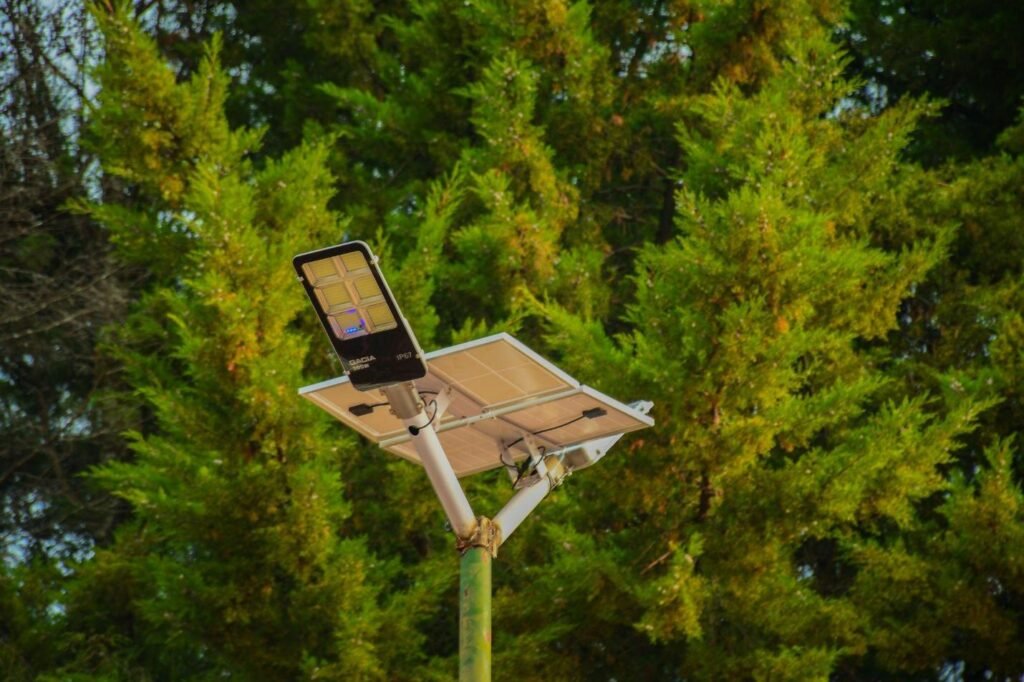
It’s because the power supply is limited here. In battery-based installations, energy must be stored and replenished through solar charging. Lower control consumption can therefore help limit the energy used by the control device.
The LT104-DC consumes ≤0.5W. This makes its own power requirement relatively small within the lighting system. When selecting a solar photocell, consider both its control function and its energy demand. The overall system should balance:
- Solar charging
- Battery storage
- Photocell consumption
- Nighttime lighting load
How To Select the Right Voltage Photocell for Your Project
First, confirm the system’s DC voltage. The photocell switch must match that rating. Then check the required light threshold and time delay. These settings affect when the lighting switches.
Next, consider the outdoor environment and energy budget. Check:
- Power consumption: Lower consumption matters for solar systems.
- Light level: LT104-DC turns on at 10–16 Lux.
- Time delay: 3–10 seconds helps limit unwanted switching.
- Protection: LT104-DC provides IP65 protection.
- Service life: More than 10,000 switching operations.
FAQs
Does a 12V Photocell Work With 24VDC Lighting?
Only if the photocell is rated for both.
What Is the Difference Between a 12V and 24V Photocell?
It’s mainly about the operating voltage they are designed to handle. It’s recommended to ensure their compatibility with the lighting system.
Are Low-Voltage Photocells Suitable for Solar Street Lights?
Yes. They are suitable for compatible solar lighting systems that use limited DC power. This includes 12V or 24V DC architectures.
Do DC Photocells Save Energy?
They help reduce unnecessary daytime operation through automatic switching. A low-consumption model such as the LT104-DC also uses < 0.5 W.
Why Does a Photocell Need a Time Delay?
A time delay helps prevent temporary changes in ambient light from causing unwanted switching. The LT104-DC provides a 3–10 second delay.
What IP Rating Should a Low-Voltage Outdoor Photocell Have?
The required rating depends on the installation environment. The LT104-DC has IP65 protection, with optional IP66/IP67 protection.
Final Words
12V/24VDC photocells provide simple automatic control for outdoor lighting systems. They are especially useful for solar applications where voltage compatibility and low power consumption matter. For reliable 12V/24VDC photocontrollers, Lead Top offers the LT104-DC for solar and outdoor lighting projects.

 English
 Portuguese (Brazil)
 Spanish
 Russian
 Dutch
 Japanese
 Portuguese (Portugal)