Municipalities are investing in LED street lighting across Brazil. However, successful modernization requires more than replacing old luminaires. This includes:
- Reliable control systems
- Compatible components
- Proper maintenance planning
Photocell sensors are the way forward in this regard. They:
- Automatically switch outdoor lights according to ambient light levels
- Help prevent unnecessary daytime operation
- Installation and replacement are simple
For municipalities and contractors, choosing the right light photocell is an important step toward reliable, extended public lighting.
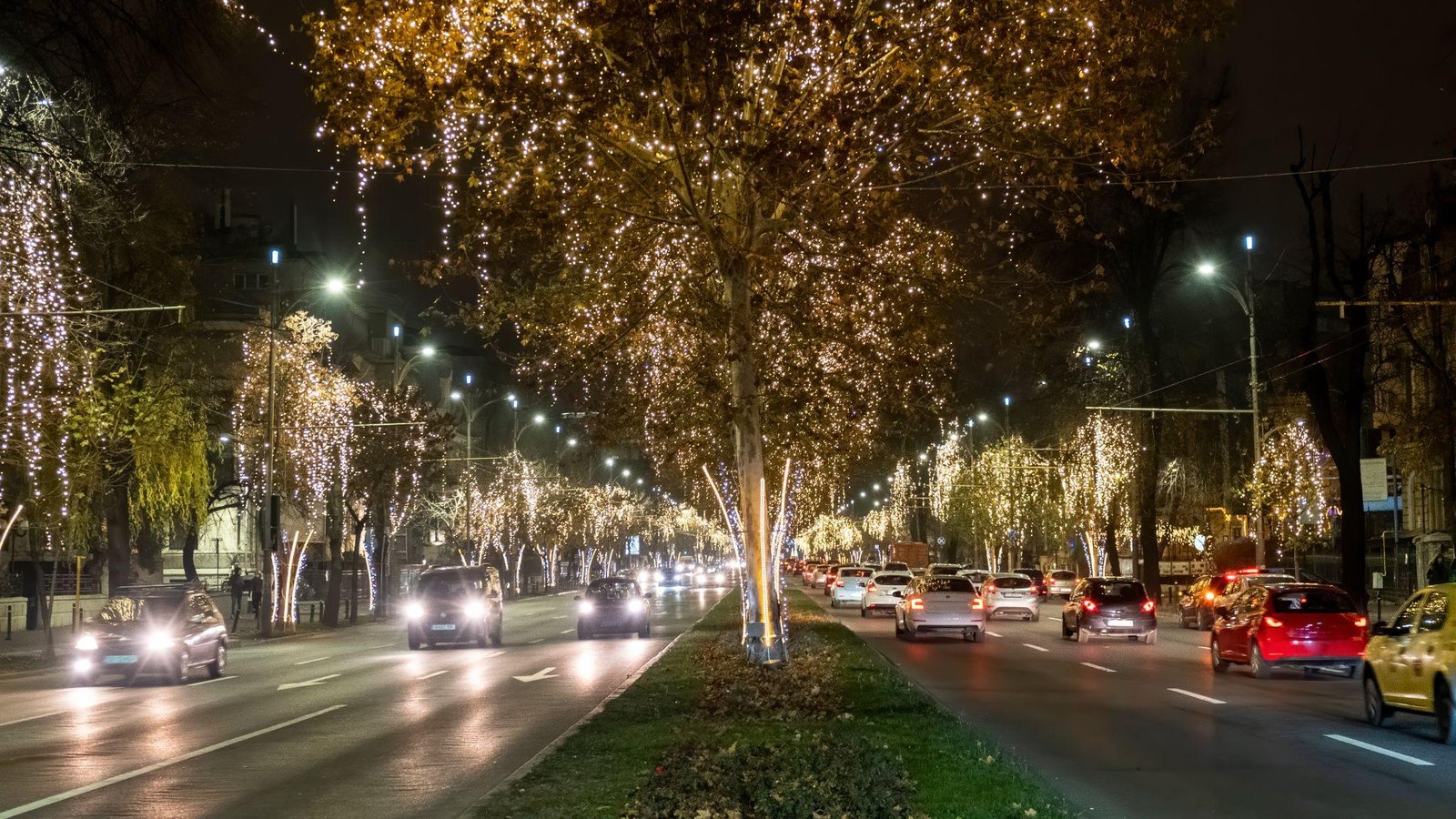
What Challenges Do Cities Face When Modernizing Public Lighting?
An extended public lighting contract, such as the one proposed in Ibirama, generally raises a few recurring challenges:
Energy efficiency
LED luminaires reduce power consumption per fixture. The automatic switching helps ensure lights are off during daylight hours.
Maintenance planning
Consistent equipment selection and clear replacement procedures matter more over a multi-year contract than for a one-off installation.
System consistency
Compatible, standardized interfaces across a large fixture base can simplify spare-parts management for whoever operates the system long term.
Long-term operation
Equipment reliability, maintenance planning, and operational costs all factor into how well a system performs over a contract term like the 16 years proposed for Ibirama.
Ibirama’s proposed PPP is a useful reference point here — not because its specifications are public yet, but because a 16-year contract of this kind makes equipment standardization a meaningful part of the eventual bidding requirements.
Why Is Automatic Light Sensor Switch Important for LED Public Lighting?
Because they detect ambient light and automatically switch a compatible luminaire accordingly. This plays a role across vicinities by removing the need for manual operation.
When properly selected and installed, automatic switching can reduce unnecessary daytime operation — a system that only runs when ambient light calls for it uses less energy than one on a fixed schedule or switched manually.
Key Selection Criteria
- Supply voltage compatibility — matched to the local electrical system
- LED driver load and switching requirements — including inrush current at switch-on
- Surge protection — relevant to grid conditions and lightning exposure
- Operating temperature and ingress protection — suited to the outdoor environment
- Installation interface and maintenance access — ease of field inspection and replacement
Why Combine Twist-Lock Photocontrols with NEMA Receptacles?
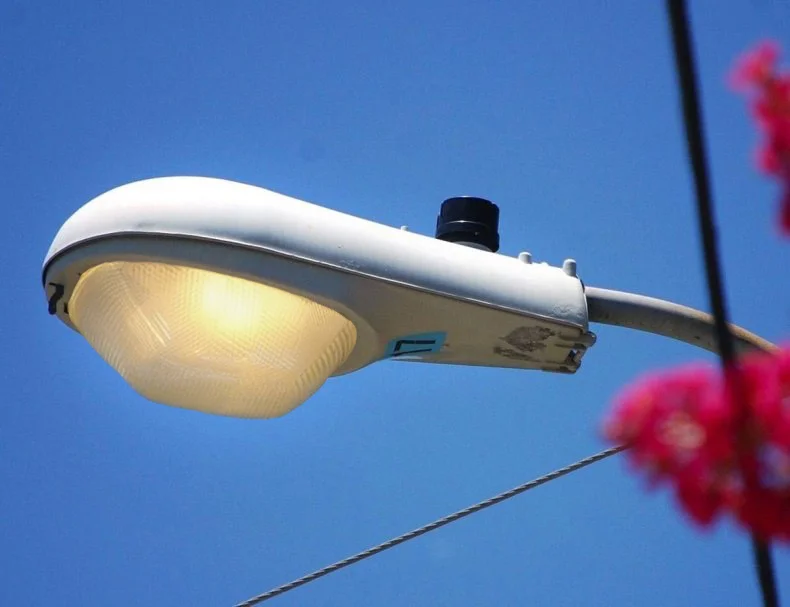
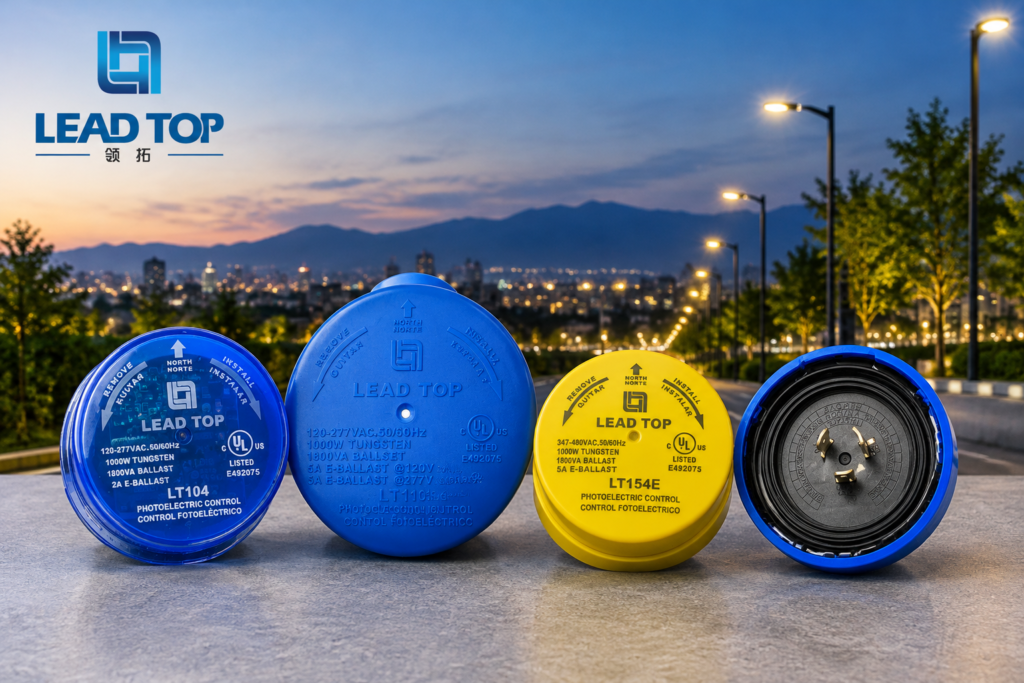
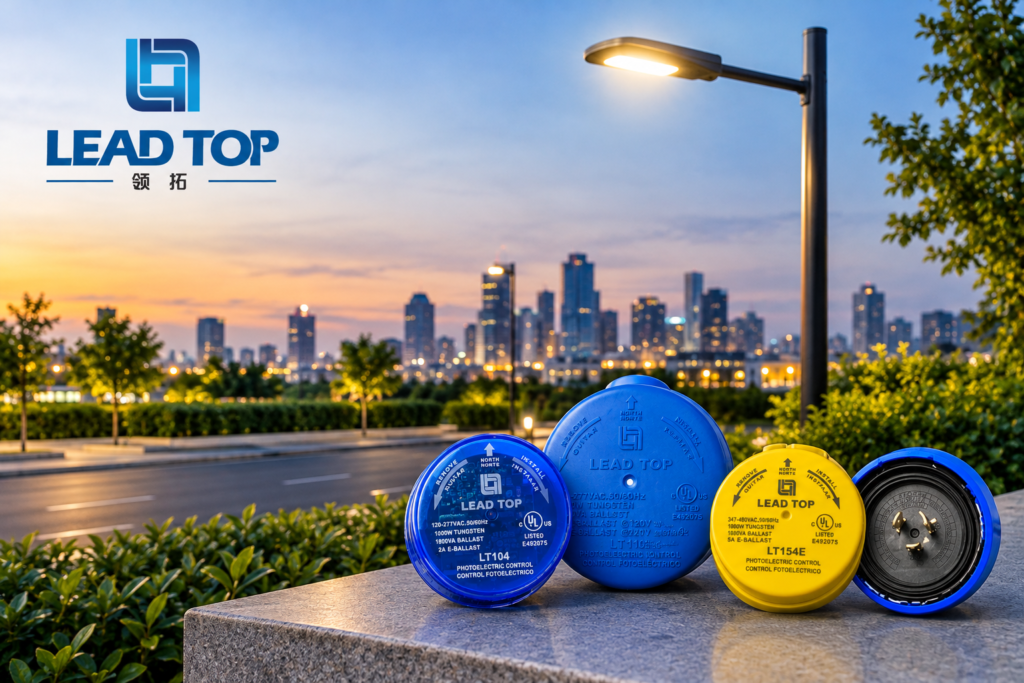
A twist-lock photocontrol plugs into a matching NEMA receptacle mounted on the luminaire and locks in place with a quarter turn. This modular connection means a compatible photocontrol can generally be replaced without replacing the entire luminaire — a meaningful distinction for a project maintaining thousands of fixtures over many years.
For projects spanning multiple streets and zones, standardized interfaces let maintenance crews carry a smaller, more consistent set of spare parts rather than managing different interfaces for different fixture batches.
Main Compatibility Checks
Check
What to Confirm
Mechanical interface
Twist-lock fit between the photocontrol and receptacle
Contact configuration
Pin arrangement matches between components
Rated voltage and load
Both components support the system’s electrical requirements
Applicable technical standards
Compliance with relevant standards such as ANSI C136.10
Suggested installation relationship
LED Luminaire → Compatible NEMA Receptacle → Twist-Lock Photocontrol
This is typical for compatible luminaires, not a universal configuration — some fixtures use direct-wire photocontrols instead, and the two formats aren’t interchangeable without modification.
Which Photoelectric Sensor Should Be Selected for Long-Term Public Lighting Projects?
Product Model
Potential Project Focus
Key Selection Considerations
General-purpose LED street lighting
Zero-crossing design and project-specific surge protection
Projects prioritizing long-life design
Higher electronic ballast load rating and long-life features
Heavy-duty outdoor lighting
Heavy-duty design and high-inrush-current protection
LT110 Series
Applications requiring thermal-type control
Rated voltage, switching characteristics, and load compatibility
Long-term projects — particularly multi-year contracts like the one proposed for Ibirama — should evaluate electrical compatibility, load requirements, surge conditions, and maintenance strategy together, rather than selecting a model in isolation. The final selection must follow the exact model specifications and the project’s actual requirements.
How Can Standardized Photocontrol Interfaces Simplify Maintenance?
Compatible twist-lock photocontrol receptacles can support more convenient inspection and replacement across a large fixture base. Potential benefits include:
- Simplified spare-parts management
- More consistent installation procedures
- Easier replacement of compatible photocontrols
- Reduced need to replace an entire luminaire when only the photocontrol fails
Actual savings depend on:
- Site accessibility
- Labor
- Spare-parts availability
- Equipment reliability
Standardization reduces friction. However, it doesn’t eliminate the practical realities of servicing fixtures spread across a city.
Photocontrol vs. Remote Monitoring
Worth distinguishing, since Ibirama’s proposed PPP includes a remote monitoring component:
- Photocontrols automatically switch lighting based on ambient light — a self-contained function needing no network connection.
- Remote monitoring requires additional compatible communication and monitoring equipment to track performance, report faults, or adjust settings remotely.
A conventional photocontrol handles switching reliably on its own, but doesn’t provide remote visibility into the system — that requires a separate, compatible monitoring layer.
Where Can Normal-Voltage Photocontrols Be Used in Brazil?
- Urban streets and avenues — automatic switching for compatible road lighting
- Residential neighborhoods — outdoor lighting control for neighborhood roads and public areas
- Public parking lots — automatic operation of compatible parking-area luminaires
- Commercial and industrial areas — building exteriors, industrial parks, and perimeter lighting
- Public spaces and security lighting — squares, pedestrian areas, and outdoor security installations
Each application requires model selection based on local supply voltage, luminaire load, installation configuration, and environmental conditions.
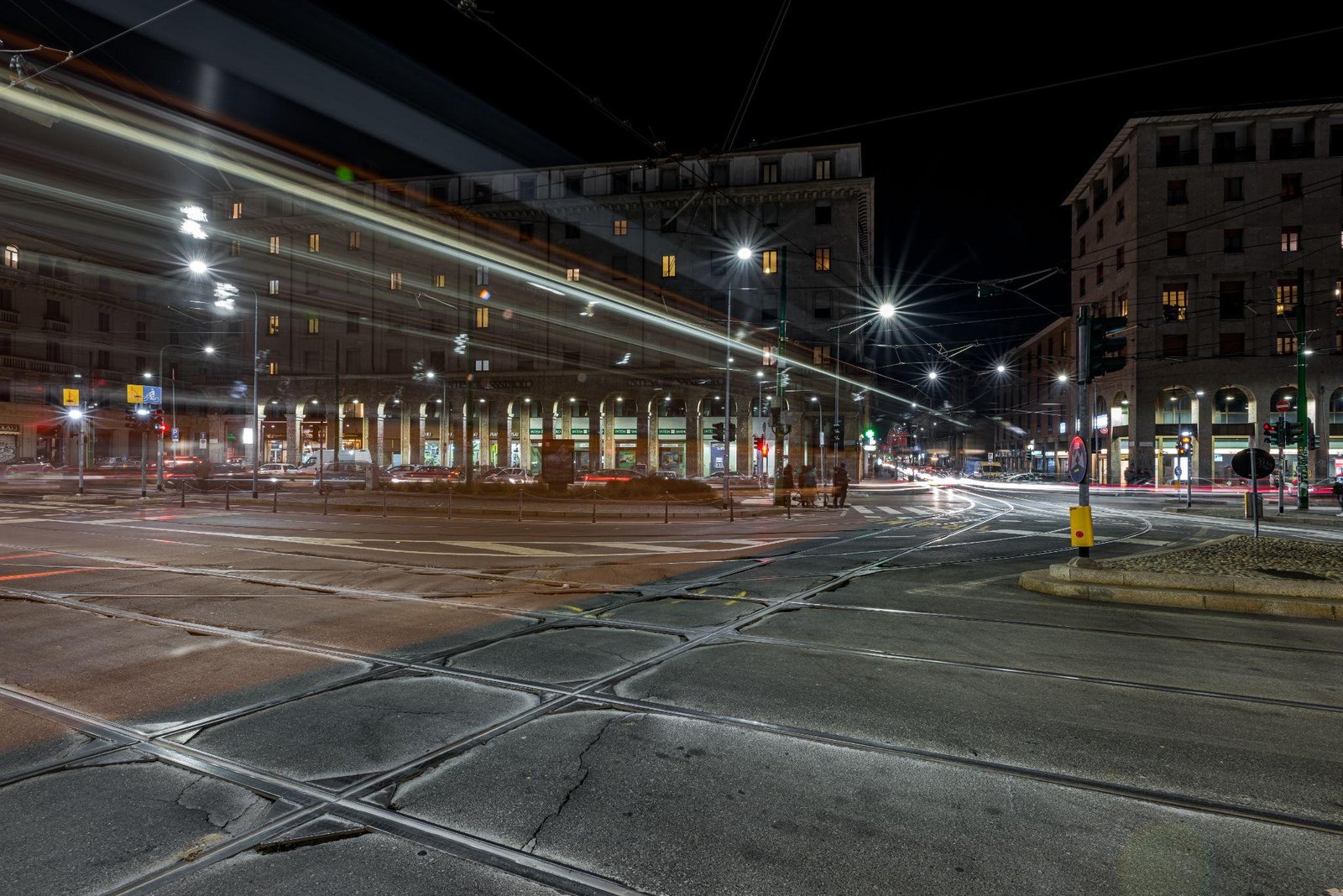
Product Recommendation
1. LT134 — Long-Life Twist-Lock Photocontrol
Positioned as an option for projects prioritizing long-life design, the LT134’s catalog specifications include a 120–277V rated voltage, a 10–16 lux turn-on light level, and IP66 ingress protection.
It’s a reasonable candidate for outdoor lighting projects with defined electrical and maintenance requirements, such as a multi-year contract.
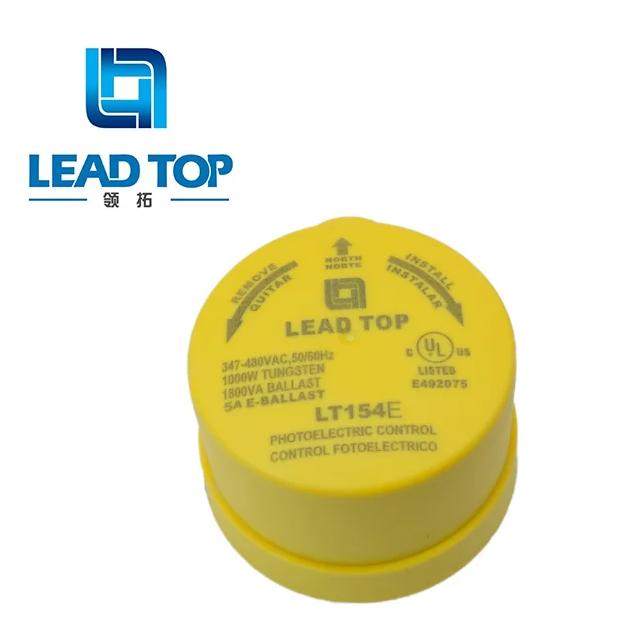
2. LT154 — Heavy-Duty Twist-Lock Photocontrol
The LT154’s heavy-duty design is built for applications requiring careful evaluation of load and inrush-current protection. It carries a 120–277V rated voltage and a high-inrush-current protection design.
As with any heavy-duty specification, the actual load and protection configuration should be checked before deployment against the specific LED driver in use.
3. LT500 Series — NEMA Mounting Receptacle
The LT500 series functions as the mounting and electrical interface for compatible three-pin twist-lock photocontrols.
Interface and electrical compatibility should be verified against the chosen photocontrol and luminaire before ordering.
Suggested Combination: LT134 + Compatible 3-Pin NEMA Receptacle
- Target applications: public LED lighting projects using compatible twist-lock interfaces that prioritize maintenance planning
- Key value: a modular arrangement supporting replacement and spare-parts standardization
- Selection note: confirm the exact model’s mechanical interface, voltage, load rating, and applicable requirements before ordering
FAQ
Q1: Why are photocontrols useful in public lighting modernization?
They automate switching based on ambient light. This
- Helps support consistent outdoor lighting operation
- Reduces reliance on manual switching
Q2: What is the difference between a photocontrol and a remote monitoring system?
The former provides automatic switching based on sunlight availability. The latter requires additional compatible communication and monitoring equipment to track performance from a central location.
Q3: Are twist-lock photocontrols suitable for all LED streetlights?
Not automatically — they require a compatible receptacle and suitable electrical ratings matched to the specific luminaire.
Q4: Which Lead Top models should be considered for public lighting projects?
Each project has its own needs. However, the below-listed products are worth considering:
- LT124
- LT134
- LT154
- LT110
Q5: Can standardized receptacles reduce maintenance costs?
Compatible interfaces can simplify replacement. However, actual savings depend on overall project conditions such as site accessibility and labor.
Q6: What should buyers confirm before ordering photocontrols for Brazil?
- Local supply voltage
- Driver requirements
- Switching load
- Certification requirements
- Receptacle compatibility
- Environmental conditions
- Project-specific procurement requirements
Final Words
Public lighting modernization in Brazil requires reliable controls, compatible components, and proper maintenance planning. Photocontrols help improve lighting operations and simplify replacement. Lead-Top offers dependable photocontrols and compatible NEMA receptacles for diverse outdoor lighting needs. Contact Lead-Top to find the right solution for your project.

 English
 Portuguese (Brazil)
 Spanish
 Russian
 Dutch
 Japanese
 Portuguese (Portugal)