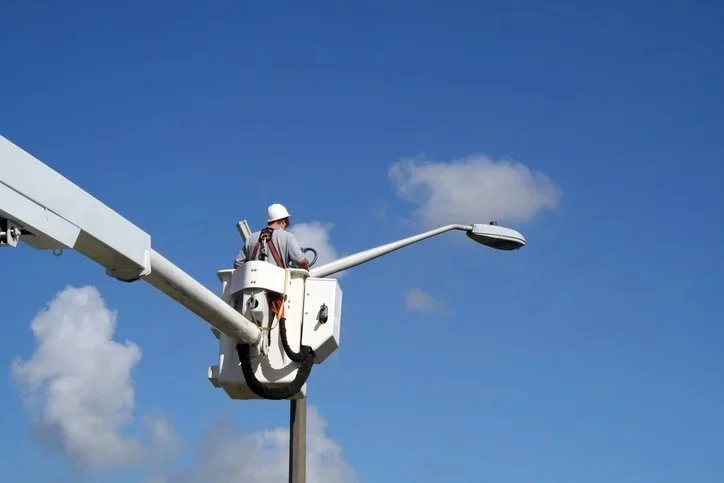
On October 11, 2026, Boca del Río’s municipal government, led by Mayor Maryjose Gamboa Torales, reported a series of public works across the city. Public Lighting crews carried out work in the Miguel Alemán neighborhood to improve visibility and safety, with further lighting attention extended to Costa Verde, Remes, Virginia, Calle 6, Ampliación Miguel Alemán, and Luis Echeverría.
Reports like this are a reminder that public lighting maintenance is an ongoing, citywide effort rather than a one-time upgrade. Keeping streetlights reliable involves more than the luminaire itself — it also depends on the control components that switch lights on and off automatically, night after night, in outdoor conditions.
This article looks at why control components deserve attention in any lighting maintenance plan, what normal-voltage photocontrols do, and how a compatible twist-lock light sensor switch and NEMA receptacle can support practical inspection and replacement work for municipal teams.

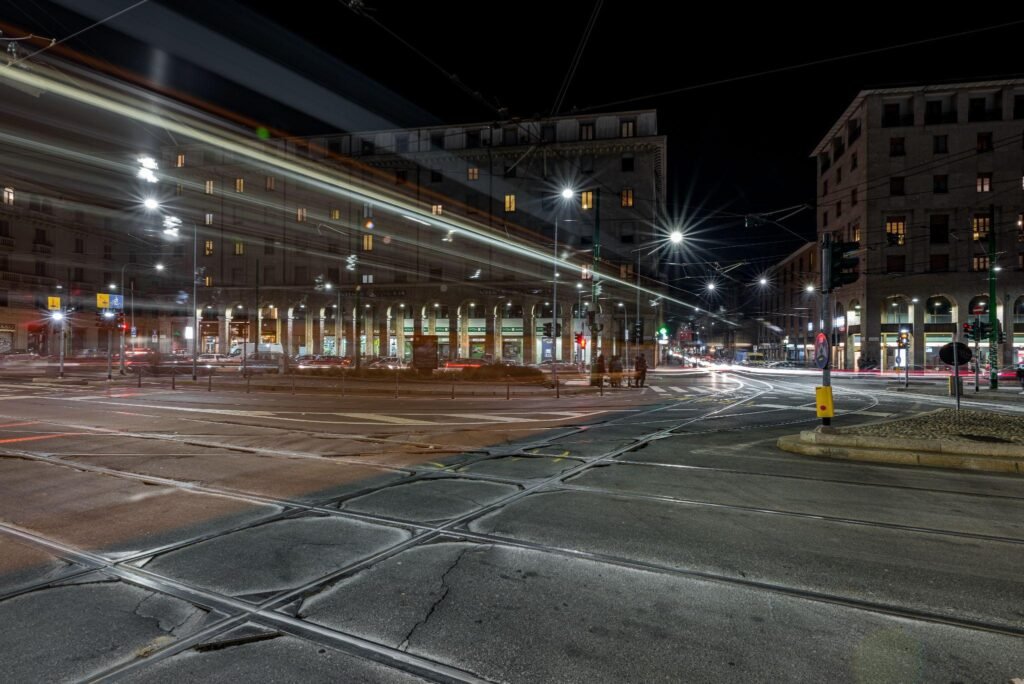
Image Courtesy: Tripadvisor
What Public Lighting Maintenance Means for Municipal Projects
Maintaining lighting across multiple streets and neighborhoods — as described in the recent Boca del Río report — typically means coordinating crews across a wide geographic area, often with varying fixture ages, suppliers, and installation types.
A few considerations generally apply to projects of this scale:
Control components should be part of the plan
A luminaire can be physically sound while its photocontrol no longer switches reliably, so inspection schedules benefit from covering both.
Standardized specifications help crews move faster
When replacement photocontrols and receptacles follow recognized standards (such as ANSI C136.10 and UL773), maintenance teams can identify compatible products more easily across different streets and fixture types.
General considerations are not the same as confirmed faults
The points discussed in this article reflect common outdoor lighting maintenance topics industry-wide. They are not a report of specific problems identified in Boca del Río’s public lighting system.
What Are Common Lighting Control Issues in Outdoor Lighting Systems
Photoelectric sensors are simple devices, but outdoor exposure over years of operation can affect how they perform. Maintenance teams working on streetlight systems generally watch for:
Improper Switching
Switching that no longer follows the intended ambient-light threshold — lights turning on too early, too late, or not at all relative to dusk and dawn.
Weather Impacts
Components affected by extended environmental exposure, including heat, humidity, UV exposure, and voltage fluctuations over repeated years of service.
Compatibility
That’s a critical concern when replacing an older light photocell sensor. Particularly when a newer unit’s rated voltage and load type don’t match the existing fixture.
Every component should function as one system — a fault in any single part can look like a failure in another, so inspection generally needs to consider the full assembly rather than the photocontrol alone.
Again, these are general outdoor lighting maintenance considerations drawn from the industry, not a statement about specific equipment issues in Boca del Río.
How Normal-Voltage Photocontrols Support Automatic Streetlight Operation
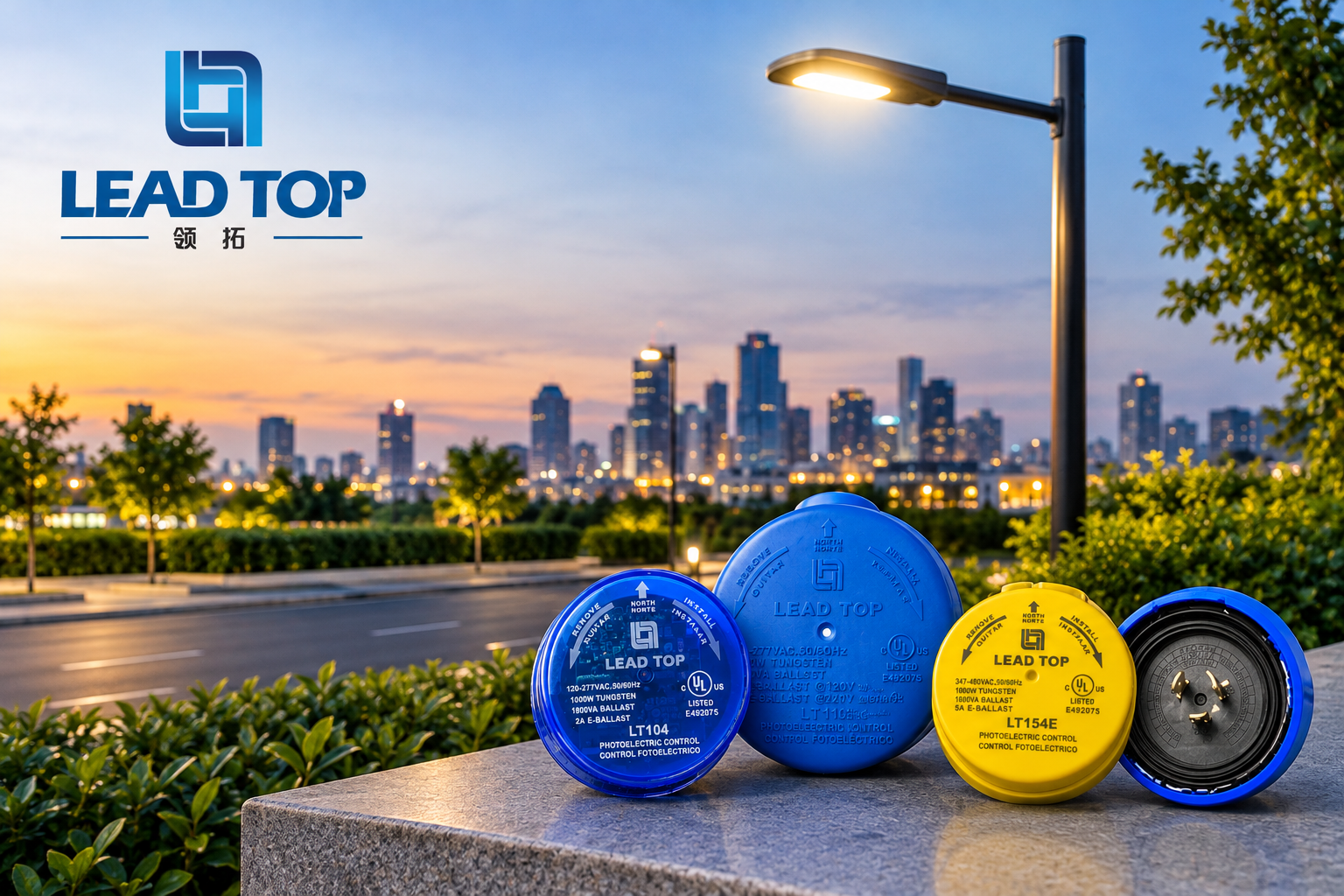
A photo switch sensor is a small device that detects ambient light levels and automatically switches a connected luminaire accordingly. They’re widely used in:
- Streetlights
- Parking lot lighting
- General outdoor area lighting
A few specification details matter for reliable operation:
- Rated voltage must match the supply voltage of the fixture (commonly 120–277V for normal-voltage applications).
- LED driver characteristics, including inrush current and load type, should be compatible with the light sensor control‘s rated capacity.
- Switching delay — a short built-in delay before the control responds — can help the system avoid reacting to brief changes in ambient light, such as headlights or lightning, rather than genuine dusk or dawn conditions.
How Twist-Lock Photocontrols Compare With Direct-Wire Installation?
Automatic light sensors are generally installed in one of two ways, and the two formats are not interchangeable.
Installation Type
How It Works
Typical Fit
Twist-lock photocontrol
Plugs into a matching NEMA receptacle on the fixture and locks with a quarter turn
Luminaires with a compatible receptacle already installed
Direct-wire photocontrol
Wired directly into the fixture’s electrical connections
Luminaires without a receptacle, or where direct wiring is standard practice
Because the two formats connect differently, replacing one with the other usually means either changing how the fixture is wired or installing a compatible receptacle — not a simple swap.
For a maintenance project covering many fixtures, standardizing on a compatible receptacle interface can make future photocontrol replacement faster, since crews can swap a twist-lock unit without rewiring the fixture each time.
Product Recommendation
It depends on multiple factors. The following options cover a range of typical requirements when paired with a compatible NEMA receptacle.
It’s advised to confirm the exact specifications of your chosen configuration before ordering.
Model
Positioning
Consider When
An economical electronic photocontrol option for compatible 120–277V systems
Project cost and straightforward replacement are priorities
A standard electronic street light controller with a short built-in time delay
The specified voltage and LED load requirements are met by a compatible system
A long-life electronic option with a stated rating of 8A E-Ballast at both 120V and 277V
The application requires the corresponding electrical capacity
A heavy-duty option featuring zero-crossing detection and high-inrush-current protection
Heavier LED driver loads or added protection against switching wear are needed
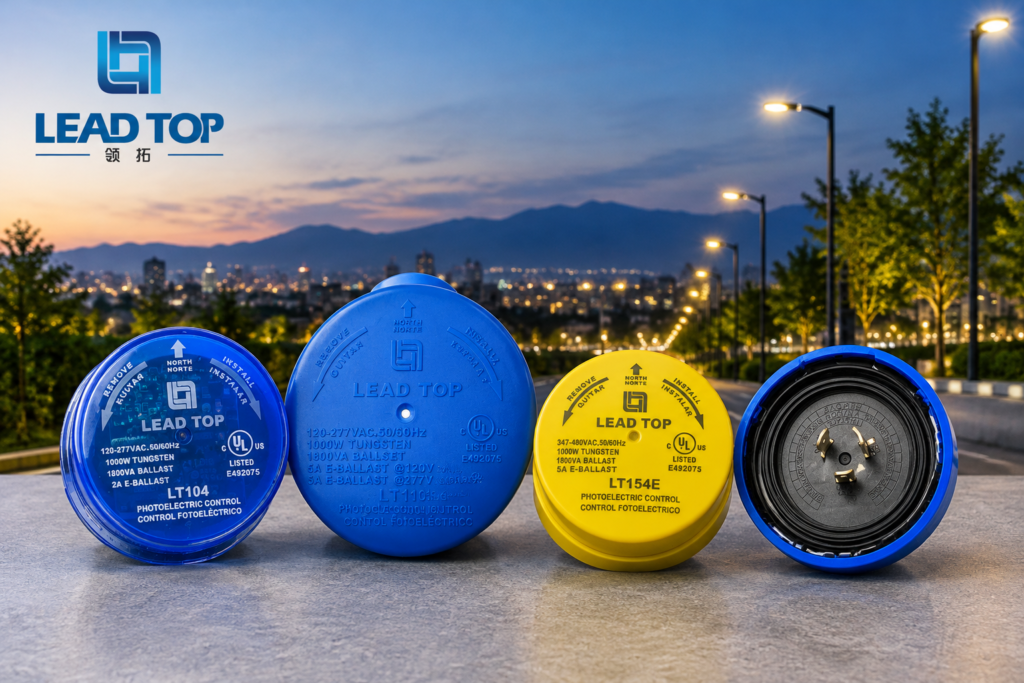
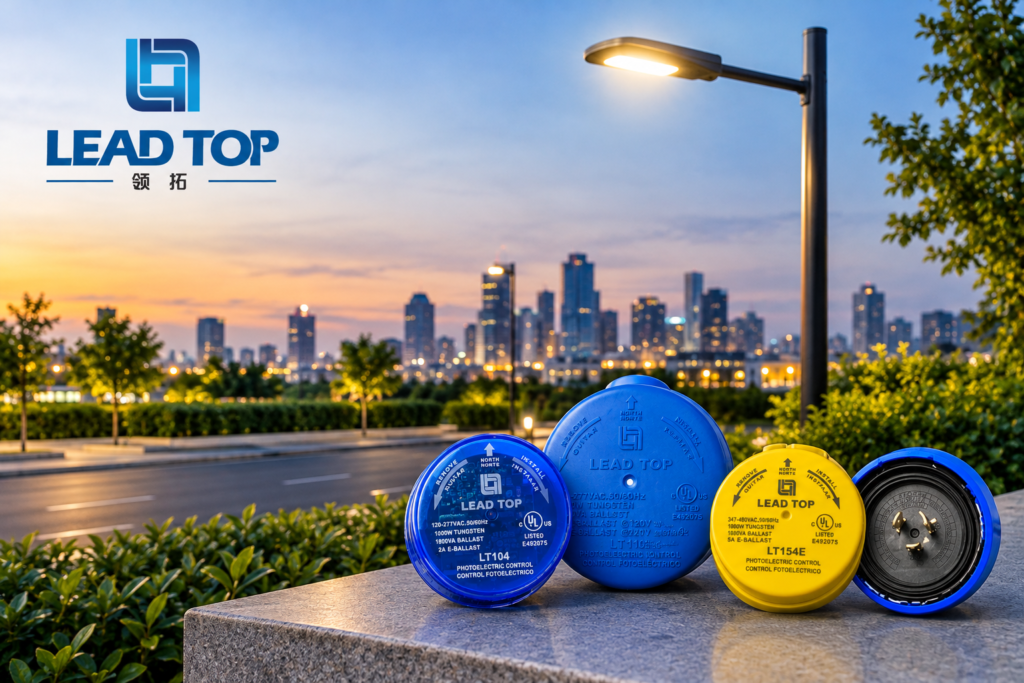
For a compatible standard 3-pin receptacle system, Lead Top’s LT615, LT625, and LT645 options are worth reviewing once the required configuration has been confirmed — each is built to the ANSI C136.10 and UL773 standards common to twist-lock streetlight systems.
What Municipalities and Lighting Contractors Should Check Before Installation?
- Confirm the existing system’s rated voltage.
- Check the LED driver characteristics and electrical load.
- Verify the photocontrol and receptacle interface match.
- Confirm the required light threshold and switching delay.
- Review the ingress protection rating and operating temperature range.
- Inspect the wiring and receptacle for wear and damage.
- Test automatic switching after installation.
- Record model numbers and specifications for future maintenance reference.
FAQ
When should a streetlight photocontrol be replaced?
It’s appropriate when:
- A control fails inspection
- No longer switches reliably
- Does not meet the application’s electrical requirements
Can I replace an existing photocontrol without changing the NEMA receptacle?
Potentially, if the replacement photocontrol is compatible with the existing receptacle and satisfies all relevant electrical and installation requirements.
Which photocontrol is best for municipal maintenance?
All products have different characteristics. Selection should be based on the actual system requirements — rated voltage, load, and installation format — rather than model name alone.
Why is receptacle compatibility important?
Because it provides the intended mechanical and electrical interface between the photocontrol and the lighting system, this supports safe and reliable operation and easier future replacement.
The Bottom Line
Explore Lead Top‘s normal-voltage twist-lock photocontrols and NEMA receptacles. Contact our team for assistance selecting suitable components for streetlight maintenance and replacement projects.

 English
 Portuguese (Brazil)
 Spanish
 Russian
 Dutch
 Japanese
 Portuguese (Portugal)