The quick acceptance of LED technology has renovated outdoor illumination systems across metropolises, freeways, parking facilities, and commercial properties. LED fixtures are now extensively used because of their energy proficiency, long lifecycle, and abridged maintenance requirements. But as LED illumination systems continuously evlve, the importance of selecting the best possible and most suitable automatic illumination control components has increased a lot.
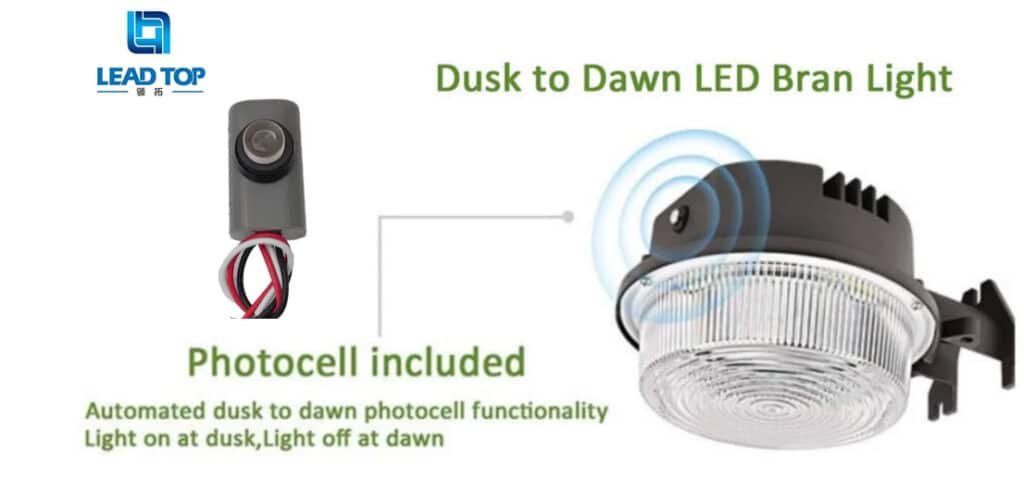
One of the most common such devices used outdoor is the photocell. It is an intelligent sensor that works by sensing the light intensity. It turns the lights on and off on its on at dusk and dawn respectively. While dealing with LED fittings, one of the main questions that most experts ask is whether they should prefer a thermal photocell or an electronic photocell for LED illumination systems?
Both serve the same purpose of sensing the light outdoors and controlling the circuits accordingly. But their internal working system differs. Since the LED drivers work in a different way compared to traditional lamps, the choice between the two types of photocells depends on things like load characteristics, electrical behavior, ecological situations, and project requirements.

What Is a Thermal Photocell?
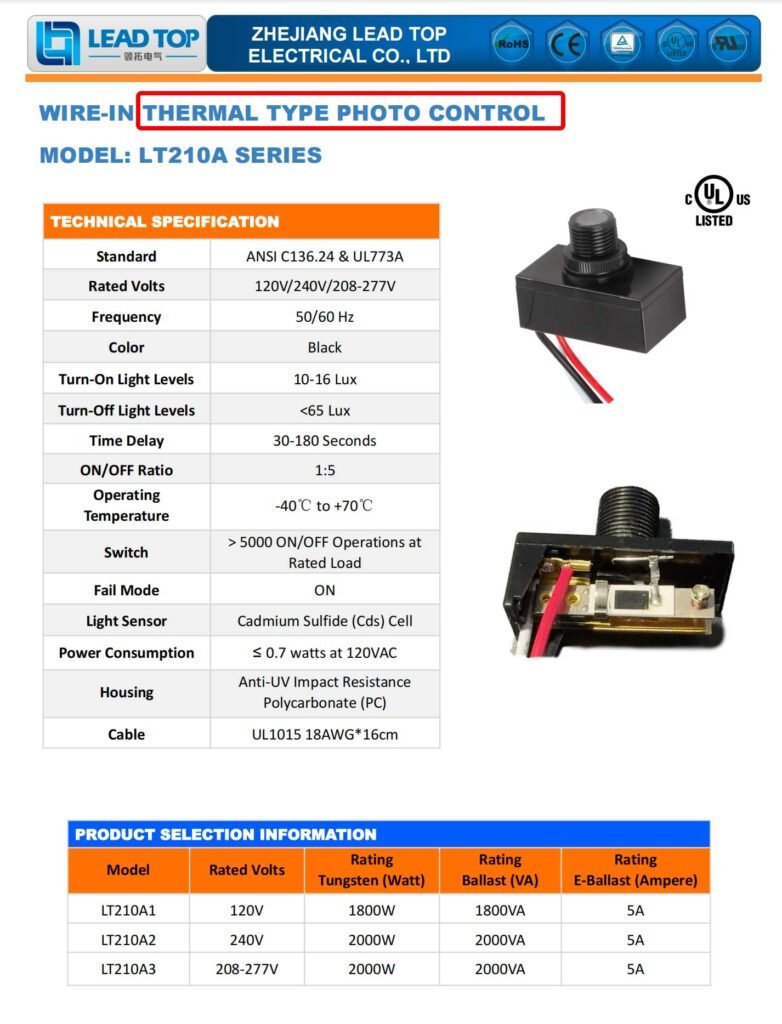
A thermal photocell is one of the most customary and extensively used forms of automatic illumination control in outdoor environs. It works with a combined operation of a few components including a light sensor, a small heater, and a bimetal strip that controls switching mechanism.
When the ambient light level decreases at dusk and it goes below a set threshold, the device signals a small inner heater. This heater warms the bimetal strip. This strip has two different metals joined together that expand at different rates when heated.
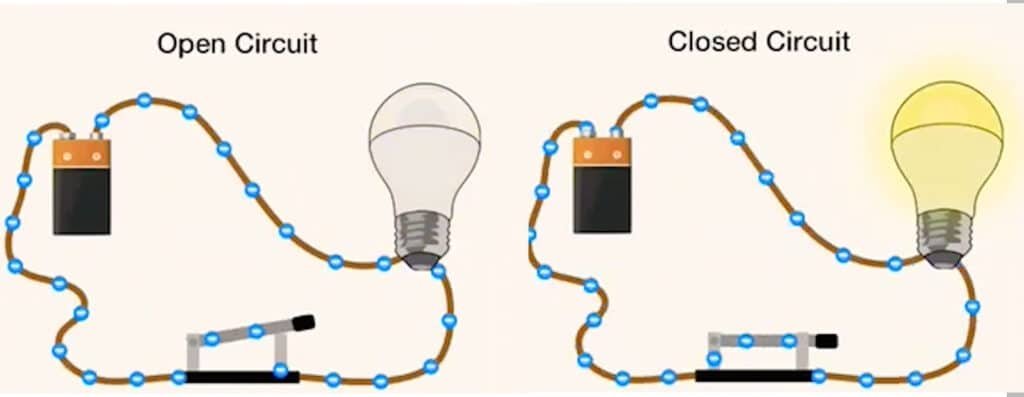
When the strip is heated, it slightly bends and the electrical contacts come together. The circuit is closed and the current flows, turning the lighting fixture on.
When the dawn arrives and light slowly starts increasing, the heater is turned off. The metal strip cools down and gets straightened again. This opens the circuit and the current is no more flowing through it, hence switching off the lights.
This thermal switching process offers a number of benefits that have made thermal photocells popular for many years.
Key Advantages of Thermal Photocells
Thermal photocells are broadly valued for their resilience and simplicity. Their main advantages include:
- Solid surge forbearance, permitting them to handle electrical thwarts and inrush current
- Long-lasting mechanical structure, with littler multifaceted electronic components
- Steady performance in severe outdoor temperatures
- Extended operational lifecycle in severe environs
Because of these characteristics, thermal photocells have been expansively used in old-style street illumination systems, as well as in numerous contemporary LED outdoor illumination installations.
What Is an Electronic Photocell?
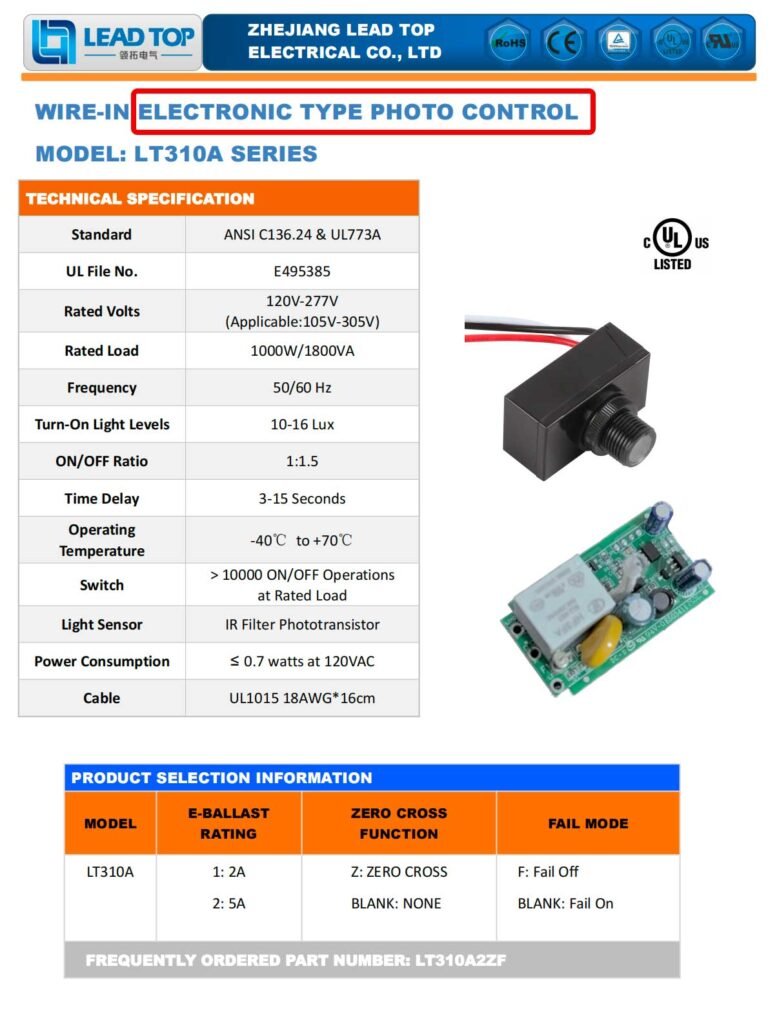
This photocell performs the same function of automatically turning the lights on and off. But it depends on semiconductor-based electronic circuits instead of metal strips.
Inside an electronic photocell, a light-sensitive part, for example a photodiode or phototransistor, detehow bright or dark it is outside. This signal is processed by an electronic control circuit. That circuit in turn switches the illumination circuit on or off.
Rather than using a heated bimetal strip to close electrical contacts, the electronic circuit controls a switching device such as a triac or relay. This permits the system to react rapidly and accurately to changes in light conditions.
Key Advantages of Electronic Photocells
Electronic photocells are every so often selected for contemporary illumination systems because they offer:
- Quicker reaction time when sensing changes in surrounding light
- Lesser minimum load requirements, permitting them to work with small LED loads
- Enhanced compatibility with low-wattage LED modules
- Abridged mechanical wear, as no heated metal components are used for switching
Why Is Load Compatibility Important for LED Lighting Systems?
One of the most critical respects when selecting between thermal and electronic photocells is load compatibility.
LED illumination systems are very different. Rather than directly connecting to the power supply, LED fixtures use electronic drivers that control voltage and current before delivering power to the LED chips.
Because of this composite circuitry, LED drivers can produce unique electrical behaviors such as:
- High inrush current during startup
- Low steady-state current during operation
- Capacitive leakage through internal filters
These behaviors affect how the illumination load interacts with photocell switching mechanisms.
How Do Thermal and Electronic Photocells Handle LED Driver Inrush Current?
Inrush current can sometimes be many times higher than the normal operative current of the LED fixture, even though it lasts only milliseconds.
Thermal photocells are usually very good at controlling these surges. Their mechanical switching contacts and vigorous design permit them to bear significant electrical stress.
Electronic photocells can also control LED drivers efficiently, but in certain cases they may need extra surge defense depending on the driver design. Because electronic circuits can be sensitive to voltage thwarts, system engineers often include defensive components such as surge suppressors.
How Do Environmental Conditions Affect Photocell Selection?
Thermal photocells are well recognized for their capability to function dependably in extreme ecological settings. Their simple internal design and negligible dependence on delicate electronic components permit them to function efficiently in temperatures extending from very cold winter time to hot summer environments.
As a consequence of their mechanical switching design, thermal photocells are also highly resilient to electrical noise and voltage variations that can occur in large power distribution networks.
Electronic photocells, while accurate and proficient, depend on semiconductor components that may be more subtle to uneven power situations in some areas. In areas where electrical grids experience recurrent voltage variations, extra fortification or careful system design may be necessary.
When Should You Choose a Thermal Photocell for LED Lighting?
A thermal photocell is generally the finest select in circumstances where resilience and electrical sturdiness are primacies.
Thermal photocells are perfect when:
- The LED illumination load is medium or high wattage
- The illumination system must bear high inrush currents
- The installation atmosphere includes exciting temperatures
- Long-lasted outdoor resilience is required
Table 1: Comparison of Thermal and Electronic Photocells
| Feature | Thermal Photocell | Electronic Photocell |
| Switching Mechanism | Bimetal strip with internal heater | Semiconductor electronic circuit |
| Response Time | Slower | Faster |
| Minimum Load Requirement | Moderate load recommended | Works with low loads |
| Surge Tolerance | Very strong | Moderate to high depending on design |
| Mechanical Wear | Possible over long time | Minimal mechanical wear |
Table 2: Recommended Photocell Selection for LED Applications
| Application Type | Recommended Photocell Type | Reason |
| LED street lighting | Thermal photocell | Handles high load and surge current |
| Parking lot lighting | Thermal or electronic | Depends on fixture wattage |
| Low-power LED fixtures | Electronic photocell | Better stability with small loads |
| Smart lighting systems | Electronic photocell | Supports advanced control features |
What Should Be Considered Before Selecting a Photocell?
Though both thermal and electronic photocells are trustworthy technologies, the final choice should always be based on system-level assessment.
Vital factors to consider comprise:
- LED driver specifications
- Total load wattage
- Inrush current characteristics
- Ecological settings
- Electrical grid constancy
Conclusion
Both thermal photocells and electronic photocells play important parts in contemporary LED illumination systems. Each technology bids exclusive benefits dependent on the application.
Thermal photocells offer excellent resilience, solid surge forbearance, and dependable performance in severe outdoor settings, making them well suitable for infrastructure illumination projects such as street illuminations and parking lots.
Electronic photocells bid quick retort time, enhanced compatibility with low-wattage LED modules, and accurate electronic control, making them perfect for contemporary energy proficient and smart illumination systems.
Instead of one technology being generally better than the other, the top select depends on LED driver behavior, load size, ecological settings, and project requirements.
Lead-Top Electrical Co., Ltd. has more than 10 years of experience in the photo control industry, providing certified wire-in controllers, NEMA twist-lock photocells, NEMA connectors, and Zhaga lighting solutions for retail, wholesale, and public illumination projects around the world.
References:
- https://leaditop.com/product-category/product/wire-in-controllers/button-photocell/
- https://leaditop.com/product/outdoor-photocell-light-sensordusk-to-dawn-photo-control-sensorauto-on-off-hard-wired-post-eye-light-controlphotoelectric-switch-sensor-for-lighting-fixtures/
- https://leaditop.com/product/lt310a-12-48vdc-wire-in-type-photo-control-used-for-landscape-lights-barn-lights/
- https://en.wikipedia.org/wiki/National_Electrical_Manufacturers_Association
- https://en.wikipedia.org/wiki/Semiconductor


 English
  Portuguese (Brazil)
  Spanish
  Russian
  Dutch
Dutch  Japanese
  Portuguese (Portugal)