Traditional photocells mainly automate lighting at dusk and dawn. But modern day lighting often needs more then this. Dimming can adjust LED output for different operating conditions and project requirements.
Two common interfaces used with compatible LED drivers are:
While both can support dimming, they use different control methods and fit different lighting architectures. So, how do you choose between them?
The answer depends on:
- The LED driver
- Control system
- Project requirements
- Installation setup
- Plans for future expansion
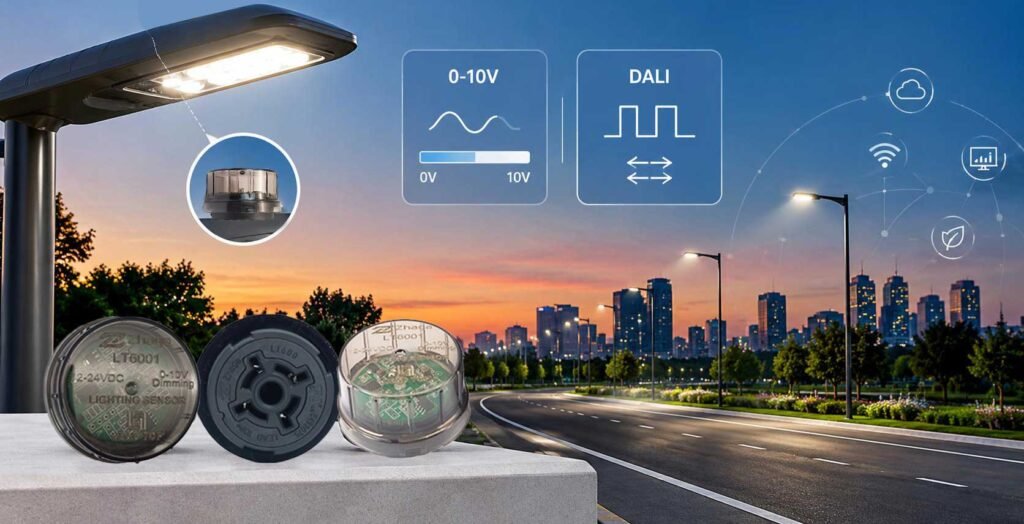
What Is 0-10V Dimming and How Does It Work?
This is an analog control interface used with compatible LED drivers. It uses a low-voltage control signal to adjust the driver’s output. This ultimately lowers the luminaire’s light level. The exact dimming range depends on the driver. Current outdoor driver families support 0-10V control for street, roadway, site, and area lighting.
The basic control flow is:
Ambient Light Detection → Photocell/Controller → 0-10V Signal → LED Driver → LED Luminaire
The photocell sensor detects ambient light. The controller provides the dimming command. The compatible driver then adjusts LED output. This separates light sensing from LED power control.
What Is DALI Dimming and How Does It Work?
This is a digital lighting control interface designed for communication between photocontrol devices and compatible LED drivers. Unlike 0-10V, it uses digital communication rather than an analog voltage signal. This makes DALI suitable for lighting systems that require more structured digital control.
A basic DALI control flow can be shown as:
Ambient Light Detection → Controller → DALI Communication → DALI LED Driver → LED Luminaire
A DALI-compatible driver is required for this architecture. DALI can also work with sensors and communication nodes within a broader lighting system. D4i-based DALI solutions, for example, can support functions such as energy reporting, diagnostics, and luminaire data.
How Do 0-10V and DALI Compare?
Use a comparison table covering:
| Feature | 0-10V | DALI |
| Control Type | Analog | Digital |
| Signal Method | Voltage signal | Digital communication |
| Driver Requirement | 0-10V-compatible driver | DALI-compatible driver |
| Control Architecture | Relatively simple | More advanced |
| Dimming Application | Basic/standard dimming | Digital lighting control |
| Smart Lighting Application | Suitable for certain applications | Suitable for more advanced applications |
| System Considerations | Simpler control architecture | More complex control architecture |
Which Interface Fits Different Smart Street Lighting Applications?
When Is 0-10V Suitable
0-10V can fit projects that need automatic lighting plus straightforward dimming. A compatible driver can receive a 0-10V signal and adjust LED output.
This can suit roadway, area, and other outdoor luminaires where the control architecture does not require extensive digital functions. Signify, for example, lists outdoor LED drivers with 0-10V control and applications including road lighting.
When Can DALI Be Considered
DALI can suit systems that need digital control and broader lighting-management functions. Outdoor DALI systems can combine drivers, sensors, and communication nodes. DALI-based solutions can also support data and diagnostics.
What Should Large Outdoor Lighting Projects Check Before Selecting an Interface?
Before selection, verify:
- LED driver and dimming interface
- Controller compatibility
- Receptacle and wiring architecture
- Required control functions
- Future system expansion
The interface should match the complete lighting architecture.
How Do Photocell Sensors Work with 0-10V and DALI?
A photocell switch starts by detecting ambient light, not by directly controlling the LED output. The detected condition is passed to a controller or control device. That device then communicates with the compatible LED driver.
The basic logic is:
Ambient Light Detection → Controller → Control Interface → LED Driver → Luminaire
With a 0-10V system, the controller can provide a dimming signal to a compatible driver. With DALI, the controller can communicate digitally with a DALI-compatible driver. Outdoor DALI architectures can place a sensor and communication node within the luminaire.
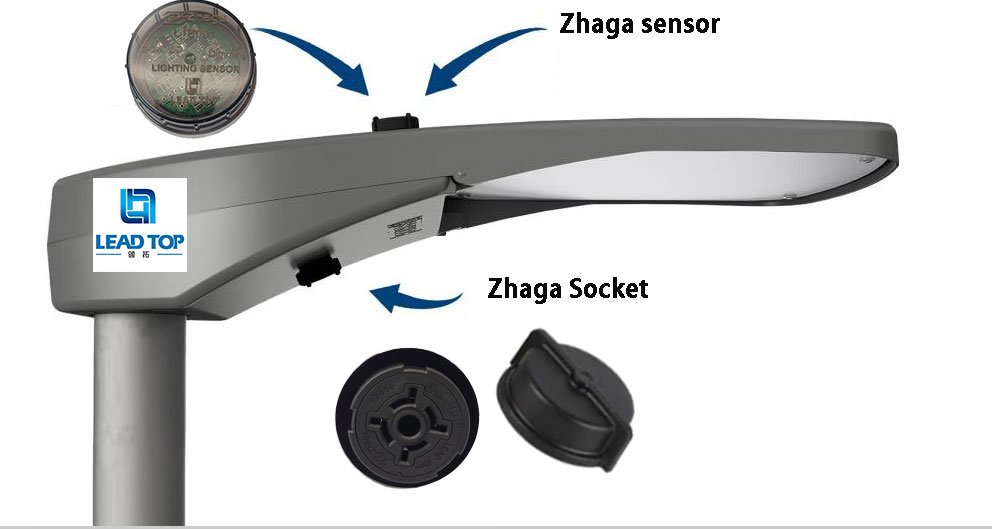
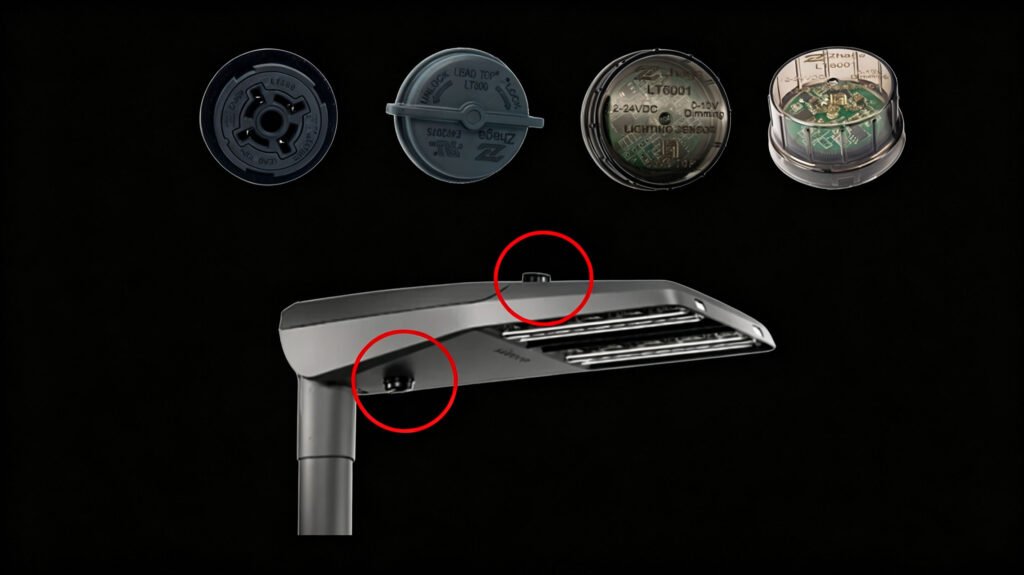
Zhaga Book 18 provides a standardized interface between outdoor luminaires and sensing or communication modules.
How Can Lead-Top Zhaga Solutions Support Different Dimming Systems?
Role of the LT6001 Zhaga Lighting Controller
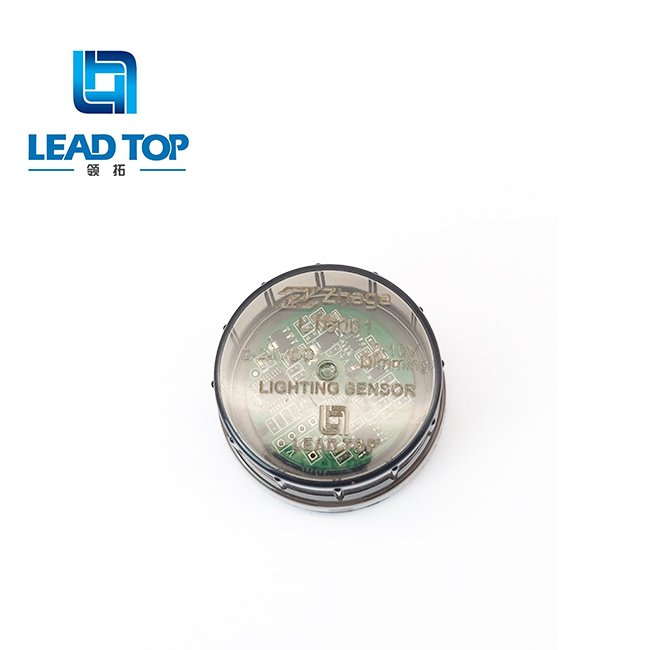
The LT6001 is a Zhaga Book 18 lighting controller for outdoor LED luminaires. It is designed for dusk-to-dawn control in street and area lighting.
Its IR-filter phototransistor detects ambient light. The controller has a 3–10 second turn-off delay, IP66 protection, and an operating range of −40°C to +70°C.
The Lead-Top datasheet also lists more than 10,000 ON/OFF operations and identifies the LT6001 for use with a 0-10V dimming driver.
Role Of LT6002 Zhaga Sensor Play
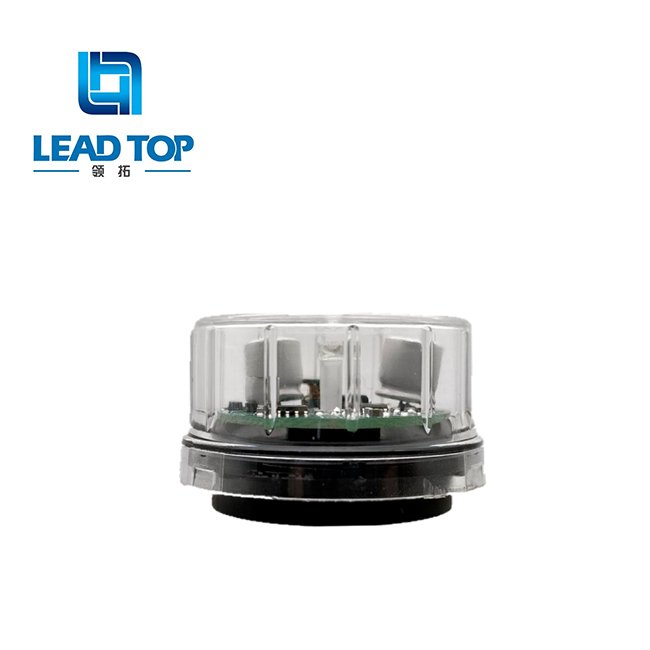
The LT6002 is another Lead-Top Zhaga sensor solution. It can form part of a Zhaga-based outdoor lighting architecture. Specific technical values should be checked against the latest official datasheet before specification.
How Does the LT600 Zhaga Receptacle Connect the Lighting System?
The LT600 provides the physical Zhaga interface for a compatible controller or sensor. Its supported features include 4 pins, 1.5A, 30V, IP66, and IK09. The listed connections include 24VDC, DALI−, DALI+, and General I/O. Zhaga Book 18 defines the mechanical, power, and communication aspects of this type of interface.
How Should You Choose Between 0-10V and DALI?
Check the LED Driver Support
Start with the LED driver. Check its supported control interface before selecting a controller. Both options need their respective compatible DALI drivers. The controller, interface, and driver must work together.
What Level of Lighting Control Does the Project Require?
Next, define the required control level. Basic projects may only need automatic operation and adjustable output. More advanced systems may require digital communication, monitoring, diagnostics, or broader lighting management.
Will the Lighting System Need to Expand in the Future?
Future requirements also matter. Consider whether the project may add sensors, communication nodes, remote monitoring, or networked control. Zhaga Book 18 is designed to support sensing and communication modules on outdoor luminaires, while Zhaga-D4i extends this ecosystem with standardized intra-luminaire DALI and data capabilities.
What Should You Confirm Before Selecting a Dimming Interface or Zhaga Controller?
This could work well as a practical buyer checklist rather than another conventional paragraph section.
| Checkpoint | What to Verify |
| LED Driver | Supported control interface |
| Dimming | Required dimming method |
| Controller | Compatibility with the driver |
| Receptacle | Required physical interface |
| Wiring | Control and power connections |
| Environment | Required outdoor protection |
| Expansion | Future sensors or networked controls |
| System | Compatibility with the overall lighting architecture |
How Is Street Lighting Evolving from Automatic Photocells to Smart Control?
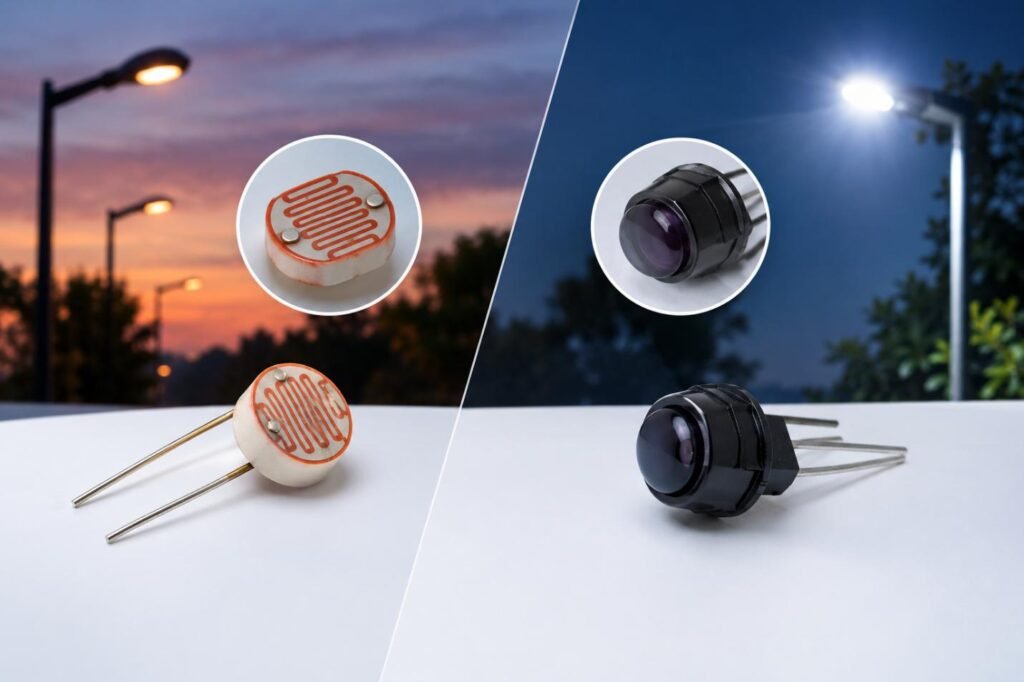
Street lighting is moving beyond simple dusk-to-dawn switching. A traditional photocell lighting sensor mainly detects ambient light and triggers ON/OFF operation. Dimming adds another step. The system can detect conditions, send a dimming signal, and adjust LED output.
The progression can be viewed as:
Traditional Photocell
Ambient light detection → ON/OFF
Dimming Control
Ambient light detection → Dimming signal → Adjustable light output
Zhaga-Based Smart Lighting
Sensor → Zhaga interface → LED driver → Lighting control system
Zhaga Book 18 supports this shift by providing a standardized interface between outdoor luminaires and sensing or communication modules. It is designed to simplify the addition of smart nodes and support interoperable lighting architectures.
This makes the photocell one part of a broader smart street lighting system, rather than the complete control system.
FAQs
What Is the Difference Between 0-10V and DALI Dimming?
The former uses an analog voltage signal. The latter uses digital communication between compatible control devices and LED drivers.
Is 0-10V Suitable for Smart Street Lighting?
Yes. It can suit efficient lighting projects that require automatic control and adjustable LED output with a compatible driver.
When Is DALI Used in Outdoor Lighting?
This can be used when a project requires digital lighting control and integration with a broader infrastructure.
Can a Photocell Work with a 0-10V LED Driver?
Yes. A compatible photocell or controller can detect ambient light and provide control input to a 0-10V-compatible LED driver.
Does DALI Require a Compatible LED Driver?
Yes. The LED driver must support DALI communication to operate correctly.
Can Zhaga Connectors Be Used with Smart Street Lighting Systems?
Yes. Zhaga Book 18 provides a standardized interface for connecting sensing or communication modules to suitable outdoor luminaires.
What Should You Check Before Selecting a Dimming Interface?
Check the LED driver’s supported interface, controller compatibility, wiring, required control level, receptacle, and future expansion needs.
What Is the Role of the LT600 Zhaga Receptacle?
The LT600 provides the physical Zhaga interface between a compatible outdoor luminaire and controller or sensor, with connections including 24VDC, DALI−, DALI+, and General I/O.
Final Words
0-10V and DALI offer different approaches to street light dimming, so the LED driver and project requirements should guide the choice. For reliable photocontrollers, Zhaga receptacles, and outdoor lighting solutions, Lead-Top can support projects with suitable control requirements.
Suggested links: Lead Top Official Website | LT600 Zhaga Products


 English
 Portuguese (Brazil)
 Spanish
 Russian
 Dutch
Dutch Japanese
 Portuguese (Portugal)