What makes one photocell sensor different from another? The answer often starts with the light-sensing technology inside it. CdS Cells and IR Filter Phototransistors both detect changes in ambient light, but they are used across different photocontrol designs.
Understanding these technologies can help buyers choose the right street light photocell for their project. Lead Top offers both options across its product range. From traditional photocontrols to electronic and Zhaga lighting solutions, the sensor type can influence product selection.
So, how do these two technologies differ, and which one fits your lighting application?
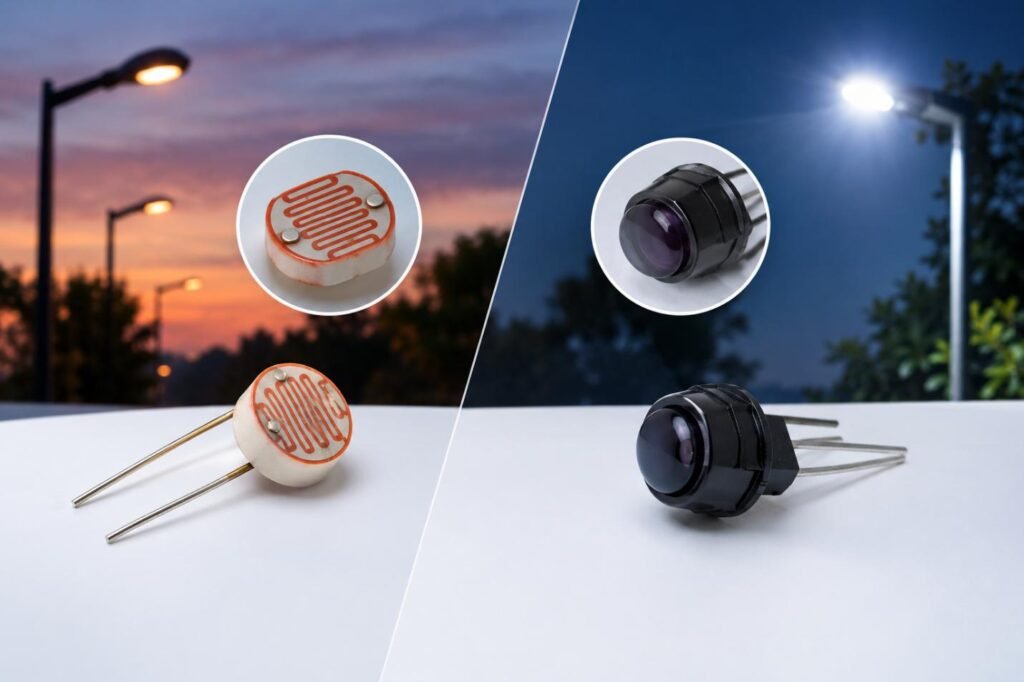
What Is a CdS Cell?
This light-sensitive device is built for detecting changes in natural light levels. CdS stands for Cadmium Sulfide. In photocontrols, its light response is used to determine when outdoor lighting should switch on or off. CdS photocells have been used in traditional street lighting controls for dusk-to-dawn operation.
How Does a CdS Cell Work in a Photocontrol Switch?
The sensor responds as ambient light changes. The automatic light sensor then uses that sensing signal to control the lighting circuit. Lead Top’s LT110 Series uses a CdS Cell light sensor.
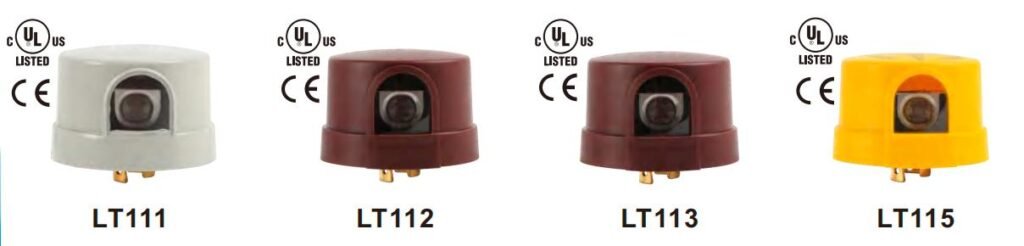
| LT110 Specification | Catalog Value |
| Turn-on level | 10–16 Lux |
| Time delay | 30–90 seconds |
| ON/OFF ratio | 1:5 |
| Operating temperature | −40°C to +70°C |
| Switching operations | More than 5,000 |
| Light sensor | CdS Cell |
What Is an IR Filter Phototransistor?
An IR Filter Phototransistor is a light-sensing device used in electronic light photocell sensors. A phototransistor converts detected light into an electrical signal for the control circuit. An IR filter helps limit unwanted infrared response and can shape the sensor response toward visible ambient light. IR-filtered phototransistors are used in outdoor lighting controls and street lighting photocontrols.
Where Does Lead Top Use This Sensor?
Lead Top uses IR Filter Phototransistors across several electronic photocontrol models. These include:
- LT104
- LT124
- LT134
- LT154
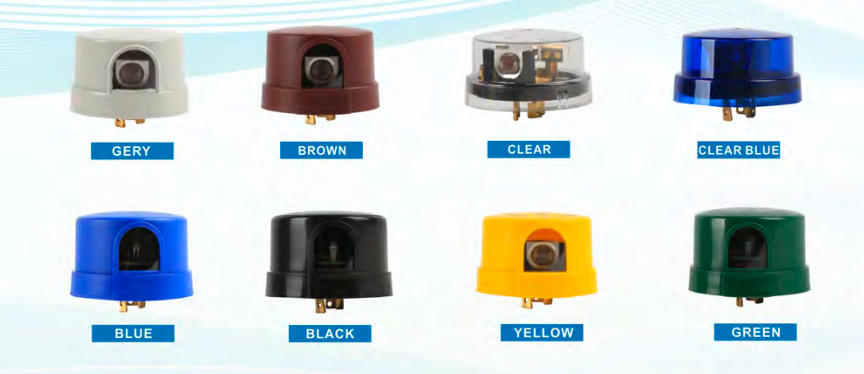
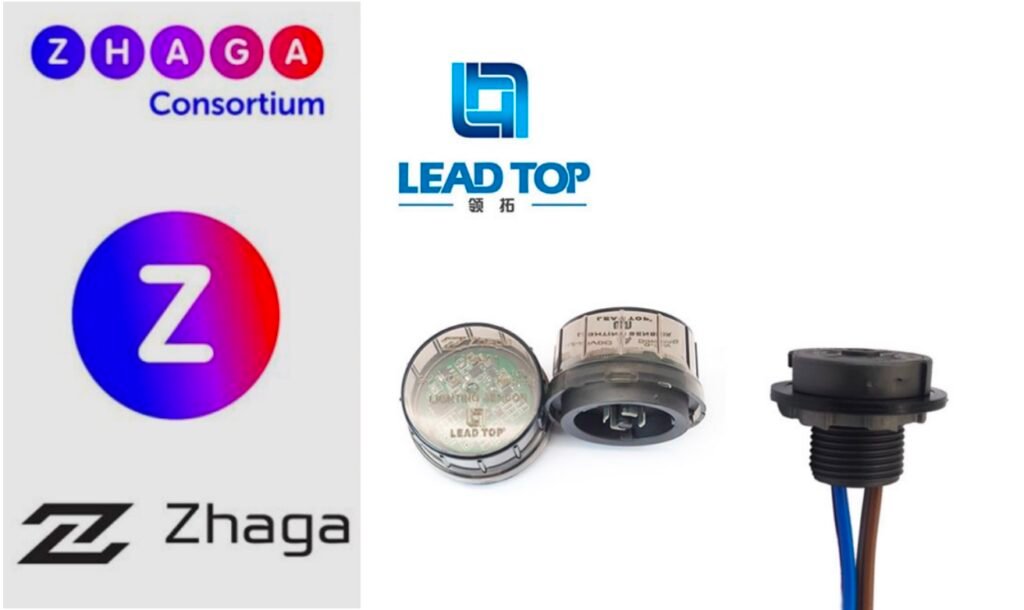
The technology is also used in its Zhaga Lighting Sensor range. Typical catalog characteristics include:
- 10–16 Lux turn-on level
- 1:1.5 ON/OFF ratio
- 2–5 or 3–10 seconds time delay, depending on the model
- More than 10,000 switching operations for many models
- −40°C to +70°C operating temperature
How Do CdS Cells and IR Filter Phototransistors Compare?
CdS Cells and IR Filter Phototransistors use different sensing technologies. CdS Cells are based on Cadmium Sulfide sensing. They appear in traditional photo switch sensor designs. IR Filter Phototransistors use a phototransistor with optical filtering.
They are used across Lead Top’s electronic photocontrol and Zhaga lighting products. The key difference is the sensor technology and its catalog positioning.
| Feature | CdS Cell | IR Filter Phototransistor |
| Sensor technology | Cadmium Sulfide Cell | Phototransistor with IR filter |
| Lead Top examples | LT110 Series | LT104 / LT124 / LT134 / LT154 / LT600 |
| Typical application | Traditional photocontrol | Electronic photocontrol / smart lighting |
| Catalog positioning | Thermal photocontrol | Electronic photocontrol / Zhaga sensor |
Why Does the Sensor Type Matter When Choosing a Photocell Switch?
The sensor technology is part of the product design. It can affect which product matches the project specification. Buyers should first confirm the required sensor type. Then, check the switching behavior, time delay, and lighting application. The control system must also match the selected photocontrol.
For a project specification, check these points:
- Sensor technology: CdS Cell or IR Filter Phototransistor
- Time delay: Confirm the required operating range
- Lighting application: Traditional, electronic, or smart lighting
- System compatibility: Check the required control interface
- Outdoor requirements: Verify temperature and other specified conditions
The right choice starts with the project requirements, not the sensor name alone.
Which Light Sensor Should You Choose for Your Project?
The right sensor depends on the photocontrol specified for the project. Start with the lighting system and required control design. Then check the sensor technology.
For Traditional Photocontrol Applications
For traditional photocontrol requirements, consider a CdS Cell-based product such as the LT110 Series. This option fits projects that specifically call for CdS sensing technology.
For Electronic Photocontrol Applications
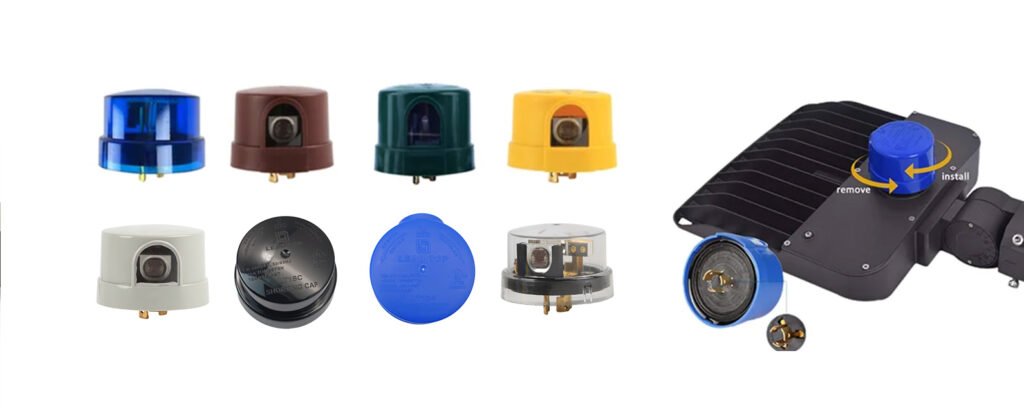
For electronic photocontrols, Lead Top offers models using IR Filter Phototransistors. The models support outdoor applications such as street and roadway lighting. These include:
- LT104
- LT124
- LT134
- LT154
For Zhaga Smart Lighting Applications
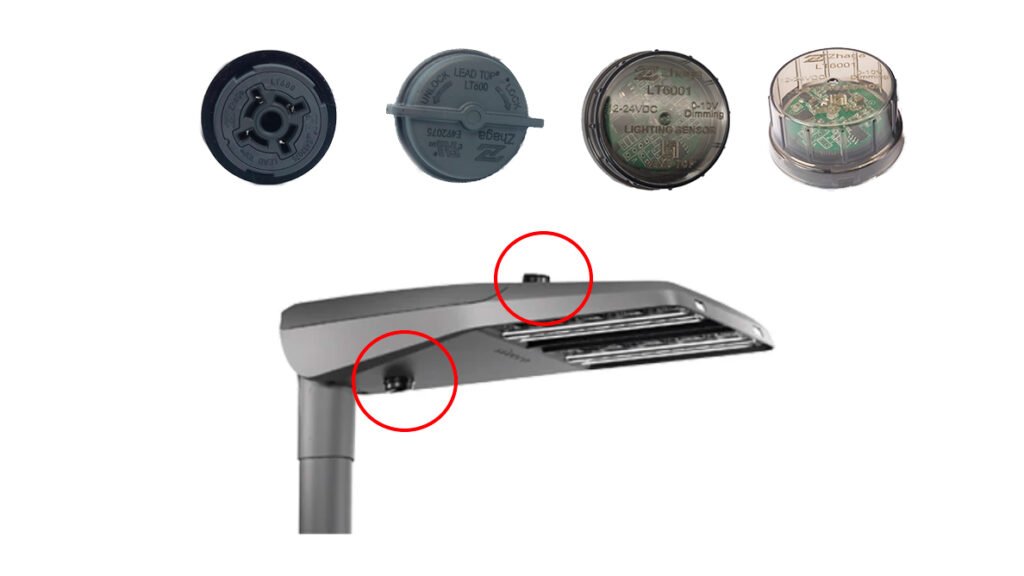
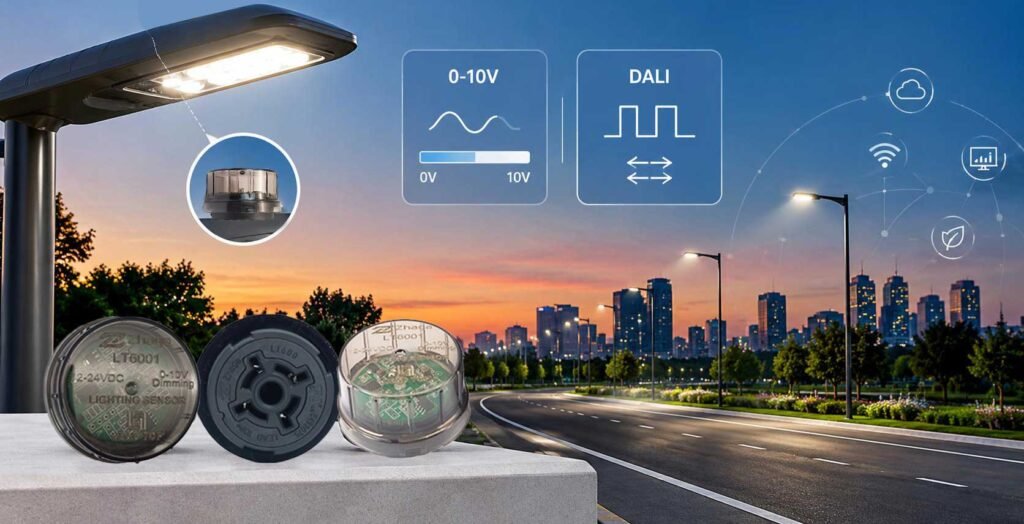
For Zhaga systems, consider the LT600 Series. The LT600/LT6001 platform uses a Zhaga Book 18 interface. LT6001 provides IR-filtered ambient-light sensing, 12–24 VDC operation, 10–16 Lux turn-on, 3–10-second delay, and IP66 protection.
Which Lead Top Photocontrol Receptacle Solutions Are Available?
Lead Top offers light-sensing solutions across traditional, electronic, and Zhaga-based photocontrol designs. The product choice depends on the required sensor technology and lighting system. Its current product range includes NEMA twist-lock and Zhaga products.
| Lead Top Solution | Sensor Technology | Product Positioning |
| LT110 Series | CdS Cell | Traditional photocontrol |
| LT104 / LT124 IR | Filter Phototransistor | Electronic photocontrol |
| LT134 / LT154 IR | Filter Phototransistor | Electronic photocontrol |
| LT600 / LT6001 / LT6002 | IR Filter Phototransistor | Zhaga smart lighting |
The LT6001 is listed as a Zhaga Book 18 light sensor. Here are its key features:
- Operates at 12–24 VDC
- Provides 10–16 Lux
- Turns on with a 3–10 second delay
- IP66 rated
FAQs
What Is a CdS Cell in a Photocell?
A CdS Cell is a Cadmium Sulfide light-sensing component that detects changes in ambient light for photocontrol operation.
What Is an IR Filter Phototransistor?
It is a phototransistor-based light sensor with an IR filter, used in electronic photocontrols and Zhaga lighting sensors.
What Is the Difference Between CdS and Phototransistor Sensors?
They use different sensing technologies. CdS Cells are used in Lead Top’s LT110 Series, while IR Filter Phototransistors appear across several electronic and Zhaga models.
Which Sensor Is Used in Lead Top Photocontrols?
Lead Top uses both CdS Cells and IR Filter Phototransistors, depending on the photocontrol model and application.
Which Lead Top Products Use IR Filter Phototransistors?
Lead Top models include LT104, LT124, LT134, LT154, and its Zhaga lighting sensor range.
Does the Sensor Type Affect Photocontrol Selection?
Yes. Buyers should check the specified sensor technology, time delay, application, system compatibility, and project requirements.
The Bottom Line
CdS Cells and IR Filter Phototransistors serve different photocontrol designs and project requirements. Choosing the right sensor starts with the specified technology and lighting application. For reliable photocontrollers across these options, Lead Top offers practical sensor solutions for traditional, electronic, and Zhaga lighting projects.
Suggested links:


 English
 Portuguese (Brazil)
 Spanish
 Russian
 Dutch
Dutch Japanese
 Portuguese (Portugal)