Standard locking photocell sensors come with a rating of either 2A or 5A for the electronic ballast. However, bigger LED drivers and wattage loads create a lot of pressure on contacts and protective circuitry, which the smaller models are not capable of handling.
This guide highlights what the amp rating really means, the circumstances that justify 2A and 5A models, and where the 8A model is more cost-effective in the long run.

What Does the Amp Rating on a Photocell Switch Actually Measure?
The “2A / 5A / 8A” figure is the electronic-ballast (E-Ballast) rating. It is the continuous load the switching contacts can carry. It is not the tungsten wattage, which is sold separately on the same datasheet, for example, 1000W/1800VA.
Many buyers tend to treat these numbers as one and the same. However, this is not the case.
Why LED Loads Stress the Rating
Even below the stated limit, LED loads can wear contacts faster than expected. The reason is driver inrush current. At switch-on, an LED driver draws a spike several times its running current, and every dusk operation delivers that spike to the contacts. The contacts see this stress once a day, every day, for the life of the installation.
Simple Arithmetic for Buyers
| Supply voltage | 8A running load (approx.) |
| 120V | 960W |
| 277V | 2,200W |
These numbers show the running capacity. They do not show the wear. The inrush, not the running wattage, is what damages the contact.
Consequence
Look at the amp and the switching cycle ratings combined. Inrush stress and contact count compound each other, so a unit that looks adequate on amps alone may still fall short on endurance.
When a 2A or 5A Photocell Is the Right Choice?
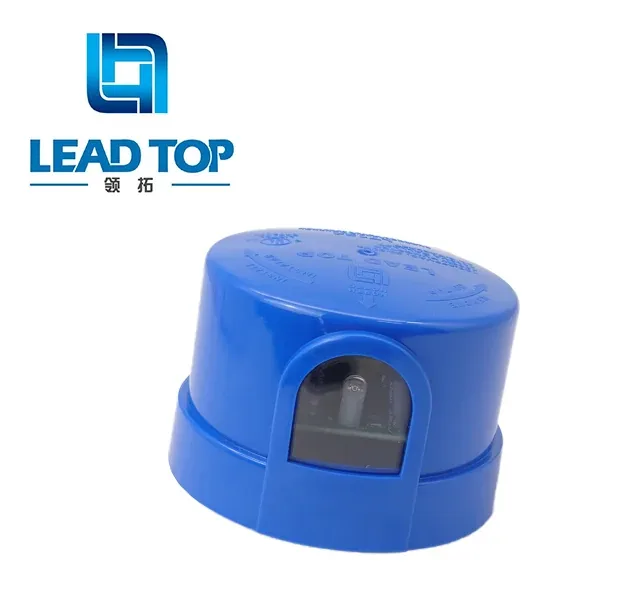
Smaller units are not a compromise. For many projects, they are the correct specification.
Choose 2A or 5A when:
- The site uses single-fixture street or area lighting with modern LED drivers in the 50-150W class.
- The programme is cost-sensitive, and each control switches only one fixture. The economics of the 2A/5A tier are real, and overspecifying is wasted budget.
- The load sits well inside the rating, so inrush stays modest, and the contacts are not working near their limit.
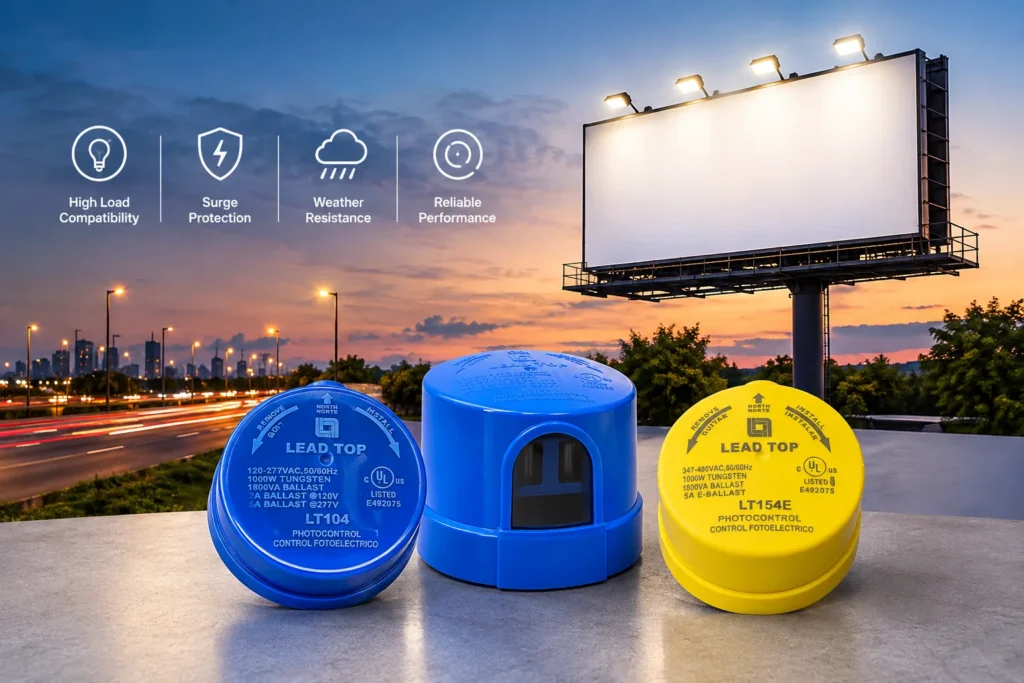
The 2A and 5A tiers (LT104, LT124 and LT124L) remain the right default for the majority of installations. This is not a case of “bigger is always better.”
When Is an 8A Twist-Lock Photocell Worth Considering?
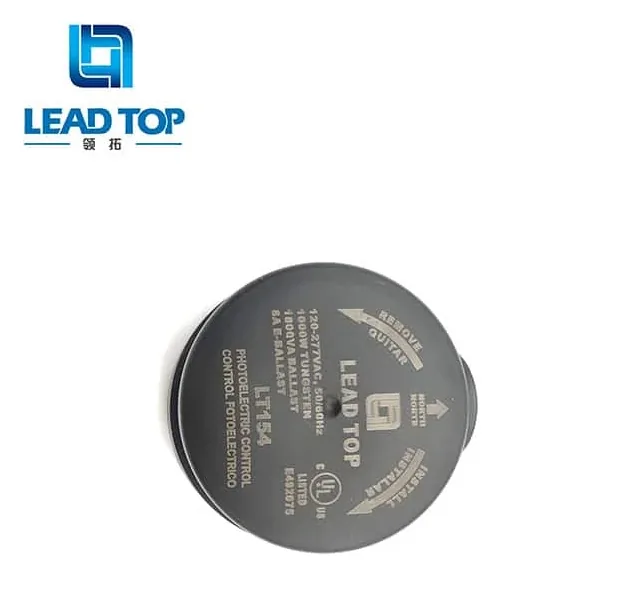
These photocontrol receptacles are applicable when switching stress rises above what a standard unit was built for.
Typical Situations
- Multi-fixture circuits
One photocontrol switching several luminaires on the same phase adds both running current and simultaneous inrush.
- High-wattage single loads
- Large floodlights
- Billboard and sign lighting
- Sports or industrial yard fixtures with big drivers
Quick Selection Guide
| Site profile | Suggested tier |
| One fixture, 50-150W LED driver | 2A or 5A |
| Several luminaires on one control | 8A |
| Large floodlight or sign load | 8A |
| Cost-sensitive, single-fixture programme | 2A or 5A |
What Overload Failure Looks Like in the Field
| Symptom | Likely cause |
| Light stays on at noon | Contact welding |
| Intermittent flicker before failure | Eroded contacts |
| Maintenance spike in year two or three | Shortened service life from repeated inrush |
That last point matters. Overload damage rarely shows at installation. It shows up in the maintenance records two or three years later, when the original installer is long gone, and the cause is no longer obvious.
The Hidden Cost
Each failed control means a truck roll. The labour typically exceeds the price difference between a 5A and an 8A unit within one or two swaps. Over the full service life, the 8A light photocell sensor can be the cheaper choice.
LT134 vs LT154: How to Choose Between the Two 8A Models?
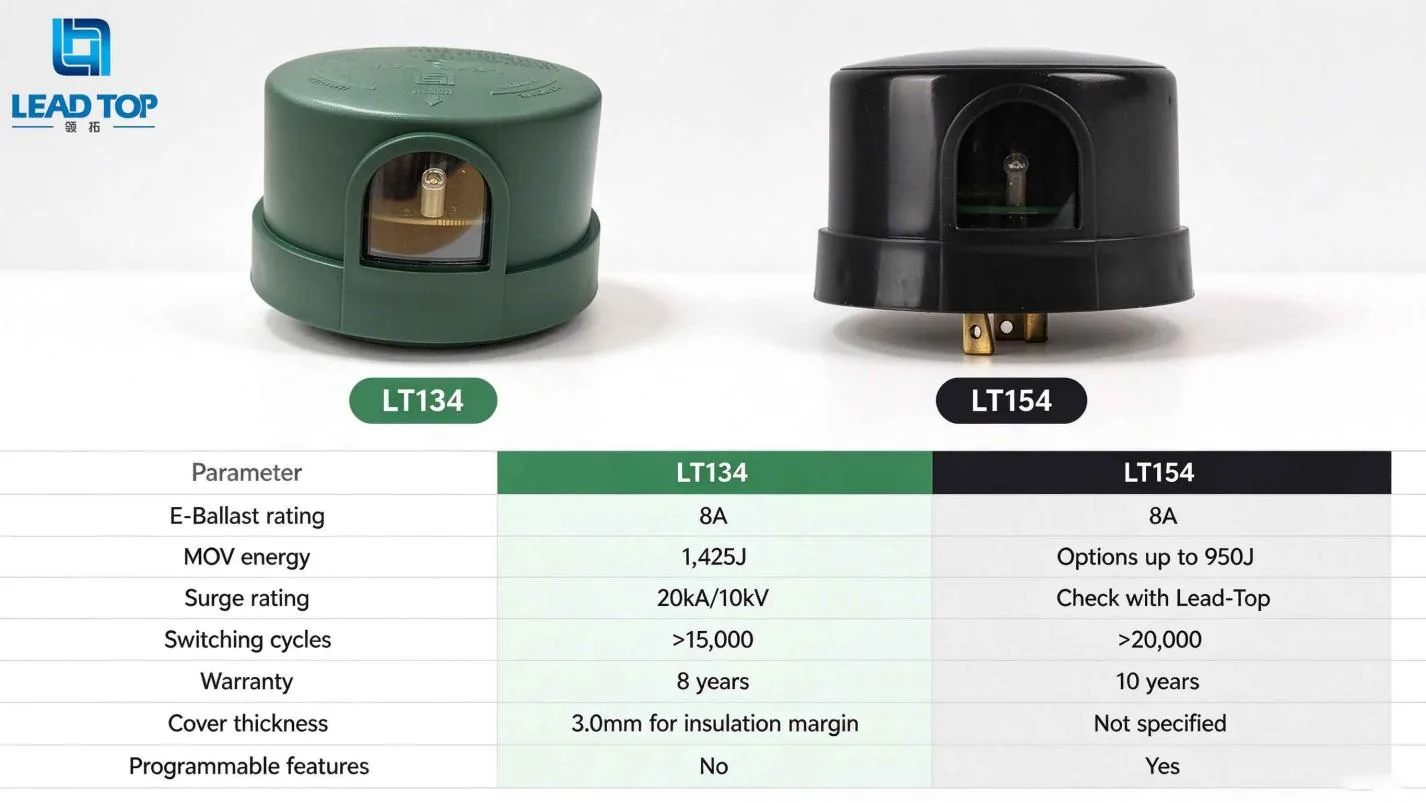
Both models carry the 8A E-Ballast rating. The difference is in endurance, not load capacity.
| Feature | LT134 | LT154 |
| E-Ballast rating | 8A | 8A |
| MOV energy | 1,425J | Options up to 950J |
| Surge rating | 20kA/10kV | Check with Lead-Top |
| Switching cycles | >15,000 | >20,000 |
| Warranty | 8 years | 10 years |
| Cover thickness | 3.0mm for insulation margin | Not specified |
| Programmable features | No | Yes |
LT134 photo switch sensor is the choice when surge exposure and contact life both matter. The higher MOV energy and thicker cover add margin at exposed sites.
LT154 light sensor control suits long-service programmes and sites where the control must be configured, not just installed. Its longer switching life and warranty support projects planned over many years.
Decision rule
Compare the two by switching cycles and joules against the site’s flash exposure and daily switching count. The load is the same. The endurance is not.
Product Recommendation
For outdoor lighting projects with larger LED driver loads, multi-fixture circuits, or high-wattage fixtures, consider Lead-Top’s 8A twist-lock lighting controls LT134 and LT154. Match the model to the application and confirm its current surge, MOV, and load specifications with Lead-Top before selection.
Lead-Top also offers 2A and 5A twist-lock controls, wire-in controls, and related bases for street, road, parking-lot, and landscape lighting.
FAQ
What does 8A mean on a photocell?
It is the electronic-ballast load rating: the continuous current the switching contacts can carry before inrush stress. It is a load capacity figure, separate from the tungsten wattage rating on the same datasheet.
Can I use an 8A photocell on a small LED fixture?
Absolutely. The 8A unit can handle small loads without difficulty. The extra expense involved is in the unit price alone, so limit the use of 8A to applications requiring this type of load handling.
What happens if I overload a photocell?
The contacts erode over repeated operations. This typically shows up as flicker, then a lamp stuck switching. The failure accelerates with every cycle inrush above the rating.
Is a higher amp photocell also better protected against surges?
Not automatically. Load rating and surge capacity are different requirements. Look at the MOV joules rating and surge capacity apart from the amp rating.
How do I choose between LT134 and LT154?
- Match endurance to the site.
- LT134 has the superior MOV energy (1,425J) for surge sites.
- LT154 provides the highest switching endurance (>20,000 cycles) and programmability for longevity programmes.
Final Words
For all single fixture work, a 5A photocell is the perfect choice. In cases where fixtures are being grouped together, an 8A model will protect the contacts from the inrush effect and will save money in the long run.
Please provide your load schedule (fixture count per control, driver watts, and conditions at the site), and our Lead-Top will be able to tell you if a 2A, 5A, or 8A device is suitable for your needs.

 English
 Portuguese (Brazil)
 Spanish
 Russian
 Dutch
 Japanese
 Portuguese (Portugal)