For billboards and sign lighting, there can be no effective illumination without timely switching. Manual control is prone to error and unreliable. Therefore, the automatic system is a must.
Photocontrols switch outdoor sign lighting according to ambient light conditions. For projects with 1000W and higher lighting loads, though, selecting one takes more than a simple wattage comparison. The main selection factors are:
- Operating voltage
- Load type
- LED-driver requirements
- Inrush current
- Switching performance
- Outdoor protection
This guide walks through each factor and introduces the Lead Top LT134 and LT154 as models to evaluate against a project’s electrical and operational requirements.

Why Do Billboards and Outdoor Signs Need Light Sensor Switches?
Automatic Operations
A lighting control detects ambient light and switches the connected lighting accordingly. This reduces the need for routine manual operation. Proper functioning is critical for commercial signboards and advertisements because switching malfunctions can hinder visibility.
Reducing Unnecessary Operating Hours
Automatic control can help prevent lights from remaining on during daylight hours. Actual energy savings depend on multiple other factors, so they shouldn’t be assumed. These include
- Lighting load
- Operating schedule
- Installation
- Control settings
Supporting Outdoor Lighting Management
Signs are exposed to changing weather and ambient light. This makes reliable switching important. Select a photocontrol suited to the installation environment and the maintenance plan.
What Should You Check When Choosing a Photocell for a 1000W+ Lighting Load?
Rated Wattage Is Only One Part of the Selection
The wattage rating of the lighting system does not correspond to the complete electrical load rating of the light sensor control. Review the rated wattage and rated VA ratings of the photocontrol relative to the application for which the control will be used.
Confirm the Operating Voltage
- Identify the actual supply voltage of the sign lighting system.
- Verify that the photocell sensor supports it.
- Don’t make selections based on wattage alone. Avoid it if the voltage rating is unsuitable.
Consider LED Drivers and Inrush Current
The LED driver might experience an inrush current during startup. The regular power consumption of a system might not give the complete switching requirements. Verify the driver’s electrical properties against the compatibility of the photocontrol’s load.
Evaluate Switching Performance and Service Life
Compare switching characteristics and rated operating life, especially for extended use. Consider:
- Expected switching frequency
- The consequences of lighting downtime
Use published product specifications. Not all electronic photocontrols perform identically.
Check Surge Protection and Weather Resistance
Outdoor signs may need suitable surge protection and environmental sealing. Review the installation’s exposure and protection requirements. Then confirm the product’s actual protection configuration on its datasheet.
How Do LT134 and LT154 Compare for Billboard and Sign Lighting?
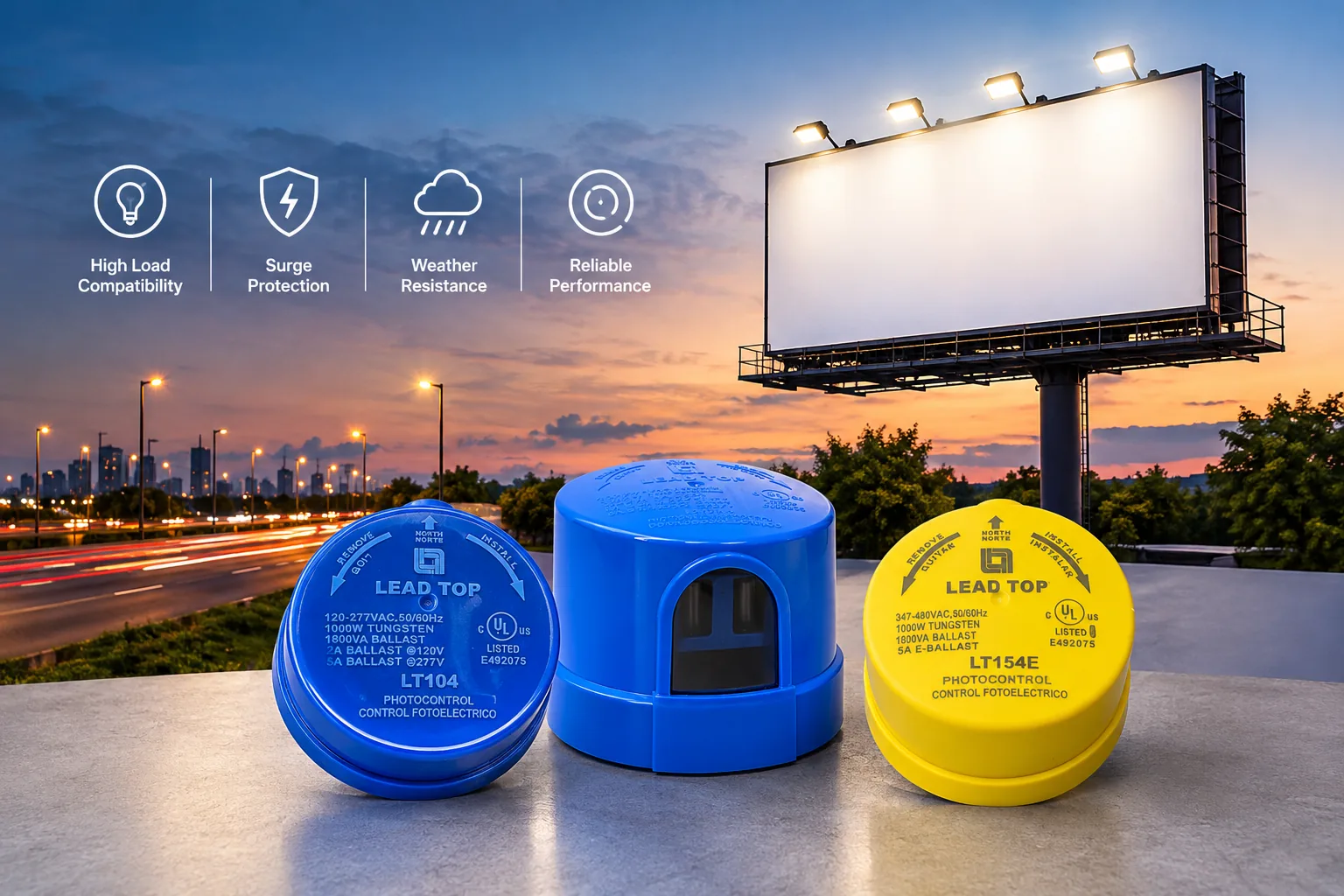
Let’s look at both side by side. Treat each as a candidate for evaluation, based on your sign lighting system’s electrical requirements.
| Feature | LT134 | LT154 |
| Product type | Long-life electronic twist-lock photocontrol | Heavy-duty electronic twist-lock photocontrol |
| Rated voltage | 120–277V | 120–277V |
| Rated load | 1000W / 1800VA | 1000W / 1800VA |
| Electronic-ballast rating | 8A E-Ballast | 8A E-Ballast |
| Switching characteristics | Zero-crossing electronic switching | Zero-crossing electronic switching |
| Notable selection consideration | Long-life design | High-inrush current protection |
| Environmental protection | IP66; IP67 option listed | IP66; IP67 option listed |
Important selection note
The listed 1000W / 1800VA rating does not by itself establish suitability for every installation described as a 1000W+ load. Before choosing, confirm:
- Actual load
- Voltage
- LED-driver characteristics
- Inrush current
- Applicable product specifications
When To Choose LT134?
- A long lifespan must always come first.
- Compatibility with voltages and loads is necessary for the lighting system.
- The project needs an electronic twist-lock light photocell sensor. Thus, the installation interface should be compatible.
When Should You Consider LT154?
- The project places particular emphasis on high-inrush current protection.
- Its stated electrical ratings meet the sign lighting system’s requirements.
- Heavy application requirements make its features relevant.
Final Decision Matrix
- Compare the real electrical requirements against both datasheets.
- Check the receptacle interface and installation arrangement.
- Request technical confirmation if the load exceeds a published rating. Also check driver compatibility.
- Don’t treat either model as automatically suitable for every sign.
Which Installation and Control Details Matter for Billboard Photocells?
Choose a Compatible Twist-Lock Interface
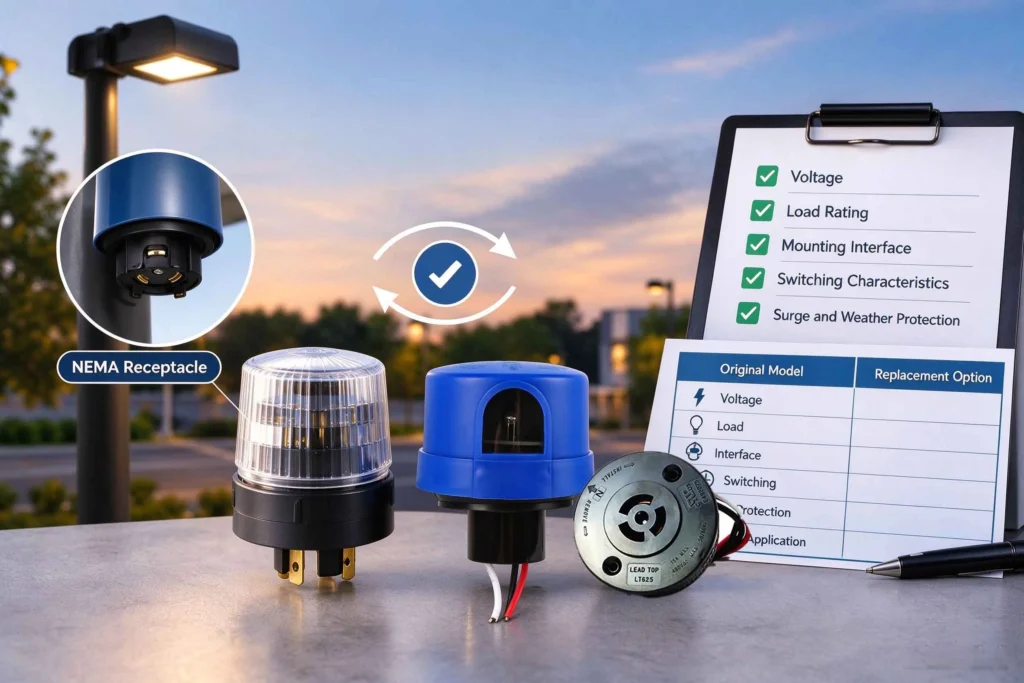
A compatible receptacle connects a twist-lock photocontrol to the lighting system. Confirm the required interface and applicable standard before ordering. The Lead-Top NEMA receptacle range is a good place to check compatibility.
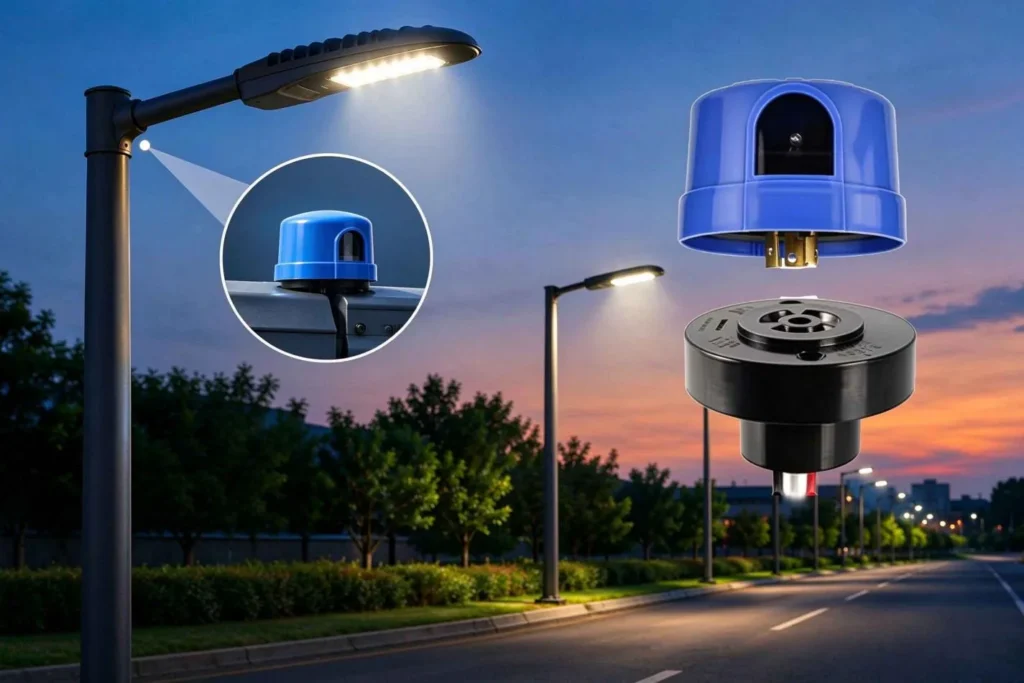
Consider Sensor Placement
The photocontrol receptacle should receive representative ambient light. These can affect light detection:
- Nearby lighting
- Sign illumination
- Obstructions
- Shadows
Follow the installation instructions. Avoid placement that lets the sensor respond to its own controlled lighting.
Plan for Inspection and Replacement
Accessible installation and clear product identification simplify future maintenance. Record the photocontrol model and its electrical specifications for replacement planning. Inspect according to the project’s maintenance procedures.
Where Can Photocontrols Be Used Beyond Billboards?
- Roadside advertising signs
- Commercial building signs
- Retail storefront signs
- Illuminated business directories
- Outdoor promotional displays
- Other outdoor lighting, where electrical ratings and mounting requirements are compatible
In each case, the final selection depends on:
- Actual supply voltage
- Load characteristics
- Mounting interface
- Environmental conditions
Which Lead-Top Products Should You Consider for Billboard and Sign Lighting?

LT134 Long-Life Electronic Twist-Lock Photocontrol
Evaluate it when long service life is a priority, and its electrical specifications match the installation. See the LT134 product page for details.
LT154 Heavy-Duty Electronic Twist-Lock Photocontrol
Evaluate it when high-inrush current protection is an important selection factor. See the LT154 product page for details.
Compatible NEMA Receptacle
The photoelectric sensor and receptacle must have a compatible interface. Refer to the NEMA receptacle information and installation documentation before ordering.
FAQ
Can a photocell rated at 1000W control a billboard lighting system above 1000W?
Not automatically. Check the following against the product specifications:
- Total load
- Rated voltage
- VA requirements
- Load type
- Inrush current
A higher-load application may need a different control arrangement.
Is a higher wattage rating enough to determine photocell compatibility?
No. These also matter:
- Voltage
- LED-driver characteristics
- Switching requirements
- Interface compatibility
- Environmental protection
What is the difference between LT134 and LT154?
Both are electronic twist-lock photocontrols with listed ratings of 120–277V and 1000W / 1800VA. LT134 emphasizes long-life design. LT154 emphasizes heavy-duty use and high-inrush current protection.
Can a twist-lock photocontrol be installed on any billboard lighting system?
No. The lighting system must have a compatible receptacle and meet the photocontrol’s electrical and installation requirements.
How can I choose a photocell for a commercial sign project?
Start with:
- Supply voltage
- Total load
- LED-driver specifications
- Inrush current
- Mounting interface
- Outdoor exposure
Then compare them with the manufacturer’s datasheets.
The Bottom Line
Choosing a photocell for a 1000W+ billboard comes down to more than wattage. Check:
- Voltage
- Load type
- LED-driver behavior
- Inrush current
- Receptacle interface
LT134 and LT154 are candidates to evaluate, not automatic fits. Contact Lead-Top with your voltage, load details, LED-driver information, and installation requirements to help identify a suitable photocontrol solution.


 English
 Portuguese (Brazil)
 Spanish
 Russian
 Dutch
 Japanese
 Portuguese (Portugal)