Mexico’s street lighting is moving toward LED technology. But is replacing old luminaires enough?
Municipalities also need to consider:
- Existing poles
- Wiring
- Electrical connections
- Photocells
- NEMA receptacles
As LED retrofit projects continue across Mexico, municipalities need to evaluate the complete lighting system rather than the luminaire alone. This article explains the key factors to consider when planning an LED street light retrofit in Mexico.
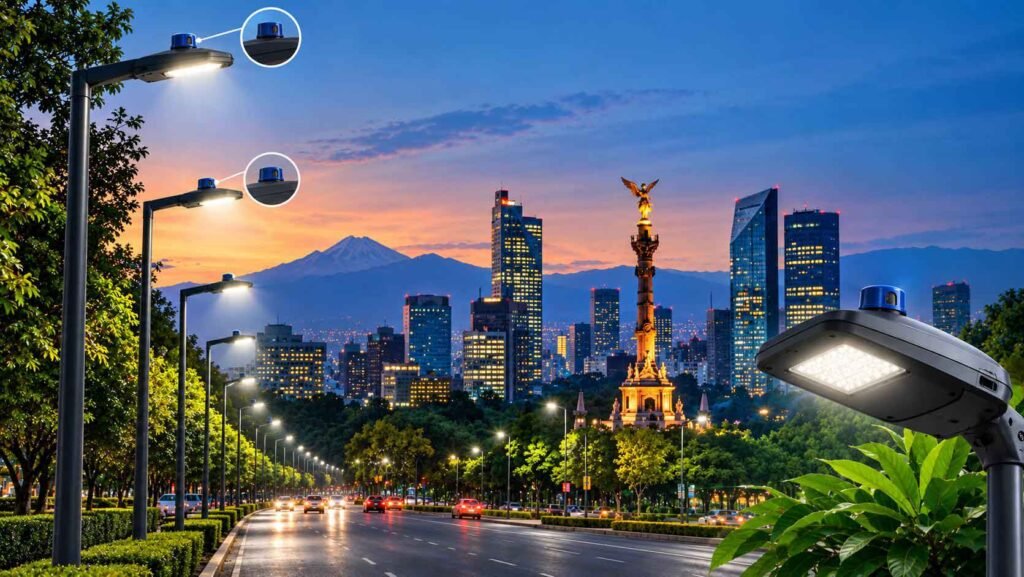
Why Is Mexico Transitioning From Traditional Street Lighting to LED?
Energy efficiency, operating costs, and infrastructure modernization are key drivers. Mexico’s CONUEE identifies LED as an efficient public-lighting technology, with lower operating costs and longer average service life than many traditional options.
The transition is already producing measurable results.
- Lighting upgrades in 20 Mexican municipalities improved more than 5,000 km of streets by 2023.
- In 2024, Cuauhtémoc began a program to renew nearly 6,000 luminaires initially, with plans for about 23,000.
For municipalities, LED retrofits can therefore reduce energy use while modernizing existing lighting infrastructure.
What Should Municipalities Consider Before Starting an LED Street Light Retrofit?
What Existing Infrastructure Should Municipalities Assess?
Before replacing luminaires, municipalities should document the existing system. CONUEE recommends an integrated diagnosis covering the number and type of lighting systems, poles, mounting conditions, electrical circuits, and roadway geometry. This helps identify what can be retained and what needs modification.
Key checks include:
- Existing poles and mounting structures
- Wiring and electrical circuits
- Existing luminaires and installation methods
- Photocontrols and NEMA receptacles
- Pole height and spacing
Electrical Compatibility Factors That Matter During an LED Retrofit
The new LED luminaire must match the existing electrical conditions. Municipalities should verify operating voltage, circuit capacity, driver requirements, and installation conditions.
CONUEE project documentation also calls for electrical plans, load information, and technical details for drivers, luminaires, and control systems.
How Can Municipalities Plan for Long-Term Maintenance?
Standardization can simplify future service work. Using compatible components also makes replacement easier across large networks. Municipalities should therefore consider product availability, control replacement, and component interchangeability before finalizing the retrofit design.
How Can LED Retrofit Projects Improve Energy Efficiency and Lighting Control?
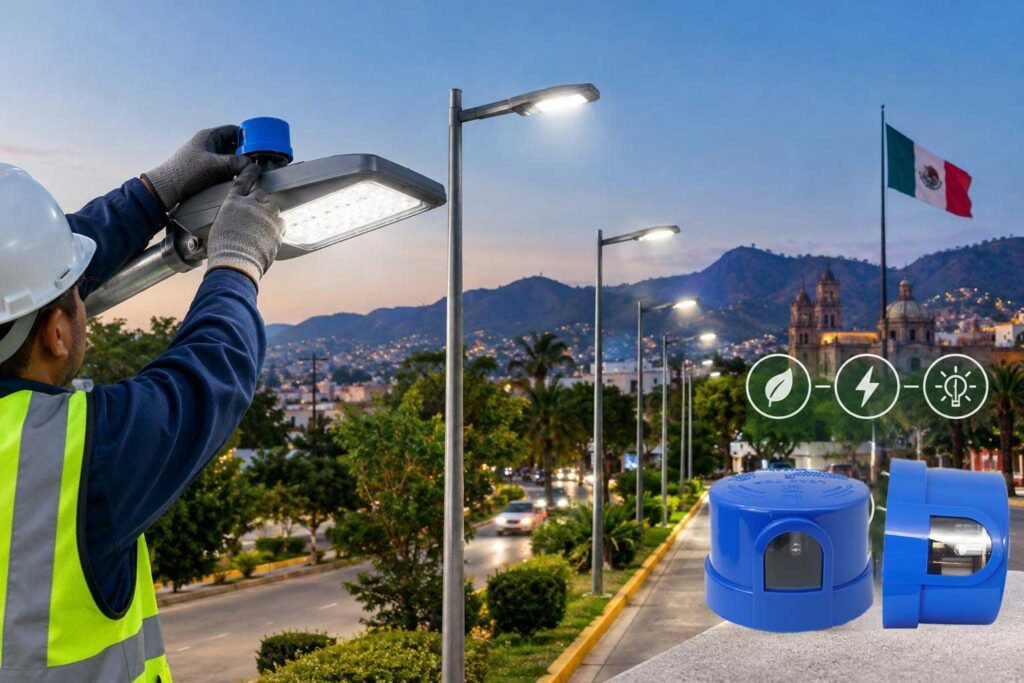
Why Does LED Retrofit Improve Street Lighting Efficiency?
These lights can reduce electricity use while improving lighting performance. CONUEE found energy-saving potential of 20% to 89% across more than 475 Mexican public lighting projects, depending on the existing technology.
| Retrofit factor | Municipal benefit |
| Lower energy consumption | Reduced electricity costs |
| Longer service life | Fewer replacement cycles |
| Efficient light distribution | Better use of installed light |
| Modern controls | Better operating schedules |
Why Are Lighting Controls Important in LED Street Lighting?
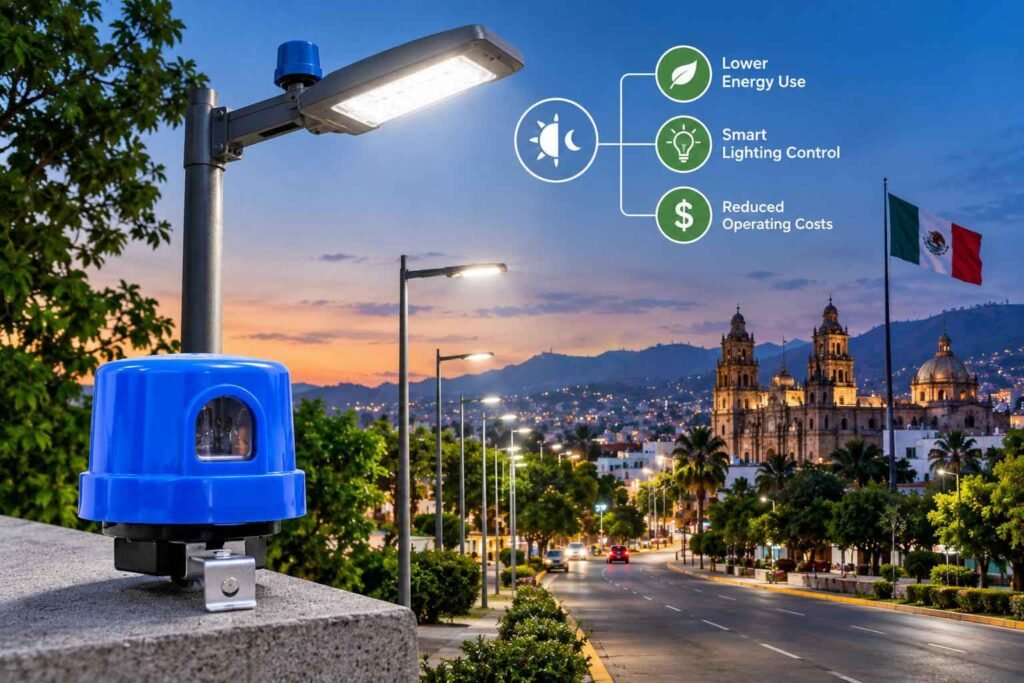
LED efficiency depends on proper operation. A light sensor can switch luminaires according to daylight conditions. This helps prevent unnecessary daytime operation and adds another efficiency layer to the retrofit.
What Should Municipalities Check When Selecting LED Light Sensor Switches?
The photoelectric sensor should match the LED system and receptacle. Check voltage, load rating, LED inrush current, switching performance, and twist-lock compatibility. A compatible control can also make future replacement faster and reduce maintenance work.
How Do NEMA Receptacles and Photocontrols Affect LED Retrofit Compatibility?
A NEMA receptacle provides the connection point between the luminaire and a locking-type photocontrol. ANSI C136.10 covers the physical and electrical interchangeability of these devices. This makes standardized controls easier to install and replace.
For a municipal retrofit, check the receptacle type, wiring, voltage, and control requirements before installation. A compatible receptacle can reduce field modifications and simplify future photocontrol replacement.
When Are 3-Pin Photocontrols Suitable for LED Street Lights?
It is suitable for projects that require basic switching. It is practical for LED luminaires that do not require separate dimming or communication connections.
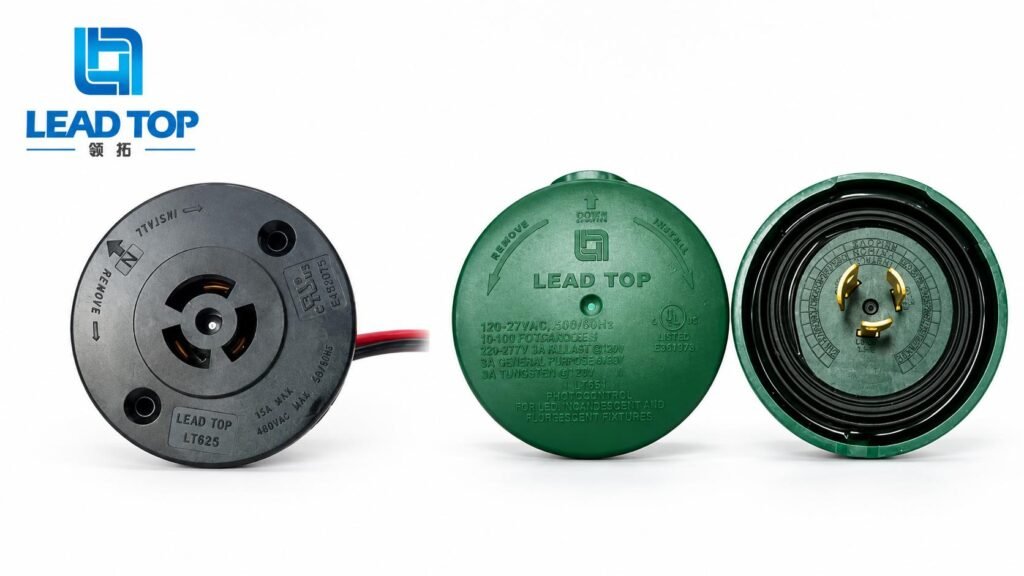
Which Lead-Top Photocell and NEMA Receptacle Combination Can Support LED Retrofits?
For standard LED retrofit applications, Lead-Top can provide:
| Component | Recommended solution |
| Photocontrol | LT134 Standard Zero-Crossing Twist-Lock Photo Control |
| Receptacle | LT625 ANSI C136.10 3-Pin Receptacle |
| Application | Municipal LED street lighting |
| Connection | Twist-lock |
| Control | Basic ON/OFF |
This combination can support standardized installation and easier maintenance when the electrical ratings and luminaire requirements are compatible.
How Should Municipalities Plan an LED Street Light Retrofit Project?
A retrofit should begin with an assessment, not product selection. CONUEE recommends documenting existing equipment, electrical circuits, poles, loads, and technical conditions before a municipal lighting modification or replacement project.
| Step | What should municipalities check? |
| 1. Assess | Luminaires, poles, wiring, circuits, photocells, and receptacles |
| 2. Select | LED voltage, driver, power, mounting, and environmental requirements |
| 3. Control | Retain or replace photocells based on compatibility and condition |
| 4. Maintain | Standardize components and simplify future replacement |
Step 1 — How Can Municipalities Assess Existing Street Lighting Infrastructure?
Create an inventory first. Record luminaire type, wattage, pole arrangement, electrical circuits, photo switch sensors, and NEMA receptacles. This establishes a clear baseline for the retrofit.
Step 2 — How Should Municipalities Select Compatible LED Luminaires?
Check voltage, driver specifications, power, mounting, photometric performance, and environmental requirements. Mexican municipal projects must also consider applicable efficiency and product standards.
Step 3 — Should Existing Photocells Be Retained or Replaced?
Do not replace controls automatically. First, check their condition and compatibility with the new LED system. Replace outdated or incompatible units where necessary.
Step 4 — How Can Municipalities Simplify Installation and Future Maintenance?
Use standardized components where practical. Compatible photocells and receptacles can make future replacement easier. This can also reduce field labor across large municipal lighting networks.
How Can Municipalities Choose the Right Photocontrols for an LED Retrofit?
Choosing a photocontrol starts with the LED luminaire. Check its voltage, driver requirements, load, and inrush current. The photocontrol must also match the existing receptacle. ANSI C136.10-2023 addresses physical and electrical interchangeability between locking-type photocontrols and mating receptacles.
Municipalities should check these points before approval:
- Voltage and load rating
- LED driver compatibility
- Inrush-current handling
- Twist-lock connection
- Switching reliability
- Outdoor environmental protection
For dimming systems, the control interface also matters. ANSI C136.41-2025 covers external locking-type controls used with drivers for 0–10V and DALI dimming.
What Should Municipalities Look for in a Photocontrol Supplier for Mexico LED Retrofit Projects?

A supplier should offer more than a photocell. Municipalities need products that fit the project’s electrical and control requirements. Mexican public-lighting guidance also emphasizes technical documentation, existing electrical conditions, and applicable standards when planning lighting projects.
Look for a supplier that provides:
| Supplier capability | Why it matters |
| Compatible photocontrols | Reduces retrofit issues |
| Standardised receptacles | Simplifies replacement |
| Technical documentation | Supports project specification |
| Consistent supply | Helps large municipal projects |
| Replacement support | Simplifies long-term maintenance |
This approach helps municipalities select controls that work with the LED system today and remain practical to maintain later.
FAQs
What Is an LED Street Light Retrofit?
A retrofit replaces older lighting equipment with more efficient LED luminaires. It can also include upgrades to photocells and other existing infrastructure.
Why Are Municipalities in Mexico Upgrading Traditional Street Lights to LED?
To reduce electricity consumption and improve lighting efficiency. Mexico’s CONUEE supports replacing inefficient municipal lighting systems with more efficient technologies.
What Should Municipalities Consider Before Starting an LED Retrofit Project?
Municipalities should assess existing poles, electrical circuits, wiring, luminaires, controls, and mounting conditions. They should also verify applicable Mexican standards and the technical requirements of the proposed equipment.
Why Should Lighting Controls Be Included in an LED Retrofit?
Lighting controls help operate street lights according to actual lighting conditions. Including them in the retrofit can reduce unnecessary operation and improve overall system efficiency.
What Is the Difference Between a 3-Pin and a 5/7-Pin Street Light Control?
A 3-pin control is generally used for basic ON/OFF photocontrol. 5/7-pin systems can support additional control functions, including dimming interfaces such as 0–10V or DALI, depending on the system design.
What Should Contractors Check When Replacing Traditional Street Lights With LED Luminaires?
Contractors should check:
- Voltage
- LED driver compatibility
- Load
- Inrush current
- Mounting
- Photocontrols
- NEMA receptacles
The new components should also meet the applicable project standards and certification requirements.
The Bottom Line
Mexico’s LED retrofit projects should address more than the luminaire. Compatible photocontrollers, NEMA receptacles, and reliable controls can support efficient, maintainable street lighting. Lead-Top offers photocontrollers and NEMA receptacles for municipal LED applications. Talk to Lead-Top to find a suitable control solution for your next retrofit project.


 English
  Portuguese (Brazil)
  Spanish
  Russian
  Dutch
Dutch  Japanese
  Portuguese (Portugal)