Seville is upgrading thousands of public lighting points with efficient LED luminaires. Since May 2023, more than 31,300 fixtures have been renewed. This has helped achieve average energy savings of around 66%.
But LED replacement is only part of the modernization process.
Reliable infrastructure and automatic lighting control also matter. This is where photocell light switches remain useful. They help LED street lights operate automatically from dusk to dawn and avoid unnecessary daytime operation.
Seville’s upgrade shows why efficient luminaires and dependable control components must work together in modern municipal lighting.
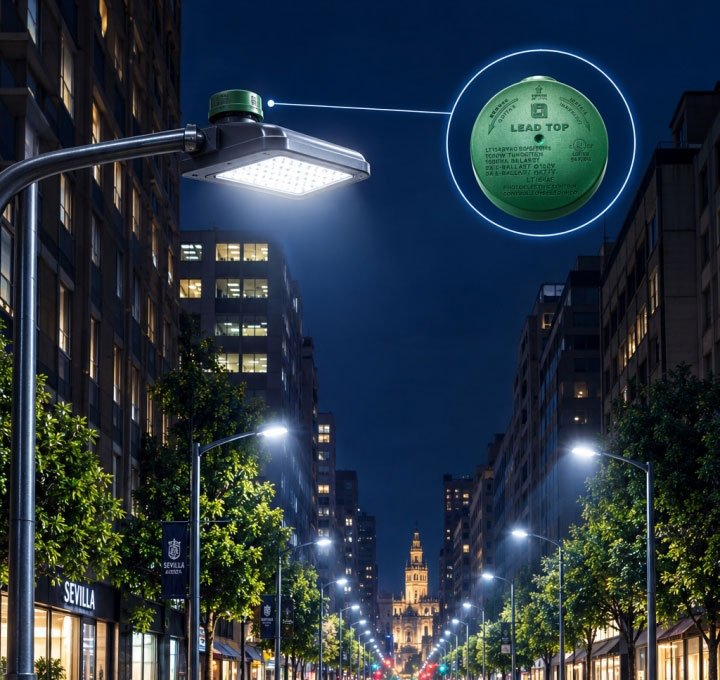
How Is Seville Accelerating Its Public Lighting Modernization?
Seville offers a strong example of what municipal lighting upgrades look like in practice. Since May 2023, the city has renewed 31,361 public lighting fixtures across its neighborhoods, investing about €17.55 million in the renewal and wider improvement of its lighting network.
The project is moving Seville away from older discharge lighting toward high-efficiency LED technology. With these upgrades, LED luminaires now account for approximately 75% of the city’s public lighting network, while around 41% of the lighting stock has been renewed during the period.
What Has Seville’s Modernization Program Included?
The project goes beyond replacing old luminaires. Key improvements include:
- Replacing inefficient discharge luminaires with efficient LEDs
- Upgrading electrical safety through underground equipotential networks
- Improving lighting control and protection centers
- Expanding lighting in selected parks and streets
- Replacing around 350 obsolete supports with more durable galvanized units
This makes Seville’s project more than a simple LED street lighting retrofit. It is a broader modernization of municipal lighting infrastructure, creating a more efficient and reliable foundation for the city’s public lighting network.
How Much Can Seville Gain From an LED Street Lighting Retrofit?
The city’s modernization program has achieved an average energy saving of approximately 66%, according to the municipality.
The benefits are not limited to lower electricity consumption. The new LED luminaires use a 3000K color temperature. Its warm white light has better color rendering, which increases visual comfort for pedestrians and drivers.
What Are the Main Benefits?
| Improvement | Impact on Municipal Lighting |
| Lower energy use | Reduces electricity consumption |
| High-efficiency | LEDs Improve lighting performance |
| Better color rendering | Helps users identify objects more clearly |
| Improved visual comfort | Creates more comfortable public spaces |
| Better reliability | Supports dependable lighting operation |
| Improved electrical safety | Strengthens the overall lighting infrastructure |
Seville’s experience shows that LED street lighting Spain projects can deliver benefits beyond energy savings. Better light quality, electrical safety, reliability, and public-space visibility can all contribute to a stronger municipal lighting network.
Why Is Replacing LED Luminaires Only One Part of Modernization?
Is replacing old fixtures enough to modernize a municipal lighting network?
Seville’s recent projects suggest otherwise. The city has paired LED upgrades with changes to the supporting infrastructure. These include new control centers, electrical circuits, protection systems, and equipotential grounding networks. One recent Seville East project, for example, combines 97 new LED luminaires with new control centers and underground circuits.
A complete LED street lighting retrofit may therefore involve:
- Upgrading electrical infrastructure
- Improving protection and grounding
- Modernizing control centers
- Replacing outdated circuits
- Strengthening network safety
The goal is simple. The LED fixture should not work alone. It should operate as part of a safe, reliable, and controllable lighting network.
Why Does Automatic Lighting Control Still Matter After an LED Retrofit?
LED technology reduces energy use, but the light still needs to operate at the right time. Automatic control helps manage that operation without relying on manual switching.
From Efficient Lighting to Efficient Operation
A photocell switch can detect changes in ambient light and can automate switching accordingly. This helps prevent unnecessary daytime operation.
Seville is also moving toward more advanced control. Its 2026 projects include digitalized systems that can regulate lighting according to actual needs.
For large municipal networks, this control layer can support:
- Consistent automatic operation
- Lower unnecessary energy use
- Easier maintenance
- More reliable lighting schedules
So, LED technology improves the fixture. Automatic control helps manage when that efficiency is used.
How Can Photocell Lighting Sensors Support More Efficient Municipal Lighting?

A photocontrol adds a simple control layer to an LED street light. It responds to ambient light instead of relying on manual switching. This makes it useful across large municipal networks where thousands of luminaires must operate on a consistent schedule.
Automatic Operation
A light sensor detects falling daylight and activates the street light. It switches the light off again when daylight returns. This supports automatic operation at each lighting point.
Energy Management
LEDs already reduce consumption. Automatic control helps prevent those efficient luminaires from operating when they are not needed. This supports the energy-saving goals seen in Seville’s modernization, which has achieved average savings of about 66%.
Maintenance
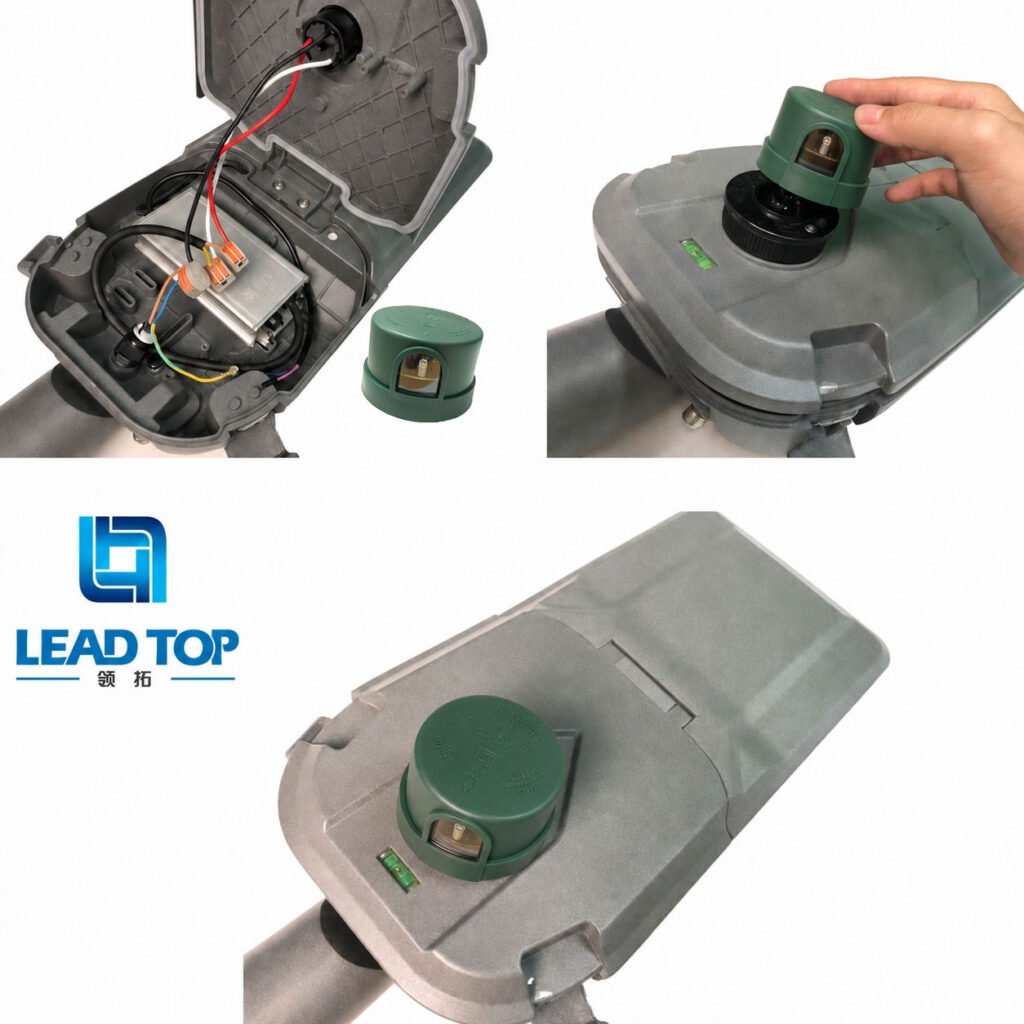
Twist-lock photocontrols can also simplify field replacement. A technician can replace an individual control device without changing the entire luminaire. This is practical for large municipal street lighting networks.
Why Should a Photocell and NEMA Receptacle Be Considered Together?
A photocell cannot work independently of its fixture interface. The receptacle provides the mechanical and electrical connection between the lighting fixture and the locking-type photocontrol. ANSI C136.10 specifically covers the physical and electrical interchangeability of locking-type photocontrols and mating receptacles.
For an LED retrofit, compatibility should therefore be checked at both ends:
| Component | What It Provides | Why It Matters |
| Photocell | Ambient-light-based switching | Automatic operation |
| NEMA receptacle | Fixture-to-control interface | Secure, standardized connection |
| Compatible pair | Mechanical and electrical fit | Easier installation and replacement |
Using compatible components can reduce installation issues and make future maintenance more straightforward. For large retrofit programs, that consistency matters across thousands of lighting points.
Which Lead-Top Photocell and Receptacle Combination Fits Spanish Municipal LED Projects?
Recommended Combination
For standard LED street lighting applications, Lead-Top’s LT134 Standard Zero-Crossing Twist-Lock Photo Control paired with the LT625 ANSI C136.10 3-Pin Receptacle is a practical control combination. The 3-pin interface follows the locking-type photocontrol and receptacle concept covered by ANSI C136.10, which addresses physical and electrical interchangeability.
Why Does the LT134 + LT625 Combination Work?
The LT134 provides automatic photocontrol through a twist-lock design. The LT625 provides the matching fixture interface. Together, they support:
- Automatic dusk-to-dawn operation
- Twist-lock installation
- Standardized 3-pin connection
- Straightforward replacement
- Practical maintenance for large lighting networks
Where Can This Combination Be Used?
The combination can fit municipal street lighting, roadway lighting, residential streets, public spaces, and LED retrofit projects where a compatible 3-pin locking photocontrol interface is specified.
What Can Seville’s Lighting Upgrade Teach Other European Cities?
The main lesson is clear. A successful public lighting modernization should not stop at replacing old luminaires. Seville has combined LED renewal with improvements to electrical and control infrastructure. Its program has already renewed more than 31,300 fixtures and achieved average energy savings of around 66%.
For other European cities, the project highlights several practical priorities:
● Upgrade the luminaire
Replace inefficient lighting with efficient LEDs.
● Modernize the infrastructure
Improve electrical protection and control systems.
● Strengthen automatic control
Ensure lights operate when needed.
● Plan for maintenance
Use standardized, replaceable components.
● Think beyond energy savings
Consider reliability, visibility, and long-term operation.
Seville shows that LED street lighting is the foundation, but dependable control helps complete the modernization.
FAQs
How Many Street Lights Has Seville Replaced?
They have renewed more than 31,300 units since May 2023. The modernization spans across districts.
How Much Energy Can LED Street Lighting Save?
Savings depend on the existing lighting system and project design. In Seville, the modernization has delivered average energy savings of around 66%.
Why Is Lighting Control Important After an LED Retrofit?
LEDs only reduce energy consumption. Photosensors help prevent unnecessary operation and support consistent lighting schedules.
How Does a Photocell Control a Street Light?
They detect changes in ambient light and switch lights accordingly.
Can Photocells Be Used With LED Street Lights?
Yes. They can be used with LED street lights. However, the photocontrol and luminaire should be electrically and mechanically compatible.
What Is an ANSI C136.10 3-Pin Receptacle?
It is a standardized 3-PIN receptacle used with photocontrols. The ANSI standard addresses the physical and electrical interchangeability of these components.
Why Should a Photocell and NEMA Receptacle Be Matched?
Matching them ensures proper mechanical fit and electrical compatibility. It also supports easier installation and maintenance across large lighting networks.
Are Photocells Still Useful in Modern Municipal Lighting Systems?
Yes. Photocells remain useful for automatic control, even in modern LED networks. They provide a simple way to manage when outdoor lights operate.
Final Words
Seville shows that LED upgrades can make municipal lighting more efficient and reliable. But reliable control is also essential for extended performance. For such projects, Lead-Top offers dependable photocontrollers and NEMA receptacles for modern municipal lighting.



 English
  Portuguese (Brazil)
  Spanish
  Russian
  Dutch
Dutch  Japanese
  Portuguese (Portugal)