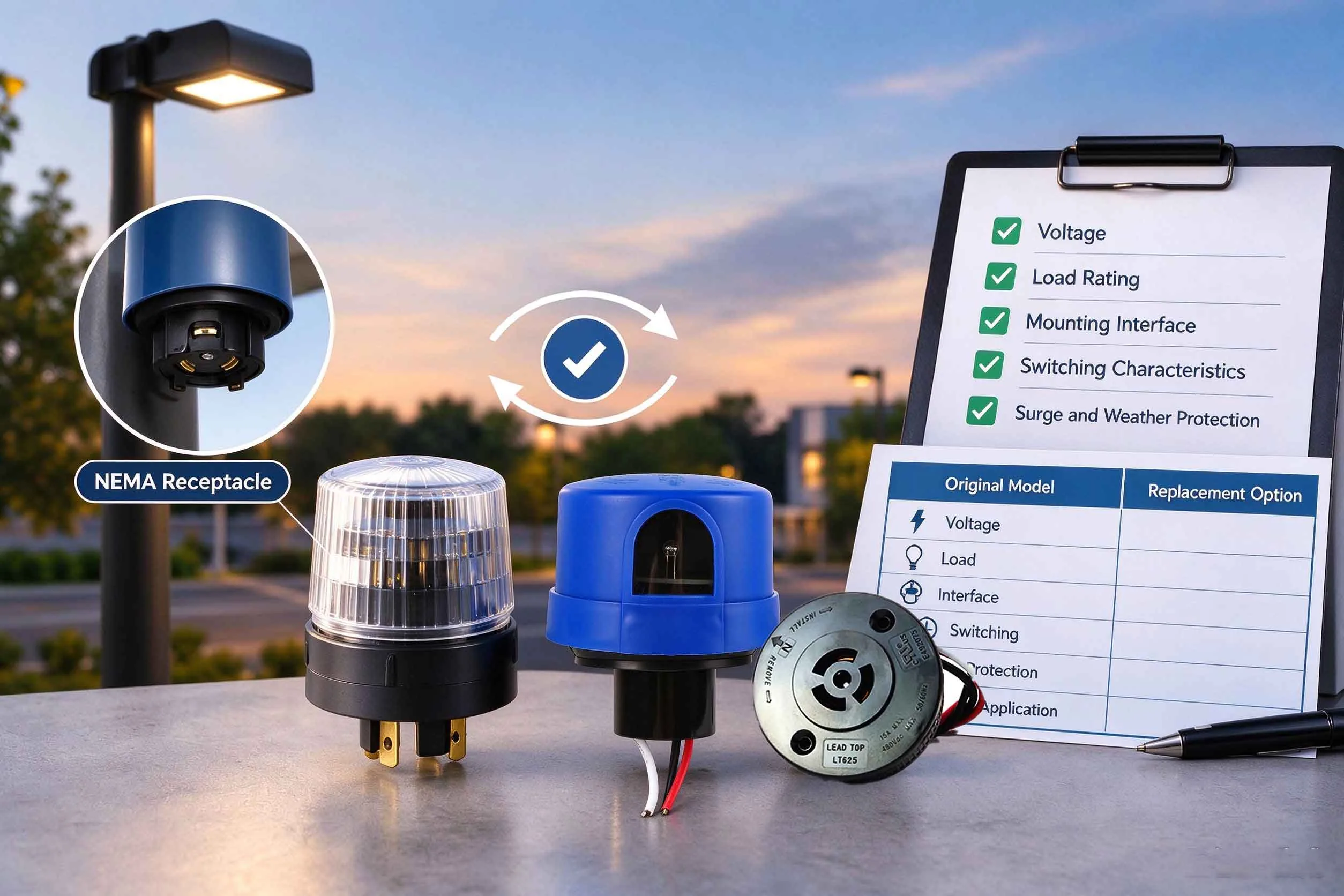
Finding a replacement photocontrol can be tough when the original model doesn’t work for a lighting project. The choice based only on appearance and rated wattage can lead to compatibility problems.
A reliable replacement process starts with the
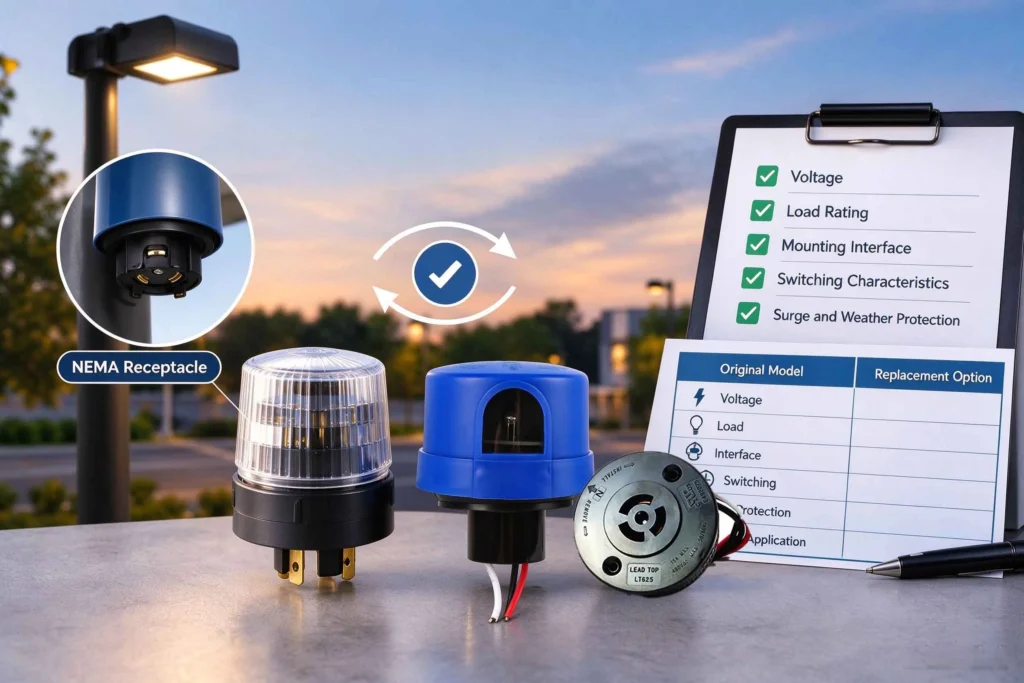
- Original photocell’s voltage
- Load rating
- Mounting interface
- Switching characteristics
- Environmental protection requirements
A variety of locking photoelectric sensors is available from Lead Top for use in various outdoor lighting applications. Buyers can find replacements by comparing specifications, not just by product model name.
What Is a Lighting Control Cross-Reference?
A photocell cross-reference matches an existing outdoor light sensor switch with a potential alternative based on its technical specifications and intended application. It’s useful in a few common situations:
- The original product is discontinued.
- Buyers need an alternative supplier.
- Contractors are sourcing replacement parts for existing outdoor lighting systems.
A suitable alternative must meet the electrical and mechanical requirements of the installation. Similar appearance and product descriptions do not automatically guarantee compatibility.
Which Specifications Matter When Replacing a Photoelectric Sensor?
Rated Voltage
Supply voltage compatibility is critical for new light control to work efficiently. Confirm the voltage listed on the existing photocell before selecting an alternative.
Load Rating and LED Compatibility
Compare:
- The photocontrol’s wattage
- VA rating
- Applicable electronic ballast
LED drivers may also produce high inrush current when switched on. This makes switching-load compatibility an important consideration.
Mounting Interface and Receptacle Compatibility
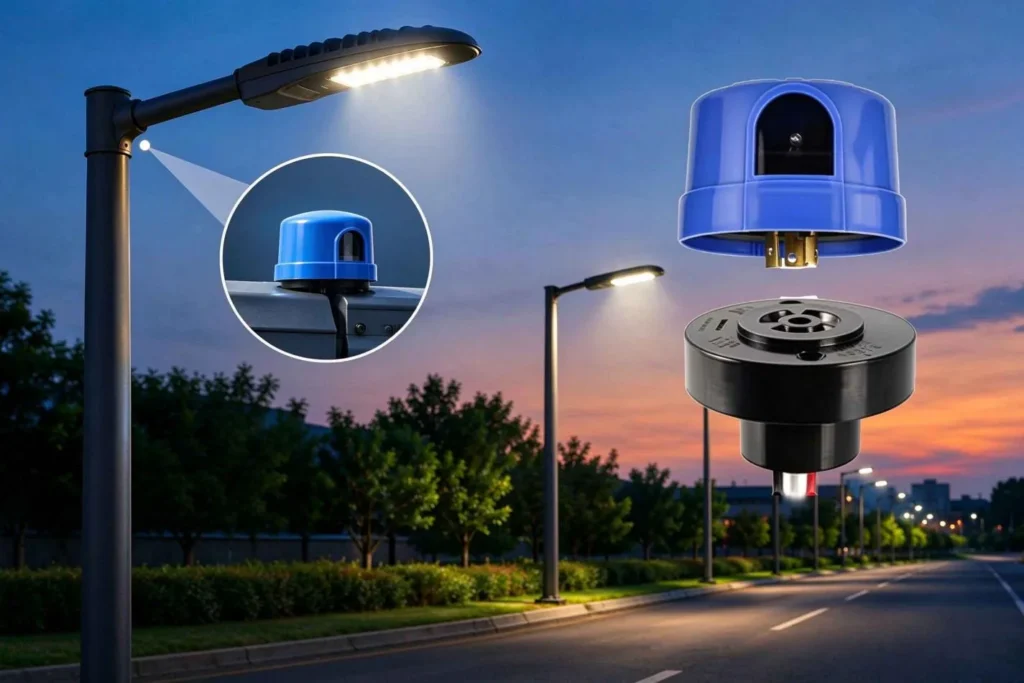
Many outdoor lighting systems use locking photocell switches installed in compatible NEMA receptacles. Confirm:
- The required pin configuration
- Receptacle interface
- Applicable standard before ordering a replacement
Switching Characteristics
Photocell sensor may differ in light activation thresholds and switching technology. The selected product should meet the project’s operating requirements and help avoid unsuitable switching behavior.
Surge Protection and Weather Resistance
Photocell devices installed outdoors could potentially be exposed to difficult conditions and temperature extremes. Compare the listed surge protection and ingress protection values to the installation environment.
How to Find a Compatible Replacement Photocell?
Step 1 — Identify the Existing Model
Record these specifications:
- The manufacturer’s name
- Complete model number
- Voltage rating
- Any additional markings
Product labels and original datasheets provide a more reliable starting point than appearance alone.
Step 2 — Record the Lighting System Requirements
Confirm these specs:
- Supply voltage
- Connected load
- LED-driver specifications
- Mounting interface
- Operating environment
For installations with multiple luminaires, verify whether the control arrangement differs from a single-light application.
Step 3 — Compare the Technical Specifications
| Specification | Information to Confirm |
| Existing model | Manufacturer and complete model number |
| Voltage | Required operating voltage |
| Load | Wattage, VA, and applicable driver ratings |
| Interface | Twist-lock configuration and receptacle compatibility |
| Switching | Light threshold and time delay |
| Protection | Surge and ingress protection requirements |
| Application | Luminaire type and environmental conditions |
Step 4 — Verify Compatibility Before Ordering
Photocell products may look similar. Differences appear during installation. To avoid this, review the datasheet of the replacement product and confirm any unclear specifications with the manufacturer.
Confirm your order only when the necessary requirements have been verified.
Which Lead Top Photocontrol Models Should You Compare?
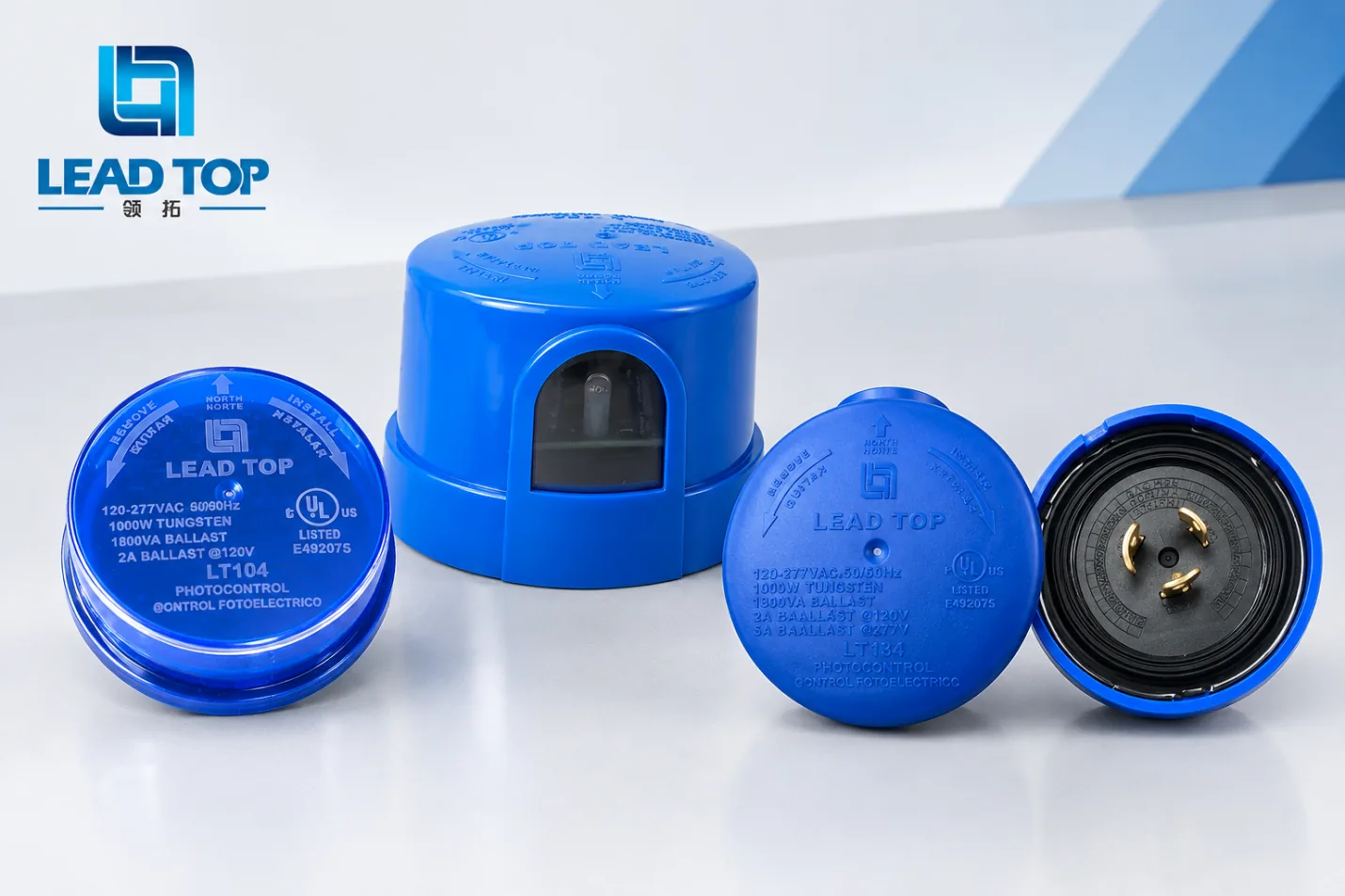
Lead Top’s twist-lock photo switch sensor range includes several options for different lighting control requirements. The appropriate model depends on the original product specifications and the target application.
| Lead Top Model | Key Selection Consideration |
| LT104 | Cost-conscious electronic photocontrol applications |
| LT110 Series | Thermal photocontrol applications |
| LT124 | Electronic photocontrol with zero-crossing switching |
| LT134 | Long-life electronic photocontrol applications |
| LT154 | Heavy-duty applications requiring high-inrush current protection |
| LT164 Series | Electromagnetic photocontrol applications |
The LT104, LT124, LT134, LT154, and other models should be compared using their:
- Published electrical ratings
- Load compatibility
- Switching characteristics
- Available protection configurations
No model should be treated as a universal replacement for every existing photocell.
Why Does a Compatible Twist-Lock and NEMA Receptacle Matter?
Because both components work together as part of the lighting control interface. A replacement light sensor must match the installed receptacle and meet the electrical requirements of the system.
For new installations:
Selecting a compatible light photocell sensor and receptacle together can simplify product specification and replacement planning.
For existing installations:
Verify the receptacle configuration before choosing the photocontrol.
How Can Buyers Reduce Photocell Replacement and Maintenance Risks?
Budget is the most critical consideration for municipalities. But just a little bit of a problem related to compatibility could be extremely costly. To prevent such situations, it is necessary to have proper documentation of products and check their specifications.
Use these practices to manage photosensor replacement risks:
Maintain model records
Document:
- Model numbers
- Voltage ratings
- Load specifications
- Receptacle types
Standardize components
Use the same photocontrol models across projects where electrical and operational requirements permit.
Verify before bulk orders
Test compatibility and review product datasheets before purchasing large quantities.
Check environmental ratings
Match ingress protection and surge protection requirements to site conditions.
Confirm uncertain specifications
Contact the manufacturer when the original model’s documentation is incomplete.
ANSI C136.10-2023 is an important consideration to reduce maintenance risks. This addresses physical and electrical interchangeability for locking photocontrols and receptacles. Use the applicable standard alongside manufacturer documentation to assess replacement suitability.
Which Lead Top Photocontrols Are Worth Considering for Replacement Projects?
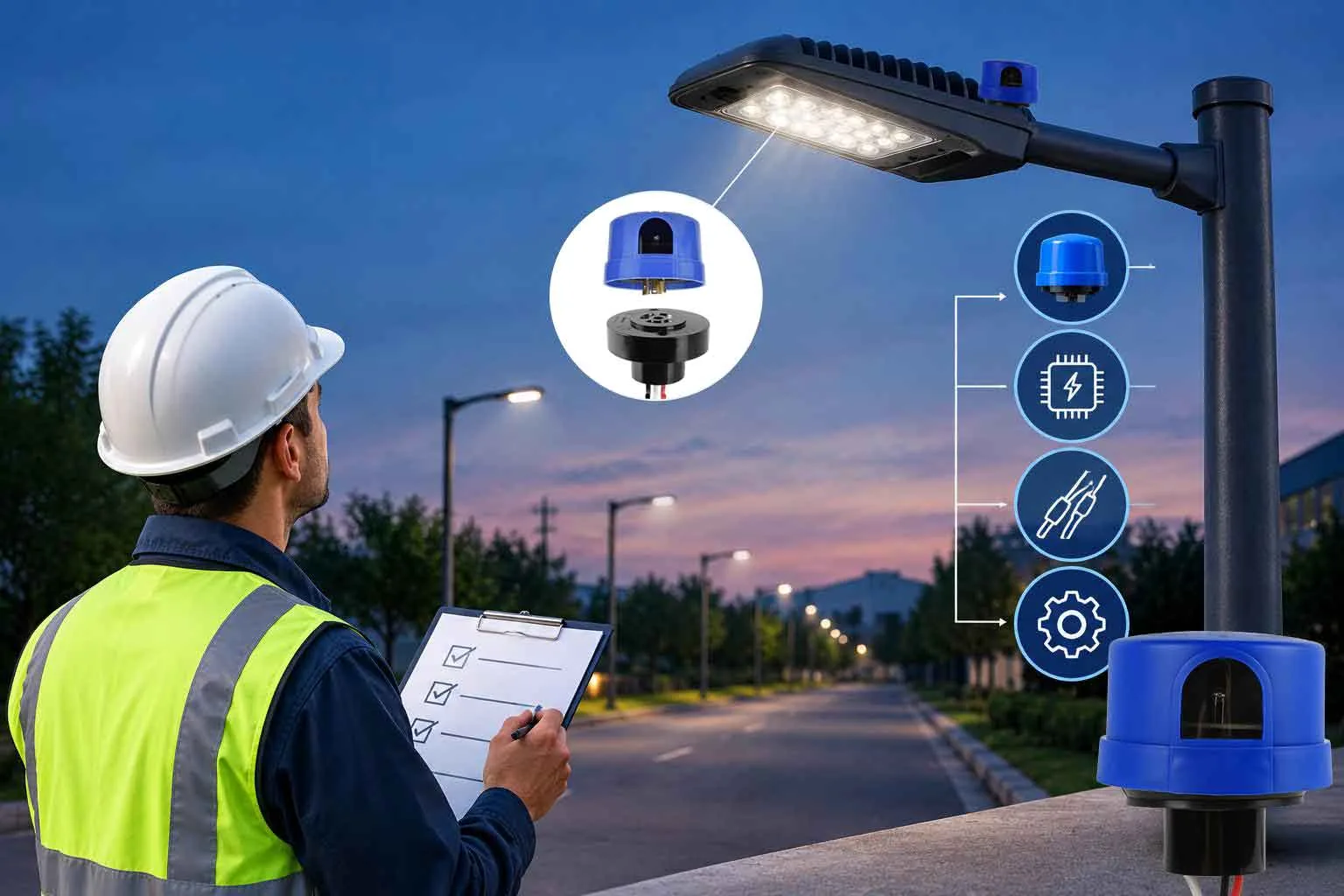
LT104 Electronic Twist-Lock Photocontrol
A candidate for projects where cost-conscious electronic photocontrol functionality is a priority and the product ratings match the application.
LT124 Electronic Twist-Lock Photocontrol
An option to evaluate when zero-crossing switching and the required electrical ratings are important.
LT134 Long-Life Electronic Twist-Lock Photocontrol
It’s the most suitable for applications where long service life is a key selection consideration.
LT154 Heavy-Duty Electronic Twist-Lock Photocontrol
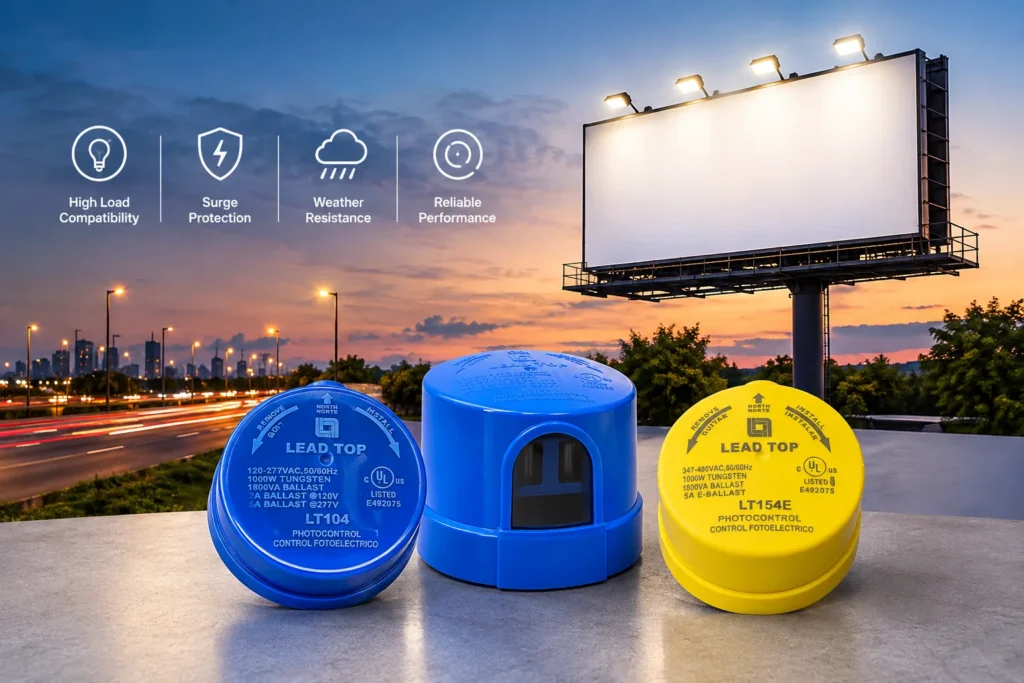
An option to evaluate when surge protection is important to the application.
Before selecting a model
Confirm:
- Rated voltage
- Connected load
- Mounting interface
- Switching requirements
- Environmental protection specifications
FAQ
How do I find a replacement for an existing photocell?
Start with the original model number and compare:
- Voltage
- Load rating
- Mounting interface
- Switching characteristics
- Environmental protection requirements
Can I replace a photocell with another model that has the same wattage rating?
Not necessarily. That’s just a single consideration. Also check the other factors like mounting interface and switching characteristics.
Are all twist-lock photocontrols compatible with NEMA receptacles?
No. The specific interface and applicable standard must be confirmed for the photocontrol and receptacle.
Which Lead Top photocontrol is best for replacement projects?
The best option depends on the existing system’s specifications. Here are our recommended products:
- LT104
- LT124
- LT134
- LT154
What information should I provide when requesting a replacement recommendation?
Provide:
- Original model number
- Rated voltage
- Load details
- Receptacle configuration
- Information about the lighting application
Final Words
Need help identifying a suitable replacement photocell?
Contact Lead Top with your existing model number and project specifications. Our team can help you evaluate photocontrol options based on your lighting system’s requirements.


 English
 Portuguese (Brazil)
 Spanish
 Russian
 Dutch
 Japanese
 Portuguese (Portugal)