Winning a municipal lighting contract is only the start. The real challenge begins when thousands of photocontrollers must be supplied and installed. A reliable supplier should support more than the initial quotation.
They should help with:
- Product selection
- Samples
- Technical documentation
- Quality control
- Production planning
- After-sales service.
Clear communication is also important when project requirements change. From the first sample to the final shipment, every stage can affect project timelines and installation costs.
This guide explains what contractors should expect from a photocontroller supplier throughout a large LED street lighting project.

What Should a Light Photocell Supplier Provide Before the Order?
Technical support should start before the purchase order. A supplier should first review the project requirements. This includes the photocell switch’s voltage, load rating, receptacle type, and required certifications. For locking-type products, ANSI C136.10 covers physical and electrical interchangeability between photocontrols and mating receptacles.
Before ordering, contractors should confirm:
- Electrical compatibility: Voltage, load, and LED driver requirements.
- Receptacle matching: Correct socket type and mechanical fit.
- Certifications: Required standards and project approvals.
- Product specifications: Switching, sensing, surge, and environmental requirements.
- Customization: Markings, packaging, wiring, or project-specific requirements.
The supplier should provide clear datasheets and technical documents. This gives the contractor a defined product baseline. It also reduces compatibility problems during installation.
Why Is Sample Development and Approval Important Before Mass Production?
A quotation should not be the final technical checkpoint. Contractors should test a production sample before approving thousands of units. The sample must match the actual luminaire, receptacle, and project requirements. This is especially important because ANSI C136.10 establishes physical and electrical interchangeability requirements for locking-type light photocell sensors and receptacles.
A practical approval process is:
Project Requirement → Sample → Testing → Approval → Mass Production
Testing should confirm the agreed electrical and mechanical requirements. It can also verify switching performance, receptacle fit, and required certifications. For dimming applications, the relevant control interface should also be checked. ANSI C136.41 establishes requirements for dimming control between external locking-type photocontrols and drivers.
Once approved, the sample becomes the production reference. This gives both parties a clear quality benchmark.
How Should Photo Switch Sensor Quality Be Controlled During Mass Production?
Mass production should follow the approved sample and agreed inspection plan. Quality control should not begin only at final inspection. It should cover materials, assembly, testing, and finished units. For locking-type photocontrols, ANSI C136.10 addresses physical and electrical interchangeability and testing.
A practical production quality plan can include:
- Incoming inspection: Check electronic components, housings, seals, and other critical materials.
- Production testing: Verify electrical and functional performance during assembly.
- Waterproof checks: Confirm the required enclosure protection for the specified model.
- Switching tests: Verify the photocontroller responds within the approved operating parameters.
- Final inspection: This includes checking everything from dimensions and markings to quantity.
The supplier should document the agreed tests and acceptance criteria. This creates a consistent benchmark across production batches. It also makes quality issues easier to trace.
What Should Contractors Expect When Managing Large-Volume Photocontroller Delivery?

Thousands of light sensor controls require more than a single delivery date. Contractors should agree on production batches and shipment schedules before manufacturing begins. This helps align component delivery with the project’s installation plan. It also gives both sides a clear timeline for quantity checks and inspections.
| Area | What to Confirm |
| Production | Batch size and completion dates |
| Packaging | Unit protection and carton requirements |
| Quantity | Units per carton and total shipment quantity |
| Documentation | Packing lists, inspection records, and shipping documents |
| Consistency | Same approved specifications across batches |
Batch identification is also useful for large projects. It helps contractors trace products if a field issue appears later. Clear communication is essential when quantities or delivery dates change. A supplier should confirm these changes before shipment, not after the schedule is affected.
What Installation and Field Support Should a Photocontroller Supplier Provide?
Installation support should begin before the first unit reaches the pole. The supplier should provide clear product documentation. It should cover wiring, mounting, receptacle compatibility, and operating requirements. This matters because ANSI C136.10 addresses the physical and electrical interchangeability of locking-type photocontrols and mating receptacles.
Field Support Cover
- Wiring guidance: Confirm the correct electrical connections.
- Receptacle matching: Verify the photocontroller fits the specified socket.
- Installation instructions: Provide model-specific mounting information.
- Troubleshooting: Help identify switching or compatibility problems.
- Technical contact: Provide a direct channel for field questions.
For dimming projects, documentation should also identify the applicable control interface. ANSI C136.41 covers interfaces between external locking-type controls and luminaires for dimming and other functions.
What Warranty and After-Sales Support Should Municipal Contractors Expect?
A municipal lighting project does not end when the shipment arrives. Photocontrollers may remain in service for years. Contractors should therefore define the supplier’s warranty and support obligations before signing the supply contract.
| Area | What Contractors Should Confirm |
| Warranty | Coverage period and covered failures |
| Replacement | Procedure for defective units |
| Failure analysis | How failed products will be evaluated |
| Technical support | Contact person and response process |
| Spare units | Availability for field replacement |
A clear process helps contractors handle failures without unnecessary delays. It also creates a defined path from field diagnosis to replacement. For large projects, suppliers should retain enough technical information to identify the affected model or production batch. This makes recurring issues easier to investigate and resolve.
Which Photocontroller and Receptacle Combination Is Suitable for Large Municipal Projects?
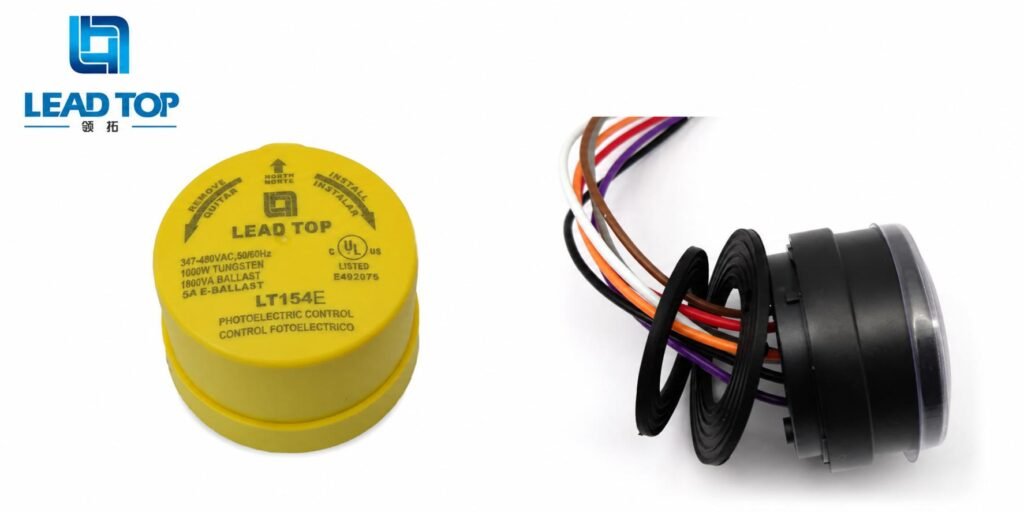
Recommended Solution for Large Municipal Projects
For projects that may add dimming later, the LT154 High-Inrush Photocontrol with the LT635 7-Pin Dimming Receptacle is a practical combination. A 7-pin ANSI C136.41 interface provides three power contacts and four signal contacts for dimming and control functions.
Why Does the LT154 + LT635 Combination Work?
The LT154 is designed for high-inrush LED loads. The LT635 adds a 7-pin interface for projects that need a more expandable control architecture.
Key benefits include:
- High inrush current capability
- Support for larger LED drivers
- Future dimming capability
- Smart-ready infrastructure
- Standardized twist-lock installation
Applications
It fits large municipal projects, roadway modernization, adaptive lighting, and smart-ready street lighting. The combination can also suit infrastructure upgrades where future control expansion is a consideration.
What Should a Contractor Confirm Before Signing a Photocontroller Supply Contract?
A large lighting control order should have clear requirements before production starts. Contractors should confirm the technical, production, quality, and commercial terms in writing. This prevents assumptions from becoming project problems later.
Contractor Procurement Checklist
| Area | What to Confirm |
| Technical | Approved model, voltage, load, receptacle compatibility, certifications |
| Samples | Sample approval and reference unit |
| Production | Manufacturing capacity, lead time, batch schedule |
| Quality | Inspection plan, testing criteria, documentation |
| Delivery | Shipment batches, packaging, quantity, delivery dates |
| Commercial | Warranty, replacement terms, payment conditions |
| Support | Technical contact and after-sales procedure |
For dimming projects, confirm that the photocontroller and receptacle support the required control interface. ANSI/NEMA C136.41 covers mechanical, electrical, and marking requirements for locking-type dimming controls and mating receptacles, including 0–10 V and DALI applications.
Why Does Supplier Communication Matter in Long-Term Municipal Lighting Projects?
Municipal lighting projects rarely stay unchanged from bid to final installation. Quantities can shift. Technical requirements can change. Delivery dates may also move. A responsive supplier should communicate these changes quickly and document the agreed revisions.
Where Does Communication Matter Most
- Technical changes: Confirm revised specifications before production.
- Quantity changes: Adjust production plans before materials are committed.
- Delivery changes: Coordinate batches with the contractor’s installation schedule.
- Customization: Confirm markings, packaging, or project-specific requirements.
- Field issues: Provide technical feedback when installation problems appear.
Communication also protects the approved product baseline. Some municipal specifications require source approval and prior approval before changing materials or components. For large orders, this makes supplier responsiveness more than a service feature. It becomes part of project control.
What Should Contractors Know Before Choosing a Photocontroller Supplier?

Price should not be the only selection factor. Contractors should compare the supplier’s technical capability, production capacity, quality process, and project support. The supplier should also understand the applicable photocontrol and receptacle standards.
Supplier Selection Checklist
| Area | What to Evaluate |
| Technical | Specifications, compatibility, certifications, documentation |
| Product | Approved sample and required photocontroller type |
| Quality | Inspection process, testing, batch consistency |
| Production | Capacity, lead time, and volume capability |
| Delivery | Batch planning, packaging, and documentation |
| Support | Installation help, warranty, and failure analysis |
| Communication | Response time and change-management process |
For locking-type products, ANSI C136.10-2023 addresses physical and electrical interchangeability and testing. Contractors should therefore confirm that the proposed photocontroller and receptacle match the project specification. A supplier that can support the project from sample approval through after-sales service is better positioned for long-term municipal work.
FAQs
What should a contractor expect from a photocontroller supplier before mass production?
The supplier should provide:
- Approved samples
- Technical specifications
- Compatibility information
- Required certification documents
The final production requirements and testing criteria should also be agreed upon before manufacturing begins.
How should large-volume photocontroller orders be delivered?
Contractors should agree on batch sizes, production schedules, packaging, quantity checks, and delivery documentation. Batch identification can also help track products throughout a large municipal project.
What happens if a photocontroller fails after installation?
The supplier should follow a defined warranty and replacement process. Technical support should help identify the failure and determine whether the unit requires replacement or further investigation.
Why is after-sales support important for municipal lighting projects?
Municipal lighting systems operate for years, so contractors may need troubleshooting and replacement support after installation. A clear support process can reduce downtime and simplify field issue resolution.
Final Words
A reliable photocontroller supplier should support every stage, from sample approval to mass production and after-sales service. Lead-Top offers photocontrollers, receptacles, samples, technical documentation, and large-volume supply for lighting projects. Contractors can discuss their project requirements with Lead-Top before moving to mass production.


 English
 Portuguese (Brazil)
 Spanish
 Russian
 Dutch
Dutch Japanese
 Portuguese (Portugal)