Introduction
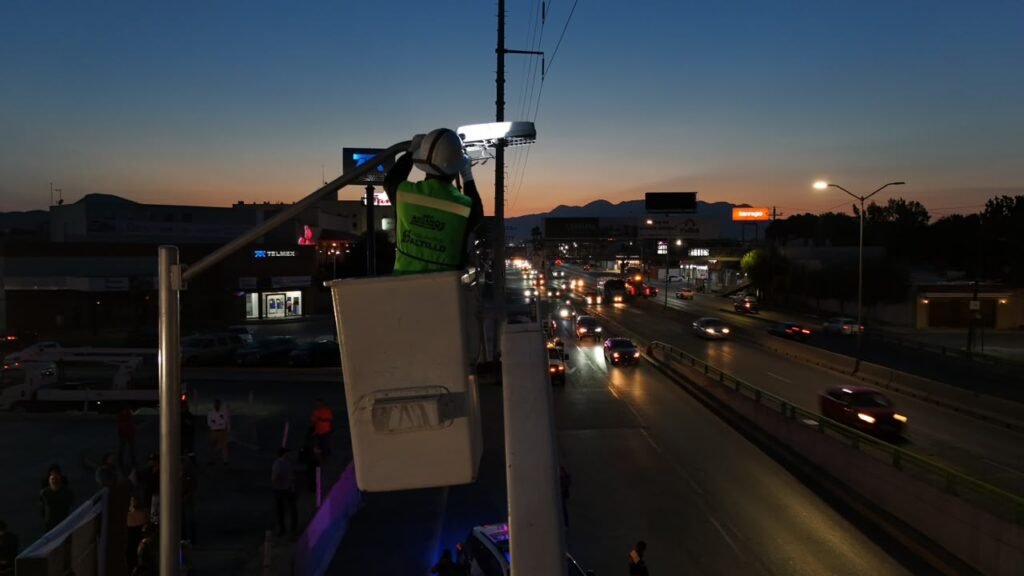
Saltillo just kicked off a new roadway lighting project. The budget sits at MXN 8.2 million. Not a small number for a city works program, and it puts Saltillo LED street lighting back in the spotlight.
The target is the Luis Echeverría Ring Road. 780 aging streetlights along this route are getting replaced. The new fixtures are 170W LED luminaires, each putting out 28,401 lumens.
City officials expect a 40 percent cut in energy consumption once the project wraps up. Beyond the energy savings, they’re also counting on better traffic safety and clearer nighttime visibility along the corridor.
This isn’t Saltillo’s first lighting project either. Back in November 2025, the city upgraded lighting at its four main entry points. That meant 1,700 new streetlights going in, plus repairs on more than 14,000 lighting points across the municipality.
There’s a pattern here worth noticing. Cities expand lighting coverage first. Once that’s mostly done, they shift focus to the corridors carrying the most daily traffic. Saltillo’s approach to Mexico street lighting fits that pattern exactly, and it shows what a well-planned LED street light retrofit looks like when it targets the right stretch of road.
Projects like this also fall under a broader category worth knowing: municipal LED lighting. That’s the umbrella term for city-run upgrades that swap outdated fixtures for LED technology across public infrastructure.
Why Roadway Lighting Is Becoming a Priority in Mexican Cities
A lot of municipalities in Mexico have already handled the basics. Neighborhoods and side streets that used to sit dark now have coverage. That part of the job is mostly finished in many places.
What comes next looks different. It’s about lighting quality on the roads that actually matter most. Highways. Ring roads. The routes carrying the bulk of daily traffic.
Common challenges include:
- Aging luminaires often hit the end of their service life all at once, since a lot of them went in during the same construction period years back
- Electricity use is another sticking point, as older fixtures cost more to run than modern LED alternatives
- Poor nighttime visibility isn’t just inconvenient; it’s a genuine safety risk
- Maintenance costs rise too, as older systems need more frequent attention
- Road safety expectations keep getting tighter, pushing cities toward better lighting standards on the routes that see the most traffic.
Saltillo’s project touches on every one of these pressures at once, right on one of the city’s busiest roads.
A Successful LED Upgrade Requires More Than New Luminaires
It’s easy to assume a roadway lighting upgrade is just about the fixtures. Swap the old lamp for LED, job done. That’s not really the full picture.
New luminaires are only one piece of a successful project. Engineers also need to check the street lighting control components running the system. A quality LED photocell, in particular, decides exactly when each fixture switches on and off. This affects both energy use and equipment lifespan.
Automatic dusk-to-dawn operation comes down to the photocontrol on each fixture. A weak one can leave lights running through the day, or switch on late at night, wasting power either way.
LED driver protection matters here too. A badly built control component can expose the driver to voltage spikes during switching, cutting the fixture’s usable life short.
Maintenance frequency follows directly from component quality. Reliable controls need less attention over time. That matters a lot across a corridor with hundreds of fixtures spread over several kilometers.
Lifecycle operating costs follow the same logic. A cheap component that fails early ends up costing more over the years than a slightly pricier, sturdier one would have.
Future system upgrades depend on this too. Standardized, well-built components make it much easier to bolt on smart features later, without redoing the whole job.
Procurement Tips for Municipal Engineers
A few practical points help here.
- Pick photocontrols built specifically for LED lighting, not older parts adapted from legacy fixtures.
- Go with standardized receptacles, since they speed up maintenance and swaps in the field.
- And think about smart-ready components early, in case dimming or remote management gets added down the road.
Recommended Lead-Top Solution for Municipal Roadway Projects
Standard LED Roadway Lighting Solution
For a project shaped like Saltillo’s, one product pairing stands out for large-scale roadway work.


| Product | Standard | Key Benefit |
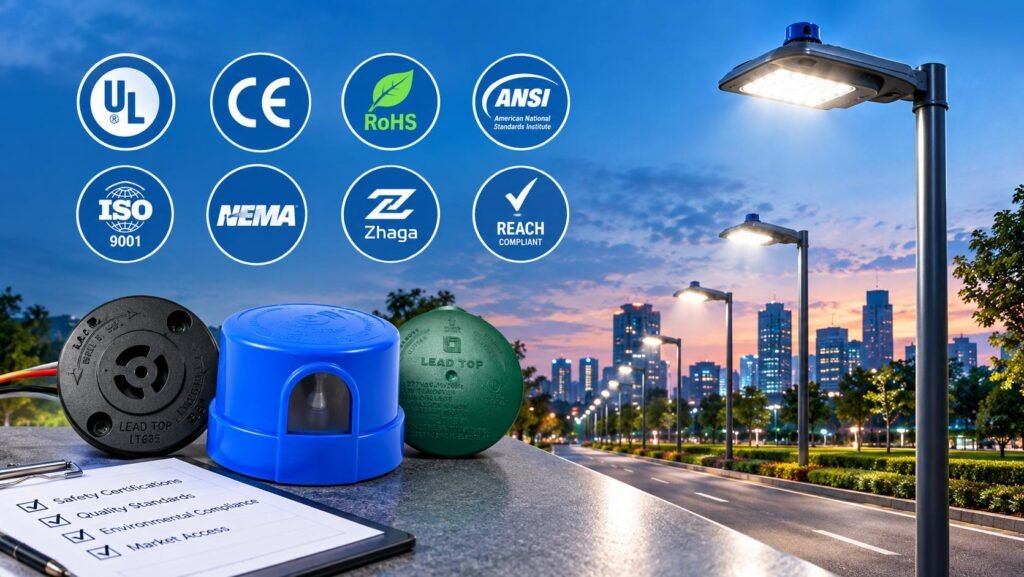
| LT124 Twist-Lock Photocontrol | ANSI C136.10 | Reliable dusk-to-dawn switching with strong LED driver protection |
| LT605 ANSI C136.41 Receptacle | ANSI C136.41 | Standardized, smart-ready socket for fast installation and future upgrades |
Why this combination works
Large roadway projects need automatic lighting control that holds up across thousands of operating hours, without constant field service calls.
Key benefits
- ANSI C136.10 compliant photocontrol
- ANSI C136.41smart-ready receptacle
- Zero-cross switching technology
- Reliable dusk-to-dawn operation
- Enhanced LED driver protection
- Easy installation and field replacement
Suitable applications
- Highways
- Ring roads
- Municipal arterial roads
- Urban roadway lighting
How to Reduce Lifecycle Costs in Municipal Lighting Projects
For a city managing thousands of streetlights, lifecycle cost usually beats the initial purchase price as the number that actually matters.
A reliable lighting control solution helps in a few concrete ways.
- It cuts unnecessary daytime operation, since an accurate photocontrol only runs the lights when they’re actually needed
- It also lowers maintenance frequency, meaning fewer site visits for crews each year
- It extends luminaire service life too, as LED driver protection built into a good photocontrol prevents premature failures from electrical surges or switching noise
- Over time, that adds up to a better return on the project’s investment
- And it simplifies long-term asset management
Standardized parts make it easier for a maintenance team to track inventory, plan replacements, keep the whole network running smoothly.
Durable outdoor lighting components also set a city up for what comes next. Once a corridor runs on standardized, smart-ready hardware, adding smart street lighting features later like dimming schedules, remote fault alerts, becomes a much simpler upgrade instead of a full rebuild.
FAQ
Why are Mexican cities replacing existing LED streetlights instead of simply adding more lights?
Many municipalities have already expanded lighting coverage. Current projects focus on replacing aging equipment to improve efficiency, reduce maintenance costs, and enhance road safety.
Why is a photocontrol important in roadway lighting projects?
A photocontrol automatically switches lights on and off based on ambient light, helping reduce energy waste and ensuring consistent nighttime operation.
What should contractors consider when selecting photocontrols for municipal projects?
Key factors include LED compatibility, switching reliability, compliance with industry standards, ease of maintenance, and long-term durability.
Why use an ANSI C136.41 receptacle?
ANSI C136.41 receptacles provide a standardized interface that simplifies maintenance today while supporting future smart lighting upgrades.
How can cities prepare roadway lighting for future smart infrastructure?
By selecting smart-ready control components during LED installation, municipalities can add dimming, remote monitoring, and adaptive lighting later without replacing the entire luminaire.
CTA
Build More Reliable Roadway Lighting Projects with Lead-Top
Whether you’re upgrading highways, ring roads, or municipal arterial streets, reliable lighting control components are essential for maximizing LED performance and reducing long-term maintenance costs.
Lead-Top offers professional outdoor lighting solutions, including the LT124 Twist-Lock Photocontrol and LT605 ANSI C136.41, helping municipalities and lighting manufacturers build durable, energy-efficient, and future-ready roadway lighting systems.
References:




 English
 Portuguese (Brazil)
 Spanish
 Russian
 Dutch
Dutch Japanese
 Portuguese (Portugal)