How do you modernize a public lighting network with hundreds of thousands of luminaires?
Peru’s Hidrandina is taking on this challenge across La Libertad, Cajamarca, and Áncash. Here are some project highlights:
- By April 2026, the utility had installed 7,302 LED luminaires
- This adds to 116,000 LED units already installed in 2025
- The program is planned to reach 152,998 LED luminaires in 2026
- Total estimated investment is S/51 million
But extensive LED retrofits involve more than replacing luminaires. Photocontrol selection, standardization, and maintenance also matter. At this scale, the right control components can make procurement and long-term maintenance much easier.
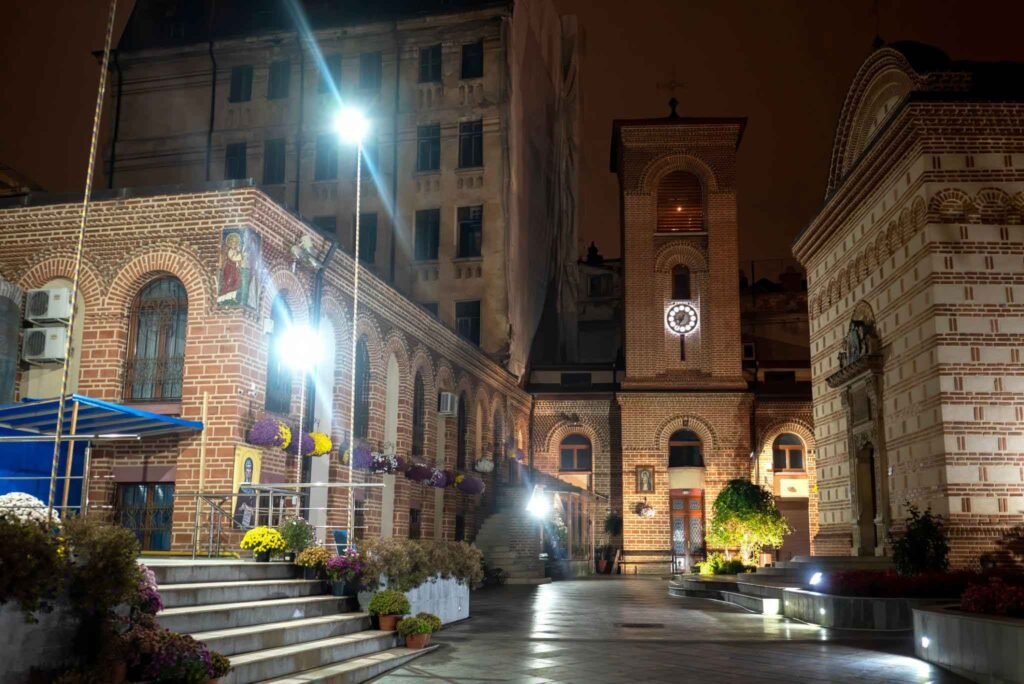
Why Does Peru Need Extensive Public Lighting Modernization?
Hidrandina’s figures show the scale of Peru’s lighting modernization clearly. Its network includes 281,599 public lighting luminaires across Peru. By the end of 2025, 41.55% had been converted to LED.
LED upgrading improves energy efficiency. But scale also creates a maintenance challenge. Thousands of lighting points require consistent components, installation practices, and replacement procedures.
For Hidrandina, the focus is not only on installing LED luminaires. It also involves managing a growing network over several regions. That makes photocontrol receptacle selection, compatibility, and standardization important parts of the modernization process.
How Has Hidrandina’s LED Network Grown Since 2021?
The modernization program has progressed exceptionally. Here are the details.
At the start, there were only 7,336 LED luminaires that were upgraded. This continued and reached 116998 by the end of 2025. Hidrandina then reported another 7,302 LED luminaires installed by April 2026.
| Milestone | LED Luminaires |
| 2021 | 7,336 |
| End of 2025 | 116,998 |
| April 2026 | 7,302 additional installations |
| 2026 target | 152,998 |
The project is therefore moving beyond a small retrofit. It is becoming a large regional lighting program. At this scale, procurement teams must consider product consistency, batch quality, compatibility, spare parts, and long-term replacement. Hidrandina’s expansion shows why these details matter before thousands of additional lighting points are installed.
Why Does Light Sensor Standardization Matter in Large LED Networks?
Each lighting point needs a compatible control system. Using different photosensor switch models can increase spare-part requirements and complicate field replacement. A standardized twist-lock setup creates a more consistent installation process. It also makes maintenance easier across a large network.
For LED projects, electrical compatibility is especially important. Lead-Top’s LT134 is rated for 120–277V and applicable across 105–305V. It also uses zero-crossing switching and supports more than 15,000 ON/OFF operations at rated load.
Which Lead-Top Photocell Switch Solution Fits Large-Scale LED Retrofits?
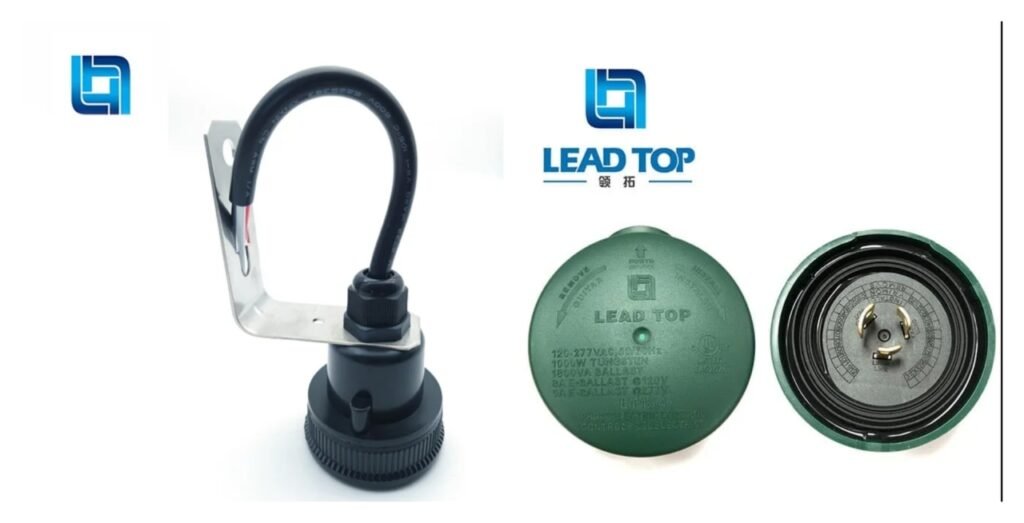
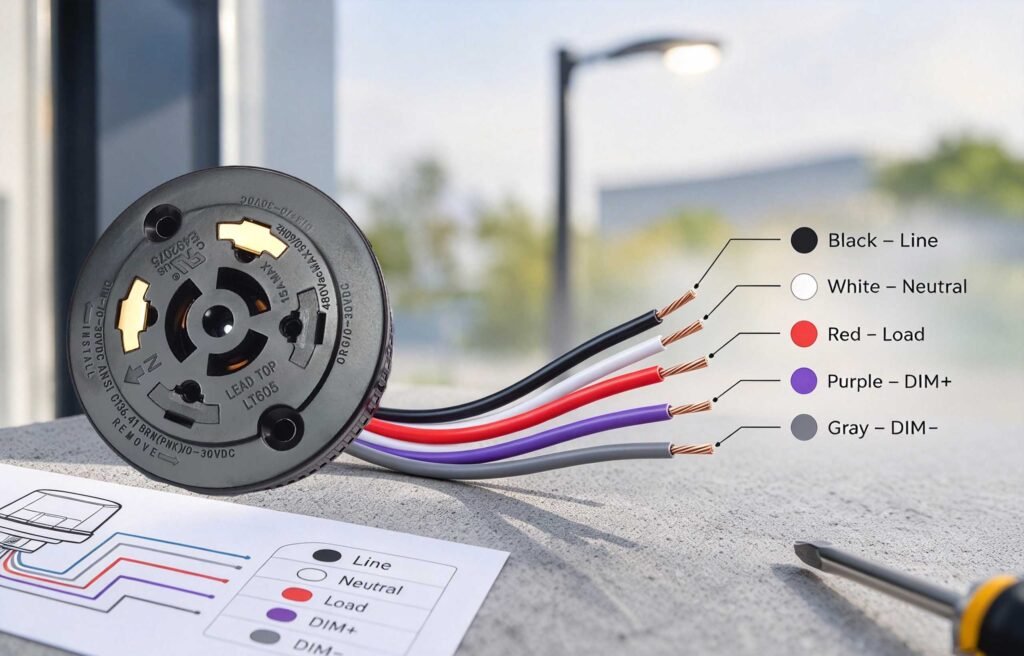
The recommended combination is the LT134 Twist-Lock Photocontrol with the LT615 ANSI-compatible receptacle. The LT134 complies with ANSI C136.10 and UL773. Its plug-in twist-lock design supports standardized outdoor lighting installation.
| Specification | LT134 Photocontrol | LT615 Receptacle |
| Type | Twist-lock photocontrol | NEMA 3-pin receptacle |
| Standard | ANSI C136.10 & UL773 | ANSI C136.10 & UL773 |
| Rated voltage | 120–277V | 0–480V |
| Applicable voltage | 105–305V | — |
| Rated load | 1000W / 1800VA | 15A / 1000W / 1800VA |
| Switching life | >15,000 operations | — |
| Operating temperature | — | -40°C to +70°C |
Why This Combination Works
The combination supports a practical maintenance model. Technicians can replace the photocontrol without changing the luminaire wiring. The LT134 also offers surge protection options up to 1,425J and IP66/IP67 protection options, depending on configuration.
Applications
It suits applications such as:
- Municipal street lighting
- Regional roadways
- Public plazas
- Parking areas
- Large LED retrofit programs
These features make standardized photocontrol hardware worth considering when a lighting authority is managing thousands of outdoor lighting points.
What Should Procurement Teams Standardize Before Ordering Thousands of Photocontrol Light Sensors?
The first step is to define one clear technical specification. ANSI C136.10 covers the physical and electrical interchangeability of locking-type photocell switches and mating receptacles.
Procurement teams should check these six points:
- Electrical compatibility: Match voltage, load, and LED driver requirements.
- Receptacle compatibility: Confirm the photocontrol and socket meet the required interface standard.
- Switching life: Compare rated operating cycles for long-term use.
- Outdoor protection: Check IP rating, temperature range, humidity, and surge protection.
- Batch consistency: Confirm stable specifications and quality across repeated deliveries.
- Spare-parts strategy: Select a standard replacement model and maintain planned inventory.
For example, Lead-Top’s LT134 offers 105–305V applicability, IP66/IP67 options, and more than 15,000 ON/OFF operations at rated load.
How Can Standardized Photosensors Reduce Streetlight Maintenance?
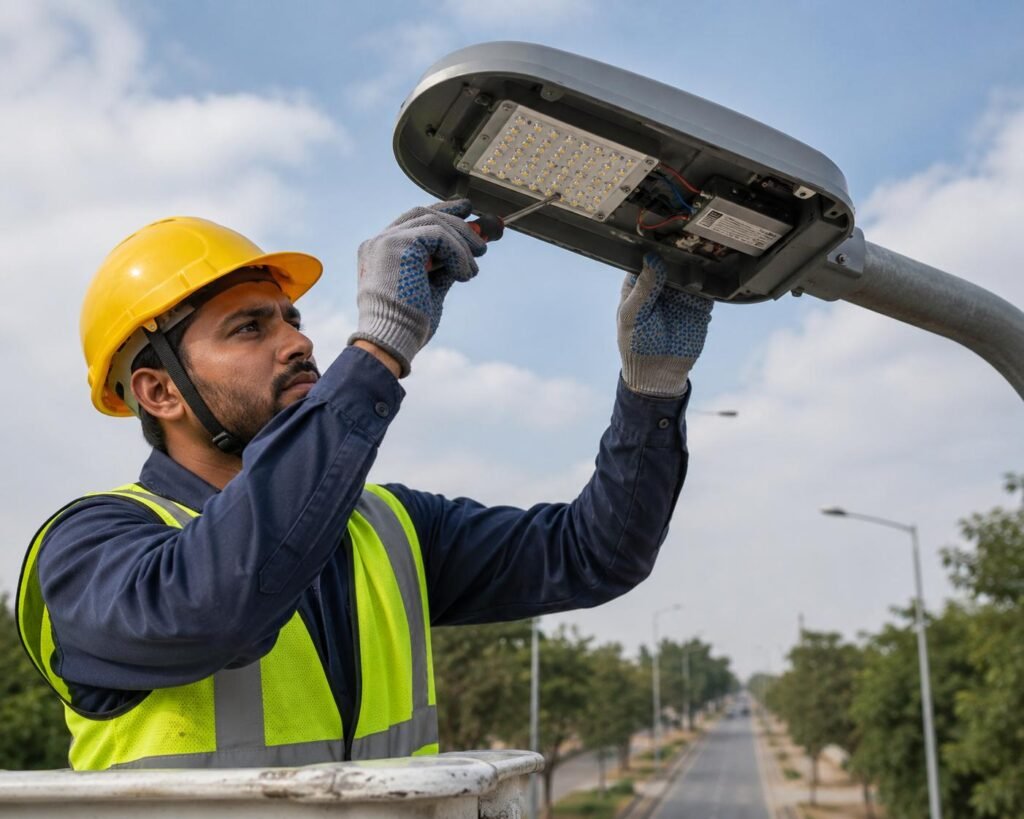
The standardization helps after installation. It gives technicians a consistent replacement process. They can carry fewer photocell lighting sensor models and follow the same installation procedure across multiple locations. This can simplify inventory and reduce compatibility checks.
The LT615 receptacle stands out in this regard. It operates within extended temperature ranges and complies with multiple international certifications.
For a large LED lighting retrofit, this consistency matters. A standardized photocontrol and receptacle combination can help reduce maintenance complexity as the number of lighting points continues to grow.
Should Large LED Retrofit Projects Prepare for Future Smart Lighting?
Not always. A project of Hidrandina’s scale can remain in service for years. Procurement teams should therefore consider whether future upgrades may include dimming, remote monitoring, or centralized control. The right interface can make later upgrades easier. It can also reduce the need for major infrastructure changes.
A practical approach is to assess future requirements before selecting the control hardware:
- Dimming compatibility
- Smart-control readiness
- Remote monitoring requirements
- Controller and receptacle compatibility
- Upgrade options
Hidrandina operates across Áncash, La Libertad, and part of Cajamarca, so infrastructure consistency has added value across its service territory.
What Can Peru’s Hidrandina Project Teach Other Municipal Lighting Programs?
The main lesson is that LED modernization is also a procurement and maintenance exercise. Hidrandina’s network covers three regions and includes a large number of public lighting points.
Large programs should therefore plan beyond the luminaire. Procurement teams should define standards for:
- Photocontrols and receptacles
- Electrical compatibility
- Spare parts
- Product consistency
- Long-term maintenance
- Future control requirements
Hidrandina’s own 2024 program identified improved public-lighting quality and public safety as objectives for LED installations. This shows why component reliability should remain part of the modernization strategy.
| Project Requirement | Photocontrol Feature to Consider | Procurement Benefit |
| Large number of lighting points | Standardized twist-lock design | Easier deployment |
| Outdoor exposure | UV-resistant housing | Better field suitability |
| LED loads | Zero-crossing switching | Helps manage inrush current |
| Long-term operation | High switching life | Fewer replacement events |
| Regional maintenance | Common replacement model | Simpler spare inventory |
| Future upgrades | Compatible control interface | Easier modernization |
FAQs
Why Is Photocontrol Standardization Important for Large LED Projects?
Because it can simplify installation, replacement, and inventory. ANSI C136.10 covers the physical and electrical interchangeability of locking-type light sensor photocell switches and mating receptacles.
What Should Engineers Check Before Ordering Photocontrols in Bulk?
They should confirm:
- Voltage and load compatibility.
- Photocontrol and receptacle compatibility.
- Switching life.
- Environmental protection.
- Applicable standards and certifications.
- Supplier production consistency.
- Spare parts availability.
How Can Municipalities Reduce Street Light Maintenance Costs?
Standardized components lower the number of models technicians need to manage. They can use consistent replacement procedures and keep fewer spare types in inventory. This becomes more valuable as LED networks expand across multiple regions.
Should a Large LED Retrofit Prepare for Future Smart Lighting?
It is worth considering. Future requirements may include dimming, monitoring, or connected lighting. ANSI C136.35 addresses compatibility for devices mounted into locking-type photocontrol receptacles for ancillary power.
Final Words
Hidrandina’s rapid LED expansion shows why large lighting projects must plan beyond the luminaire. Standardized photocontrols can simplify installation and procurement across a growing network. Lead-Top offers reliable photocontrols and NEMA receptacles for municipal and large-scale outdoor lighting projects. Its LT134 and related solutions can support demanding retrofit requirements. If you are planning a large LED retrofit in Peru, talk to Lead-Top about a photocontrol solution suited to your project.


 English
 Portuguese (Brazil)
 Spanish
 Russian
 Dutch
Dutch Japanese
 Portuguese (Portugal)