Nos projetos atuais de iluminação pública, urbana e de infraestrutura, os componentes de controle evoluíram muito além de meros acessórios intercambiáveis. Agora, são elementos essenciais do sistema, que determinam se um projeto obtém aprovação regulatória, confiabilidade a longo prazo e eficiência operacional.
Os sistemas de iluminação contemporâneos operam em diversos ambientes — ruas metropolitanas, rodovias, setores industriais, regiões costeiras e redes de cidades inteligentes. Em cada configuração, os controles de iluminação devem se integrar perfeitamente com as luminárias, os sistemas de energia e os padrões de comunicação. Essa evolução elevou a importância do ambiente de controle de iluminação, particularmente de componentes como... fotocélulas, soquetes e interfaces.
Como resultado, fabricantes de sistemas de iluminação, fornecedores de EPC (Engenharia, Aquisição e Construção) e proprietários de ativos exigem cada vez mais uma abordagem integrada para componentes de controle de iluminação — uma que conecte personalização, conformidade e transporte em um fluxo de trabalho único e sincronizado. Esse modelo coeso reduz a fragmentação, minimiza os riscos e acelera a execução do projeto.
Uma metodologia completa não significa simplesmente comprar várias peças de um único fornecedor. Significa lidar com personalização, aprovação, autenticação e logística como um processo único e ininterrupto, em vez de considerá-las tarefas de aquisição isoladas.
Tradicionalmente, os projetos de iluminação obtinham fotocélulas de um fornecedor, soquetes de outro e acessórios de um terceiro — todos com especificações, certificações e prazos de entrega diferentes. Esse modelo fragmentado frequentemente leva a interfaces incompatíveis, testes duplicados, adiamentos de aprovações e maior risco ao longo da vida útil do produto.
Em contrapartida, uma abordagem integrada garante que todos os componentes de controle de iluminação sejam projetados, autenticados e transportados como um sistema compreensível, suportando tanto a compatibilidade mecânica quanto a aceitação pelos órgãos de supervisão.

Por que a personalização começa com a compatibilidade do sistema?
Cada projeto de iluminação é diferente. As diferenças na geometria das luminárias, no projeto de energia, na orientação da instalação, nas condições climáticas e nas normas locais fazem com que os componentes de controle padronizados raramente tragam resultados ideais.
Uma personalização eficaz começa com a compatibilidade do sistema, garantindo que os componentes de controle se ajustem à luminária — e não o contrário.
Um procedimento de personalização controlada normalmente compreende:
Configuração de tensão
Os sistemas de iluminação podem precisar de:
- Opções de ampla faixa de tensão CA, como 120–277 V ou 120–480 V, para estruturas alimentadas pela rede elétrica.
- Projetos de baixa tensão CC para sistemas de iluminação solar ou híbrida.
O ajuste oportuno da tensão evita remodelações, elimina alterações inseguras e garante um desempenho elétrico consistente em todos os ambientes de trabalho.
configurações de limite de LUX
As configurações de luz ambiente variam consideravelmente de acordo com a geografia, a densidade metropolitana e o clima. A personalização dos limites de LIGADO/DESLIGADO permite que os fotocontroladores:
- Reduzir horas de funcionamento desnecessárias
- Cumprir as metas indígenas de economia de energia
- Evite alterações incorretas causadas por reflexos ou configurações climáticas.
A competência dos fabricantes de fotocélulas não é medida apenas pelo hardware, mas também pela precisão com que o comportamento de comutação pode ser ajustado.
Adaptação mecânica e de interface
A compatibilidade mecânica é constantemente subestimada. Os componentes de controle devem estar alinhados com:
- ANSI Interfaces C136.10 ou C136.41
- Padrões do Livro 18 de Zhaga
- Orientação da fiação e direção de montagem
Sem esse alinhamento, os erros de conexão e a necessidade de retrabalho no campo aumentam dramaticamente — especialmente em instalações extensas.

Personalização visual e de identificação
A cor, os rótulos, os logotipos e as marcações da carcaça podem parecer meramente estéticos, mas desempenham um papel importante:
- Constância da marca para luminárias OEM
- Documentação clara durante a instalação e manutenção.
- Concordância com a certificação e as inspeções do projeto.
A personalização visual controlada desde o início evita alterações dispendiosas de última hora.
Como um único portfólio pode suportar múltiplas funções de controle?
A aquisição frequente de componentes de controle de diferentes fornecedores gera inadequações não previstas. As especificações podem estar tecnicamente em conformidade com os critérios, mas ainda assim não funcionarem de forma otimizada em conjunto.
Um portfólio completo normalmente inclui:
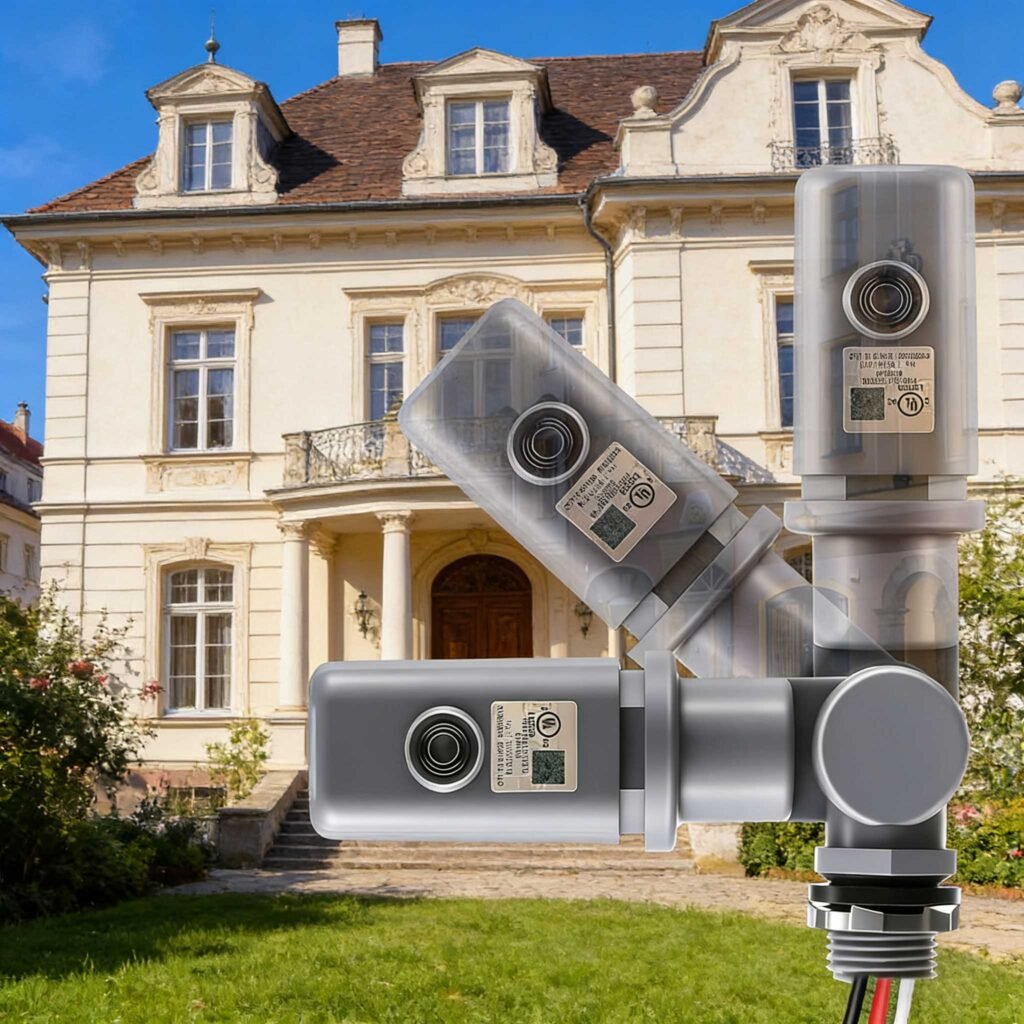
Fotocontroles
Os fotocontroladores — térmicos ou eletrônicos — oferecem funcionamento programado do anoitecer ao amanhecer. Em sistemas contemporâneos, eles devem suportar:
- Compatibilidade com LED
- Lógica de comutação constante
- Proteção contra surtos para ambientes externos
É aqui que a escolha do fornecedor certo de fotocontrole afeta diretamente o tempo de atividade do sistema e os custos de manutenção.
Tomadas (ANSI / Zhaga)
ANSI e Zhaga Os receptáculos não são conectores reflexivos. Eles descrevem:
- Segurança elétrica
- estabilidade mecânica
- Caminhos de atualização para controles futuros
O uso de tomadas homogêneas e compatíveis com o sistema simplifica a manutenção e facilita futuras modernizações inteligentes.
Capacitores de curto-circuito
Os capacitores de curto-circuito permitem a operação transitória durante testes, comissionamento e solução de problemas. Quando projetados como parte do mesmo conjunto, eles garantem:
- Comportamento elétrico verdadeiro
- Operação transitória inofensiva
- Ciclos de comissionamento mais rápidos
Em conjunto, esses componentes formam um sistema de controle interconectado em vez de peças isoladas.
Como a conformidade é incorporada ao processo de design?
Para projetos de infraestrutura e comunitários, a conformidade determina se um produto pode sequer ser considerado. Uma metodologia integrada incorpora a conformidade desde a fase de projeto, e não como um mero item a ser verificado no final.
Design em conformidade com as normas
Normas como ANSI, UL, As normas CE, RoHS e REACH afetam:
- Escolha do material
- Distâncias de fuga e de distância livre
- Resistência ecológica
Projetar levando em consideração essas necessidades evita reformas em estágios avançados e decepções nos testes.
Componentes prontos para certificação
Os componentes prontos para certificação são fabricados de forma a antecipar os testes e a aprovação. Isso é importante para projetos que abrangem múltiplas áreas, onde as perspectivas de controle diferem.
Os projetos de fotocélulas para iluminação pública necessitam cada vez mais de consenso multirregional para atender às normas internacionais.
Suporte completo à documentação
Arquivos técnicos completos — incluindo relatórios de testes, declarações e fichas técnicas — são vitais para:
- Apresentação de propostas
- Desembaraço alfandegário
- Auditorias de terceiros
Um fornecedor que oferece soluções completas garante a consistência da documentação em todos os componentes de controle.
Por que a amostragem, validação e entrega simplificadas são tão importantes quanto o projeto?
Mesmo o componente mais bem projetado falha se chegar atrasado ou não puder ser autenticado rapidamente. Um modelo integrado simplifica toda a etapa de execução.
Como a amostragem rápida reduz o risco?
A amostragem rápida permite que as equipes de produção:
- Validar a adequação e o desempenho em tempo hábil
- Realizar testes ecológicos e elétricos.
- Identificar problemas antes da produção em massa
Isto é particularmente importante para projetos ao ar livre com cronogramas EPC apertados.
Por que a produção sincronizada é importante?
Quando os componentes são fabricados sob um plano coeso, a consistência da qualidade aumenta. A padronização dos lotes diminui a discrepância e agiliza a inspeção de recebimento.
Como a logística harmonizada aumenta a previsibilidade?
Em vez de lidar com várias remessas de diferentes fornecedores, uma tática centralizada alinha a logística com os marcos do projeto, diminuindo atrasos e custos administrativos.
Como uma abordagem unificada reduz o risco ao longo do ciclo de vida do projeto?
Os componentes de controle influenciam cada etapa de um projeto de iluminação — desde a instalação até o funcionamento duradouro.
Uma abordagem unificada ajuda as equipes:
| Área Operacional | Como uma abordagem unificada ajuda as equipes |
| Qualidade da Instalação | Reduz erros de montagem, garantindo total compatibilidade entre os componentes. |
| Comissionamento | Reduz o tempo de comissionamento por meio de componentes pré-compatíveis e interoperáveis. |
| Manutenção | Elimina os requisitos contínuos de manutenção e a exposição relacionada à garantia. |
| Confiabilidade do sistema | Aumenta a estabilidade do sistema e o desempenho geral. |
Os componentes de controle de iluminação não são apenas hardware; quando mal combinados, multiplicam os riscos operacionais.
À medida que os mercados de iluminação se tornam mais controlados e sensíveis ao tempo, a complexidade se transforma em obrigação. Uma abordagem integrada transforma a complexidade em clareza, alinhando:
- Personalização de acordo com as necessidades do sistema
- Aquiescência às expectativas governantes
- Entrega com cronogramas de projeto
Em vez de gerenciar várias interfaces e documentos, as equipes de projeto ganham um fluxo de trabalho único e centralizado.
Conclusão: A simplicidade é uma vantagem competitiva?
Em um mercado de iluminação cada vez mais controlado e dinâmico, o sucesso depende de muito mais do que a escolha de componentes individuais de alta qualidade. À medida que os controles inteligentes, os requisitos de certificação e os cronogramas de projetos se tornam mais complexos, a complexidade pode rapidamente se transformar em risco. É por isso que a simplicidade se tornou uma verdadeira vantagem competitiva para fabricantes de iluminação, fornecedores de EPC (Engenharia, Aquisição e Construção) e proprietários de projetos.
Uma abordagem centralizada para componentes de controle de iluminação transforma o fornecimento fragmentado em um processo integrado e controlável. Ao garantir a compatibilidade entre dispositivos de controle, interfaces e acessórios, essa metodologia reduz erros de conexão, diminui o tempo de comissionamento e permite uma implantação mais rápida do projeto. Também simplifica a documentação e a certificação, resultando em aprovações regulatórias mais ágeis e menos atrasos durante inspeções ou entregas.
Da personalização à conformidade, uma estratégia de controle estruturada e integrada aumenta tanto a execução a curto prazo quanto o desempenho a longo prazo. Como resultado, os sistemas de iluminação funcionam bem desde o primeiro dia e continuam a agregar valor, eficiência e confiabilidade por muitos anos.
O sucesso em projetos de iluminação contemporâneos depende de quão bem os componentes de controle são incorporados, e não apenas do desempenho individual do produto.
Ao adotar uma abordagem integrada para componentes de controle de iluminação, as organizações alcançam:
| Área de Resultados | Resultado de uma abordagem de controle de iluminação integrada |
| Implantação do projeto | Alocação de projetos mais rápida e eficiente |
| Aprovação regulatória | Procedimentos de aprovação e verificação mais ágeis e previsíveis |
| Risco Operacional | Resumo dos riscos operacionais, de incorporação e de aquiescência |
| Desempenho do sistema | Melhor desempenho duradouro e maior confiabilidade do sistema. |
Da personalização à conformidade, uma estratégia integrada garante que os sistemas de iluminação funcionem de forma confiável desde o primeiro dia e continuem a gerar valor por muitos anos.
Procurando uma solução de controle simplificada?
Se sua equipe gerencia vários projetos de iluminação em diferentes regiões ou com diferentes padrões, adotar uma abordagem centralizada pode reduzir significativamente a complexidade e os riscos.
O suporte normalmente inclui:
- Seleção de produtos baseada em aplicações
- Opções de personalização e amostras rápidas
- Assistência com certificação e documentação
Num mercado onde tempo, conformidade e confiabilidade definem o sucesso, a simplicidade não é apenas conveniente — é estratégica.




 Portuguese (Portugal)
  English
  Portuguese (Brazil)
  Spanish
  Russian
  Dutch
Dutch  Japanese