Introduction
Eisenstadt, a city in Austria’s Burgenland region, just ran a pilot project worth paying attention to. The setup involved demand-based highway lighting deployed at two motorway interchanges along the S31 expressway.
Here’s how it worked. Sensors detected approaching vehicles, and the lighting adjusted brightness automatically in response. No traffic nearby, the lights sat at a low standby level. A car approaches, the brightness jumps up to meet safety standards.
The results were significant. Weekly electricity consumption at the tested junction dropped from 78 kWh to just 23 kWh, a 70.5 percent reduction.
The lights weren’t dimmer when it mattered. They just stopped running at full output when nothing was there to see them. It’s a strong early example of what smart highway lighting looks like once sensors and controls actually work together.
As more European municipalities move past simple LED replacements, this is where things are heading. Austria adaptive lighting projects like Eisenstadt’s point toward the next real stage of smart outdoor lighting, one built on sensors and standardized control, not just efficient bulbs.

Why Traditional Highway Lighting Wastes Energy
Highways behave differently than city streets. Traffic on an urban road tends to stay fairly steady through the evening. Highway interchanges don’t work that way at all.
Commuter traffic spikes hard in the morning and evening. Then, late at night, volume drops off to almost nothing for hours at a stretch. Traditional highway lighting doesn’t account for any of this. It just runs.
Keeping every luminaire at full brightness all night, regardless of whether a single car passes through, creates a handful of predictable problems.
- Unnecessary energy consumption tops the list
- Higher operating costs follow directly from that waste
- Luminaire lifespan takes a hit as well, as constant full-brightness operation puts more strain on components over time
- All of that wasted electricity translates into higher carbon emissions
Adaptive lighting tackles this head-on. Instead of running blind, it adjusts illumination only when traffic is actually detected, which is exactly what made Eisenstadt’s numbers possible.
Getting there starts with better outdoor lighting control, not necessarily brand-new highway LED lighting fixtures, since Eisenstadt’s own luminaires stayed the same and only the control layer changed.
How Adaptive Lighting Improves Safety and Energy Efficiency
The Eisenstadt pilot shows how intelligent control balances two goals that used to feel like a tradeoff. Safety on one side. Energy savings on the other.
A few operational features made this work.
- Low standby brightness kicks in during periods with little or no traffic, keeping the road lit at a base level without wasting power
- Automatic brightness increase happens the moment sensors detect vehicles approaching
- Smooth dimming follows once vehicles have passed through, rather than snapping back to standby instantly, the system tapers off gradually
- Continuous operation runs underneath all of this. The lighting never actually switches off completely, so visibility never disappears at any point. It just scales.
This approach cuts electricity consumption dramatically while keeping driving conditions genuinely safe. That combination is the whole point of adaptive street lighting, and Eisenstadt’s measured results back it up with real numbers, not just a theoretical estimate.
Why Standardized Control Interfaces Matter
Adaptive lighting takes more than bolting a sensor onto an existing fixture. It requires a standardized control architecture. One where different components from different manufacturers can actually work together without compatibility headaches.
For municipal engineers evaluating a project like this, a few considerations stand out.
- Future compatibility with smart lighting systems matters a lot, since a network built on proprietary, closed hardware becomes difficult to expand or upgrade later
- Easy installation and replacement keeps ongoing costs down
- Support for DALI communication is essential for any project involving dimming
- DALI lighting control gives engineers precise, reliable digital control over brightness levels
- Scalability for future upgrades rounds out the list
A junction equipped today with a handful of sensors should be able to expand later. Whether that means adding more sensors, connecting to a broader smart road lighting network, or integrating new monitoring features.
Choosing standardized interfaces now, rather than settling for whatever’s cheapest at the time. It can significantly reduce future maintenance and retrofit costs down the line. A well-chosen Zhaga connector, paired with a proper DALI controller, is often the difference between smart lighting infrastructure that scales.
Recommended Lead-Top Solution for Adaptive Road Lighting
European Smart Street Lighting Solution
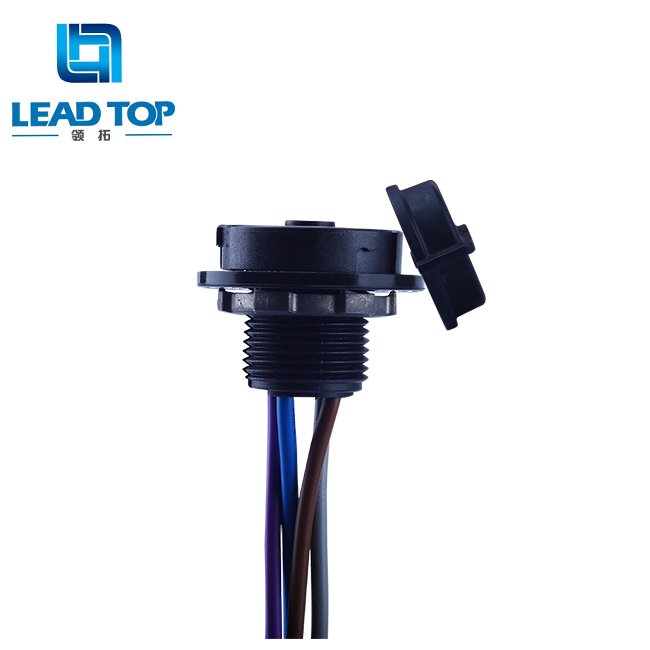
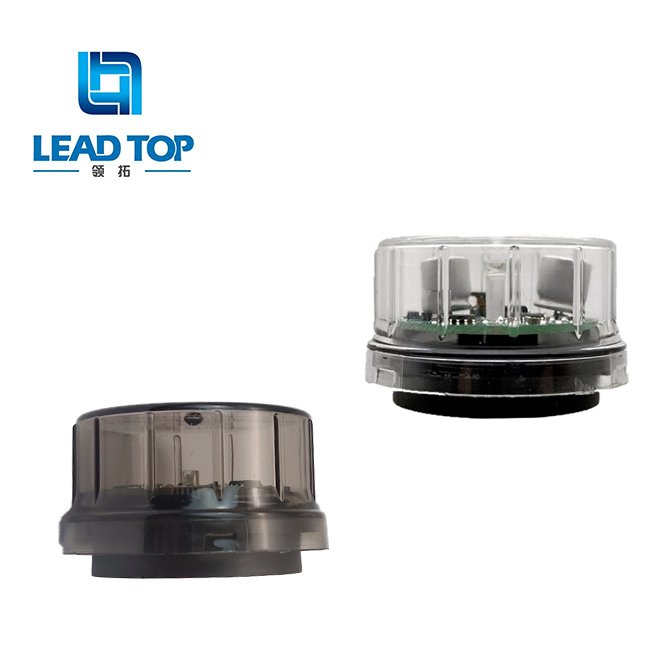
| Product | Standard | Key Benefit |
| LT600 Zhaga Book 18 Connector | Zhaga Book 18 | Standardized interface for integrating smart lighting components |
| LT6002 DALI Controller | DALI | Reliable communication and dimming control for outdoor systems |
Key benefits: Zhaga Book 18 compliant, supports DALI communication, easy installation and future upgrades, compact design for outdoor luminaires, ready for smart city applications.
Suitable applications: Highway interchanges, smart roadway lighting, adaptive lighting projects, intelligent transportation infrastructure, municipal smart lighting systems.
Engineering Considerations Before Deploying Adaptive Lighting
Planning an adaptive lighting project means looking well beyond the luminaires themselves. A handful of factors determine whether the system actually delivers the results Eisenstadt achieved.
- Reliable control interfaces come first, as sensors and controllers need a stable, standardized way to communicate
- Compatible lighting controllers matter just as much. Mismatched hardware creates exactly the kind of integration headaches standardized interfaces are meant to avoid
- Flexible dimming capability determines how finely a system can adjust output
- Long-term outdoor durability can’t be an afterthought, as highway interchange lighting runs in tough conditions, so components need to hold up over years of continuous use
- Easy maintenance and replacement rounds things out
A system that’s hard to service ends up costing more over its lifetime, no matter how much energy it saves on paper.
FAQ
What is adaptive highway lighting?
Adaptive highway lighting automatically adjusts brightness based on real-time traffic conditions. Improving energy efficiency while maintaining road safety.
Why is Zhaga Book 18 important for smart lighting?
Zhaga Book 18 provides a standardized interface for lighting controllers and sensors. Making installation, replacement, future upgrades easier.
Why is DALI commonly used in adaptive lighting systems?
DALI enables digital communication between lighting controllers and luminaires. Supporting dimming, monitoring, intelligent lighting management.
Can adaptive lighting reduce maintenance costs?
Yes. Intelligent control systems can extend luminaire operating life, reduce unnecessary runtime, and simplify maintenance planning.
What lighting control solution is suitable for adaptive roadway projects?
A combination of the LT600 Zhaga Book 18 Connector and LT6002 DALI Controller provides a future-ready foundation for adaptive lighting and smart city infrastructure.
CTA
Build Future-Ready Adaptive Lighting with Lead-Top
As municipalities across Europe adopt adaptive lighting to improve energy efficiency and road safety, standardized lighting control components have become a key part of modern infrastructure.
Lead-Top’s LT600 Zhaga Book 18 Connector and LT6002 DALI Controller help lighting manufacturers, system integrators, and municipal contractors build reliable, scalable, and future-ready outdoor lighting solutions. Contact us to explore the right smart lighting control solution for your next project.
References:




 English
 Portuguese (Brazil)
 Spanish
 Russian
 Dutch
Dutch Japanese
 Portuguese (Portugal)