Most outdoor photoelectric sensors are designed for common 120–277V AC lighting systems. However, things work differently when a lighting system runs on DC power instead.
Solar street lights, battery fixtures, and some LED systems may use 12V, 24V, or 48V DC. These systems need a compatible low-voltage photocontrol to manage lighting automatically. The right voltage range depends on the system’s power architecture.
This guide explains:
- Where 12V, 24V, and 48V photocontrols are used
- How they work with different luminaires
- How to choose the right option for your application
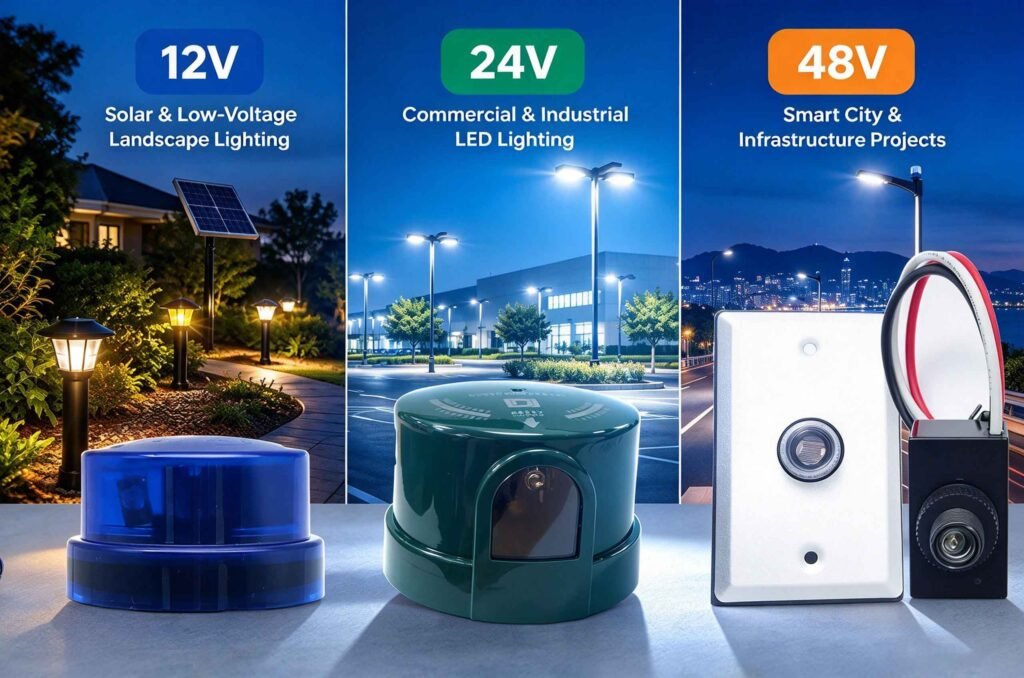
Why Are There Different Voltage Ranges For Photocontrols?
Electrical architecture is not the same for all outdoor lighting systems. Many street and commercial luminaires operate on 120–277V AC. So photocontrols are built for this common range.
Other projects use different system voltages. Solar and battery lighting can use DC power. Commercial systems may operate at higher AC voltages. This creates the need for different photocontrol ratings.
The key point is simple: the photocontrol voltage must match the lighting system.
- 120–277V: Common AC outdoor lighting
- 12/24VDC: Low-voltage DC systems
- 12–48VDC: Wider-range DC systems
- 347–480V: Higher-voltage applications
What Are the Advantages of Low-Voltage Photocell Switches?
These light sensors are designed for lighting systems that operate on DC power. They detect ambient light and automatically control the luminaire without requiring a conventional AC line-voltage photocontrol.
Their main advantages include:
Automatic Switching
The photocontrol receptacle responds to changing ambient light and switches the lighting system accordingly.
- DC system compatibility
- They can be used with:
- Compatible solar
- Battery-powered
- Low-voltage LED systems
Flexible voltage options
Depending on the model, DC photocontrols can support 12/24VDC or wider 12–48VDC systems.
Outdoor protection
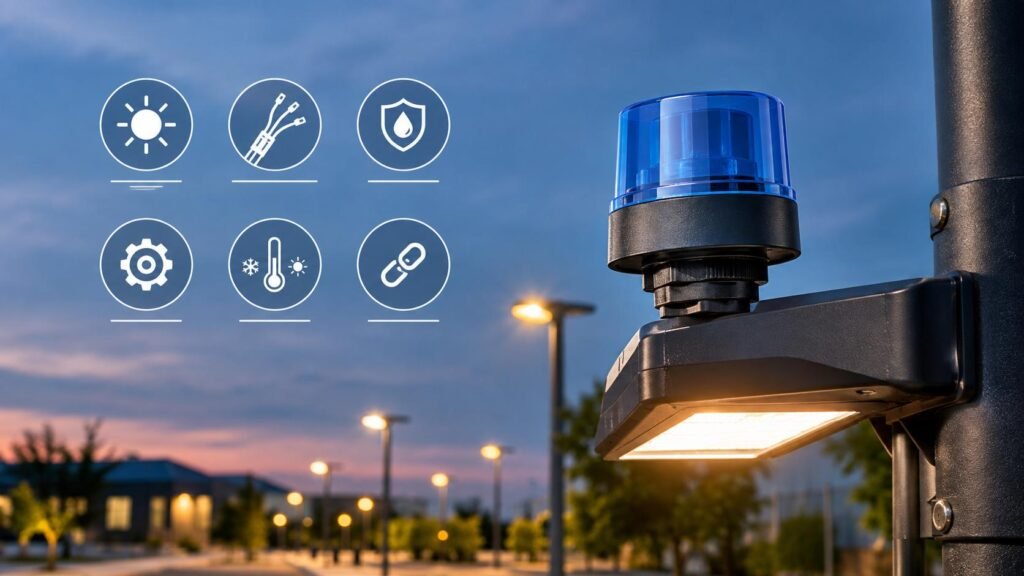
Its features support reliable outdoor operation. and include:
- IR-filtered sensing
- Time delay
- Weather-resistant enclosures
- Wide operating temperatures
Which Low-Voltage Photocontrols Does Lead Top Offer?
| Feature | LT104-DC | LT310A-DC |
| Type | DC Photocontrol | DC Wire-In Photocontrol |
| Rated Voltage | 12/24VDC | 12–48VDC |
| Applicable Voltage | — | 10–50VDC |
| Rated Load | — | 10A |
| Turn-On Level | 10–16 Lux | 10–16 Lux |
| Time Delay | 3–10 sec | 3–10 sec |
| Operating Temperature | −40°C to +70°C | −40°C to +70°C |
| ON/OFF Operations | >10,000 | >10,000 |
| IP Rating | IP65, optional IP66/IP67 | IP66 |
| Sensor | IR Filter Phototransistor | IR Filter Phototransistor |
| Power Consumption | ≤0.5W | ≤0.5W |
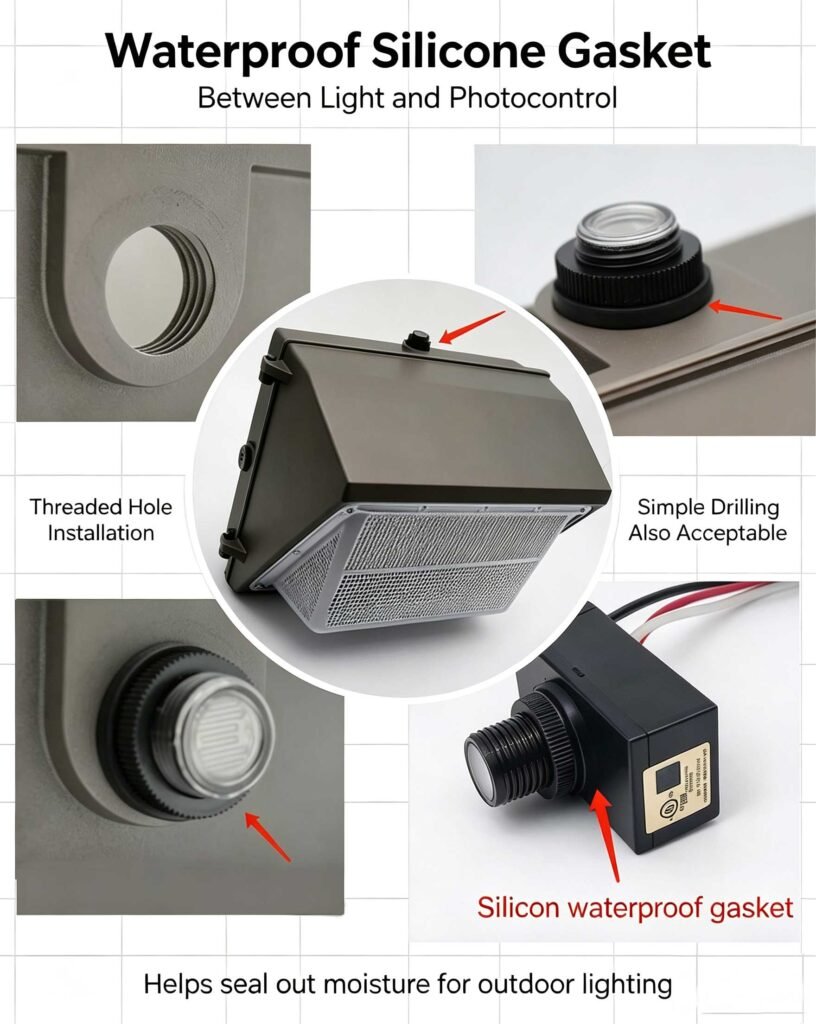
| Installation | Twist-Lock | Wire-In |
What Makes the LT104-DC a 12/24VDC Twist-Lock Photocontrol?

This product is designed for two voltage levels. It uses a twist-lock connection. This makes it suitable for compatible outdoor fixtures that already support this interface.
Lead Top lists it with 10–16 Lux turn-on levels and a 3–10 second time delay. It operates from −40°C to +70°C and supports more than 10,000 ON/OFF operations.
Its standard protection is IP65. However, IP66 and IP67 options are also available. The unit also uses an IR-filtered phototransistor and consumes < 0.5 W. Its anti-UV, impact-resistant cover supports outdoor use.
How Does the LT310A-DC Support 12–48VDC Lighting Systems?
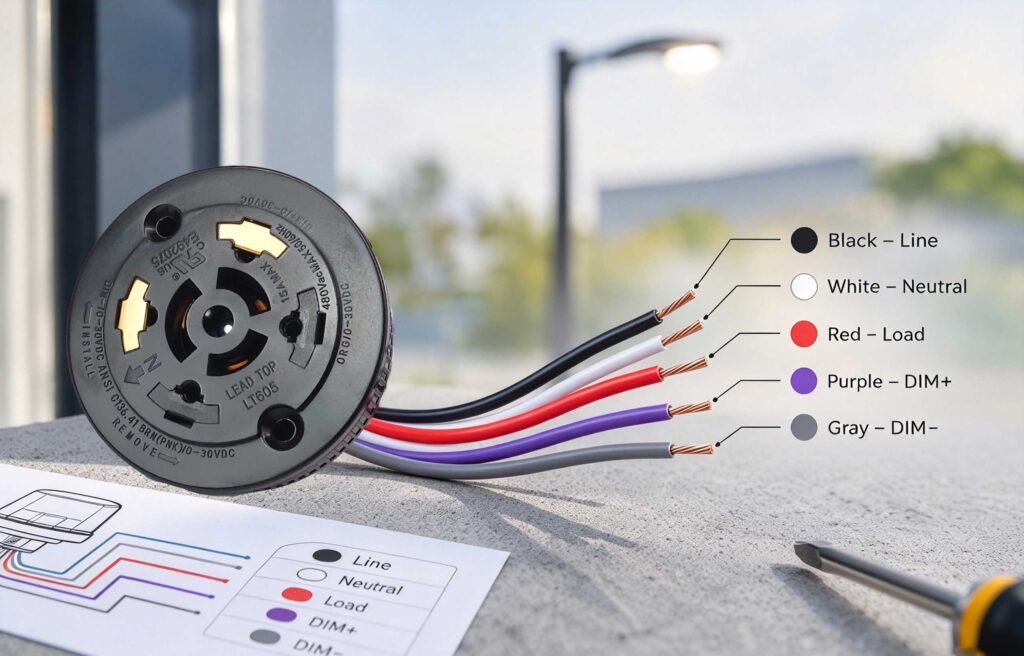
This photo switch sensor provides a wider voltage range. It is rated for 12–48VDC, with an applicable range of 10–50VDC. It uses a direct wire-in connection. This makes it suitable where a twist-lock interface is not required.
The photocontrol has a 10A rated load and uses a 10–16 Lux turn-on level. Its time delay is 3–10 seconds. It operates from −40°C to +70°C and supports more than 10,000 ON/OFF operations. The unit has IP66 protection, an IR-filtered phototransistor, and < 0.5 W consumption.
Lead Top lists it for solar, LED, HID, and induction lighting.
Where Are Low-Voltage Photocontrols Used?
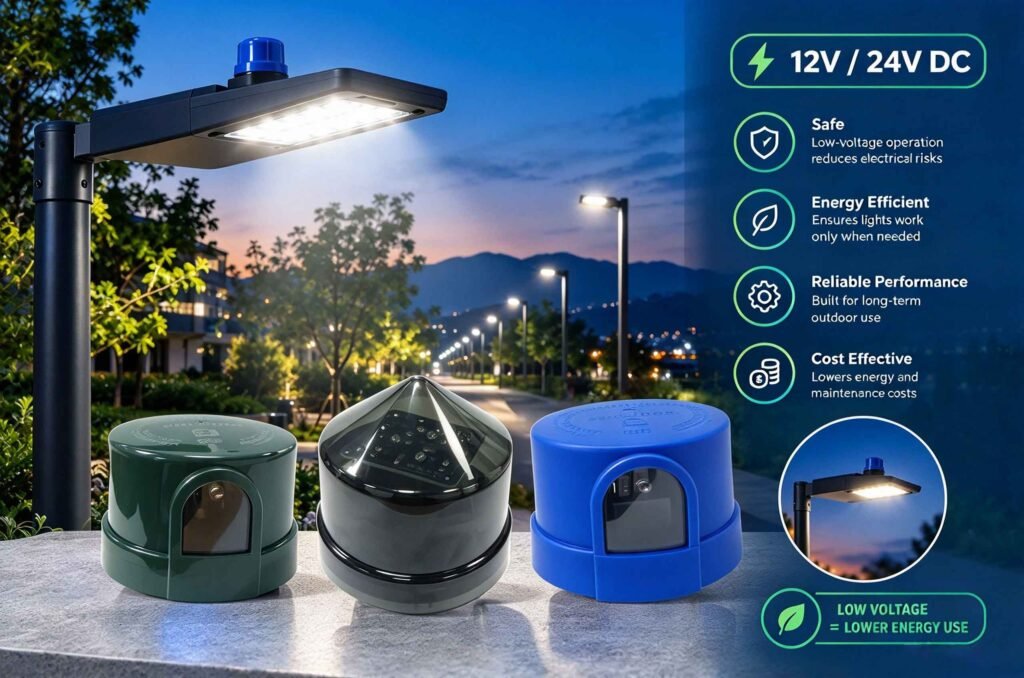
It is used where the lighting circuit operates on compatible DC voltage. Lead Top lists the LT104-DC for 12–24VDC applications, including outdoor LED, street, highway, parking lot, public-area, landscape, and barn lighting.
The LT310A-DC covers a wider 12–48VDC range. Lead Top specifies it for solar, LED, HID, and induction luminaires.
Common applications include:
- Solar street lighting
DC power from the battery system.
- Low-voltage LED lighting
Compatible DC LED fixtures.
- Battery lighting
Remote and off-grid systems.
- Outdoor lighting
- Roadways
- Parking lots
- Security
- Area lighting
How Do You Match a Limited Voltage Photocontrol With a Luminaire?
Start with the luminaire’s DC operating voltage. The voltage must fall within the photocontrol’s rated range. A 12V or 24V system can use the LT104-DC. Systems at 36V and 48V require extended options such as the LT310A-DC.
Then check the installation method:
| Check | Suitable Option |
| 12VDC | LT104-DC |
| 24VDC | LT104-DC or LT310A-DC |
| 36VDC | LT310A-DC |
| 48VDC | LT310A-DC |
| Twist-lock interface | LT104-DC |
| Direct wire-in | LT310A-DC |
Also verify the load and outdoor protection requirements before you begin installation.
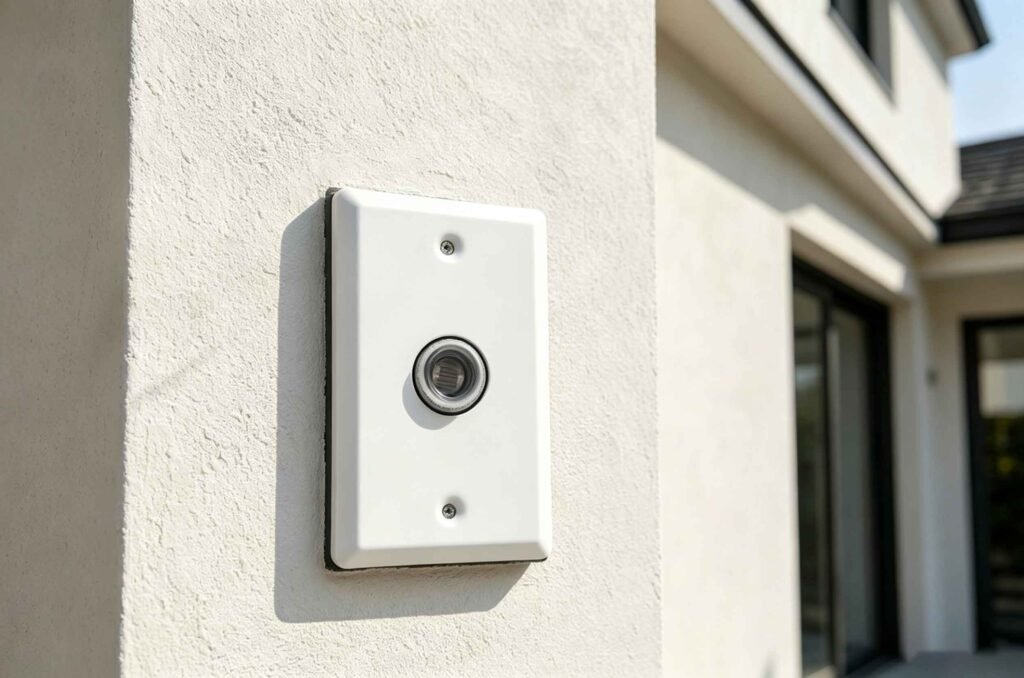
Why Do Limited Voltage Photocontrol and Lighting Combinations Work?
The answer depends on both the system voltage and installation method. For a 12VDC or 24VDC system with a compatible twist-lock interface, the LT104-DC is a direct fit. Lead Top lists it for outdoor LED, street, highway, parking lot, landscape, and other lighting applications.
For wider DC systems, the LT310A-DC supports 12–48VDC and uses wire-in installation. It is listed for solar, LED, HID, and induction luminaires.
| Lighting setup | Photocontrol |
| 12/24VDC + twist-lock | LT104-DC |
| 12–48VDC + wire-in | LT310A-DC |
| Solar + compatible DC luminaire | LT104-DC / LT310A-DC |
| Outdoor LED + DC supply | Match voltage and interface |
How Do You Choose Between the LT104-DC and LT310A-DC?
Start with the DC voltage. The LT104-DC is rated for 12–24VDC. It is suited to compatible twist-lock installations.
Need a wider voltage range? The LT310A-DC is rated for 12–48VDC, with an applicable range of 10–50VDC. It also has a 10A rated load and uses direct wire-in installation.
Use this simple decision path:
- 12V or 24V + twist-lock: LT104-DC
- 24V + direct wire-in: LT310A-DC
- 36V or 48V: LT310A-DC
- Direct wire-in + up to 10A: LT310A-DC
Always verify the luminaire voltage and connection method before installation.
FAQs
What Is a Limited Voltage Photocontrol?
This light-sensitive switch is designed for DC lighting systems, such as:
- 12V
- 24V
- 48V
Where Are 12V and 24V Photocontrols Used?
They are used in low-voltage outdoor lighting. This includes
- Solar
- Battery-powered
- LED
- Landscape
- Parking
- Security lighting systems
Can a Photocontrol Work With a 48VDC Lighting System?
Yes. A light sensor control such as the LT310A-DC supports 12–48VDC, with an applicable voltage range of 10–50VDC.
Why Are DC Photocontrols Used in Solar Lighting?
Solar lighting stores energy in batteries as DC power. A compatible DC photocontrol provides automatic switching for the lighting system.
What Is the Difference Between a 12/24VDC and a 12–48VDC Photocontrol?
The first one covers two common low-voltage levels. The second supports a wider range of DC lighting systems.
What Is the Difference Between Twist-Lock and Wire-In Photocontrols?
The former connects through a compatible receptacle, while the latter connects directly to the lighting circuit through wiring.
Does a Limited Voltage Photocontrol Need a NEMA Receptacle?
Not always. A twist-lock photocontrol requires a compatible receptacle. Similarly, a wire-in model such as the LT310A-DC uses direct wiring.
How Do You Choose the Right Photocontrol Voltage?
First, check the luminaire’s DC operating voltage. Then choose a photocontrol whose rated voltage range includes that voltage.
Can Low-Voltage Photocontrols Be Used With LED Luminaires?
Yes. These photocontrols can manage LED luminaires when the photocontrol voltage, the load, and the installation interface match the lighting system.
Final Words
Photocontrol voltage should match the lighting system, whether it uses 120–277V AC or 12–48V DC. Lead Top offers reliable photocontrol solutions, including the LT104-DC and LT310A-DC for low-voltage applications. Need the right photocontrol for your project? Contact Lead Top to discuss the suitable voltage range and installation type.

 English
 Portuguese (Brazil)
 Spanish
 Russian
 Dutch
 Japanese
 Portuguese (Portugal)