Choosing a Zhaga connector for outdoor lighting can raise an important question. What is it made of? The material affects how each component performs its intended role.
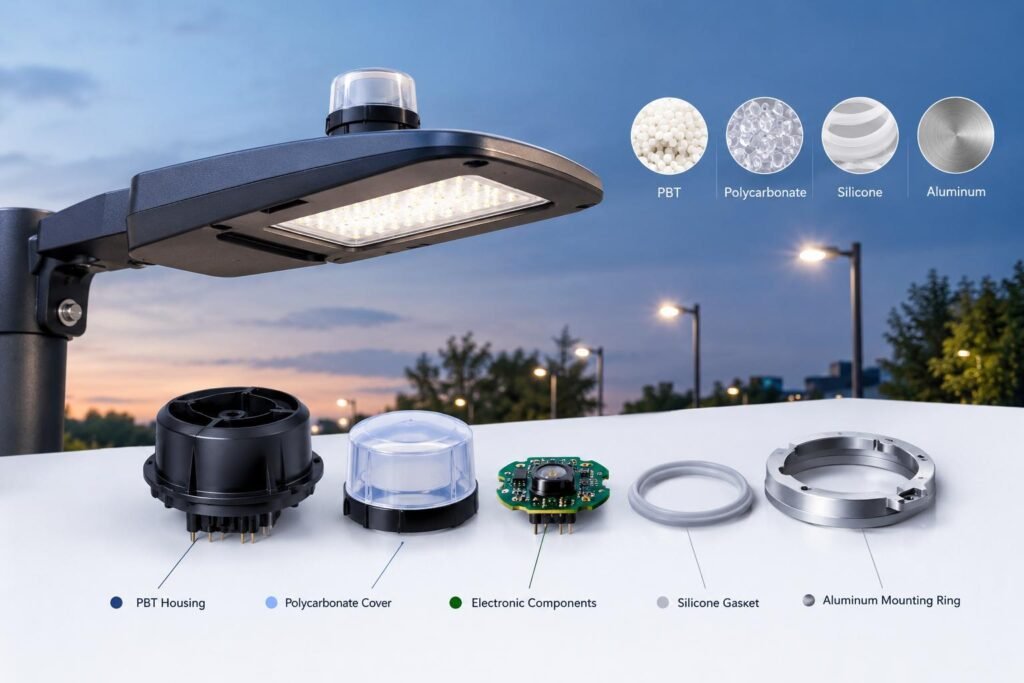
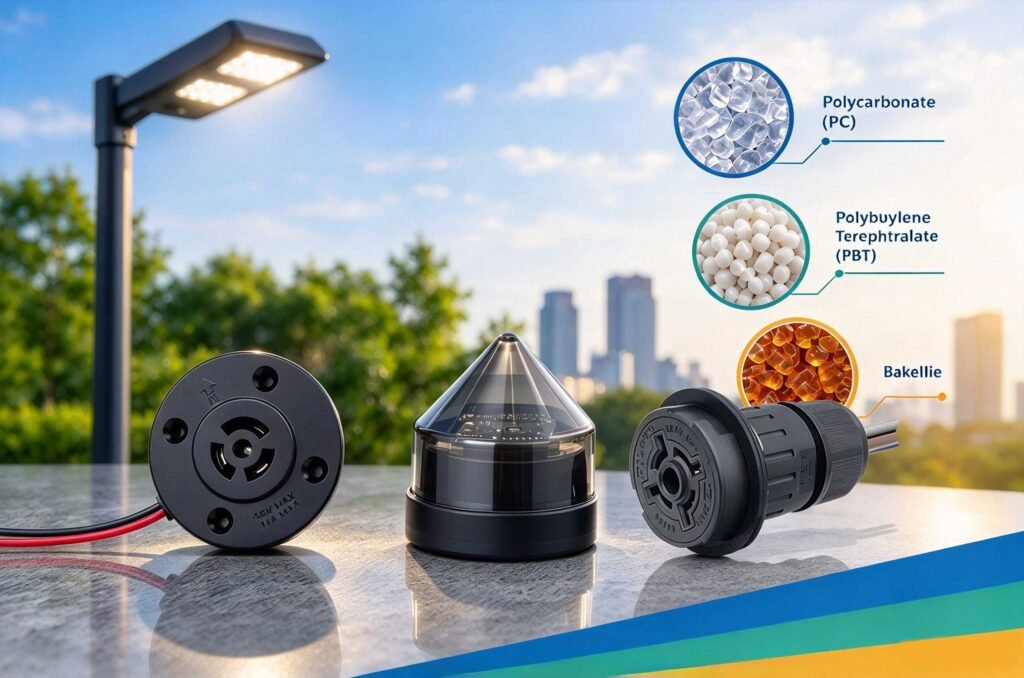
Lead Top uses different materials for different parts of its Zhaga products. PBT forms the main housing, while Polycarbonate is used for protective covers. Silicone supports sealing, and Aluminum provides the mounting structure.
This guide explains how these materials are used and what buyers should check when selecting an outdoor lighting connector.
Why Does Material Selection Matter in Zhaga Lighting Components?
Zhaga components sit directly on outdoor LED luminaires. So, their materials have specific jobs. The housing provides the main structure. The cover protects the internal sensor and electronics. The gasket supports the sealing structure. The mounting ring helps secure the receptacle to the luminaire.
This is why Zhaga connector materials should not be judged by the housing alone. Each part must match its function. Lead Top’s LT600 uses PBT for the housing, Silicone for the gasket, and Aluminum for the mounting ring. Its documented protection is IP66 and IK09.
A practical material check looks like this:
| Component | Material | Main role |
| Housing | PBT | Structural housing |
| Gasket | Silicone | Sealing structure |
| Mounting ring | Aluminum | Mechanical mounting |
Why Is PBT Used as the Main Housing Material in Lead Top Zhaga Products?
What Is PBT?
PBT stands for Polybutylene Terephthalate. In Lead Top’s specifications, it is identified as the high-temperature-resistant material used for Zhaga photocontrol receptacle bases and housings. This makes PBT a defined part of the product construction rather than a generic material claim.
PBT Working in the LT600 Zhaga Receptacle
The light sensor uses a PBT housing around its four-pin Zhaga interface. These housings are effective against high temperatures.
The receptacle is rated at 1.5A and 30V. It follows Zhaga Book 18. Its specified protection is IP66 and IK09.
Use Of PBT in the LT6001 and LT6002 Lighting Controllers
These photosensors use a PBT base with a Polycarbonate cover. The LT6001 specification lists:
- 12–24VDC
- IP66 protection
- Zhaga Book 18
It is intended for simple control and city management systems.
Why Is Polycarbonate Used for Zhaga Photo Switch Sensor Covers?
Because it protects the sensor inside a Zhaga light photocell sensor. Lead Top specifies anti-UV, impact-resistant Polycarbonate for the LT6001 cover. The cover sits above the internal sensor and electronic components. Its documented material properties address UV exposure and impact resistance.

PBT and Polycarbonate Work Together in One Zhaga Controller
The two materials serve different parts of the light sensor control. The PBT base provides the main lower structure. The Polycarbonate cover forms the protective upper section. This gives the controller a two-material construction rather than using one material for every component.
Applications of LT6001 and LT6002
Lead Top lists these Zhaga controllers for applications such as:
- LED luminaires requiring dusk-to-dawn control
- Street and area lighting
- Outdoor luminaires
- City management systems
How Does a Silicone Gasket Support the Outdoor Sealing Structure?
Role Of Silicone Gasket in the LT600 Zhaga Receptacle
The product specification of the LT600 outdoor light sensor switch identifies Silicone as the gasket material. The gasket forms part of the connector assembly around the housing interface. The LT600 is specified for outdoor use with an IP protection rating, so the gasket is a separate part of that overall sealing construction.
Buyers Should Consider the Gasket Separately From the Housing
The housing and gasket do different jobs. The PBT housing provides the main connector structure. The Silicone gasket supports the sealing interface. Therefore, buyers evaluating an outdoor lighting connector should check both materials and their construction.
| Component | Material | Function |
| Housing | High-temperature-resistant | PBT |
| Main structure | Gasket Silicone | Sealing interface |
This complete construction matters more than looking at the housing material alone.
Why Does the LT600 Use an Aluminum Mounting Ring?
The mounting ring forms part of the LT600 lighting control’s mechanical mounting structure. Lead Top specifies Aluminum for this ring. It works with the receptacle during installation. Its role is different from the PBT housing and Silicone gasket.
The housing supports the connector body. The gasket supports the sealing structure. The mounting ring supports physical installation. This separation gives each material a defined job within the LT600 assembly.

Available Mounting Options
Lead Top lists dedicated Zhaga mounting bases for different installation configurations. The available options include:
| Model | Base Diameter |
| LT600B-40 | 40 mm |
| LT600B-76 | 76 mm |
Matching covers are also available in different heights. Buyers should therefore check the required mounting diameter and configuration before selecting the receptacle accessories.
What Should Buyers Check When Selecting Materials for Outdoor Zhaga Connectors?
Start with the function of each component. The housing, cover, gasket, and mounting structure may use different materials. Each should match its intended role.
For an outdoor Zhaga connector, check:
- Housing material: Confirm the specified material and temperature resistance.
- Cover material: Check documented UV and impact properties where applicable.
- Gasket material: Verify the sealing material and related IP rating.
- Mounting material: Confirm the mechanical mounting structure.
- Protection: Check the specified IP and IK ratings.
- Interface: Verify Zhaga Book 18 compatibility and electrical ratings.
This approach helps buyers evaluate the complete connector construction instead of focusing on one material alone.
FAQs
What material is used for the Lead Top LT600 Zhaga connector housing?
PBT housing is used for the LT600 Zhaga receptacle structure. This material is highly effective at high temperatures.
What material is used for the LT600 Zhaga connector gasket?
The light sensor specification identifies Silicone as the gasket material for its sealing structure.
Why does the LT600 use an aluminum mounting ring?
The Aluminum mounting ring forms part of the LT600’s mechanical mounting structure for installation on outdoor luminaires.
What material is used for the LT6001 and LT6002 cover?
The controllers use an anti-UV, impact-resistant Polycarbonate cover with a PBT base.
What is the difference between the PBT base and Polycarbonate cover?
The PBT base provides the main structure, while the Polycarbonate cover protects the internal sensor and electronic components.
Does the LT600 Zhaga connector have IP66 protection?
Yes. The LT600 is specified with IP66 protection and an IK09 impact rating.
What should buyers check when selecting materials for outdoor Zhaga connectors?
Check:
- Housing
- Cover
- Gasket
- Mounting materials
- Specified IP/IK ratings
- Electrical ratings
- Zhaga Book 18 compatibility
The Bottom Line
Material selection gives each Zhaga component a clear role in outdoor lighting. PBT, Polycarbonate, Silicone, and Aluminum work together across the connector structure. For reliable Zhaga solutions and photocontrollers, Lead Top can provide suitable products, drawings, and material specifications for your project.

 English
 Portuguese (Brazil)
 Spanish
 Russian
 Dutch
Dutch Japanese
 Portuguese (Portugal)