Each material offers different properties. The right choice depends on where the material is used and what the component needs to withstand. Outdoor lighting controls face extreme weather conditions. These conditions make material selection important for long-term performance.
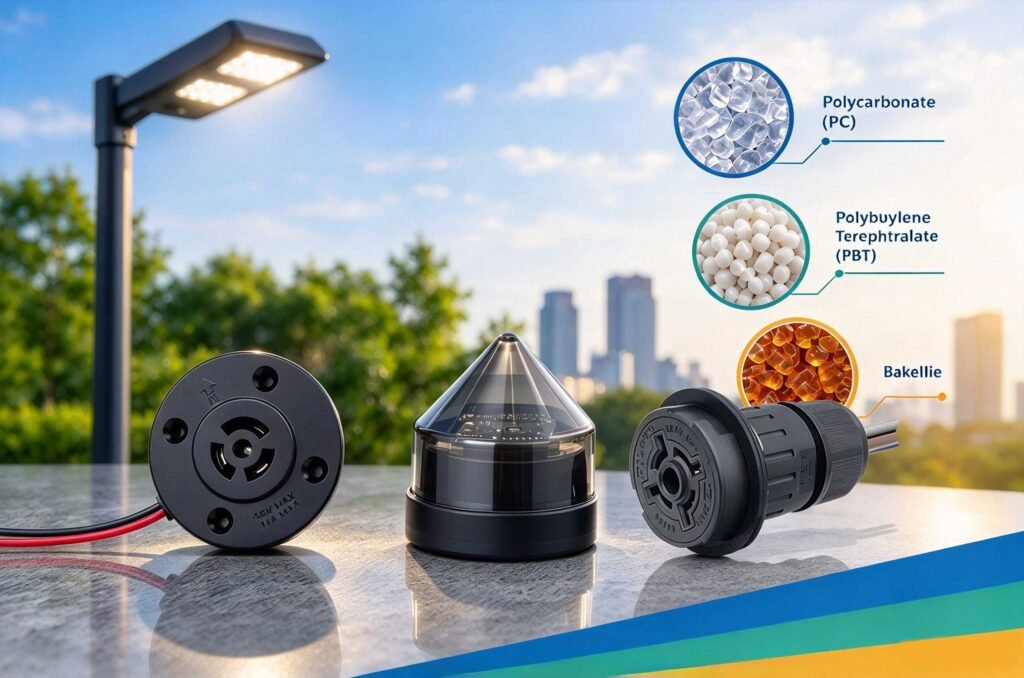
Lead Top uses Polycarbonate (PC) and Polybutylene Terephthalate (PBT) across different photocontrol and receptacle components. Bakelite provides a useful comparison as a traditional electrical insulating material.
This guide explains how these materials differ and what buyers should check before choosing a photocontrol.
Why Is PBT Used for Photocontrol Bases and Housings?
Polybutylene Terephthalate is used where a lighting control needs a stable and heat-resistant housing. Its role is different from the cover. The base supports electrical contacts and internal components. It also forms part of the product enclosure.
Lead Top specifies high-temperature-resistant PBT for several lighting control products. The LT100B NEMA base uses PBT and operates from -40°C to +70°C. The LT600 Zhaga connector also uses high-temperature-resistant PBT for its housing.
For buyers, the key checks include:
- Temperature resistance: Important for outdoor heat exposure.
- Dimensional stability: Helps maintain the housing’s designed fit.
- Electrical housing: Suitable material selection supports the component’s electrical design.
Where Does Bakelite Fit in Lighting Controls?
It’s a traditional phenolic thermosetting material used in electrical applications. It is known for:
- Electrical insulation
- Heat resistance
- Dimensional stability
These are not like thermoplastics. The cured thermosets do not simply soften and remelt when reheated. These properties make them suitable for specific electrical housings and insulating parts.
However, application requirements still matter. Prolonged outdoor UV exposure can also affect some phenolic materials, so outdoor suitability should be verified for the specific grade.
Importantly, Lead Top’s current product information does identify Bakelite in some receptacle housings, including the LT605, LT605R, LT635, and LT645. This makes Bakelite a documented material in Lead Top’s lighting-control product range, rather than only a historical comparison.
What Is the Difference Between PC, PBT, and Bakelite?
They all serve different roles in lighting controls.
- PC is known for toughness and transparency. It suits protective covers where impact resistance and light transmission matter.
- PBT is an engineering thermoplastic with strong electrical properties and good dimensional stability. These features make it useful for housings.
- Bakelite is a phenolic thermoset. It offers electrical insulation and heat resistance. Its outdoor suitability depends on the specific grade and application.
| Material | Typical Role | Key Consideration |
| PC | Cover | Impact and UV performance |
| PBT | Base or housing | Heat and dimensional stability |
| Bakelite | Electrical housing | Insulation and thermal behavior |
Why Can One Photocell Switch Use More Than One Material?
Because each part has a different job. A cover needs protection from impact and outdoor exposure. A base needs stable support for electrical contacts and internal components.
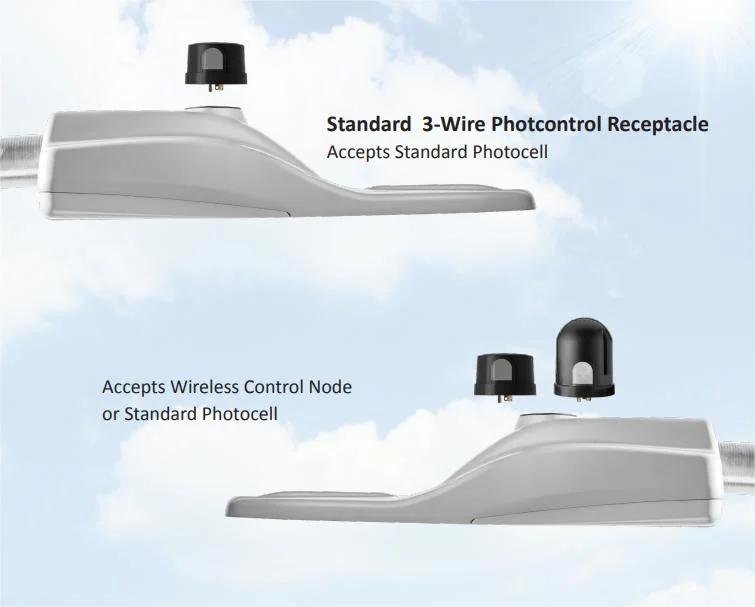
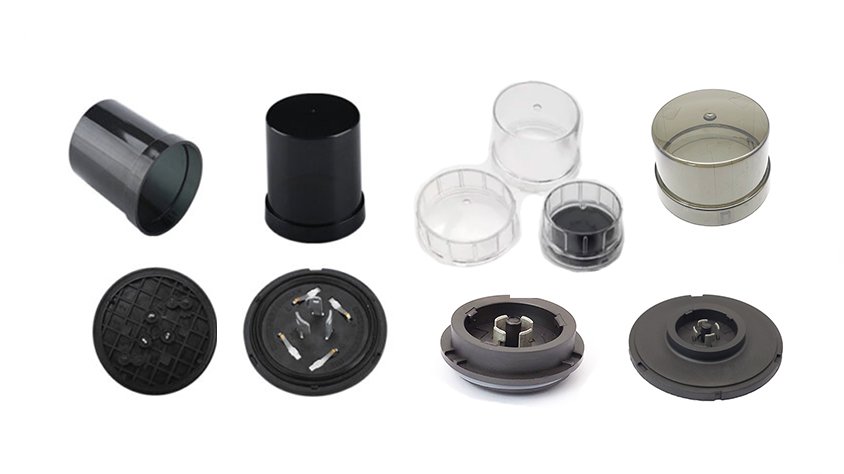
Lead Top’s NEMA photocontrols are built from a base, PCB electronic circuit, and cover. Its product range also shows different material choices across components. For example, the LT635 receptacle specifies Bakelite for its housing, while Lead Top also lists UV-resistant and high-impact-rated covers as accessories.
A typical material approach can therefore look like this:
- Cover → PC: Protective outer layer.
- Base or housing → PBT or Bakelite: Structural and electrical support.
- Internal electronics → Selected by design: Material needs depend on the circuit and component requirements.
This approach matches the function of each part.
How Should Buyers Evaluate Material When Sourcing Light Sensors?
Start with the product datasheet. Do not rely only on terms such as “durable” or “weatherproof.” The specified material gives buyers a clearer basis for evaluation.
Check these points before sourcing:
- Cover material: Confirm the exact material and UV resistance.
- Base material: Check whether it is designed for outdoor and temperature exposure.
- Operating temperature: Compare the rated range with the installation environment.
- Protection: Review the stated IP or impact rating.
- Flame resistance: Check whether relevant flame-resistance information is provided.
- Application fit: Make sure the material matches the intended lighting system.
For example, Lead Top specifies PBT for the LT134 base and a temperature range of -40°C to +70°C.
How Does Lead Top Use Different Materials Across Its Lighting Control Products?
Material selection varies across Lead Top products. It depends on the component and its function. The product specifications show different materials across photocontrols, receptacles, and Zhaga connectors.
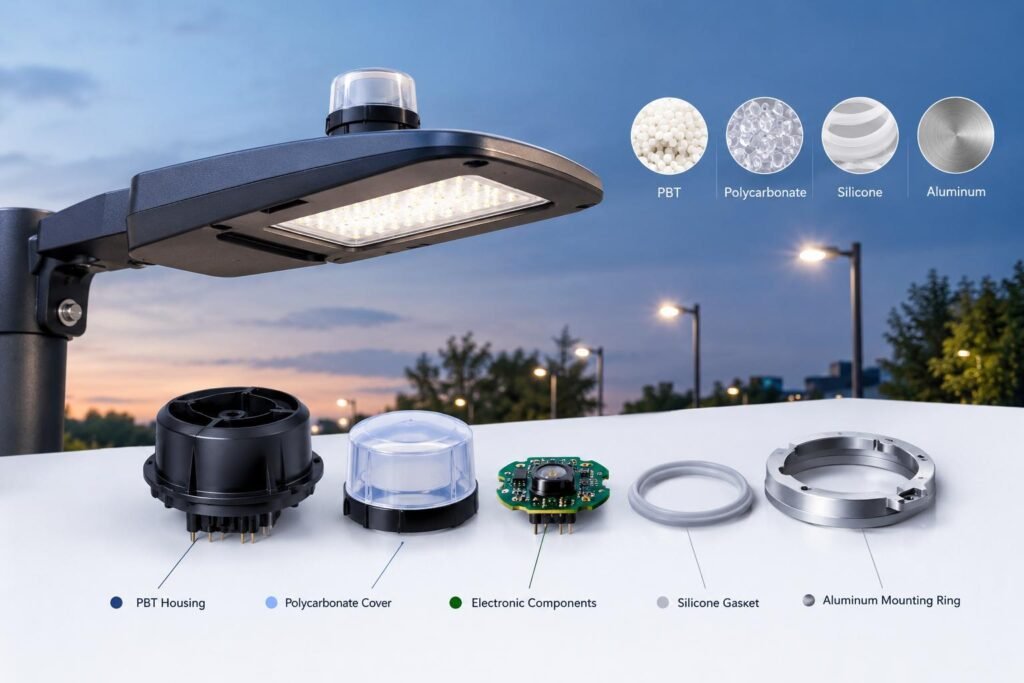
| Product Component | Specified Material | Application |
| Photoelectric sensor base | High-temperature-resistant PBT | NEMA photocontrols |
| Light photocell sensor cover | Anti-UV impact-resistant material | Outdoor protection |
| LT600 housing | High-temperature-resistant PBT | Zhaga Book 18 connector |
| LT600 gasket | Silicone | Sealing |
| LT600 mounting ring | Aluminum | Mechanical mounting |
Lead Top specifies PBT bases across models such as the LT124 and LT134. The LT600 Zhaga connector also uses PBT for its housing.
This shows why buyers should evaluate each component separately. The material choice follows the component’s role and required performance.
What Should You Look for in a Photocell Sensor Material Specification?
Start with the exact material named in the datasheet. Then check whether its properties match the installation environment. A material claim is more useful when supported by measurable specifications.
Focus on these points:
● Material type
Confirm the cover, base, or housing material.
● UV resistance
Check whether the material is UV-stabilized or UV-resistant.
● Temperature range
Compare the rated range with expected outdoor conditions.
● Impact protection
Review the stated impact or enclosure rating.
● Environmental protection
Check the relevant IP rating and outdoor suitability.
● Flame resistance
Look for documented flame-resistance information where required.
● Standards
Verify applicable requirements such as ANSI C136.10 or UL 773.
For example, published photocontrol specifications commonly identify material, temperature, UV performance, and applicable standards separately.
FAQs
What Material Is Used for Photocell Covers?
Lead Top specifies anti-UV, impact-resistant Polycarbonate for several photocontrol covers.
Why Is Polycarbonate Used in Outdoor Lighting Controls?
Because it provides impact resistance and can offer UV-resistant performance. This makes it suitable for protective outdoor covers.
Why Is PBT Used for Photocontrol Bases?
Because it provides temperature resistance and dimensional stability. This makes it suitable for bases and housings in outdoor lighting controls.
What Is the Difference Between PC and PBT?
The former is commonly used for protective covers, and the latter is often selected for bases and housings that need heat and dimensional stability.
Is Bakelite Still Used in Lighting Controls?
Yes. Bakelite remains relevant for certain electrical insulating applications, depending on the component, material grade, and operating conditions.
Does Material Affect the Outdoor Life of a Photocontrol?
Yes. Good materials are more effective against extreme outdoor climates, thus boosting the shelf life of the product.
What Materials Should Buyers Check in a Photocontrol Datasheet?
- Specified cover and base materials
- UV resistance
- Operating temperature
- Protection ratings; documented flame-resistance information
Final Words
PC, PBT, and Bakelite each serve different roles in lighting controls. The right material depends on the component and application. Lead Top offers photocontrollers with documented material specifications for different outdoor requirements. Contact Lead Top for suitable products and technical support.

 English
 Portuguese (Brazil)
 Spanish
 Russian
 Dutch
Dutch Japanese
 Portuguese (Portugal)