Em toda a Europa, a infraestrutura de iluminação pública é projetada com foco na durabilidade. Municípios em cidades como Munique, Lyon e Copenhague geralmente planejam uma vida útil de 10 a 20 anos. Nessa perspectiva, a confiabilidade dos sistemas de iluminação europeus não é definida pelo funcionamento correto do sistema no momento da instalação, mas sim pela sua capacidade de continuar a se comportar adequadamente à medida que o ambiente se transforma.
Os sistemas de iluminação exterior funcionam em ambientes urbanos complexos, onde os edifícios são remodelados, a iluminação arquitetónica é melhorada, a vegetação cresce ou é removida e as luminárias vizinhas são substituídas. Ao longo do tempo, estas alterações ecológicas influenciam as condições de exposição dos sensores.
Um fotocontrolador que funciona perfeitamente no primeiro dia pode apresentar desvios graduais de comportamento se sua estrutura não permitir alterações. Portanto, na Europa, a confiabilidade não é estática. Ela precisa ser constante.
É por isso que a capacidade de ajuste estrutural se tornou vital para alcançar um desempenho de iluminação externa a longo prazo.
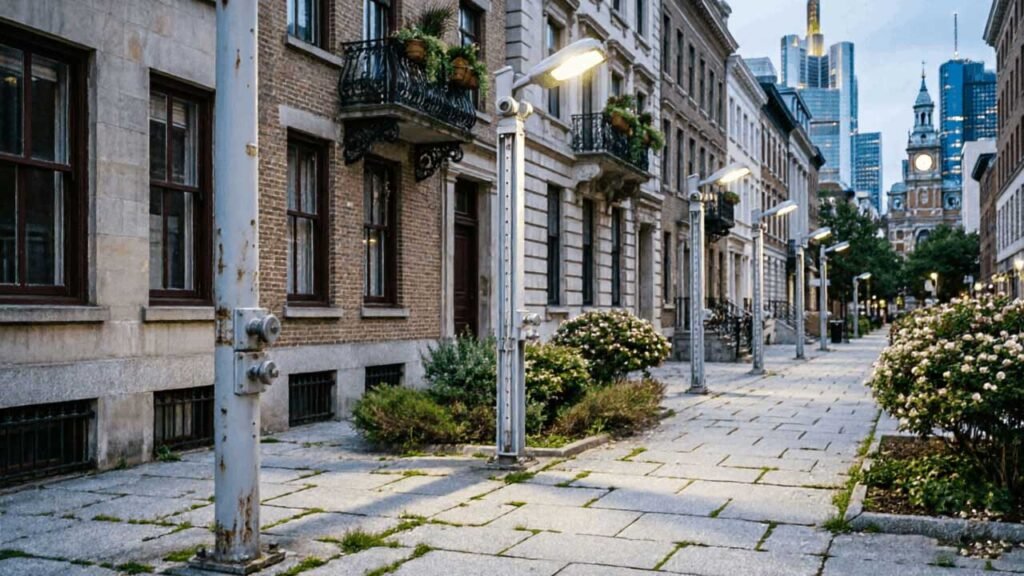
Por que a confiabilidade está relacionada ao desempenho ao longo do tempo, e não apenas no momento da instalação?
No momento da instalação, os engenheiros de iluminação regulam os sistemas de acordo com a atmosfera luminosa predominante. No entanto, as metrópoles europeias são dinâmicas.
Durante uma vida típica de 15 anos:
- Os novos edifícios introduzem superfícies de vidro refletoras.
- Foi adicionada iluminação ornamental à fachada.
- Árvores de rua crescem e alteram os padrões de luz.
- Os traçados das estradas são adaptados.
- As luminárias vizinhas foram modernizadas com LED.
Os sistemas de fotocontrole com direção fixa partem do pressuposto de que as condições de luminosidade ecológica no momento da instalação permanecerão constantes. Na realidade, essa suposição dificilmente se confirma em áreas densamente povoadas da Europa.
Quando a orientação do sensor não pode ser alterada, pequenas mudanças ecológicas se acumulam lentamente. Ao longo de vários anos, o comportamento de mudança pode sofrer deriva, iniciando-se um pouco antes ou depois do planejado.
Essa deriva não indica falha elétrica. Ela reflete um desalinhamento da exposição.
A capacidade de ajuste estrutural permite que o desempenho seja restaurado em vez de substituído, reforçando a confiabilidade dos sistemas de iluminação europeus como um objetivo de longo prazo.
Qual a diferença entre rigidez estrutural e resiliência estrutural?
Os sistemas rígidos de fotocontrole visam o posicionamento preciso em um único ponto no tempo. Seu funcionamento ideal ocorre somente quando as condições práticas correspondem às premissas originais da instalação.
Em contrapartida, os projetos resistentes reconhecem a inconsistência ecológica.
| Abordagem de projeto | Características | Resultados a longo prazo |
| Estrutura rígida | Orientação fixa do sensor | O desempenho depende de um ambiente inalterado. |
| Estrutura ajustável | Cabeça de detecção reorientável | O desempenho pode ser recuperado quando o ambiente muda. |
| Dependente da instalação | Requer alinhamento perfeito | A deriva acumula-se ao longo dos anos. |
| Orientado ao ciclo de vida | Suporta recalibração | Confiabilidade contínua sem necessidade de substituição. |
A resiliência estrutural transforma a confiabilidade em algo sustentável.
Essa diferença é particularmente significativa na Europa porque:
- O acesso aos acessórios pode ser limitado após a instalação.
- As normas de preservação do patrimônio podem proibir alterações em equipamentos.
- As interrupções de manutenção são controladas pelo orçamento.
Ao incorporar a capacidade de ajuste ao design, os produtores apoiam estratégias de fotocontrole ajustáveis na Europa que se alinham com o planejamento de infraestrutura de longo prazo.
Como a capacidade de ajuste contribui para um comportamento consistente do sistema em instalações antigas?
As grandes redes de iluminação europeias costumam conter milhares de luminárias instaladas em diferentes bairros e ao longo dos anos.
Com o tempo, surgem variações:
- Algumas partes estão passando por reformas.
- Outros acrescentam iluminação arquitetônica.
- A cobertura de árvores varia de rua para rua.
Sem capacidade de ajuste, comportamentos de comutação imprevisíveis tornam-se visíveis em toda a rede.
Os controles ajustáveis permitem que os operadores:
- Reoriente os sensores quando novas fontes de luz aparecerem.
- Corrigir o desvio produzido por superfícies refletoras
- Padronize os tempos de comutação entre as zonas.
Essa capacidade fortalece diretamente a confiabilidade do sistema de iluminação europeu, não evitando as mudanças ecológicas, mas sim adaptando-se a elas.
O resultado é uma redução nas reclamações relacionadas a:
- ativação irregular do pôr do sol
- desligamento ao amanhecer
- Variação de zona para zona
É importante ressaltar que esses problemas geralmente não estão relacionados à degradação elétrica. Eles decorrem da inflexibilidade estrutural.
A ajustabilidade estrutural compromete a estabilidade mecânica?
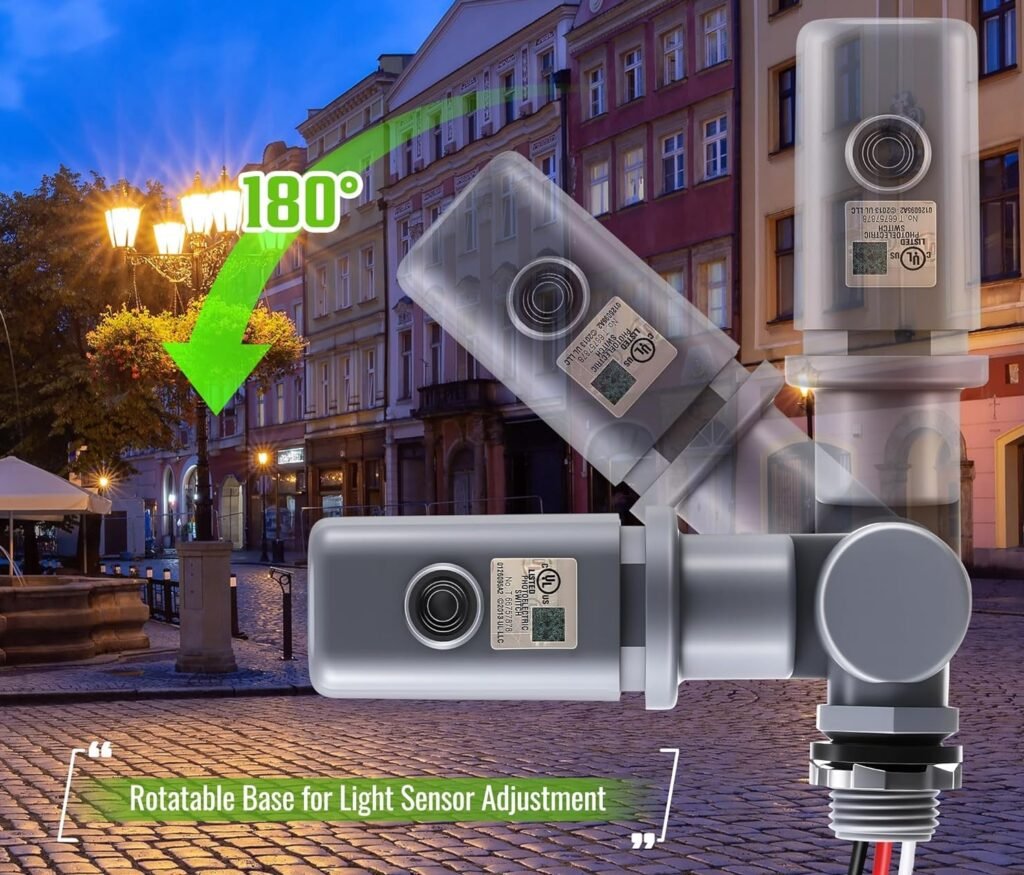
Uma preocupação comum na fabricação é se os mecanismos ajustáveis introduzem folga, desgaste ou imprevisibilidade.
Em sistemas projetados com qualidade inferior, esse risco pode ocorrer. No entanto, soluções bem projetadas incorporam ajustes controlados e limitados dentro de uma estrutura com suporte adequado.
A capacidade de ajuste não é movimento livre — é movimento planejado.
Produtos como fotocontrole de haste giratória Os modelos da UE integram:
- Ângulos de ajuste definidos
- estruturas de travamento seguras
- habitações resistentes às intempéries
- Interfaces de montagem constantes
Quando projetada corretamente, a ajustabilidade estrutural melhora a resiliência sem comprometer a durabilidade.
Como os modelos LT210CH e LT310D atendem aos padrões de confiabilidade europeus?
Duas soluções que se alinham com essa filosofia são:
Ambos foram projetados para suportar ajustes. controle de fotos Atender aos requisitos europeus, mantendo a confiabilidade mecânica.
LT210CH:
Destinado a aplicações cívicas e urbanas padrão, este modelo destaca:
- Flexibilidade estrutural da haste giratória
- comportamento de comutação térmica constante
- Habitações resistentes para exposição prolongada
É especialmente indicado para projetos em que o ajuste estrutural e a constância da vida útil são os principais objetivos.
LT310D
Planejado para aplicações que exigem características de controle mais rigorosas, oferece:
- Precisão de desempenho aprimorada
- Opções de configuração de resposta mais rápida
- Flexibilidade estrutural semelhante à do LT210CH
Ambos os produtos refletem uma filosofia de design compartilhada: a confiabilidade se mantém por meio da flexibilidade.
O acesso para manutenção em municípios europeus pode ser complexo e dispendioso. Podem ser necessários fechamentos de vias, equipamentos de elevação e autorizações regulamentares.
Quando ocorrem irregularidades na comutação devido a mudanças ecológicas, sensores rígidos frequentemente levam a:
- Substituição completa do dispositivo
- Visitas de serviço repetidas
- Custos de emprego amplificados
Os designs ajustáveis permitem a recalibração durante os ciclos de manutenção programados.
Isso diminui:
- Descarte desnecessário de produtos
- chamadas de emergência
- interrupção do funcionamento
Ao longo de uma vida útil de 15 a 20 anos, essas economias contribuem consideravelmente para o desempenho da iluminação externa a longo prazo.
A política ecológica europeia destaca a eficiência no uso de recursos e a redução de resíduos.
Um produto que precisa ser substituído porque sua exposição não corresponde mais ao ambiente em que foi projetado contradiz esses princípios.
A ajustabilidade estrutural prolonga a vida útil, permitindo a adaptação a:
- Novos materiais de construção
- Sistemas de LED aprimorados
- Alterações em superfícies refletoras
- Mudanças no traçado urbano
Isso apoia o pensamento de infraestrutura circular — mantendo os componentes funcionais pelo maior tempo possível.
Nessa perspectiva, confiabilidade não significa resistir à mudança, mas sim acomodá-la com sabedoria.
A estabilidade duradoura na Europa é definida por três fatores:
- Constância no comportamento de alternância
- Flexibilidade à mudança ecológica
- custo de vida útil controlada
Sistemas rígidos podem se destacar na precisão inicial, mas apresentar dificuldades ao longo do tempo.
Os sistemas ajustáveis proporcionam resiliência estrutural que contribui para a confiabilidade dos sistemas de iluminação europeus ao longo do tempo.
A incorporação de flexibilidade mecânica controlada com sensoriamento térmico constante garante que:
- O desempenho continua confiável.
- A deriva pode ser corrigida.
- Os ciclos de substituição são prolongados.
Este é o espírito da confiabilidade sustentável.
Qual é a perspectiva final e a solução recomendada?
A ajustabilidade estrutural melhora a confiabilidade porque converte o desempenho de uma condição fixa para uma condição sustentável.
Nos sistemas de iluminação europeus:
- As metrópoles evoluem
- Idades da infraestrutura
- Mudanças no ambiente de luz
Um projeto rígido pressupõe estabilidade.
Um design ajustável antecipa mudanças.
Soluções como os produtos de fotocontrole com haste giratória da UE — incluindo os modelos LT210CH e LT310D — comprovam que a confiabilidade duradoura não é alcançada eliminando a inconsistência, mas sim projetando-a para ela.
Soluções recomendadas
- LT210CH – Haste giratória Fotocontrolador térmico com fio
- LT310D – Fotocélula térmica de alto desempenho com fio
Ambos os produtos são fabricados para suportar infraestruturas europeias de longa duração, através de resiliência estrutural, sensores confiáveis e flexibilidade que protegem o desempenho da iluminação externa a longo prazo em ambientes urbanos em expansão.



 English
 Portuguese (Brazil)
 Spanish
 Russian
 Dutch
Dutch Japanese
 Portuguese (Portugal)