Introdução
A infraestrutura urbana está se tornando rapidamente mais inteligente e interconectada. Em todo o mundo, as prefeituras não tratam mais os postes de iluminação como simples dispositivos de iluminação. Em vez disso, os modernos sistemas de iluminação estão se transformando em plataformas de infraestrutura digital capazes de suportar coleta de dados, otimização do tráfego, monitoramento ambiental e gestão de energia.
Essa transformação está intimamente ligada à ascensão da iluminação urbana inteligente e das tecnologias de iluminação conectada. As cidades de hoje desejam sistemas de iluminação que façam mais do que simplesmente ligar e desligar ao anoitecer. Elas precisam de sistemas que possam se comunicar, coletar informações, reduzir custos operacionais e dar suporte à futura expansão da cidade inteligente.
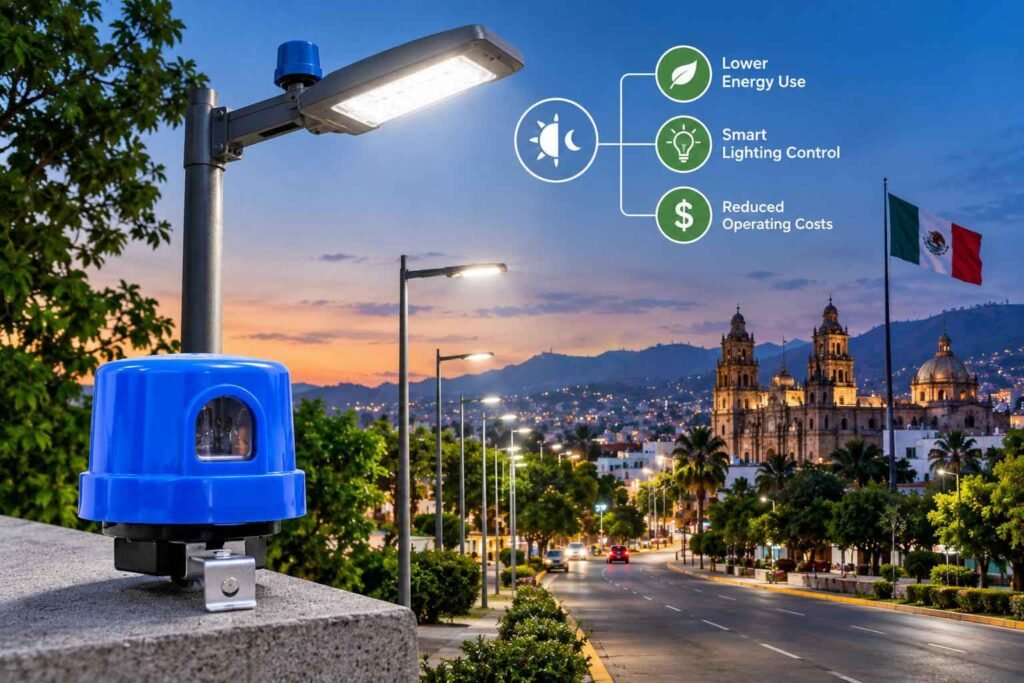
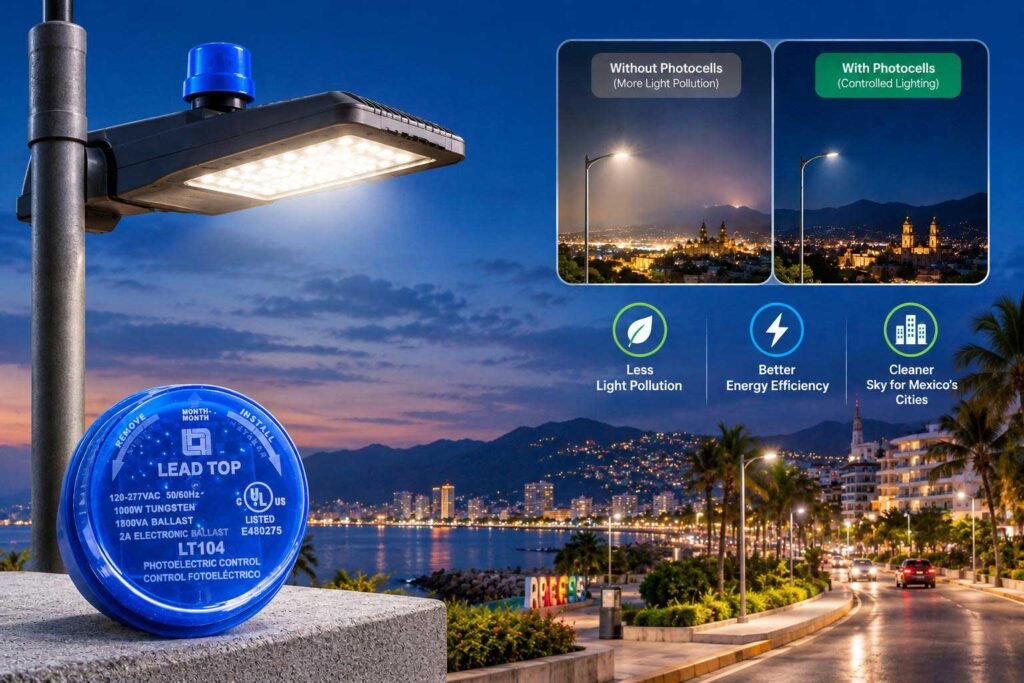
No centro dessa transformação está a fotocélula para iluminação externa. Convencionalmente usada como um simples interruptor crepuscular, o sensor de fotocélula para iluminação atual está se tornando um componente fundamental na infraestrutura metropolitana conectada.
À medida que os municípios implementam postes inteligentes, sensores de IoT, sistemas de comunicação sem fio e iluminação adaptativa em rodovias, fotocélulas estão se transformando em nós de infraestrutura inteligentes, capazes de suportar sistemas de gestão metropolitana de última geração.
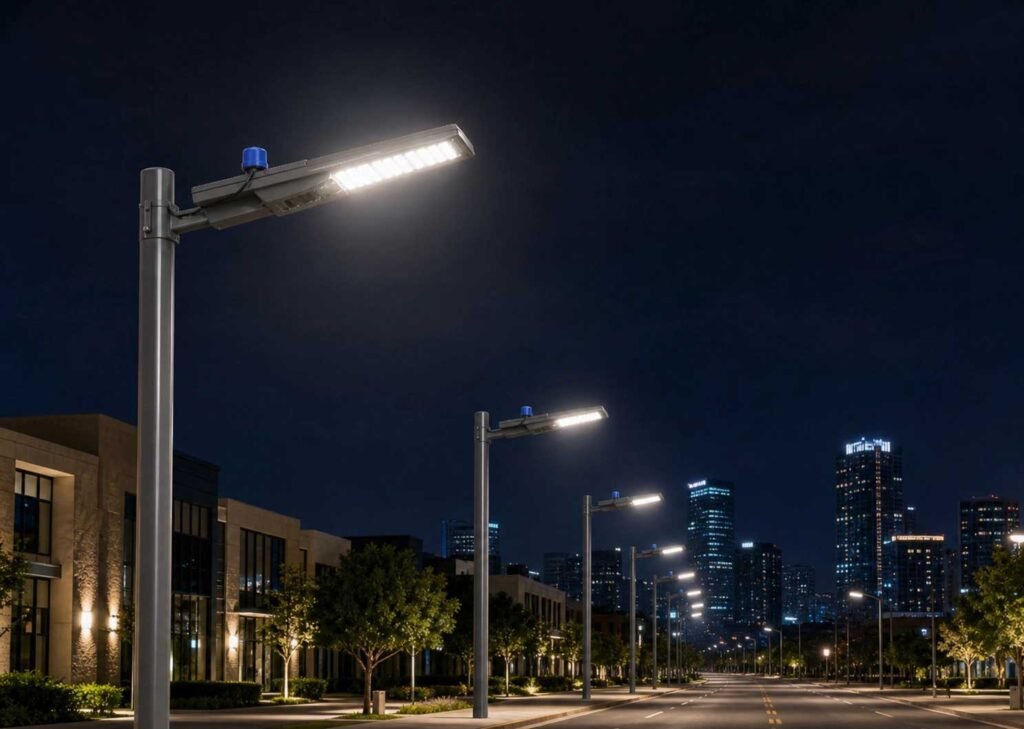
Por que a iluminação pública não serve mais apenas para iluminar?
As cidades modernas enfrentam desafios crescentes relacionados à eficiência energética, congestionamentos de trânsito, segurança pública e manutenção da infraestrutura. Como a iluminação pública está atualmente distribuída por todas as áreas metropolitanas, as cidades a utilizam cada vez mais como plataformas ideais para a implantação de tecnologias de cidades inteligentes.
Os postes de iluminação tradicionais tinham apenas uma função: iluminar. Os modernos sistemas de iluminação inteligente agora oferecem:
- Monitoramento de tráfego
- sensoriamento da qualidade do ar
- Wi-Fi público
- Câmeras de segurança
- Monitoramento ecológico
- Controle adaptativo de iluminação
- Sistemas de comunicação de emergência
Essa tendência está acelerando o desenvolvimento da infraestrutura de iluminação inteligente na Europa, América Latina, Oriente Médio e Ásia.
Os municípios estão investindo cada vez mais em:
- Postes inteligentes
- Redes de sensores
- Metropolitan sistemas de IoT
- Infraestrutura baseada em IA
- Serviços públicos conectados
Os sistemas de iluminação pública estão se tornando uma das maneiras mais econômicas de implantar tecnologias de cidades inteligentes, porque a energia e a infraestrutura já existem em locais próximos a rodovias.
Consequentemente, o humilde sensor fotocélula para luzes externas está se tornando uma interface imprescindível entre a infraestrutura física e os sistemas de gerenciamento digital.
Como as fotocélulas para iluminação externa se tornaram nós de infraestrutura inteligente?
A antiga fotocélula para iluminação externa foi projetada principalmente para o acionamento automático do anoitecer ao amanhecer. Ela detectava os níveis de luz ambiente e acionava as luminárias quando a luz do dia diminuía.
Embora essa funcionalidade continue sendo importante, os sensores fotoelétricos de iluminação atuais executam tarefas muito mais incomuns.
As fotocélulas modernas agora suportam:
- Comunicação sem fio
- sistemas de dimerização inteligentes
- Monitoramento remoto
- Detecção de falhas
- Otimização de energia
- Integração de nós inteligentes
- Controle adaptativo de iluminação
Em vez de operarem de forma autônoma, diversos sistemas modernos de controle de iluminação por fotocélulas são integrados a plataformas centrais de cidades inteligentes.
Essa inovação permite que as cidades monitorem o desempenho da iluminação remotamente, reduzindo os custos de manutenção e melhorando a eficiência operacional.
Por exemplo:
| Fotocélula tradicional | Infraestrutura de fotocélulas inteligentes |
| Interruptor liga/desliga simples | Comunicação de rede inteligente |
| Operação independente | Integração de iluminação conectada |
| Detecção de manutenção manual | Diagnóstico remoto |
| Horário de iluminação fixo | controle de iluminação adaptativo |
| Funcionalidade limitada | compatibilidade com a infraestrutura de IoT |
A transição de dispositivos de comutação isolados para componentes de infraestrutura conectados é uma das maiores mudanças na iluminação urbana contemporânea.
Como os sensores crepusculares estão se tornando ferramentas de dados urbanos em tempo real?
O sensor crepuscular antigo foi projetado para automatizar o funcionamento da iluminação pública com base no brilho ambiente. Isso eliminou a necessidade de acionamento manual trabalhoso e melhorou a eficiência energética.
Atualmente, porém, o moderno interruptor com sensor fotocélula para uso externo tornou-se parte integrante dos sistemas de gestão urbana.
Os sistemas avançados de fotocélulas agora podem:
- Falhas de iluminação de detecção
- Relatar consumo de energia
- Suporte para escurecimento adaptativo
- Permitir monitoramento centralizado
- Comunique-se com plataformas de IoT.
- Integrar com sistemas de tráfego
Em ambientes de iluminação conectados, cada poste de luz torna-se parte de uma ampla rede de dados urbanos.
Essa conversão é especialmente importante para:
- Sistemas de tráfego inteligentes
- Gestão de rodovias orientada por IA
- Otimização da resposta a emergências
- Manutenção preditiva de infraestrutura
- Programas de economia de energia
Os sistemas contemporâneos de controle de iluminação por fotocélula também ajudam os municípios a diminuir as horas de funcionamento desnecessárias, o que reduz diretamente o consumo de eletricidade e as emissões de carbono.
Por que as cidades precisam de redes de iluminação conectadas?
As redes de iluminação conectadas oferecem muito mais do que economia de energia. Elas ajudam os municípios a melhorar a eficiência operacional, diminuir os custos de manutenção e construir infraestrutura inteligente e escalável.
Diversas tendências globais importantes estão impulsionando essa mudança.
Requisitos de Eficiência Energética
Os custos da eletricidade continuam a subir internacionalmente. As cidades estão sob pressão para diminuir o consumo de energia, mantendo ao mesmo tempo uma iluminação pública segura.
Sistemas de iluminação conectados ajudam a otimizar:
- Horários de iluminação
- Níveis de escurecimento
- Ciclos de manutenção
- Padrões de consumo de energia
Manutenção preditiva
A manutenção tradicional geralmente depende da inspeção manual após a ocorrência de falhas.
Sistemas conectados permitem:
- Detecção remota de falhas
- Monitoramento em tempo real
- Resposta de manutenção mais rápida
- Menor interrupção operacional
Isso melhora consideravelmente a confiabilidade da infraestrutura.
Gestão centralizada de iluminação
Os municípios desejam cada vez mais plataformas centralizadas capazes de controlar milhares de pontos de iluminação simultaneamente.
Isso permite que os operadores:
- Ajuste o brilho remotamente
- Detecte prontamente as falhas do sistema.
- Analisar o consumo de energia
- Otimizar a eficiência operacional
Exemplos globais de cidades inteligentes
Europa
Os municípios europeus estão investindo fortemente em infraestrutura de iluminação urbana inteligente por meio de ZhagaSistemas baseados em [tecnologia], postes inteligentes e redes urbanas conectadas.
Médio Oriente
Iniciativas de cidades inteligentes impulsionadas por IA estão acelerando a aceitação de infraestrutura rodoviária inteligente e sistemas de iluminação adaptáveis.
América latina
Programas de modernização em larga escala com LED estão gerando uma forte demanda por sistemas de fotocélulas para iluminação externa escaláveis e compatíveis com futuras atualizações de cidades inteligentes.
Quais são as melhores configurações de iluminação inteligente para implantação urbana?
Solução de retrofit com excelente custo-benefício para projetos municipais
Combinação recomendada


Melhores aplicativos
- Projetos de retrofit na América do Sul
- melhorias metropolitanas com custos controlados
- projetos de transição para LED
Principais vantagens
| Recurso | Beneficiar |
| Compatibilidade com ANSI | Fácil integração com sistemas existentes |
| Baixo custo de implantação | Adequado para grandes programas de modernização. |
| Desempenho confiável em ambientes externos | Operação estável a longo prazo |
| Instalação fácil | Implantação municipal mais rápida |
| Compatibilidade com LED | Compatível com sistemas de iluminação modernos |
Solução de infraestrutura inteligente para cidades conectadas
Combinação recomendada


Melhores aplicativos
- projetos europeus de cidades inteligentes
- Ecossistemas de postes inteligentes
- Sistemas de iluminação adaptáveis
- infraestrutura de iluminação IoT
Principais benefícios
| Recurso inteligente | Vantagem de infraestrutura |
| Conformidade com o Livro 18 de Zhaga | integração inteligente padronizada |
| Compatibilidade com DALI | Controle digital avançado de iluminação |
| Arquitetura preparada para IoT | Expansão futura da cidade inteligente |
| Design modular compacto | Manutenção e atualizações mais fáceis |
| Suporte a nós inteligentes | Infraestrutura urbana conectada |
Esta solução é compatível com sistemas de iluminação conectados contemporâneos e com a escalabilidade futura das cidades inteligentes.
Como as fotocélulas inteligentes dão suporte à infraestrutura urbana com IA?
A inteligência artificial está se tornando progressivamente parte dos sistemas de gestão urbana.
As plataformas urbanas baseadas em IA dependem fortemente da coleta de dados de dispositivos de infraestrutura distribuídos. Os sistemas de iluminação pública são perfeitos para isso, pois já existem em todos os municípios e operam indefinidamente.
As fotocélulas modernas ajudam a suportar:
- gerenciamento de tráfego por IA
- Monitoramento ecológico
- Iluminação adaptativa em rodovias
- Algoritmos de otimização de energia
- Gestão inteligente de serviços públicos
Em vez de funcionarem como dispositivos de controle isolados, as fotocélulas estão se tornando parte da camada de sensores de IA das municipalidades modernas.
Isto é particularmente importante para:
- Sistemas de tráfego independentes
- Ajuste dinâmico de iluminação
- Roteamento inteligente de emergência
- Análise preditiva de infraestrutura
Com o desenvolvimento da infraestrutura de IA, a tecnologia de sensores fotoelétricos para iluminação externa continuará evoluindo, indo além da simples automação da iluminação.
Por que o futuro das cidades inteligentes começa no poste de luz?
Os postes de iluminação estão se tornando ativos de infraestrutura estratégicos porque já oferecem:
- Acesso elétrico
- Ampla cobertura geográfica
- Pontos de instalação elevados
- Redes de manutenção existentes
Os projetos atuais de substituição de fotocélulas em postes de iluminação envolvem cada vez mais hardware preparado para tecnologia inteligente, em vez de dispositivos de comutação antiquados.
Os futuros postes inteligentes poderão oferecer suporte a:
- Câmeras de trânsito
- Sensores ecológicos
- Equipamentos de comunicação 5G
- Wi-Fi público
- sistemas de carregamento de veículos elétricos
- Vigilância inteligente
- Iluminação adaptativa de rodovias
Com a aceleração dessa renovação, o sensor de luz em postes de iluminação antigos torna-se uma interface fundamental entre os sistemas de iluminação e a infraestrutura urbana digital.
Conclusão
A iluminação pública está se transformando de simples dispositivos de iluminação em redes inteligentes de infraestrutura urbana capazes de suportar:
- Iluminação conectada
- sistemas de tráfego baseados em IA
- Gestão de cidades inteligentes
- Otimização de energia
- Manutenção preditiva
- Reforço da segurança pública
No centro dessa renovação está a moderna fotocélula para iluminação externa.
As fotocélulas inteligentes de hoje não são mais apenas interruptores de anoitecer e amanhecer, mas sim nós de infraestrutura em extensos ambientes urbanos conectados.
À medida que as cidades continuam a adotar postes inteligentes, sistemas de IoT e redes de iluminação adaptáveis, a tecnologia de fotocélulas inteligentes se tornará cada vez mais importante para o desenvolvimento urbano futuro.
CTA
Explore as soluções de fotocélulas inteligentes Lead-Top e de controle de iluminação compatíveis com Zhaga, projetadas para projetos metropolitanos inteligentes e conectados. Seja para planejar a modernização de iluminação pública com LED, a instalação de postes inteligentes ou a infraestrutura de iluminação preparada para inteligência artificial, os sistemas de fotocontrole escaláveis e confiáveis podem ajudar a alcançar metas de modernização urbana de longo prazo.
Referências:
- https://leaditop.com/product-2/
- https://en.wikipedia.org/wiki/Internet_of_things
- https://en.wikipedia.org/wiki/Zhaga_Consortium
- https://leaditop.com/product/3-pin-nema-base-high-quality-photocell-3pin-electronic-photo-control-switch-outdoor-sensor-day-night-light-switch/
- https://leaditop.com/product/lt104-conical-shell-12-48v-120-240v-twist-lock-photocontrollers-for-outdoor-landscape-barn-lighting/
- https://leaditop.com/product/zhaga-socket-connected-dali-2-0-protocol-and-0-10v-dimming-control-luminaire-lighting-2/
- https://leaditop.com/product/customizable-upgraded-models-highly-waterproof-zhaga-socket-lt600/
- https://leaditop.com/product/ip66-ansi-c136-41-nema-3-pintwist-lock-photocell-socket-ip66-ultra-thin/
- https://leaditop.com/product/zhaga-socket-connected-dali-2-0-protocol-and-0-10v-dimming-control-luminaire-lighting/



 Portuguese (Portugal)
  English
  Portuguese (Brazil)
  Spanish
  Russian
  Dutch
Dutch  Japanese