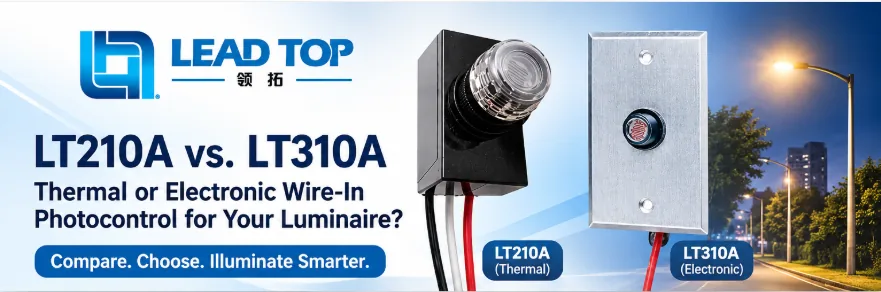
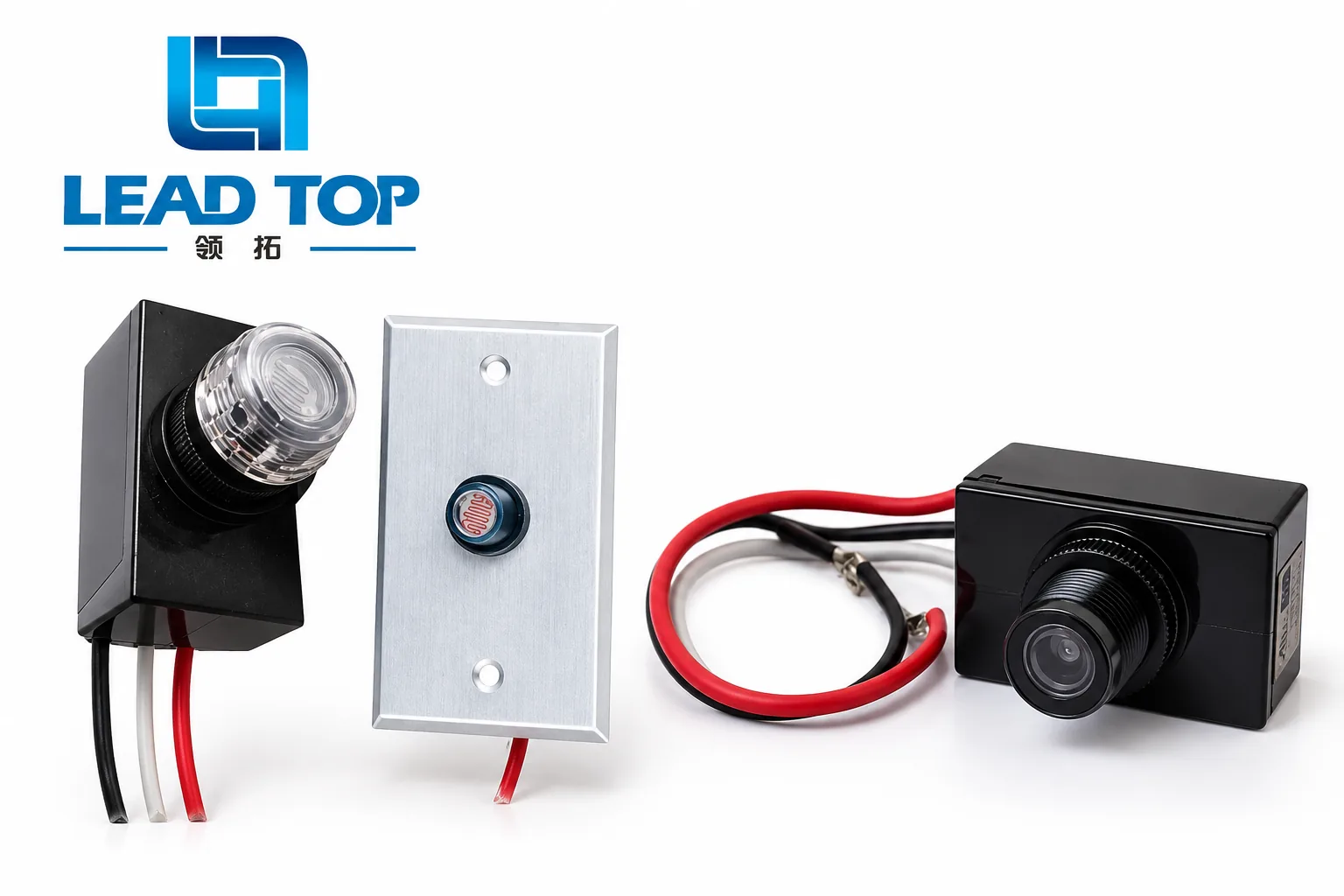
Within the wire-in category, Lead-Top produces two photocell switches based on two distinct designs. The LT210A control is a thermal type. The LT310A control is an electronic type.
Both the lighting controls are listed with the same specifications – 16 cm leads and 5A E-Ballast rating. But the 5A rating is not a universal restriction on LED-driver currents. Hence, the choice should not be based only on the mounting method or the LED current. The choice depends on:
- How the switch reacts
- What type of load ceiling it operates at
- Which switch gives an answer to your specifications
This guide compares the two lighting fixtures based on various criteria. In the end, it makes a summary and offers a criterion for choosing one.
What Do the LT210A and LT310A Share, and What Differs?
What is identical?
- Format – wire-in
They are both meant to be wired into a luminaire or an appropriate enclosure.
- Wiring Leads
- UL1015 18AWG, 16 cm
- Classificação E-Ballast
- 5A
- Proteção contra entrada
IP66 by standard, IP67 by option
Check all of the above against your AC model. That is why they might appear to be "the same part at two prices" – they are not.
What is the technology split?
LT210A Thermal Type
The 210 series consists of thermal-type photocontrols.
LT310A Electronic Type
An electronic photocontrol sensor featuring infrared sensing capabilities. Zero-crossing triggering and failure-mode configurations depend on the specific model selected.
Never make assumptions that a thermal model means greater delay, reduced failure rate, or lower cost. All three require the datasheet or quotation.
How Do the LT210A and LT310A Compare on Specifications?
| Spec | LT210A Day and Night Work Motion Photosensitive Light Photocell (thermal) | LT310A Wire-in Type Photo Control (electronic) |
| Tecnologia | Thermal-type photocontrol | Electronic, IR-type sensing |
| Load ceiling | A1: 1800W tungsten / 1800VA ballast. A2 and A3: 2000W / 2000VA | 1000 W / 1800 VA |
| Classificação LED | 5A E-Balast | 5A E-Ballast (code 2); 2A on code 1 |
| Nível de ativação | 10-16 Lux | 10–16 luxo |
| Atraso | 30-180 segundos | 3–15 segundos |
| Relação LIGADO/DESLIGADO | 1:5 | 1:1.5 |
| Cruzamento zero | – | Available on the Z configuration |
| Modo de falha | Falha-ligado | Fail-ON standard; Fail-OFF via the F code, if confirmed |
| Resistência | > 5000 cycles | >10.000 ciclos |
| Tensão de alimentação | Separate variants: 120V, 240V, 208–277V | 120–277V listed |
| Order codes | LT210A1 / A2 / A3, plus -F variants | LT310A1 (2A) / LT310A2 (5A), plus Z and F codes |
When Should You Specify the LT210A Photoelectric Sensor, the Thermal Route?
Heavy loads beyond 1800VA
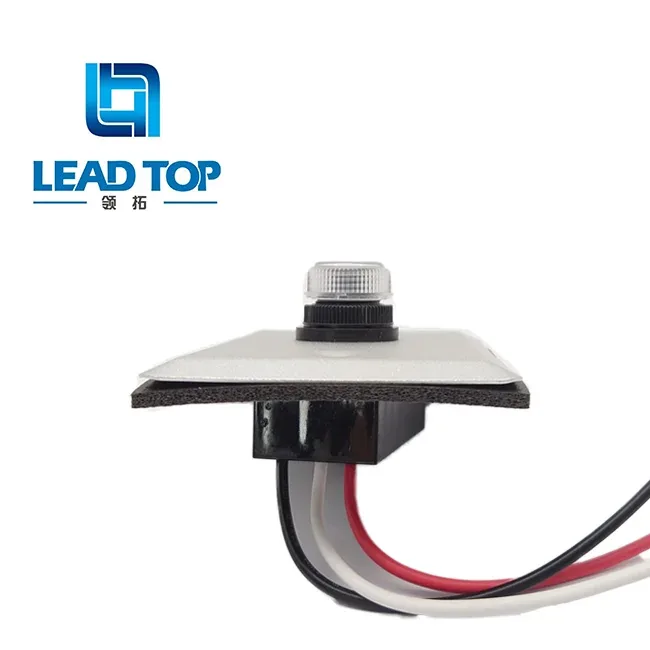
The LT210A2 and LT210A3 achieve 2000W tungsten / 2000VA ballast with a 5A E-Ballast rating, the highest in the wire-in family. The LT210A1 has a rating of 1800W / 1800VA, so don’t put it with the rest.
HID high-power holdover and mixed-load circuits usually end up here. Ensure the load type and switching conditions are within the range of the model chosen.
Fixed-voltage production
The LT210 light photocell sensor series is ordered by voltage variety, making it perfect for production lines designed for a single market.
Programmes that prefer a thermal approach
Some users want a thermal option. Statements like "reduced number of failure points" or "temperature stability" need product internal information to be included on the specification.
Who should not specify it?
- LED programmes that require contact timing zero-cross protection
- Specifications that ask for a proven ON/OFF ratio or fail mode
- Fleet programmes that require one product number for a number of supply voltages
When Should You Specify the LT310A Photocontrol Receptacle, the Electronic Route?
LED street and area lighting
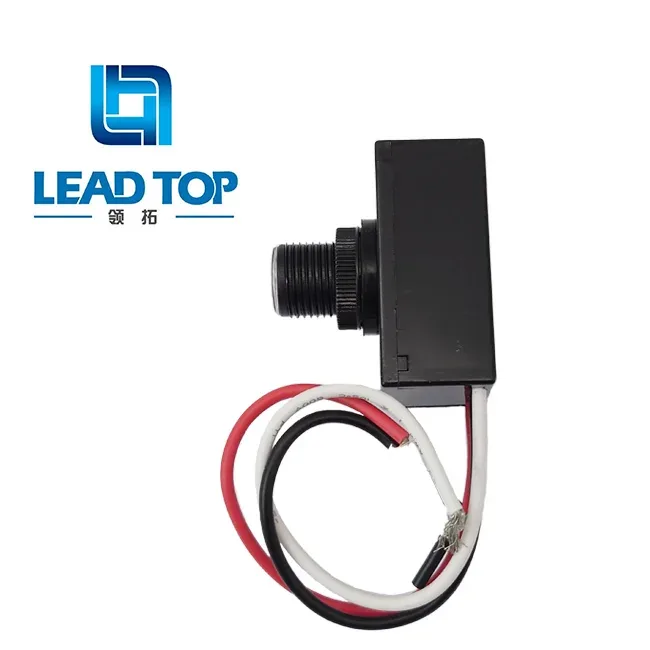
The zero-cross (code Z) timing of switching on the AC waveform zero-cross point, if supported by the particular model, might reduce stress on contacts during switching with proper loads.
This will not mitigate driver de LED inrush or extend service life. This applies mainly to networks where daily cycles occur with high inrush drivers.
Specifications that name numbers
1:1.5 ratio, 3 to 15-second delay band, greater than 10,000 cycles endurance, Fail-OFF needed: an LT310A photo switch sensor may be appropriate for them, if each value and each option is listed in the present AC datasheet.
Order numbers should be compiled after checking the Z and F coding possibilities from the factory.
Mixed-voltage fleets
With the continuous 120 to 277V voltage window confirmed, a single part number fits the whole range, eliminating voltage-based variant management.
Who should not specify it?
Lowest cost programs with fixed voltage and no zero-cross or fail-mode required. The thermal route might be cheaper, depending on quotations for the equivalent functionality.
Is the Voltage Listing an Ordering Decision?
Yes, and it affects inventory more than most buyers expect.
| Fator | LT210A | LT310A |
| Estrutura | Three variants: A1 (120V), A2 (240V), A3 (208–277V) | One listed 120–277V window, if confirmed |
| Inventário | Each variant is its own part number | One SKU can cover a mixed fleet |
| Ideal para | One market, one voltage, price-driven | Many markets, unpredictable voltages |
This is a practical inventory rule, not a universal purchasing rule. Also compare the real voltage distribution, stocking cost, lead times, minimum order quantities, and confirmed pricing.
What Does Each Technology Cost Over Its Life?
Resistência
The LT310A’s >10,000 cycles endurance rating will be documented if valid for the chosen technology. Zero-crossing timing will reduce wear on contacts but not ensure this rating at all loads. Determine the endurance value of the LT210A before making lifecycle claims.
Mode of failure
Even though the two products have different internal configurations, the modes of failure will depend on their components. Do not state that any product fails due to any particular mode without substantiating this claim with engineering or returned product data.
Frequency of replacements rather than price per unit
Where available, use service life, warranties, failure rates, and cost of replacement. Where such data is unavailable, consider lifecycle cost as a comparison tool rather than a proven benefit.
Which Model Fits Which Programme?
1. Applications of Heavy Loads and Mixed HID Holdovers
Choose either the LT210A2 or LT210A3 for programmes of heavy loads up to 2000W and mixed HID holdovers. They are the high-end models of the LT210A wire-in family.
2. Low Procurement Cost & Fixed Voltage Projects
Choose the LT210A1 for projects where low procurement cost and fixed voltage are the only considerations. The LT210A1-F can also be chosen, provided confirmation of its role in the project’s target market.
3. LED Systems with Requirement of Zero Cross Switching
The LT310A2Z is a good choice for LED networks that require electronic control with zero-crossing switching. It is advisable to confirm the correct order code and loads involved before procurement.
4. Projects with Special Control Requirements
It is recommended to choose the LT310A with the required Z/F code if the project requires specification of switching ratio, time delay, and fail mode. Confirm the 1:1.5 ratio, 3-15 seconds delay, and Fail OFF in the chosen model.
5. Small and Solar Luminaires
The LT310LE (300W/300VA) and LT210LE mini are intended for small lights. With smaller wire-in design, they can be used for solar luminaires and other installations having small space inside.
6. Installations with Adjustable Sensors
Rotatable handles of the LT310C and LT310CH make them a good choice for installations that require adjustment of the photocell angle after installation.
One key difference is that the LT310LE and LT210LE mini are smaller light alternatives, not direct substitutes for the standard LT210A and LT310A lights.
Perguntas frequentes
Can I use an LT310A instead of an LT210A?
Only up to the load rating. LT310A is rated 1000W / 1800VA, whereas variants of LT210A go up to 1800W-2000W. Within that limit, substitution is simply a matter of technology selection, assuming the rest is compatible. It is not automatically a function-to-function substitution.
Which is better for LED street lights?
LT310A with zero-cross feature is a better fit since zero-cross switching might decrease switching-related contact stress with the right LED drivers. The actual effect depends on the inrush of the driver and the configuration you choose.
Does the thermal LT210A handle LED drivers?
The 5A E-Ballast rating of the LT210A is a load rating, but it doesn’t mean that the device will work with any drivers. In the present case, it has no zero-crossing feature. Whether it is needed or not depends on your specs and the driver’s inrush.
Why does the LT210A order by voltage when the LT310A covers a range?
This is because of the nature of placement of lines. While the LT210 is designed to have per-market versions, the LT310A has wide-window versions. In terms of operations, this determines how many SKUs your warehouse stocks.
My spec requires Fail-OFF. Which model do I order?
The LT310A with a suffix of F might be the way to go. Please confirm with the factory that the letter F indicates Fail-OFF in your version and that the combination is available. The LT210A is available in standard and -F versions, but the meaning of -F needs confirmation first.
What should I send to get the exact part number?
- Type of load and rating (tungsten, ballast, or LED driver)
- Tensão de alimentação
- Desired fail mode
- Requirement for zero-crossing
- Switching frequency
- In case of LED driver, inrush peak and pulse width, if known
- Turn-on threshold, turn-on delay, ON/OFF ratio and environmental conditions, if known
Palavras finais
LT210A should be considered for use with large loads with a fixed voltage, while LT310A is ideal for LED loads, defined control conditions, and multiple voltages. Provide Load Top with information about the load, supply voltage, fail-mode needs, and application.


 English
 Portuguese (Brazil)
 Spanish
 Russian
 Dutch
 Japanese
 Portuguese (Portugal)